










Golden Chain Tree: A Complete Guide to Laburnum and Its Spectacular Yellow Blooms
Introduction to the Golden Chain Tree
The Golden Chain Tree, known botanically as Laburnum, is one of the most visually dramatic flowering trees found in temperate gardens across the world. Native to the mountainous regions of central and southern Europe, this deciduous tree has captured the imagination of gardeners for centuries with its extraordinary cascading clusters of brilliant yellow flowers. When in full bloom during late spring, a mature Laburnum can stop passersby in their tracks, resembling a living waterfall of gold pouring from its branches.
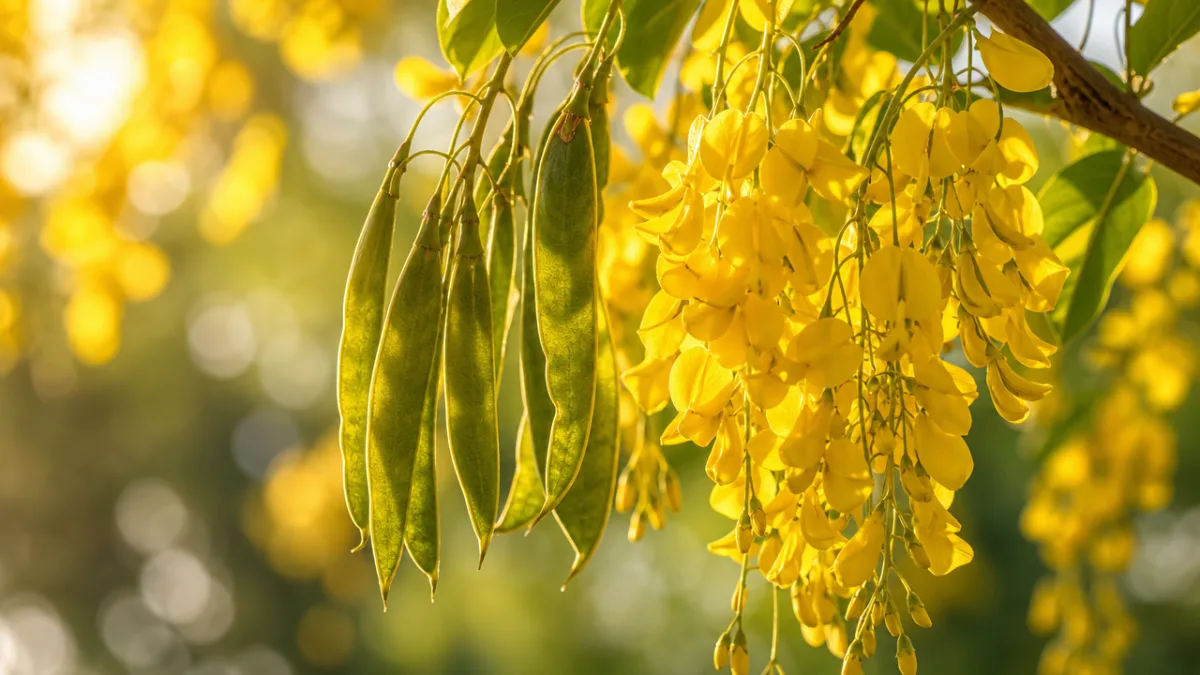
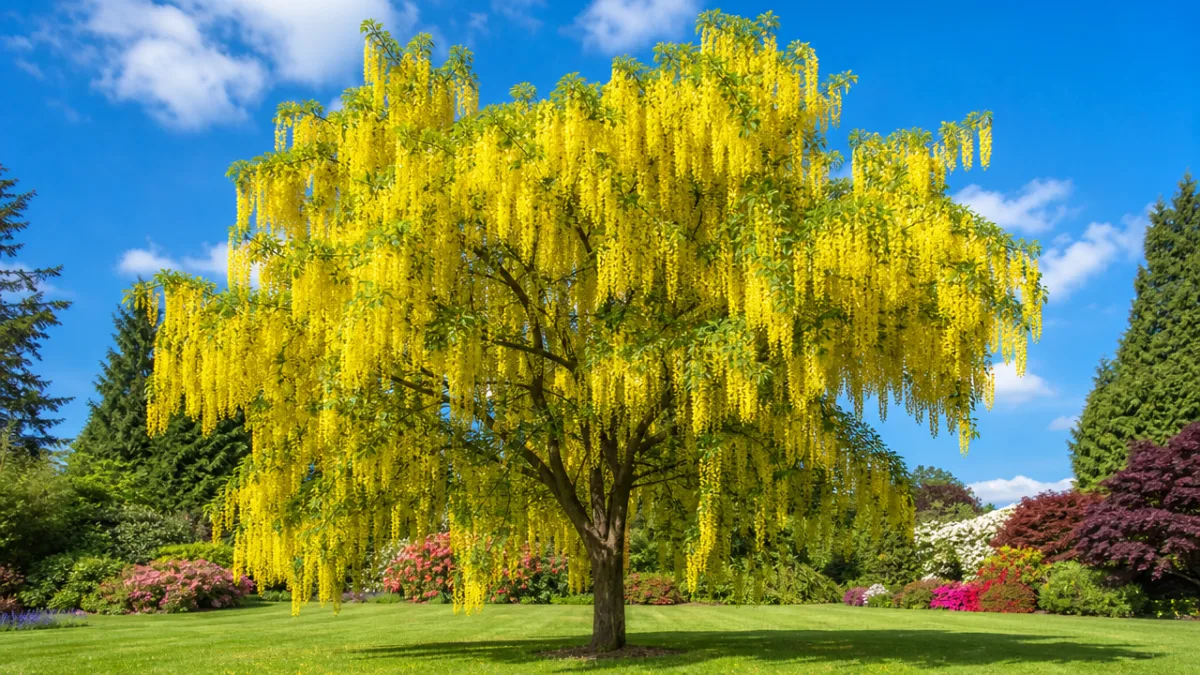
The genus Laburnum belongs to the legume family Fabaceae, which places it in the company of peas, beans, and wisteria. This botanical relationship becomes immediately apparent when you examine the individual flowers closely — each one bears the distinctive pea-flower shape, with a broad upper petal and two smaller side petals cupping a keel. The flowers are arranged in pendulous racemes that can hang anywhere from six to eighteen inches in length, creating the signature waterfall effect that has earned the tree its evocative common name.
There are two principal species most commonly cultivated: Laburnum anagyroides, the common Laburnum, and Laburnum alpinum, the Scottish Laburnum or Alpine Laburnum. Of greatest garden importance, however, is their hybrid offspring Laburnum × watereri, particularly the cultivar ‘Vossii’, which produces the longest and most abundant flower chains of all while also setting significantly fewer seeds — an important consideration given the plant’s well-documented toxicity. Understanding the differences between these varieties helps gardeners make informed choices appropriate to their landscape and safety requirements.
Growing Conditions and Site Selection
Choosing the right location for a Golden Chain Tree is one of the most important decisions a gardener will make when cultivating this species. Laburnum thrives in full sun to partial shade, though it produces its most spectacular floral displays when positioned in a spot that receives at least six hours of direct sunlight per day. In hotter climates, some afternoon shade can actually be beneficial, protecting the tree from heat stress and helping the blooms last a few days longer before they fade. The ideal climate sits within USDA hardiness zones four through seven, meaning the tree is genuinely cold-hardy but can struggle in regions with prolonged summer heat and humidity.
Soil requirements for Laburnum are relatively flexible, which contributes to its popularity among gardeners with less-than-perfect growing conditions. The tree tolerates a wide pH range and performs adequately in poor, rocky, or chalky soils where many other ornamental trees would fail. However, it absolutely requires excellent drainage, as waterlogged roots are among the quickest ways to weaken or kill this species. If your garden has heavy clay soil that retains moisture, consider planting your Laburnum on a slight slope or raised bed, or amending the planting area generously with grit and organic matter to improve drainage before the tree is established.
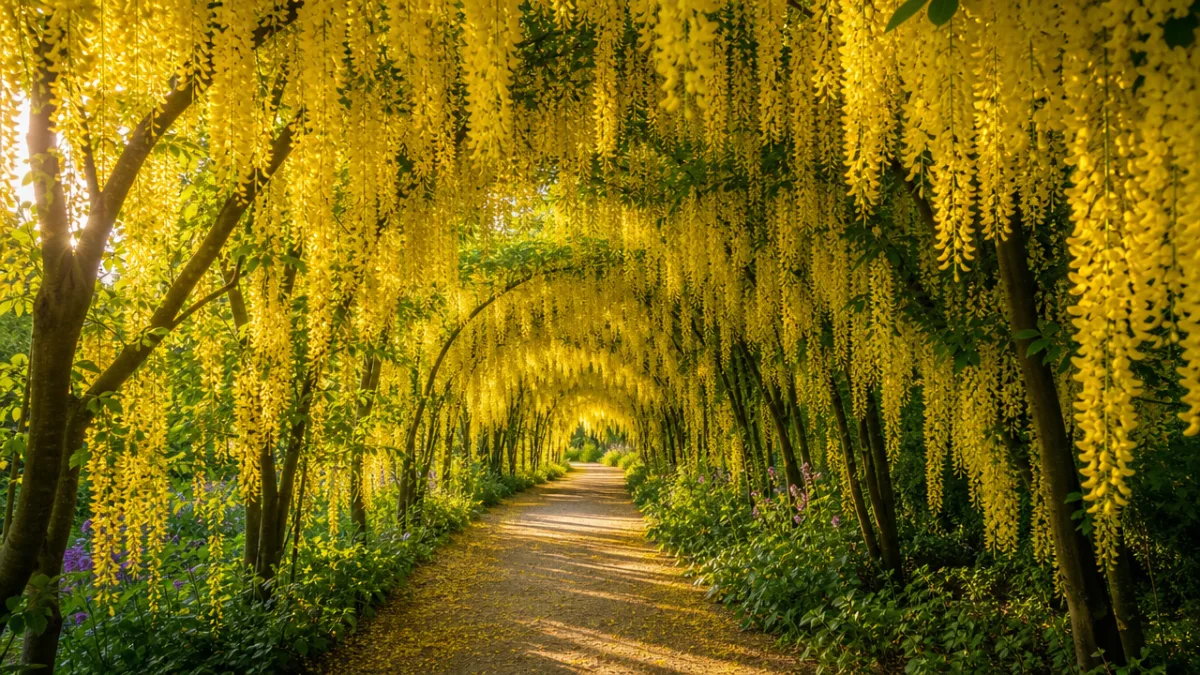
One of the most celebrated ways to display Laburnum in a garden setting is by training it over a pergola or arch to create what is commonly known as a Laburnum tunnel. When the trees on either side of a walkway are trained over a frame and allowed to meet overhead, the effect during flowering season is genuinely breathtaking — visitors walk through what appears to be a tunnel of pure gold. The famous Laburnum Walk at Barnsley House in the Cotswolds and the tunnel at Bodnant Garden in Wales are among the most photographed garden features in the United Kingdom, drawing thousands of visitors each spring. Replicating this effect on a smaller scale in a private garden is well within the reach of an enthusiastic and patient home gardener.
Propagation from Seeds and Other Methods
Growing a Golden Chain Tree from seed is a rewarding if somewhat lengthy process that requires patience and an understanding of the seed’s natural dormancy mechanisms. Laburnum seeds are contained within flat, elongated pods that closely resemble those of garden peas — another reminder of the plant’s leguminous heritage. The seeds themselves are small, hard, and dark brown to black in color when fully ripe. Collecting seeds is straightforward: allow the pods to mature on the tree until they begin to turn brown and papery in late summer or early autumn, then harvest them before they split open and scatter their contents on the ground.
The critical step in successfully germinating Laburnum seeds is scarification, a process that mimics the natural weathering that seeds would experience in the wild before germinating in spring. The seed coat is extremely hard and impermeable, and without intervention it can prevent water absorption for months or even years. To scarify Laburnum seeds at home, you can either gently nick the seed coat with a sharp knife or piece of sandpaper, being careful not to damage the embryo inside, or soak the seeds in hot (not boiling) water for twelve to twenty-four hours. Both methods have proven effective and significantly improve germination rates compared to unscarified seeds sown directly.
After scarification, the seeds benefit from a period of cold stratification lasting four to six weeks, which breaks the dormancy cycle and triggers the germination response. Place the prepared seeds in a sealed bag with slightly moist vermiculite or peat moss substitute and refrigerate them at temperatures between thirty-three and forty degrees Fahrenheit. Following this cold treatment, sow the seeds in a well-draining seed-starting mix, cover them lightly to a depth of about half an inch, and maintain consistent moisture in a location with gentle warmth. Germination typically occurs within two to four weeks under these conditions. Seedlings grow fairly quickly in their first season but will require several years of patient cultivation before they reach flowering maturity.
Alternative Propagation Techniques
While seed propagation is deeply satisfying, it does come with one significant caveat: seedlings grown from seed may not always faithfully reproduce the characteristics of the parent plant, particularly in hybrid cultivars like ‘Vossii’. For gardeners who wish to propagate a specific named variety, vegetative propagation methods are far more reliable. Hardwood cuttings taken in late autumn or early winter, typically eight to twelve inches in length, can be rooted in free-draining compost in a cold frame. Success rates vary, but the method is low-cost and requires minimal equipment beyond patience and a sheltered position protected from hard frosts.
Grafting is the propagation method of choice used by most professional nurseries to produce named Laburnum cultivars reliably at scale. Young stock plants of Laburnum anagyroides grown from seed are used as rootstocks, and scions of the desired cultivar are grafted onto them using either whip-and-tongue or chip budding techniques. This approach guarantees that the resulting trees will flower true to type while benefiting from a well-established and vigorous root system. Home gardeners with some grafting experience can attempt this technique in early spring just as the buds begin to swell, though the learning curve is steeper than for cuttings or direct seeding.
Toxicity, Safety, and Responsible Cultivation
Any responsible discussion of Golden Chain Trees must address one of their most important characteristics openly and without minimizing it: every part of the Laburnum plant is poisonous. The primary toxic compounds are quinolizidine alkaloids, predominantly cytisine, which acts on nicotinic acetylcholine receptors in a similar fashion to nicotine. The seeds contain the highest concentration of this compound, followed by the bark, leaves, and flowers. Ingestion of even a relatively small quantity of seeds can cause serious illness in children, dogs, horses, and other animals, with symptoms including nausea, vomiting, convulsions, and in severe cases, respiratory failure.
Despite this toxicity, Laburnum has been widely and successfully grown in gardens throughout Europe and North America for well over a century, including in gardens frequented by children. The key to safe cultivation lies in informed management rather than outright avoidance. Choosing the hybrid cultivar Laburnum × watereri ‘Vossii’ is the single most effective mitigation strategy for those concerned about seed toxicity, as this variety produces very little viable seed compared to its parent species. Promptly removing developing seed pods before they mature is another practical measure that reduces the availability of the most toxic plant material, though this is admittedly a labor-intensive solution in a large garden with many trees.
Education and supervision remain equally important tools, particularly in gardens used by young children or pets. Teaching children about plant safety generally — including the principle that they should never eat berries, seeds, or pods from garden plants without adult confirmation that they are safe — is valuable far beyond the Laburnum context. Many beloved and common garden plants, including foxgloves, delphiniums, and lily of the valley, carry their own toxic compounds. The goal is not to strip gardens of beautiful plants but to cultivate an awareness that respects both natural beauty and biological reality. Position Laburnum where seed pods fall in a location that can be monitored, and clean up fallen pods promptly to minimize risk.
Historical and Cultural Context of Laburnum Toxicity
Historically, the toxicity of Laburnum was well known in European folk medicine and agricultural tradition long before it was characterized chemically. Farmers were aware of its dangers to livestock and took care to prevent grazing animals from accessing it in hedgerows and woodland edges. Paradoxically, cytisine — the primary toxic alkaloid — has attracted significant modern scientific interest as a potential smoking cessation aid, owing to its structural and pharmacological similarity to nicotine. Several clinical trials conducted in Eastern Europe, where cytisine-based treatments have been in use for decades, have shown promising results, and the compound is now being investigated more broadly in Western medicine as an affordable alternative to synthetic nicotine replacement therapies.
Pruning, Maintenance, and Long-Term Care
One of the appealing qualities of the Golden Chain Tree for busy gardeners is that it requires relatively modest maintenance once established. In its early years, formative pruning is important to develop a strong framework of well-spaced branches and to establish the overall shape you wish the mature tree to take. This is best done immediately after flowering has finished, typically in late spring or early summer, to allow the plant the maximum time to put on growth and develop buds for the following season. Avoid heavy pruning in autumn or winter, as Laburnum can be susceptible to dieback if large wounds are left exposed to cold and wet conditions.
Established trees need relatively little intervention beyond removing dead, damaged, or crossing branches and tidying up any unwanted suckers that may arise from the rootstock in grafted specimens. If you are maintaining a Laburnum trained over a pergola or arch, more regular attention is required throughout the growing season to tie in new growth, redirect wayward shoots, and remove any stems that have grown in directions that break the desired visual line. For the famous tunnel effect, gardeners typically train the branches inward and overhead during summer, gradually building up a dense canopy that transforms into a golden ceiling of cascading blooms each spring.
Watering requirements for an established Laburnum are modest in all but the driest climates, as the tree has adapted to survive on relatively limited moisture in its native mountainous habitats. Young trees in their first two or three seasons benefit from supplemental watering during dry spells to help their root systems establish, but once settled into their permanent position, they generally manage well without irrigation except in prolonged drought conditions. Feeding is similarly restrained — as a legume, Laburnum can fix atmospheric nitrogen through associations with soil bacteria, reducing its need for nitrogen-rich fertilizers. An annual top-dressing of balanced general fertilizer in early spring is usually sufficient to maintain healthy growth and abundant flowering.
Companion Planting and Garden Design
The intensely yellow color of Laburnum blooms makes it a powerful element in garden composition, and thoughtful companion planting can either harmonize with or dramatically contrast against its seasonal display. One of the most celebrated planting combinations pairs Laburnum with purple alliums, particularly Allium hollandicum ‘Purple Sensation’, which reaches its flowering peak at precisely the same time as the Laburnum blooms in late spring. The bold, spherical purple flower heads rising on straight stems beneath a canopy of hanging yellow racemes create a combination of complementary colors so striking that it has become an iconic pairing in garden design, associated in particular with the plant combinations pioneered at Barnsley House.
For gardens where the Laburnum is freestanding rather than trained, consider the wider seasonal picture when selecting companions. Spring-flowering bulbs such as camassia, blue muscari, and white tulips all combine beautifully with the yellow blooms without competing for attention. As the Laburnum finishes flowering and retreats into its role as a pleasant green-leafed foliage tree, later-blooming perennials such as hardy geraniums, salvias, and nepeta can fill the border with color and interest. The key is to think of the Laburnum as a spectacular but brief star performer and to build the surrounding cast of plants to support and succeed it across the full growing season.
In smaller gardens where space is at a premium, Laburnum earns its place through sheer flowering impact relative to its physical footprint. Unlike many ornamental trees that grow to enormous proportions, a well-managed Laburnum typically reaches fifteen to twenty-five feet in height with a spread of twelve to fifteen feet — substantial enough to make an impression without overwhelming a modest plot. Its graceful, somewhat weeping habit gives it an elegance that works in both formal and informal garden settings. Whether used as a focal point at the end of a path, a specimen tree in a lawn, or one element of a mixed shrub and tree planting, the Golden Chain Tree rewards garden makers who take the time to understand and work with its particular beauty.
Wildlife Value and Ecological Considerations
Despite its toxicity to mammals, the Golden Chain Tree provides genuine ecological value in garden and landscape settings. The flowers are rich in nectar and pollen, making them attractive to a range of bee species during their blooming period. Bumblebees in particular are frequently seen working the flowers, as they are able to access the nectar through the keel of each pea-flower more easily than some smaller insects. Certain specialist bee species with long tongues are especially well adapted to exploiting Laburnum flowers, and in gardens where wildflower resources may be limited in late spring, the tree can provide a meaningful foraging boost at a transitional point in the season between the main flush of spring bulbs and the height of summer perennial flowering.
It is worth noting that while the tree’s ecological value to pollinators is real, it should not be romanticized to the extent that it overshadows the genuine responsibility that comes with growing a plant of significant toxicity. Gardeners who keep chickens, goats, or other small livestock should be particularly cautious, as these animals may browse fallen leaves or pods with potentially serious consequences. The overarching lesson is that the Golden Chain Tree is neither a dangerous plant to be avoided at all costs nor an entirely benign addition to any garden without consideration — it is a plant of great beauty and some responsibility, best appreciated by those who take the time to understand it fully before making room for it in their landscape.








What do you think?
It is nice to know your opinion. Leave a comment.