










Boston Fern Plant (Nephrolepis Exaltata): Care and Growing Guide
Introduction to the Boston Fern
If you’ve ever walked into a room and noticed a gorgeous, feathery plant spilling out of a hanging basket, there’s a good chance it was a Boston Fern. Scientifically known as Nephrolepis exaltata, this is one of the most popular houseplants in the world — and it’s not hard to see why. Those long, arching fronds give any space an instant tropical feel, and the plant has been a home décor staple since the Victorian era, when people couldn’t get enough of showing off enormous specimens in their parlors and drawing rooms.
Beyond looking great, Boston Ferns actually do some useful work. NASA’s Clean Air Study found that Nephrolepis exaltata is one of the better houseplants for pulling common indoor pollutants — things like formaldehyde, xylene, and toluene — out of the air. So if you’re trying to make your home feel better in more ways than one, this plant genuinely pulls its weight.
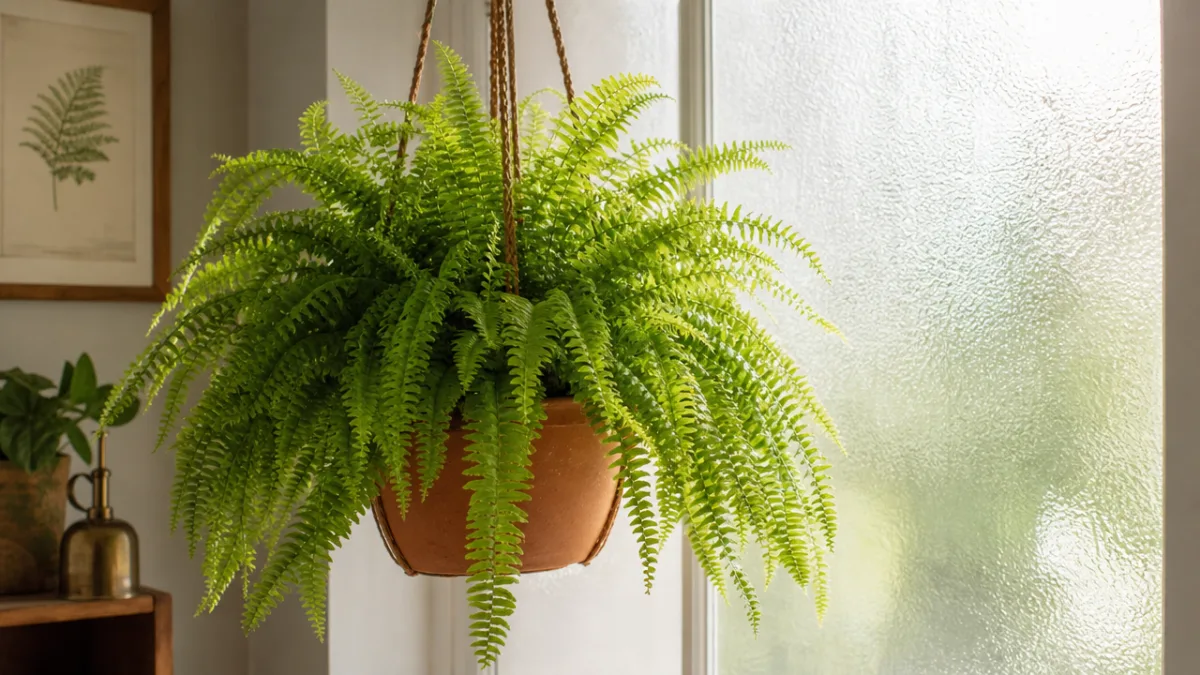
The good news is that despite coming from tropical origins, Boston Ferns are more adaptable than you might expect. They do particularly well in hanging baskets, where those long fronds get to drape and cascade the way nature intended. Whether you’ve been growing plants for years or you’re just getting started, once you understand what this fern actually needs, keeping one healthy and lush for years is very much within reach.
Ideal Growing Conditions and Environment
To give your Boston Fern what it needs, it helps to picture where it comes from. In the wild, these ferns grow on the forest floor or cling to tree trunks, tucked beneath a thick canopy that breaks up the sunlight into soft, shifting patterns. That’s why they do so well in bright, indirect light — direct sun is too harsh and will scorch those delicate fronds. Inside your home, a spot near an east- or north-facing window tends to hit the sweet spot, offering gentle, consistent light without the intensity that would do more harm than good.
Temperature-wise, Boston Ferns are happiest somewhere between 60°F and 75°F (15°C to 24°C). They don’t handle extremes well — cold drafts, hot air blasting from a radiator, or the constant dry chill of air conditioning can all stress the plant quickly. Keep it away from exterior doors, heating vents, and AC units. And in winter, watch out for windowsill placement — glass panes can get surprisingly cold, and fronds resting against them may end up damaged.
Humidity is probably the single biggest factor in whether your Boston Fern thrives or slowly declines, and it’s also the thing most people overlook. These plants evolved in environments with consistently high moisture in the air, and they really feel it when indoor air gets dry. The telltale signs are browning leaf tips and fronds dropping off. To give your fern the humid conditions it’s after, try grouping it with other moisture-loving plants, setting the pot on a pebble tray filled with water, or running a small humidifier nearby. Any of these approaches can make a noticeable difference.
Watering Your Boston Fern
Getting the watering right is one of the trickier parts of Boston Fern care, but once you have a feel for it, it becomes second nature. These ferns want soil that stays consistently moist — but “moist” and “waterlogged” are very different things. Letting a fern sit in soggy soil is a fast track to root rot, which is one of the most common ways houseplants die. A simple approach that works well: water thoroughly whenever the top inch of soil feels dry, and make sure excess water can drain freely out the bottom of the pot.
The type of water you use matters more than most people realize. Boston Ferns can be sensitive to the fluoride and chlorine in tap water, and over time that can show up as browning leaf tips. One easy fix is to fill a jug with tap water and leave it uncovered overnight — that lets the chlorine dissipate before you water. Rainwater is even better if you can collect it; plenty of plant lovers swear by it for ferns specifically. Either way, try to use lukewarm water rather than cold, since chilly water can be a shock to the roots.
Your watering schedule should shift with the seasons. In spring and summer, when the plant is actively growing, it’ll need water more often. Come autumn and winter, growth slows down and the plant simply doesn’t need as much. Watering too frequently during the cooler months is a common mistake that leads to oversaturation. Some growers also like to lightly mist the fronds on dry days, which can help maintain surface humidity — just keep in mind that misting is a supplement to proper root watering, not a substitute for it.
Soil, Potting, and Fertilization
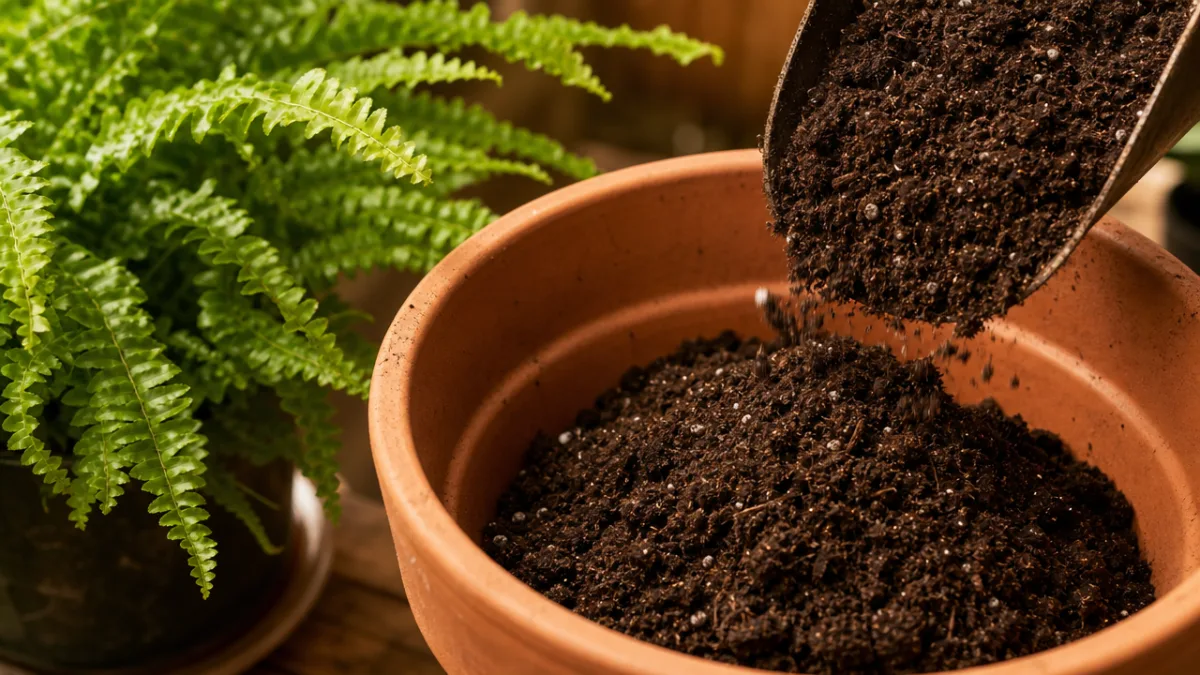
The best potting mix for a Boston Fern holds onto some moisture while still letting excess water drain away — that balance is key. A rich, peat-based mix blended with perlite or coarse sand works really well. Most commercial potting mixes made for ferns or tropical plants will do the job right out of the bag, though mixing in a bit of well-composted bark can improve the structure and give the roots something to appreciate over time.
Plan on repotting every year or two, or sooner if the plant looks cramped — roots circling the inside of the pot or poking out the drainage holes are your cue. Spring is the best time to do it, right as the plant gears up for its most active growth period. When choosing a new pot, go just one size up from the current one. It might be tempting to give the plant lots of room to grow, but an oversized pot holds too much moisture around the roots and raises the risk of rot. Always use a pot with drainage holes, and if your space tends to be on the humid side, terracotta pots are worth considering — the porous material helps pull excess moisture away from the soil.
Fertilizing is straightforward: a balanced, water-soluble fertilizer diluted to half strength, applied once a month from spring through early fall, gives the plant what it needs without overdoing it. Look for something with roughly equal parts nitrogen, phosphorus, and potassium, or a product made specifically for ferns and foliage plants. Come winter, skip fertilizing entirely — the plant is resting and can’t make good use of it anyway.
One thing worth knowing is that Boston Ferns are fairly hungry plants by houseplant standards. If yours has been in the same pot for over a year, it may do better with lighter, more frequent feedings rather than occasional large doses. Also, always water your fern before applying liquid fertilizer — putting concentrated nutrients onto dry roots can cause irritation and damage. If you notice leaves yellowing despite decent light and regular watering, that’s often a sign the plant is ready for a feeding.
Pruning, Grooming, and Common Problems
A bit of regular grooming goes a long way toward keeping your Boston Fern looking its best. As the plant matures, older fronds naturally yellow and brown — this is totally normal, and it just means the plant is redirecting energy toward newer growth. Snipping those spent fronds back to the base keeps things tidy and encourages the plant to keep pushing out fresh leaves. Use clean, sharp scissors or pruning shears, and wipe the blades with rubbing alcohol before and after to avoid passing anything between plants.
If your fern has gotten overgrown, leggy, or patchy — especially after a rough winter — a more drastic cut can actually do wonders. Trimming all the fronds back to just a few inches above the soil sounds alarming, but Boston Ferns are tough, and most will bounce back with a flush of fresh, full growth over the following weeks as long as the conditions are right. It’s a great reset for a plant that’s been struggling.
Boston Ferns are susceptible to a handful of common pests and diseases that every grower should be familiar with. The most frequent pest problems include spider mites, scale insects, mealybugs, and fungus gnats. Spider mites thrive in dry conditions and can be identified by the fine webbing they produce between fronds. Mealybugs appear as white, cottony masses at the base of fronds or in leaf axils. The following are practical steps for managing pest infestations:
- Isolate any affected plant immediately to prevent the spread of pests to nearby houseplants.
- Rinse the entire plant thoroughly with a strong stream of lukewarm water to physically dislodge insects from the foliage.
- Apply insecticidal soap or neem oil spray to all leaf surfaces, including the undersides of fronds where pests commonly hide.
- Repeat treatment every five to seven days for at least three weeks to break the pest life cycle completely.
- Improve humidity and air circulation around the plant to create a less hospitable environment for future infestations.
Fungal problems can pop up when a plant stays too wet or doesn’t get enough airflow — you might notice dark spots on the fronds, or the plant wilting even though the soil is moist. Usually, removing the affected fronds, improving drainage, and giving the plant a bit more breathing room is enough to sort things out without resorting to chemical treatments. As with most plant problems, prevention beats cure — keeping the growing conditions dialed in from the start is really the best protection you have.
Propagation and Varieties
One of the genuinely fun parts of growing Boston Ferns is how easily you can make new plants from an existing one. The simplest method is division — when you’re repotting a large, healthy plant, carefully split it into two or more sections, making sure each one has a good chunk of roots and several fronds. Pop each division into its own pot with fresh potting mix, water it well, and find it a warm, humid spot with indirect light. Within a few weeks, you’ll typically start to see new growth coming in as each section settles into its new home.
Boston Ferns also produce stolons — horizontal runners that reach out from the base of the plant and develop little plantlets at their tips. Once a plantlet has grown a small cluster of roots, you can detach it from the parent and pot it up on its own. It’s a method that mirrors exactly how the plant spreads in nature, and there’s something really satisfying about watching it happen. Keep the young plants consistently moist and in a humid spot for the first few weeks after separation, and they’ll usually establish without much fuss.
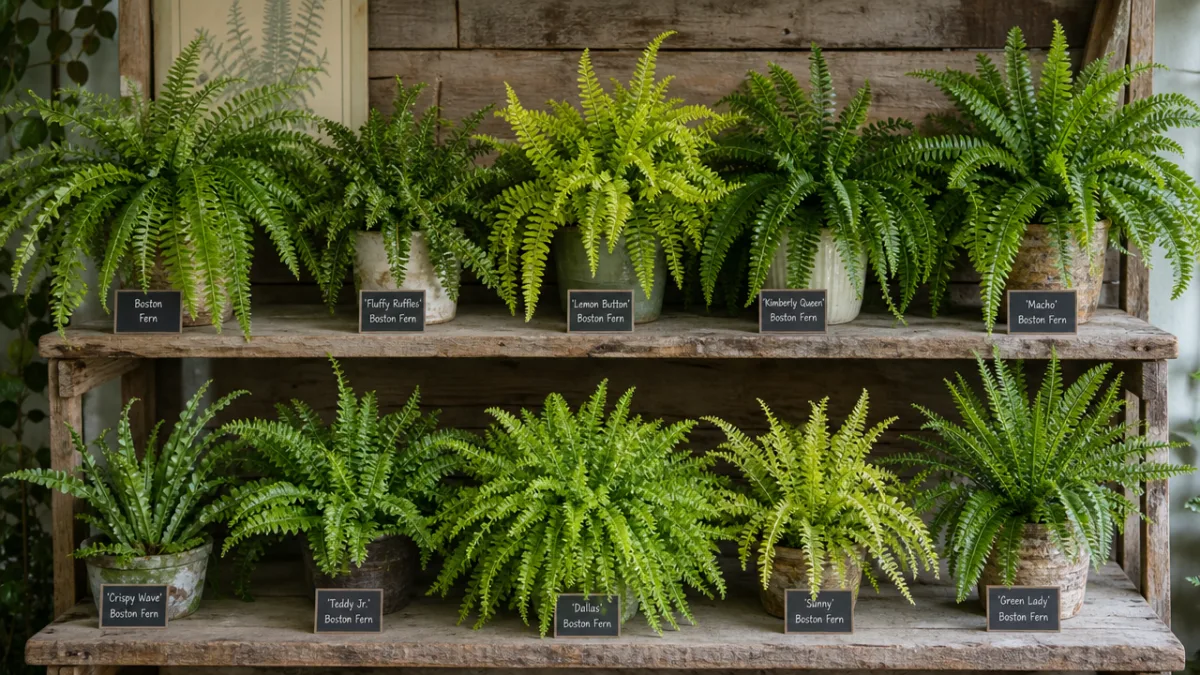
The world of Boston Fern cultivars is surprisingly rich, with numerous named varieties offering subtle and not-so-subtle variations on the classic form. The standard Nephrolepis exaltata ‘Bostoniensis’ remains the most widely available, but enthusiasts may also enjoy exploring varieties such as:
- Fluffy Ruffles — a compact variety with tightly ruffled, densely packed fronds that give it an unusually textured appearance.
- Tiger Fern — notable for its striking yellow-streaked variegation that adds a dramatic contrast to the typical deep green foliage.
- Dallas Fern — a hardy, drought-tolerant cultivar that adapts more readily to lower humidity levels, making it an excellent choice for beginners or those in drier climates.
- Lemon Buttons — a miniature variety with small, rounded pinnae arranged along delicate, compact fronds, ideal for smaller spaces or terrariums.
- Rita’s Gold — distinguished by its golden-yellow fronds, which bring warm color variation to fern collections and contrast beautifully with darker foliage plants.
All of these cultivars follow the same basic care routine as the standard Boston Fern, though some — like the Dallas — are noticeably more forgiving of less-than-ideal conditions. Branching out into different cultivars is a great way to keep things interesting while building on what you already know. Specialty nurseries and online plant shops have really expanded their Nephrolepis selections in recent years, so finding something a little unusual for your collection has never been easier.
Boston Ferns in Interior Design and Outdoor Use
There’s a reason Boston Ferns show up in so many beautifully decorated spaces — they’re just naturally dramatic in the best possible way. A large, well-grown specimen in a hanging basket adds vertical interest and a sense of lush, living abundance that’s hard to replicate with anything else. In rooms with high ceilings, clustering a few Boston Ferns at different heights creates an almost forest-like layering effect that feels both calming and visually rich. They’re the kind of plant that makes a room feel finished.
If you have outdoor space and live somewhere warm enough, Boston Ferns can spend the summer outside — or even grow year-round if you’re in USDA hardiness zones 9 through 11, where frost isn’t really a concern. Shaded porches and patios are ideal spots, offering the filtered light and cooler temperatures these plants love while shielding them from drying wind and harsh afternoon sun. Gardeners in colder climates often make a seasonal tradition of moving their ferns outdoors after the last frost, then bringing them back in before fall arrives, and the plants tend to reward that routine with noticeably lusher growth after a season of warm, humid outdoor conditions.
When it comes to pairing Boston Ferns with other plants, their soft, feathery texture plays really well against bolder leaf shapes — think the glossy leaves of a peace lily, the clean lines of a snake plant, or the dramatic spread of a bird of paradise. That fresh, bright green also works as a natural neutral, complementing flowering plants and colorful foliage specimens without competing with them. Whether you’re using a Boston Fern as a standalone statement or weaving it into a larger plant arrangement, it has a remarkable knack for bringing movement, life, and a sense of natural ease to any space it’s in.








What do you think?
It is nice to know your opinion. Leave a comment.