










Blazin’ Rose Blood Leaf: A Complete Guide to Iresine herbstii ‘Blazin’ Rose’
Introduction to Blazin’ Rose Blood Leaf
The Blazin’ Rose Blood Leaf, known botanically as Iresine herbstii ‘Blazin’ Rose’, is one of the most visually striking foliage plants available to home gardeners and landscape designers alike. With its intensely vibrant, magenta-pink leaves accented by vivid contrasting veins, this cultivar commands attention wherever it is planted. Whether used as a dramatic centerpiece in a container garden or woven throughout a colorful annual border, Blazin’ Rose consistently delivers a bold, tropical statement that few other plants can match.
Iresine herbstii, the parent species, belongs to the Amaranthaceae family and originates from Brazil, where it thrives in warm, humid conditions. Over decades of cultivation and selective breeding, horticulturists have developed numerous eye-catching cultivars, and ‘Blazin’ Rose’ stands out as one of the most vivid and reliable among them. The plant is celebrated for its exceptional heat tolerance, making it an ideal choice for summer gardens in temperate climates where many ornamental plants struggle under intense sun and high temperatures.
Squak Mountain Nursery, a well-regarded Pacific Northwest retail nursery located in Issaquah, Washington, has featured this cultivar prominently among its seasonal offerings. Known for curating high-quality, regionally appropriate plants with an emphasis on unusual and hard-to-find varieties, Squak Mountain Nursery has helped introduce countless gardeners to the joys of growing bold foliage plants like Blazin’ Rose. Their endorsement of this particular cultivar speaks volumes about its reliability, visual impact, and overall garden performance throughout the growing season.
For gardeners who want to move beyond green foliage and introduce genuine drama into their outdoor and indoor spaces, Blazin’ Rose represents an outstanding choice. Its rich, jewel-toned coloration photographs beautifully, attracts admiring comments from visitors, and pairs harmoniously with an enormous variety of companion plants. This guide will walk you through everything you need to know about growing, caring for, and designing with this exceptional plant.
Visual Characteristics and Ornamental Appeal
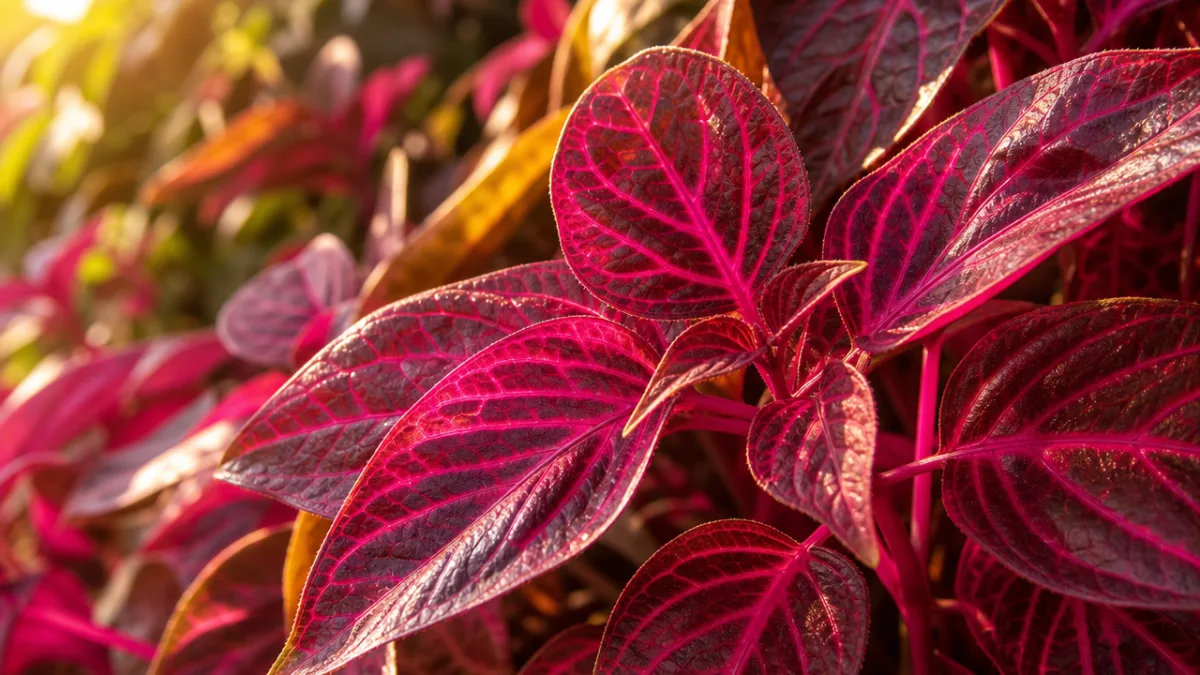
The most immediately arresting feature of Iresine herbstii ‘Blazin’ Rose’ is, without question, its foliage color. The leaves are a deep, saturated rose-magenta that almost appears to glow under full sunlight, creating an effect that landscape designers describe as a “color anchor” — a point of reference that draws the eye and organizes the visual composition of a planting bed. Unlike some plants whose foliage color fades or becomes washed out in intense summer heat, Blazin’ Rose actually intensifies its coloration under bright, direct sunlight, making it more spectacular precisely when other plants are at their most stressed.
Each leaf is broadly ovate, with a slightly waxy surface texture that reflects light in an appealing way. The contrasting veining, typically a brighter pink or nearly white, creates an intricate tracery across each leaf’s surface that gives the plant an almost luminous quality, especially in late afternoon or early morning light. The stems themselves are reddish-pink, reinforcing the plant’s vivid color palette from tip to root. Together, these characteristics create a plant that reads as intensely colorful from a distance while rewarding closer inspection with remarkable fine detail.
Blazin’ Rose grows in a bushy, mounding habit that typically reaches between 12 and 24 inches in height and spreads to a similar width under average garden conditions. With consistent pinching and adequate fertilization, plants can be maintained as compact, dense mounds or allowed to grow somewhat taller and more upright for use as a background element in container plantings. The plant’s naturally tidy growth habit means it rarely requires heavy pruning to look its best, though regular tip-pinching encourages the branching that makes for a fuller, more lush appearance overall.
The textural contrast Blazin’ Rose provides against silver, chartreuse, or deep green foliage is particularly effective. When planted alongside silver dusty miller, bright yellow sweet potato vine, or deep green basil, the rose-magenta of the blood leaf practically vibrates with visual energy. This ability to enhance the colors of surrounding plants makes it an invaluable tool in the hands of a skilled container or border designer.
Growing Conditions and Site Requirements
Iresine herbstii ‘Blazin’ Rose’ thrives in conditions that mimic its tropical Brazilian origins — warm temperatures, bright light, and consistent moisture with excellent drainage. In terms of sun exposure, this cultivar performs best in full sun to partial shade. Full sun, defined as six or more hours of direct sunlight per day, brings out the most intense foliage coloration and promotes the most compact, vigorous growth. In shadier conditions, the plant remains attractive but may display somewhat less vivid color and a slightly more open, stretched growth habit as it reaches toward available light.
Soil requirements are relatively forgiving, provided the growing medium offers both adequate moisture retention and good drainage. Iresine herbstii does not tolerate waterlogged conditions, which can quickly lead to root rot and plant decline. In garden beds, amending heavy clay soils with compost or coarse sand prior to planting will significantly improve drainage and long-term plant health. For container culture, a high-quality all-purpose potting mix amended with perlite at a ratio of roughly three parts potting mix to one part perlite creates ideal conditions for vigorous root development without the risk of waterlogging.
Temperature is a critical consideration when planning for Blazin’ Rose in the landscape. This plant is rated for USDA hardiness zones 10 through 12 as a perennial, meaning it survives winters outdoors only in frost-free climates. In cooler zones, it is grown as a tender annual, planted outdoors after all danger of frost has passed in spring and either composted at season’s end or overwintered indoors as a houseplant. The plant shows no tolerance for frost whatsoever; even a light frost will cause significant damage, while a hard freeze will kill the plant entirely. Gardeners in cooler climates should plan transplanting for late May or early June, when soil temperatures are reliably warm.
Watering practices should aim to keep the soil consistently moist but never saturated. During peak summer heat, container-grown specimens may require daily watering. A helpful rule of thumb is to check the top inch of soil; if it feels dry to the touch, it is time to water thoroughly until water flows freely from the drainage holes. Mulching around the base of garden-bed plantings helps retain soil moisture, moderate soil temperature, and suppress weed competition, all of which contribute to a healthier, more vigorous plant.
Planting, Fertilization, and Maintenance
Establishing Blazin’ Rose successfully begins with proper site preparation and transplanting technique. When moving nursery-grown transplants into the garden, water them thoroughly the day before transplanting to reduce transplant shock. Dig a planting hole roughly twice the width of the root ball and at the same depth, backfill with native soil or a blend of native soil and compost, and firm gently around the roots to eliminate air pockets. Water immediately after planting and again every one to two days during the first two weeks as the plant establishes its root system in its new location.
Fertilization plays a significant role in achieving the lush, vibrant growth that makes Blazin’ Rose such a showstopper. As a foliage plant, it benefits most from fertilizers that are relatively balanced or slightly higher in nitrogen, which supports robust leaf production. Applying a slow-release granular fertilizer at planting time provides a steady nutritional baseline throughout the growing season. Supplementing with a liquid fertilizer every two to three weeks during the active growing season — particularly during periods of rapid growth in early and midsummer — encourages the most impressive foliage display. Avoid over-fertilizing with high-nitrogen formulas, which can produce overly lush but somewhat floppy growth.
Pinching back the growing tips regularly is the single most important maintenance practice for keeping Blazin’ Rose looking its best throughout the season. By removing the top one to two inches of each stem tip every two to three weeks, gardeners encourage the plant to branch laterally, resulting in a denser, more compact, and more floriferous overall form. Without regular pinching, plants can become somewhat leggy and open-centered, particularly in partially shaded locations. Pinching is a quick task that takes only minutes and pays dividends in improved plant appearance for the remainder of the season.
Pests and diseases are rarely serious concerns with Iresine herbstii, which is notably resistant to most common garden pests. Occasionally, aphids or spider mites may appear during periods of heat stress or when plants are grown in insufficiently humid indoor environments. A strong jet of water directed at affected foliage is usually sufficient to dislodge and reduce aphid populations. For spider mites, increasing humidity around indoor plants and applying insecticidal soap according to label directions typically resolves infestations effectively and safely.
- Pinch tips regularly: Every two to three weeks during the growing season to maintain a dense, bushy form and prevent legginess.
- Fertilize consistently: Use a balanced slow-release granular fertilizer at planting and supplement with liquid feed every few weeks throughout summer.
- Water deeply and regularly: Keep soil consistently moist but well-drained, increasing frequency during extreme heat or drought.
- Monitor for pests: Inspect foliage periodically for aphids or spider mites and treat promptly with water jets or insecticidal soap.
- Protect from frost: Move container plants indoors before the first fall frost date in your region to preserve them as houseplants through winter.
Landscape Design Applications and Companion Planting
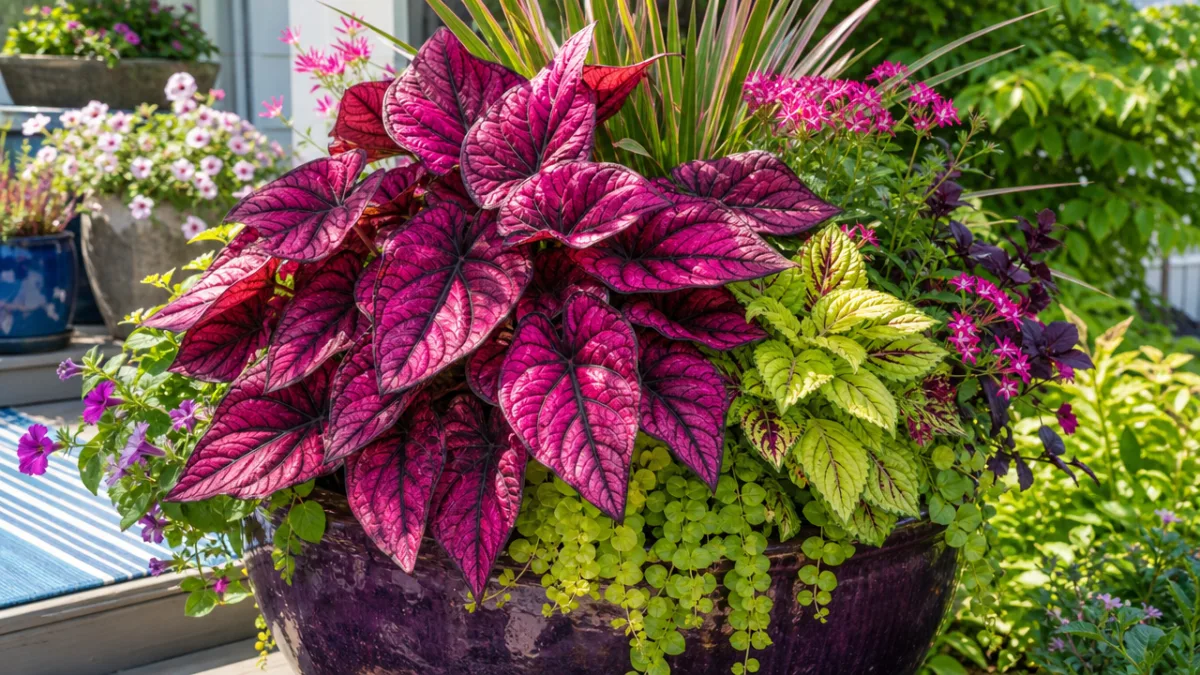
One of the most compelling attributes of Blazin’ Rose Blood Leaf is its extraordinary versatility in the designed landscape. It performs beautifully as a standalone specimen in decorative containers, where its rich coloration makes an immediate impression on a patio, deck, or entryway. In mixed container plantings, it functions as a dramatic “thriller” element in the classic thriller-filler-spiller container design formula, providing the vertical and coloristic focal point around which other plants are arranged. Its consistent color and reliable growth make it a predictable, professional-quality performer in both residential and commercial landscape contexts.
In garden beds and borders, Blazin’ Rose integrates seamlessly into tropical-themed plantings alongside cannas, elephant ears, coleus, and ornamental bananas, where its smaller scale provides a foreground or mid-border element that bridges the gap between towering tropical specimens and ground-level plantings. It also works beautifully in more cottage-inspired settings, where its magenta tones echo the colors of roses, salvias, and zinnias while providing a textural contrast to their floral forms. The key to using Blazin’ Rose successfully in mixed plantings is to treat it as a color anchor and build the surrounding palette around its vivid rose-magenta tones.
Companion plants that pair particularly well with Blazin’ Rose include a wide range of annuals and tropicals selected for complementary or contrasting coloration. Chartreuse-leaved plants create a vibrant complementary contrast: sweet potato vine in ‘Marguerite’ or ‘Lime’ coloration, golden creeping Jenny, and lime-colored coleus all create electrifying combinations. Silver foliage plants such as dusty miller, artemisia, and silver falls dichondra provide a cool, sophisticated contrast that makes the magenta appear even more luminous. Deep purple or near-black foliage from plants like Persian shield, black sweet potato vine, or dark-leaved coleus creates a moody, jewel-toned combination of remarkable depth and sophistication.
For gardeners interested in edible or pollinator-friendly gardens, Blazin’ Rose can serve as an ornamental accent that adds color without competing with food plants for resources. While the plant itself is not edible, its presence attracts few pest insects and does not host common vegetable garden pests, making it a safe and attractive companion for kitchen garden borders. Its bold color also helps identify garden bed boundaries and pathways, serving a functional design purpose alongside its purely ornamental contributions.
- Chartreuse contrasts: Pair with sweet potato vine, golden creeping Jenny, or lime coleus for a vibrant, high-energy combination.
- Silver accents: Combine with dusty miller or silver falls dichondra for an elegant, luminous planting with sophisticated cool-warm contrast.
- Deep purple drama: Juxtapose with black sweet potato vine or dark coleus for a rich, jewel-toned composition of exceptional depth.
- Tropical themes: Use as foreground planting alongside cannas, elephant ears, and ornamental bananas for a lush, exotic garden atmosphere.
- Container thrillers: Position at center or back of mixed containers as the focal element in thriller-filler-spiller arrangements.
Overwintering and Propagation Techniques
For gardeners who fall in love with a particular specimen of Blazin’ Rose and wish to preserve it from year to year, overwintering and propagation offer two excellent pathways. The simplest approach to overwintering is to bring container-grown plants indoors before the first fall frost, placing them in the brightest available window — ideally a south-facing window that receives several hours of direct sunlight — and reducing watering to reflect the plant’s slower winter growth rate. Supplemental grow lights positioned close to the foliage can compensate for insufficient natural light and help the plant maintain its vigorous coloration through the darker winter months.
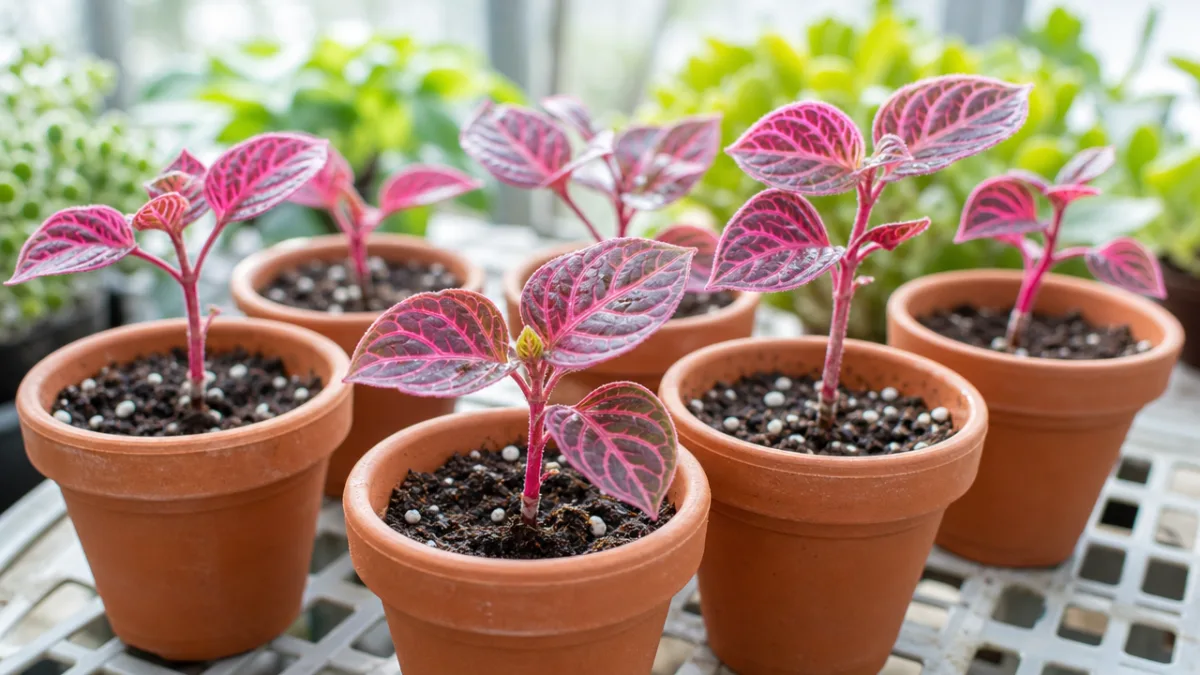
Stem cutting propagation is remarkably straightforward with Iresine herbstii and represents the most reliable method for producing new plants identical to the parent. To take cuttings, select healthy, non-flowering stem tips with at least three to four sets of leaves and snip cleanly just below a leaf node using sharp, sterilized scissors or pruning shears. Remove the lower leaves to expose an inch or two of bare stem, then insert the cutting into a small pot of moistened propagating medium — a 50-50 mix of perlite and peat moss or cocofiber works well. Enclose the pot loosely in a clear plastic bag to maintain high humidity around the cutting and place it in bright, indirect light.
Roots typically develop within two to three weeks under these conditions, at which point the cutting can be gradually acclimated to lower humidity by opening the bag slightly each day over the course of a week before removing it entirely. Once the new plant has filled its initial small pot with roots — visible through the drainage holes or by gently removing the root ball — it can be potted up into a larger container with standard potting mix and treated as a mature plant. This process allows gardeners to take multiple cuttings from overwintered stock plants in late winter or early spring, producing a full supply of new Blazin’ Rose plants for the coming season at essentially zero cost.
Overwintered plants that have grown large and somewhat straggly through the winter months can be cut back aggressively in late winter — reducing them to six inches or so above the soil — to encourage a flush of vigorous, well-colored new growth. This rejuvenation pruning, combined with resuming regular fertilization as day length increases in late February and March, typically results in plants that are ready to return outdoors with excellent vigor and color as soon as warm temperatures arrive in spring.
Where to Find and Purchase Blazin’ Rose Blood Leaf
Squak Mountain Nursery’s featuring of Iresine herbstii ‘Blazin’ Rose’ highlights an important truth about this plant: it is most reliably found at independent specialty nurseries that prioritize unusual and high-performing cultivars over the commodity annuals typically stocked at large home improvement stores. Independent garden centers with knowledgeable staff and a commitment to quality plant selection are the most fruitful places to search for Blazin’ Rose and similar premium foliage plants. Staff at these nurseries can also provide regionally specific growing advice that is invaluable for getting the best results from a relatively unfamiliar plant.
Online mail-order nurseries represent another excellent option for sourcing Blazin’ Rose, particularly for gardeners in areas without access to specialty retail nurseries. Several reputable online plant retailers specialize in tender tropicals and foliage plants and offer Iresine herbstii cultivars, including ‘Blazin’ Rose’, as rooted cuttings or established plants shipped during appropriate planting seasons. When ordering online, timing delivery to coincide with reliably frost-free weather in your area is essential, and inspecting plants carefully upon arrival for signs of shipping stress allows for prompt intervention if needed.
Gardeners who are members of local horticultural societies, plant swaps, or community garden groups often discover that Blazin’ Rose and similar tender perennials circulate enthusiastically through these informal networks. Because the plant propagates so readily from cuttings, gardeners who grow it frequently produce more cuttings than they need and are happy to share. Connecting with local gardening communities through social media groups, master gardener programs, or community garden organizations can be a wonderfully enriching way to discover new plants, share growing knowledge, and acquire specimens like Blazin’ Rose that might otherwise be difficult to locate through conventional retail channels.
Regardless of where you source your Blazin’ Rose plants, selecting healthy specimens with vibrant, richly colored foliage, no signs of pest damage or disease, and a well-developed but not severely root-bound root system will give your plants the best possible start. A plant that looks slightly smaller but healthier at purchase will almost always outperform a larger, stressed specimen within a few weeks of establishment in your garden. Investing a few extra minutes in careful selection at the nursery pays dividends throughout the entire growing season in the form of a more vigorous, more beautiful, and more disease-resistant plant.








What do you think?
It is nice to know your opinion. Leave a comment.