










Acacia: The Radiant Jewel of the Garden World
Introduction to Acacia: Nature’s Golden Treasure
Few plants in the botanical world command attention quite like the Acacia. With its explosively vibrant clusters of golden yellow blooms and feathery, delicate foliage, Acacia has earned its place as one of the most breathtaking flowering plants a gardener can cultivate. Whether you encounter it cascading over a garden wall in the Mediterranean sunshine or standing proudly as a specimen tree in a temperate landscape, Acacia never fails to inspire a sense of wonder and admiration in all who behold it.
The genus Acacia encompasses an extraordinarily diverse family of plants, with over 1,000 recognized species distributed across the globe. From the iconic thornbush of the African savanna to the wattle trees beloved across Australia, Acacia has adapted to an astonishing range of climates and environments. This remarkable adaptability is one of the reasons gardeners and horticulturists have celebrated these plants for centuries, incorporating them into gardens ranging from formal Victorian estates to relaxed, naturalistic landscapes.
Beyond their undeniable visual appeal, Acacias carry deep cultural and symbolic significance across many societies. In Australia, the Golden Wattle — Acacia pycnantha — serves as the national floral emblem, representing resilience and the beauty of the native landscape. In many parts of Africa and the Middle East, Acacia trees have been revered as sacred symbols of endurance and life-giving abundance. This rich tapestry of meaning woven around these plants adds yet another dimension to the joy of welcoming them into your garden.
The Botanical Character of Acacia
Understanding the botanical nature of Acacia is essential for any gardener hoping to grow these magnificent plants successfully. Acacia belongs to the family Fabaceae, the legume family, which means it shares its lineage with plants like peas, beans, and wisteria. Like many of its relatives, Acacia has the remarkable ability to fix atmospheric nitrogen in the soil through a symbiotic relationship with bacteria housed in its root nodules. This biological superpower makes Acacia not only a beautiful garden resident but also a genuine contributor to soil health and fertility.
The leaves of Acacia are among the plant’s most distinctive features. Many species produce bipinnate leaves — elegantly divided into multiple pairs of tiny leaflets that create a soft, feathery appearance reminiscent of ferns. However, in a fascinating evolutionary adaptation, many Australian Acacias have abandoned true leaves altogether in favor of phyllodes: flattened, modified leaf stalks that perform photosynthesis while conserving water. These phyllodes give certain Acacias a sleeker, more structural silhouette that adds bold architectural interest to garden compositions.
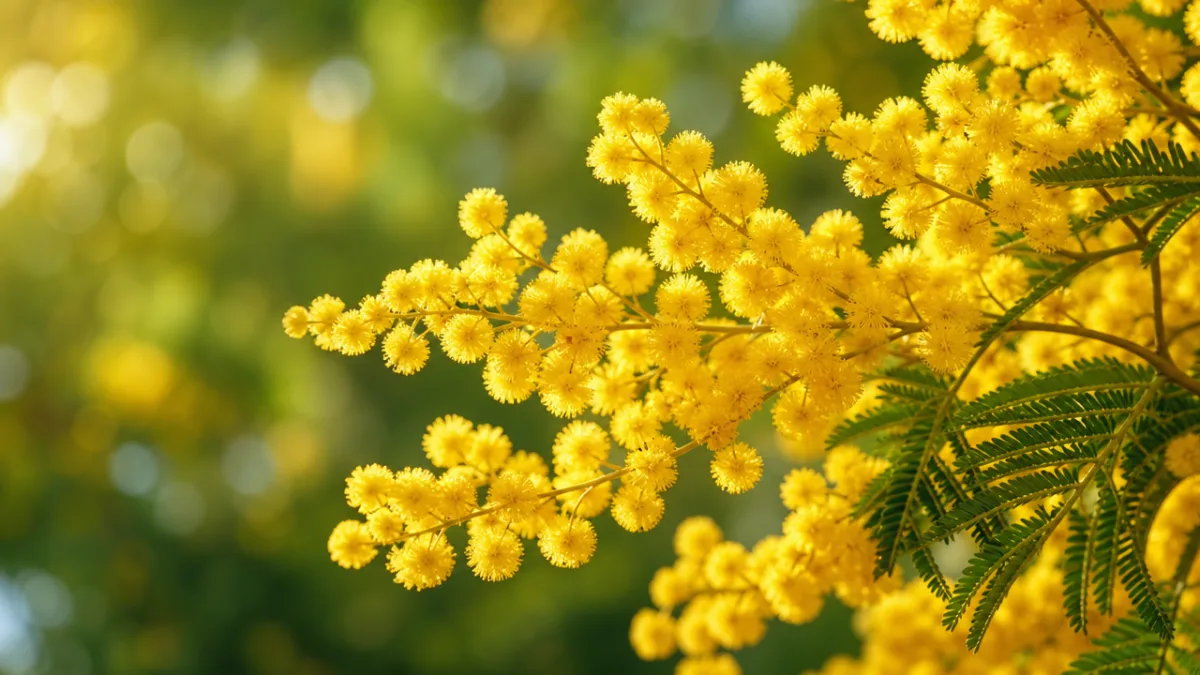
The flowers themselves are the undisputed crown jewels of the genus. Most Acacia species produce tiny individual flowers that are gathered into spherical or cylindrical clusters, creating the characteristic pompom or bottlebrush effect that makes Acacia so visually striking. These flowers are almost universally rich in nectar, making Acacia an exceptional magnet for pollinators including bees, butterflies, and hummingbirds. The sheer volume of bloom a mature Acacia can produce — sometimes thousands upon thousands of individual flower heads — creates a spectacle of color that is difficult to match in any garden planting.
Growing Acacia: Climate, Soil, and Site Selection
Selecting the right growing conditions for Acacia is the foundation of success with these plants. The majority of Acacia species originate from regions with warm, dry summers and mild winters, which means they are naturally suited to Mediterranean-type climates. In practical terms, this translates to a preference for well-drained soils, generous sun exposure, and protection from prolonged hard frosts. Gardeners in USDA hardiness zones 8 through 11 will generally find the widest selection of Acacia species available to them, though some hardier varieties can tolerate zone 7 conditions with careful siting.
Soil quality is an area where Acacia’s legendary toughness truly shines. These plants are not merely tolerant of poor soils — they genuinely thrive in them. Sandy, gravelly, or nutrient-poor soils that would defeat many ornamental plants are perfectly suited to Acacia’s needs. Rich, heavy clay soils are far more problematic, as they retain moisture around the roots and can lead to root rot, one of the few conditions that can reliably kill an otherwise robust Acacia. When planting in heavier soils, improving drainage through the addition of grit, raised beds, or mounding can make all the difference between success and failure.
Sun exposure is essentially non-negotiable for most Acacia species. These are plants of open landscapes, evolved under intense sunlight, and they require a minimum of six to eight hours of direct sun daily to perform at their best. Shade causes Acacia to become leggy and sparse in habit, significantly reduces flowering, and weakens the plant’s overall vigor and disease resistance. When selecting a planting site, prioritize the sunniest, most open location available in your garden, ideally with good air circulation that mimics the breezy conditions of the plant’s native habitat.
Planting and Caring for Acacia Through the Seasons
Planting Acacia is best undertaken in spring or early autumn, when temperatures are moderate and the plant can establish its root system without the additional stress of midsummer heat or winter cold. Container-grown specimens are the most readily available form and can be transplanted with relative ease, though it is worth noting that Acacia has a somewhat sensitive tap root system that dislikes excessive disturbance. Handle the root ball carefully during planting, position the crown at or just above the surrounding soil level, and water in thoroughly to settle the soil around the roots.
Once established — typically after the first full growing season — Acacia becomes remarkably self-sufficient and requires minimal intervention to thrive. Irrigation needs are modest; established plants in suitable climates often require no supplemental watering at all beyond natural rainfall. During prolonged drought conditions, a deep, infrequent watering every two to three weeks will sustain the plant without encouraging the shallow root development that makes plants more vulnerable to future dry spells. Fertilization is rarely necessary and can actually be counterproductive, as excessive nitrogen encourages lush but weak vegetative growth at the expense of flowering.
Pruning Acacia requires some thought and timing to achieve the best results. Light pruning immediately after flowering helps maintain a compact, attractive shape and prevents the plant from becoming excessively woody and open in habit. Hard pruning is generally inadvisable, as Acacia does not always regenerate reliably from old wood in the way that many other shrubs do. The goal should be to work with the plant’s natural form — whether that is a graceful, arching shrub, an elegant multi-stemmed small tree, or a sprawling ground cover — rather than attempting to impose a radically different shape upon it.
Key seasonal care tasks for Acacia include:
- Spring: Monitor for emerging pest activity, particularly acacia psyllids and spider mites in dry conditions; apply a light top-dressing of well-composted bark mulch around the base of the plant to conserve soil moisture.
- Summer: Ensure adequate drainage during any periods of unusually wet weather; stake young plants in exposed, windy sites to prevent wind rock while roots are still developing.
- Autumn: Carry out any necessary pruning immediately after the late flush of growth hardens off; avoid heavy pruning that would stimulate tender new growth before winter.
- Winter: In marginally hardy areas, protect the base of the plant with a deep layer of straw mulch and consider wrapping young specimens in horticultural fleece during periods of hard frost.
Popular Acacia Species for Garden Use
The vast diversity of the Acacia genus means that there is genuinely a species suited to almost every garden style and climate. For gardeners in temperate regions, Acacia dealbata — the Silver Wattle — is perhaps the most widely cultivated and celebrated species. It produces an extraordinary display of fragrant, brilliantly yellow pompom flowers in late winter and early spring, often when little else in the garden is in bloom. Its silvery-blue, feathery foliage provides year-round interest and complements a wide range of companion plants. Mature specimens can reach impressive dimensions, making Silver Wattle a genuine statement plant for larger gardens.
For smaller gardens or containers, Acacia pravissima — the Ovens Wattle — offers a more compact and manageable alternative without sacrificing any of the genus’s characteristic flamboyance. Its angular stems bearing small, triangular phyllodes create a wonderfully architectural effect that bridges the gap between the ornamental and the sculptural. In late spring, it smothers itself in chains of bright yellow flower clusters that are absolutely irresistible to bees and other beneficial insects. Ovens Wattle is also among the more cold-tolerant species, extending the range of gardens where Acacia can be successfully grown.
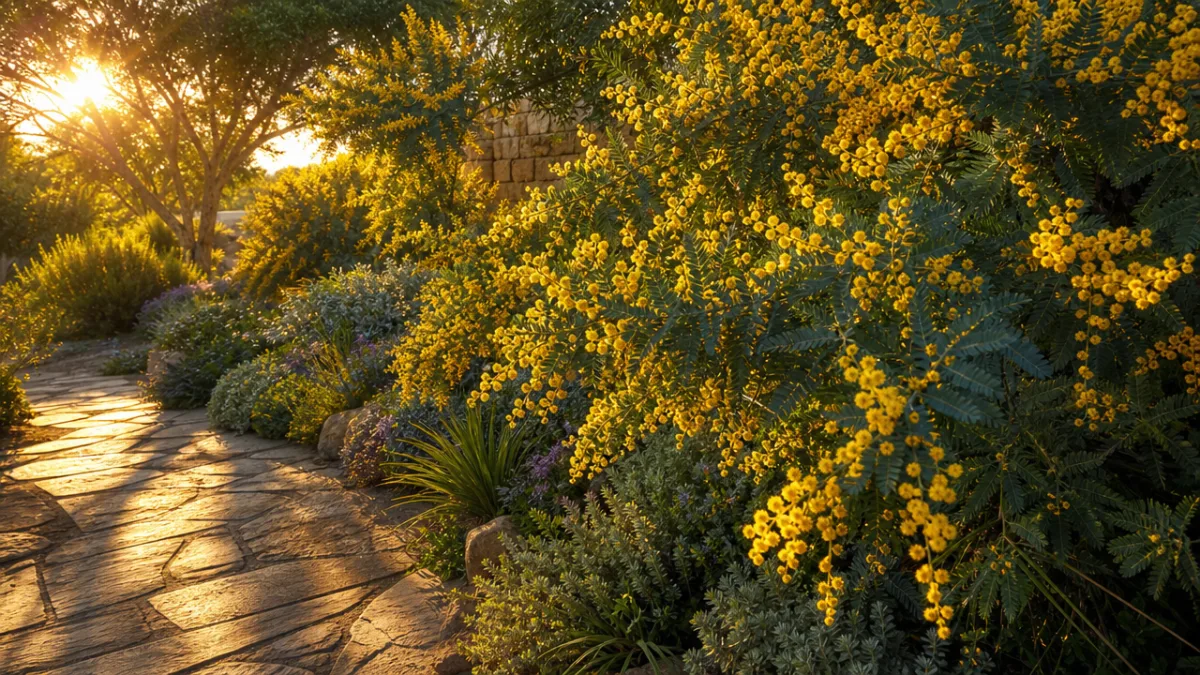
Acacia baileyana — Bailey’s Wattle or Cootamundra Wattle — is another species that has won legions of admirers worldwide. Its intensely blue-gray, finely divided foliage is among the most beautiful in the entire genus, and the contrast between this cool-toned foliage and the vivid golden yellow of its winter flowers is a combination of almost theatrical intensity. A purple-leaved form, Acacia baileyana ‘Purpurea’, adds yet another dimension of color interest, with new growth emerging in rich purple-bronze tones before maturing to blue-green. This cultivar has become particularly popular in contemporary garden design, where its unusual coloring fits seamlessly into planting palettes built around bold foliage contrasts.
Other notable species worth exploring include:
- Acacia cognata — a graceful, weeping species with narrow, willow-like leaves and a pendulous habit that makes it ideal for use as a specimen or screen plant.
- Acacia cultriformis — the Knife-leaf Wattle, prized for its striking, blade-shaped phyllodes and prolific spring flowering.
- Acacia longifolia — the Sydney Golden Wattle, one of the hardiest species, producing long, creamy yellow flower spikes and tolerating a wider range of soil conditions than most.
- Acacia retinodes — the Water Wattle, unusual among Acacias for its remarkably extended flowering season, which in mild climates can continue almost year-round.
Acacia in Garden Design: Composition and Companion Planting
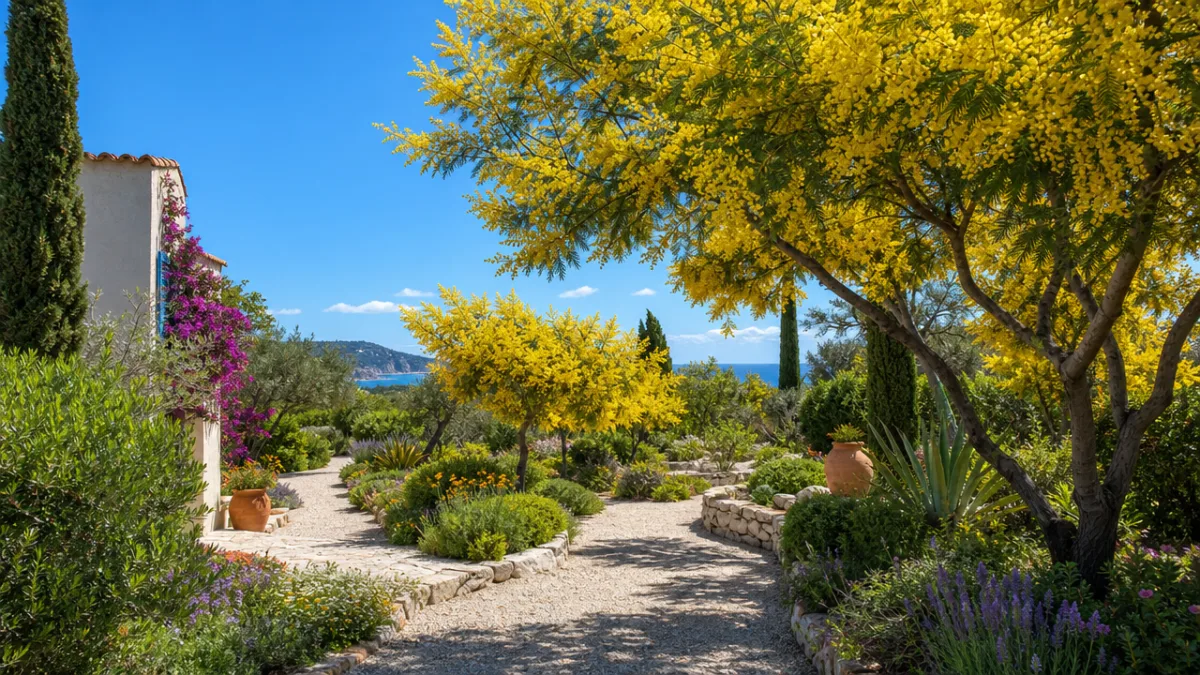
Incorporating Acacia into a garden design calls for an appreciation of both its spectacular seasonal performance and its year-round presence as a structural element. In Mediterranean-style gardens, Acacia is a natural and essential component, working harmoniously alongside lavender, rosemary, cistus, euphorbias, and ornamental grasses to create planting schemes of vibrant color, textural contrast, and ecological value. The silvery and blue-gray foliage tones found in many Acacia species act as sophisticated linking elements that tie together the diverse palette of a mixed border without ever feeling discordant or out of place.
For gardeners interested in wildlife-friendly planting, Acacia is practically indispensable. Its flowers are extraordinarily rich in both nectar and pollen, providing an invaluable early-season food source for pollinating insects at a time when many other plants have yet to come into bloom. The dense, thorny growth habit of certain species also provides excellent nesting and roosting cover for garden birds. Designing a planting scheme that sequences Acacia alongside other early bloomers such as hellebores, mahonias, and winter-flowering heathers creates a continuous wildlife resource that bridges the hungry gap between the end of autumn and the abundance of late spring.
In contemporary and minimalist garden designs, the architectural qualities of Acacia have been embraced enthusiastically by designers seeking plants that offer both visual drama and low-maintenance appeal. The bold silhouette of a mature Acacia, particularly the weeping and phyllode-bearing species, lends itself beautifully to clean, pared-back compositions where each plant is given the space to express its individual character. Used as a solo specimen rising above a sea of gravel or low groundcover planting, Acacia becomes a living sculpture of extraordinary elegance that shifts and changes with the seasons and the quality of light throughout the day.
When choosing companion plants, consider the following pairings that consistently produce outstanding results:
- Acacia dealbata with Pittosporum ‘Tom Thumb’ and blue festuca grass for a bold silver, gold, and blue-green combination with exceptional year-round structure.
- Acacia baileyana ‘Purpurea’ with purple sage, Phormium ‘Bronze Baby’, and yellow-flowered Euryops pectinatus for a richly colored, drought-tolerant scheme.
- Acacia cognata with ornamental grasses, Agapanthus, and low-growing Grevillea for a relaxed, naturalistic Australian-inspired planting.
- Acacia pravissima with Rosmarinus officinalis, Cistus purpureus, and Stipa gigantea for a classic Mediterranean-feel border with excellent pollinator value.
The Ecological and Cultural Importance of Acacia
Acacia’s significance extends far beyond the ornamental garden, reaching deep into ecosystems and human cultures around the world. In the African savannas, Acacia trees form the structural backbone of entire ecosystems, providing shade, food, and habitat for an astonishing diversity of wildlife. Giraffes browse the nutritious leaves from the upper canopy, elephants strip bark and branches, and dozens of bird species nest within the protective embrace of thorny crowns. The trees’ ability to fix nitrogen enriches the soil beneath them, supporting diverse communities of grasses and wildflowers that in turn sustain vast populations of grazing mammals.
In Australia, the relationship between Acacias and the continent’s unique biodiversity is equally profound. Wattle seeds are an important food source for many native birds and mammals, while the flowers support specialized native bees whose evolutionary history is intertwined with that of the plants themselves. Indigenous Australians have utilized Acacia for thousands of years, harvesting seeds as a nutritious food source, using timber for tools and weapons, and employing bark extracts in traditional medicine. This deep, multigenerational relationship between human communities and Acacia speaks to the plant’s fundamental importance as a provider and sustainer of life.
On a global scale, Acacia species are increasingly recognized as valuable allies in the fight against land degradation and desertification. Their ability to thrive in poor, dry soils while actively improving soil fertility through nitrogen fixation makes them ideal pioneer species for restoration planting in degraded landscapes. Organizations working on reforestation projects across sub-Saharan Africa, the Middle East, and South Asia have incorporated Acacia into their programs with considerable success, finding that these tough, adaptable plants can begin the slow process of rebuilding soil health and biodiversity in even the most challenging environments. In this sense, the beauty of Acacia in a garden is merely the visible expression of a far deeper ecological generosity.
The commercial uses of Acacia are equally impressive and wide-ranging. Gum arabic, derived from Acacia senegal and Acacia seyal, is an essential ingredient in food production, pharmaceuticals, and printing inks. Acacia timber, notably that of the Black Wattle, is prized for its hardness and durability in furniture-making and construction. Tannins extracted from Acacia bark are used in leather production, while various species yield essential oils valued in perfumery and aromatherapy. Even the flowers themselves have found commercial application, with Acacia absolute — an intensely fragrant extraction — appearing in some of the world’s most celebrated perfumes. This extraordinary versatility is a final reminder that in welcoming Acacia into a garden, one is cultivating a plant of truly global importance and enduring human value.








What do you think?
It is nice to know your opinion. Leave a comment.