










Beautiful Cottage Garden From Above: A Bird’s-Eye View of Nature’s Most Enchanting Spaces
The Magic of Viewing a Cottage Garden from Above
There’s something almost magical about looking down at a cottage garden when it’s in full bloom. Whether you’re peering out from an upstairs window, standing on a raised terrace, or scrolling through an aerial photo, what seemed like a cheerful, carefree tangle of plants suddenly reveals itself as something far more deliberate and breathtaking. That bird’s-eye perspective turns an ordinary garden visit into something closer to standing in front of a painting — and it connects you to a long, rich tradition of garden design that stretches back centuries.
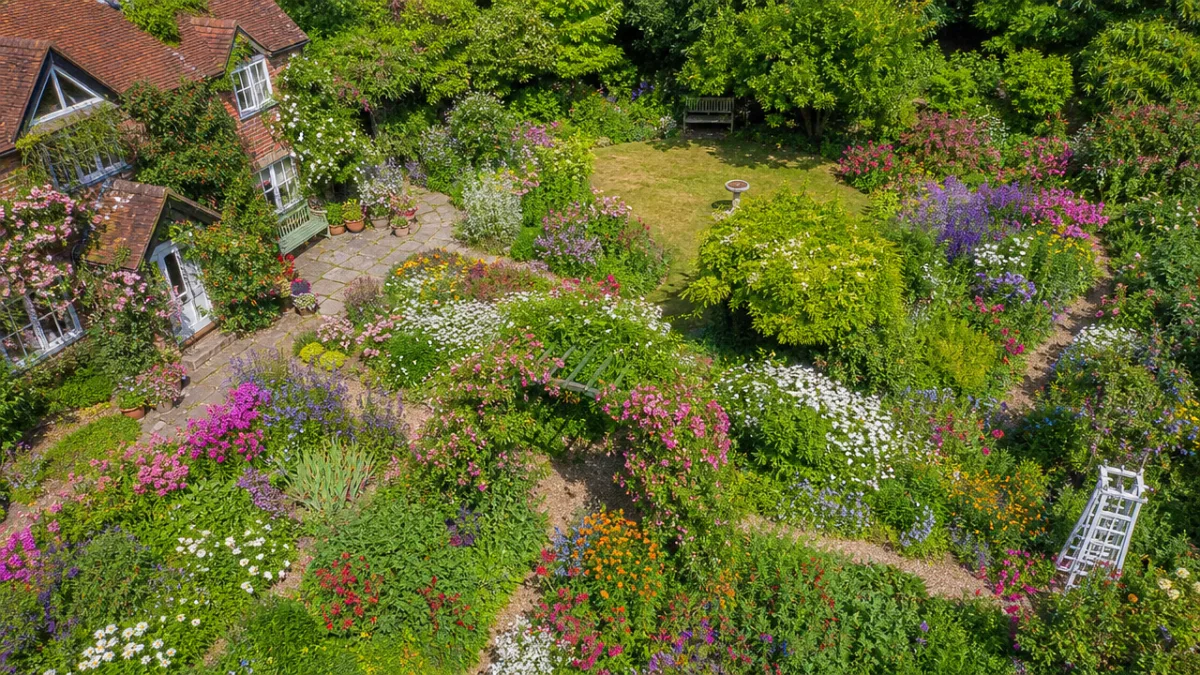
Cottage gardens have always been loved for their romantic, loosely-structured style, but you really only grasp their full genius when you look at them from above. What feels like a happy jumble of blooms at eye level turns out, from a higher vantage point, to follow a surprisingly sophisticated logic — color transitions, shifts in height, carefully considered seasonal rhythms. The gardener’s hand becomes visible in a whole new way: the climbing roses guided over an arch, the lavender planted in generous sweeps, the foxgloves that were allowed to self-seed wherever they pleased. From above, all of that intention suddenly shows.
The aerial view also brings the garden’s structural bones into sharp focus. The winding paths, the shapes of the beds, the anchor plants that hold the whole design together — all the things you might barely notice while you’re wandering through them suddenly snap into clarity. It’s one of the most rewarding ways to understand what actually makes a cottage garden work, and once you see it, you can’t unsee it.
A History Rooted in Necessity and Charm
The cottage garden we know and love today has its roots in medieval England, where rural labourers grew what they needed rather than what looked pretty. Herbs for medicine and cooking, vegetables for the table, fruit trees for preserving — these were the original inhabitants of those small plots. Flowers were welcome, but mostly the useful kind: calendula for healing, roses for rosewater, lavender for freshening linen. Seen from above, those early gardens would have looked far more orderly than their modern descendants — practical rows and patches shaped entirely by need, not romance.
The transformation into the dreamy, overflowing style we cherish today really gathered pace during the Victorian era. Figures like William Robinson and Gertrude Jekyll pushed back hard against the stiff formality of Victorian bedding schemes, championing a more naturalistic way of planting. Jekyll in particular thought about her gardens as composed pictures, and her surviving planting plans — remarkable documents of artistic intent — show exactly how she built up color and form across a space. When you look at those plans from above, you can already see the lush, interlocking quality that defines the most beautiful cottage gardens to this day.
Through the twentieth century and into our own, the cottage garden has been continuously refreshed. The Dutch naturalistic planting movement, associated with designers like Piet Oudolf, introduced grasses and long-season perennials that blended seamlessly with traditional cottage favourites. Today, a drone photograph of a well-made cottage garden might show plants gathered from six continents — yet the whole thing still feels unmistakably rooted in that ancient English tradition of abundance, informality, and genuine love of growing things.
The Plants That Define the Aerial Palette
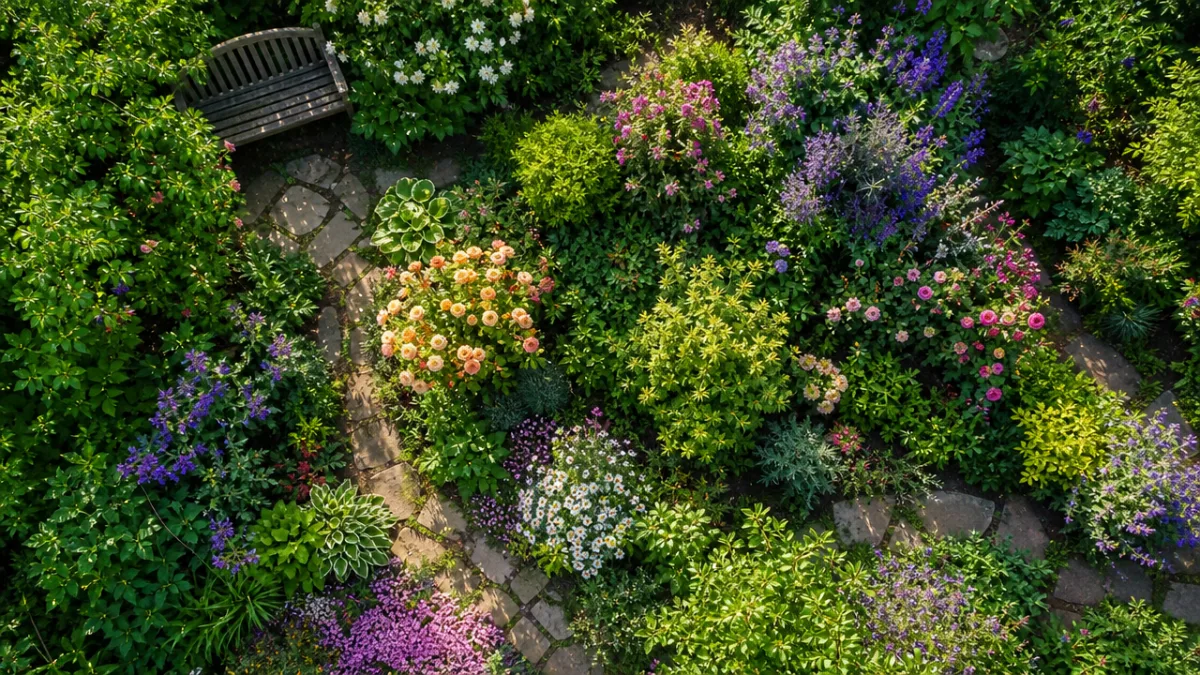
When you start thinking about a cottage garden from above, plant selection becomes almost like choosing colors for a painting. Certain plants are particularly powerful contributors to that overhead view. Roses, especially the open-faced varieties in blush, crimson, or warm apricot, read as generous splashes of color against the greens and silvers around them. A well-placed climbing rose spilling over a pergola or tumbling across a path creates a focal point that pulls the whole composition together when seen from above.
The following plant families are particularly effective in creating the layered, richly textured look that makes cottage gardens so distinctive when seen from above:
- Roses (Rosa): The undisputed stars of the cottage garden, bringing color, fragrance, and structure across many months. Old roses with their many-petalled blooms form dense, jewel-like clusters that are visible from a surprisingly long way up.
- Delphiniums: Those tall spires of blue, purple, and white act like punctuation marks from above — dramatic vertical strokes that break up the horizontal sweep of lower planting with real rhythm.
- Lavender (Lavandula): Planted in generous masses, lavender creates sweeping pools of purple-grey that look stunning from any elevated angle, particularly when clipped into soft mounds along the edges of paths.
- Foxgloves (Digitalis): Because they self-seed and pop up in unexpected places, foxgloves bring a wild, spontaneous energy to the aerial view that no amount of careful planning could manufacture.
- Hardy Geraniums: Low, spreading, and wonderfully obliging, these fill gaps with a woven texture of leaf and flower that reads from above like intricate ground-level embroidery.
- Alliums: From above, their perfectly spherical flowerheads on tall stems look like a constellation of purple or white orbs hovering above the lower planting — one of the most graphic and satisfying elements in any aerial garden photograph.
But it isn’t really about individual plants — it’s about how they’re put together. Experienced cottage gardeners think in drifts and masses, planting three or five of the same variety in a group so their combined effect registers at a distance, rather than dotting single specimens around that look lost when seen from above. And repetition matters enormously: the same lavender variety appearing at intervals along a path, or a particular rose anchoring the corners of each bed, creates the visual rhythm that lifts a group of plants into something that genuinely feels like a designed garden.
Structure, Paths, and the Architecture of Abundance
One of the real revelations of seeing a cottage garden from above is how clearly it exposes the underlying structure — even in gardens that look completely wild and unplanned at ground level. Every successful cottage garden has good bones: a clear framework of paths, beds, and boundaries that gives the planting something solid to run riot over. Looking at a cottage garden from above is a bit like holding a painting up to the light: you can suddenly see the drawing underneath that’s been giving the whole thing its confidence all along.
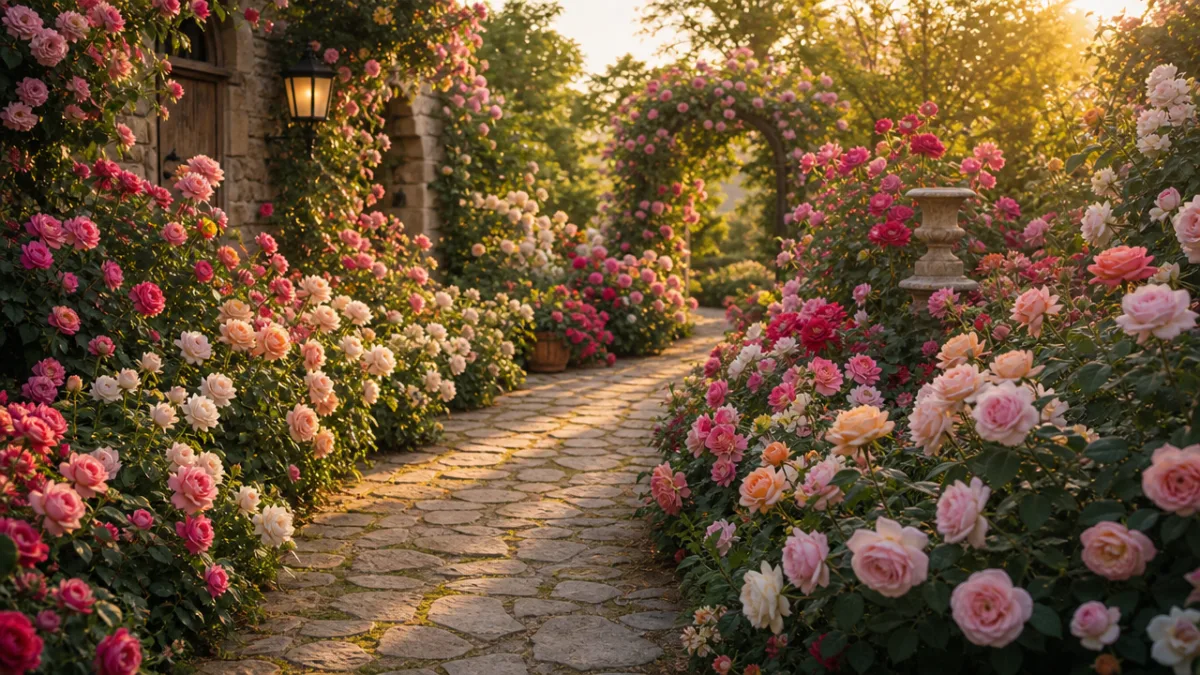
Paths are probably the most important structural element in the aerial view. Whether they’re laid in warm York stone, old brick, gravel, or simply mown grass, they create the lines that divide the space, guide you through it, and give your eye somewhere to rest between areas of dense planting. From above, a curving grass path winding between overflowing beds of roses and perennials makes an irresistibly inviting picture — there’s a sense of mystery to it, of the garden continuing beyond what’s visible, of something good waiting around the next bend. Straight paths have their own appeal, offering a more formal counterpoint to all that exuberance and keeping the composition from tipping over into chaos.
Vertical elements — arches, pergolas, obelisks, trained fruit trees — contribute just as much. An arch smothered in climbing roses, seen from directly above, becomes a dense circular mass of bloom that anchors the path below and creates a clear node of visual interest in the overall plan. Espalier fruit trees trained against walls or fences appear from above as elegant, almost calligraphic lines that bring a quiet architectural quality to what might otherwise be an entirely informal space. The interplay between these vertical structures and the horizontal spread of the planting beds is what gives a great cottage garden that quality of feeling both dynamic and harmonious at the same time — alive, but held together.
Seasonal Transformations: The Garden Through the Year
One of the most compelling things about watching cottage gardens from above is seeing how dramatically they change through the seasons. Unlike a formal garden, where the geometric framework stays more or less constant year-round, a cottage garden’s aerial appearance shifts so profoundly that the same space can look like an entirely different place in January versus July. That seasonal dynamism is one of the deepest pleasures of the cottage garden style, and understanding it changes the way you both make and appreciate these spaces.
Spring brings the first color to the aerial view, usually led by the soft whites and yellows of early bulbs pushing through still-bare earth. Tulips are particularly dramatic from above — their perfect, egg-shaped blooms in every shade from purest white to almost-black scattered across dark soil like spilled jewels. As the season builds, perennial foliage rushes in to fill the gaps, and the aerial view shifts quickly from scattered color against open ground to an increasingly dense, woven tapestry. The moment when the soil finally disappears beneath a continuous canopy of leaf and flower is one of the most exciting transitions in the cottage garden year — you can almost watch it happen week by week.
Midsummer is the aerial high point for most cottage gardens, when roses, delphiniums, geraniums, lavender, and dozens of companions are all going at once in that glorious, almost overwhelming abundance that makes the style so beloved. Autumn brings its own quieter beauty from above — seedheads catching low-angled light, ornamental grasses going amber and gold, late dahlias and asters providing vivid bursts of color amid the general fading. And even winter has something to offer: the architectural forms of clipped box or yew, the tracery of bare rose stems against pale gravel, and the kind of structural clarity that only reveals itself once all the leaves are gone.
Designing Your Own Cottage Garden for the Aerial View
If aerial images of cottage gardens have got you itching to create something with that same visual richness in your own space, there are a few key principles worth holding onto right from the start. The most important is to think at two scales at once — to consider how the garden will feel when you’re walking through it at ground level, but also how it will read as a whole composition when seen from above. These aren’t competing concerns; the best gardens satisfy both, and keeping both in mind from the beginning will save you a lot of frustration later on.
Start with the structural framework, and resist the urge to jump straight into plant lists. Spend real time thinking about path layouts, bed shapes and proportions, and where any vertical features like arches or pergolas will go. Draw your plan from above — a simple hand sketch is completely fine — and ask yourself honestly whether the shapes and lines feel balanced, interesting, and coherent. Think about the experience of moving through the garden: is there a clear way in, a sense of journey, moments of surprise? These spatial qualities, which read so clearly from above, are what give a garden its narrative quality — the sense that it was made by someone who genuinely thought about how it would feel to be in it.
When it comes to planting, lean into generous repetition. Pick a palette of maybe eight to twelve plants that work beautifully together in color, texture, and seasonal timing, and use them again and again throughout the garden rather than trying to squeeze in every beautiful plant you’ve ever loved. That disciplined repetition is what creates the cohesion and rhythm that reads so well from above, separating a truly designed garden from a well-intentioned plant collection. And do let self-seeders like foxgloves, aquilegias, and Welsh poppies establish themselves — their spontaneous appearances add a quality of joyful surprise that no amount of deliberate planting can quite replicate, and from above, those unexpected flashes of color are often the most delightful details in the whole picture.
Finally, make a habit of photographing your garden regularly from the highest vantage point you have — an upstairs window works brilliantly — and use those images as a design tool. Looking at your own garden from above is one of the most effective ways to spot areas that need more structure, notice where the color balance feels off, or identify beds that have become too crowded and need editing. Many experienced gardeners keep a seasonal photographic record exactly like this, and swear by it both for planning future changes and for capturing the fleeting moments of perfection that every garden offers in its own time. The view from above isn’t just a beautiful image — it’s one of the clearest and most honest lenses you’ll ever have for understanding, improving, and genuinely celebrating what you’ve made.








What do you think?
It is nice to know your opinion. Leave a comment.