










Amelanchier lamarckii: The Snowy Mespilus in Full Glory
Introduction to Amelanchier lamarckii
Amelanchier lamarckii, commonly known as the Snowy Mespilus or Juneberry, is one of the most celebrated ornamental trees in European and North American gardens. Belonging to the Rosaceae family, this elegant deciduous tree or large shrub has earned an outstanding reputation among horticulturalists and garden enthusiasts alike for its multi-season interest, graceful form, and remarkable adaptability to a wide range of growing conditions. It is a plant that rewards the patient gardener with spectacular displays in nearly every season of the year.
Originally native to eastern North America, Amelanchier lamarckii was introduced to Europe in the early eighteenth century and has since naturalized extensively across parts of the Netherlands, Belgium, and northwestern Germany. In these regions, it occasionally escapes cultivation and establishes itself in sandy, acidic woodland margins and heathlands, where it thrives with minimal intervention. Its hardiness and adaptability have made it a staple in both private gardens and public green spaces throughout the temperate world, appreciated for its ecological as well as its aesthetic contributions.
The species was formally described and named in honor of the French naturalist Jean-Baptiste de Lamarck, whose contributions to botany and evolutionary theory remain foundational to modern biology. While taxonomy within the Amelanchier genus has historically been complex and often debated, Amelanchier lamarckii is now widely accepted as a distinct species, distinguishable from close relatives by specific leaf characteristics, flower structure, and its notably copper-red young foliage in spring. Understanding this background enriches our appreciation of the tree’s place in botanical history as well as in the contemporary landscape.
Seasonal Beauty and Ornamental Value
Few trees can rival Amelanchier lamarckii in terms of multi-season ornamental appeal. In early spring, typically between March and April depending on the climate, the tree bursts into bloom before its leaves have fully emerged. The flowers are star-shaped, delicate, and pure white, borne in lax, pendulous racemes that drape gracefully over the still-bare branches. This early flowering habit, combined with the simultaneous emergence of silky, copper-bronze young foliage, creates a breathtaking visual contrast that few other trees in the temperate garden can match. The combination of white blossoms against reddish leaves is truly extraordinary.
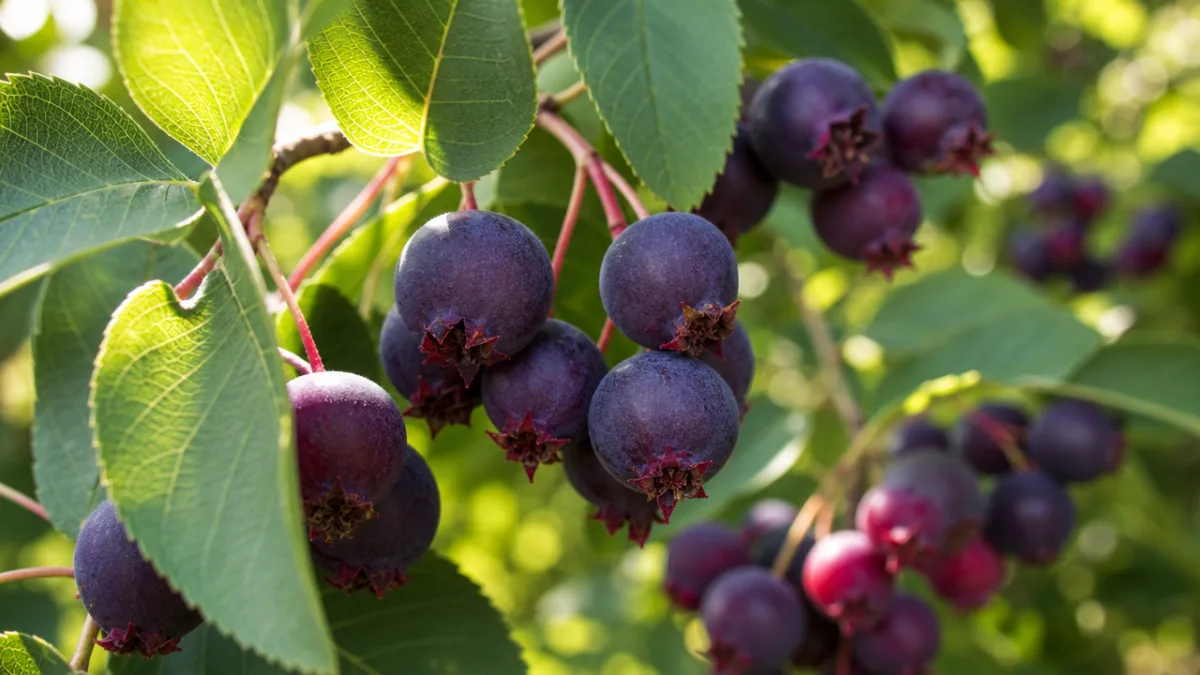
As spring progresses into early summer, the foliage matures to a soft, matte green, providing a lush and calming backdrop to the rest of the garden. By June or July, small berry-like pomes ripen from green through red to deep purplish-black. These fruits, technically classified as pomes similar to apples, are sweet and edible, attracting a remarkable diversity of birds and wildlife to the garden. In North America, these berries have long been valued as a food source by Indigenous peoples and are used in pies, jams, and fresh eating, hence the common name Juneberry or Serviceberry.
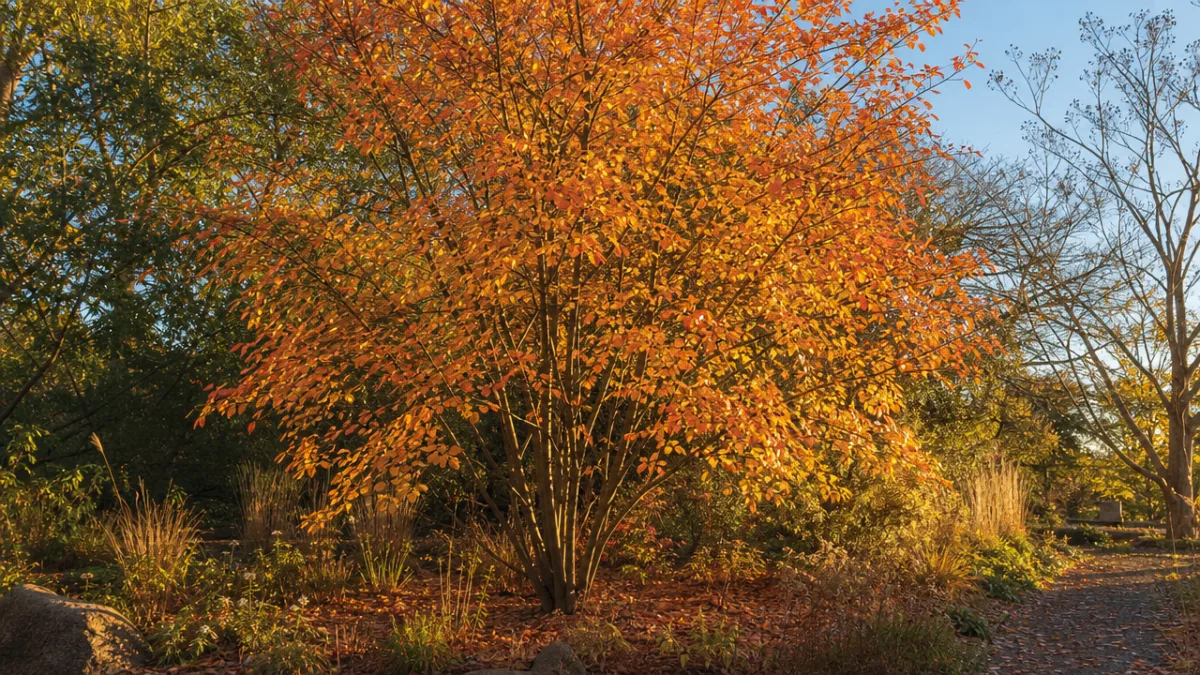
Autumn brings yet another transformation as the foliage turns to spectacular shades of orange, red, and yellow before finally dropping. This autumnal display is consistently ranked among the finest of any deciduous tree suited to temperate climates, making Amelanchier lamarckii a cornerstone planting for year-round garden interest. Even in winter, the tree retains its dignity through a graceful, multi-stemmed or single-trunked silhouette and smooth grey bark that catches the low winter light with understated elegance. This four-season performance is the primary reason the species is so consistently recommended by garden designers.
Growing Conditions and Cultivation Requirements
One of the most appealing aspects of Amelanchier lamarckii from a practical gardening perspective is its tolerance of a wide range of conditions. It grows best in a moist but well-drained soil and prefers a slightly acidic to neutral pH, ideally in the range of 5.5 to 7.0. However, it demonstrates considerable adaptability and will perform reasonably well in heavier clay soils provided waterlogging is avoided, as persistent standing water around the root zone can lead to root rot and a general decline in vigor. Incorporating organic matter into planting holes significantly improves establishment in difficult soils.
In terms of light requirements, Amelanchier lamarckii performs best in a position that receives full sun to partial shade. Full sun positions tend to produce the most prolific flowering and the most vivid autumn color, while partially shaded sites may result in slightly reduced flower density but still produce an attractive display. It is important to note that the tree is remarkably cold-hardy, tolerating temperatures well below freezing and rated for hardiness zones 4 through 8 in the USDA system, making it suitable for cultivation across most of northern and central Europe as well as a significant portion of North America.
Planting is best carried out in autumn or early spring when the tree is dormant or just beginning to break dormancy, allowing the root system to establish before the demands of active growth and flowering begin. Container-grown specimens can be planted at almost any time of year provided they are watered adequately during dry spells in their first growing season. Staking is rarely required for container-grown plants with a well-developed root ball, but bare-root specimens may benefit from a low stake for the first season to reduce wind rock while roots anchor into the surrounding soil.
Pruning, Maintenance, and Tree Care
Amelanchier lamarckii is a generally low-maintenance tree that requires relatively little intervention once established. Pruning, where necessary, should ideally be carried out immediately after flowering in spring to avoid removing the following year’s flower buds and to minimize the risk of fungal infection entering pruning wounds during the wet autumn and winter months. Light formative pruning in the early years of the tree’s life can help establish a clear trunk or a well-balanced multi-stemmed framework depending on the desired aesthetic outcome. Heavy pruning should be avoided, as it can stimulate excessive vegetative growth at the expense of flowering.
The tree occasionally produces root suckers, particularly when grown on its own roots rather than grafted onto a rootstock. These suckers can be removed if a clean single or multi-stemmed specimen is desired, or they can be allowed to develop, gradually producing a broader, more thicket-like form that can serve as a hedgerow feature or wildlife habitat. Grafted plants are less prone to suckering and may produce a more formal tree form, whereas own-rooted plants are typically longer-lived and more vigorous in the long run, especially in favorable soil conditions.
Feeding is seldom necessary in fertile garden soils, but a light mulch of well-rotted organic matter applied around the base of the tree each spring will help retain soil moisture, suppress competing weeds, and provide a slow-release source of nutrients as it breaks down. It is important to keep mulch away from direct contact with the trunk to avoid moisture retention against the bark, which can encourage fungal diseases and physical decay. In particularly poor or sandy soils, an annual application of a balanced granular fertilizer in early spring can support healthy growth and maintain consistent flowering performance year after year.
Ecological Importance and Wildlife Benefits
Beyond its considerable aesthetic virtues, Amelanchier lamarckii plays a meaningful role in supporting garden ecosystems and broader biodiversity. Its early spring flowers, appearing at a time when few other trees are in bloom, provide a critically important early-season nectar and pollen source for bees, hoverflies, and other pollinating insects that have recently emerged from winter dormancy or diapause. This ecological timing is not trivial — early pollinators often face a period of food scarcity known as the “hungry gap,” and trees that bloom reliably in March and April play a disproportionately significant role in supporting insect populations through this vulnerable period.
The fruit, ripening in early to mid-summer, is eaten enthusiastically by a wide range of bird species including blackbirds, thrushes, starlings, waxwings, and various warblers. Because the berries ripen relatively early in summer before many other fruiting shrubs and trees come into production, they represent a valuable and sometimes critical food resource for birds during the breeding season, when the energetic demands of raising young are at their highest. Gardens with established Amelanchier plants often report notably higher bird activity in June and July compared to those without, reflecting the tree’s genuine ecological contribution to urban and suburban wildlife corridors.
In its naturalized range across northwestern Europe, Amelanchier lamarckii has become integrated into heathland and woodland edge communities, where it provides structural diversity at the shrub layer and contributes to habitat complexity for invertebrates, small mammals, and nesting birds. While ecologists occasionally debate the appropriateness of non-native naturalized species in these habitats, the practical wildlife value of Amelanchier in these settings is difficult to dispute. For the garden designer or homeowner seeking to create a genuinely wildlife-friendly planting scheme, it remains one of the most ecologically productive ornamental trees available in the temperate palette.
Landscape Design Applications
The versatility of Amelanchier lamarckii in the designed landscape is one of its most compelling attributes for professional garden designers and amateur enthusiasts alike. It functions beautifully as a specimen tree in a lawn setting, where its full form, seasonal transitions, and relatively modest ultimate size — typically reaching between five and ten meters in height — allow it to be appreciated from multiple angles throughout the year without overwhelming the space. Its moderate growth rate means it reaches a satisfying size within a decade without quickly outgrowing its position, which is a significant practical advantage over faster-growing alternatives.
In mixed shrub and tree borders, Amelanchier lamarckii combines superbly with acid-loving companions such as rhododendrons, azaleas, enkianthus, and fothergilla, which share its preference for moist, slightly acidic conditions and provide complementary flower colors and textures across the season. It also pairs beautifully with ornamental grasses, spring bulbs planted beneath its canopy, and late-flowering perennials that extend the border interest through the seasons when the Amelanchier itself is in a quieter phase. The coppery spring foliage harmonizes particularly well with orange-tinted tulips or the warm gold of Narcissus planted in generous drifts underneath.
Urban planting schemes have increasingly recognized the value of Amelanchier lamarckii as a street tree and amenity planting, particularly in smaller spaces where the proportions of larger canopy trees would be inappropriate. Its non-invasive root system, tolerance of atmospheric pollution, and consistent ornamental performance make it well-suited to urban environments where trees must deliver maximum aesthetic and ecological value within limited growing conditions. The following characteristics summarize why landscape architects consistently specify this species:
- Compact ultimate size suitable for small gardens and urban settings
- Exceptional multi-season ornamental interest across all four seasons
- High tolerance of a range of soil types including clay and sandy soils
- Outstanding ecological value for pollinators and frugivorous birds
- Non-invasive root system compatible with hard landscaping and utilities
- Very high cold hardiness suitable for exposed or northern locations
- Low maintenance requirements once the tree is fully established
The tree also lends itself well to naturalistic and woodland garden styles, where its informal growth habit and wildlife associations align perfectly with the planting philosophy. In these settings, it can be allowed to develop a multi-stemmed clump form, spreading gradually over time and providing a naturalistic understory or woodland edge element that bridges the transition between open garden and denser canopy planting. This flexibility across formal and informal design contexts is rare among ornamental trees and speaks to the genuine design utility that Amelanchier lamarckii brings to the contemporary garden palette.
Varieties, Related Species, and Selection Tips
While Amelanchier lamarckii itself is a superb garden plant, it is worth being aware of several related species and cultivated varieties that may be encountered in nurseries and garden centers, as these offer some variation in size, form, and ornamental emphasis. Amelanchier canadensis, sometimes called the Shadblow Serviceberry, is a closely related North American species with a more strongly upright, suckering habit and slightly later flowering than lamarckii. Amelanchier laevis, the Allegheny Serviceberry, is similar in many respects but distinguished by its glabrous, hairless young leaves and particularly fine autumn color.
Among named cultivars of the broader Amelanchier group, ‘Ballerina’ deserves particular mention as one of the most widely available and consistently performing selections in European horticulture. This cultivar, believed to be a hybrid involving Amelanchier lamarckii, is noted for its large flowers, good fruit set, and outstanding orange-red autumn color. ‘Robin Hill’ is another named selection valued for its pink-budded flowers that open to white, adding an additional dimension of color interest to the standard white-flowered species. ‘Princess Diana’ is prized in North American horticulture for its particularly vivid red autumn foliage.
When selecting an Amelanchier for the garden, it is worth considering whether a single-stemmed tree or a multi-stemmed specimen is preferred, as nurseries often offer both forms and the visual character of the mature plant differs considerably between them. Single-stemmed trees offer a cleaner, more formal silhouette and are better suited to lawn specimens and formal borders, while multi-stemmed clumps provide a more naturalistic character and broader seasonal interest through increased stem density and canopy spread. In either form, Amelanchier lamarckii represents one of the most rewarding investments a gardener can make in a temperate ornamental tree, delivering beauty, ecological value, and reliable performance across decades of garden life.








What do you think?
It is nice to know your opinion. Leave a comment.