










Allium siculum (syn. Nectaroscordum): The Enchanting Sicilian Honey Garlic
Introduction and Botanical Overview
Allium siculum, commonly known as Sicilian honey garlic or honey bells, is one of the most captivating and architecturally striking bulbous perennials available to gardeners today. Long classified under its synonym Nectaroscordum siculum, this remarkable plant belongs to the Amaryllidaceae family and has captured the hearts of gardeners, floral designers, and botanists alike for its extraordinary pendant bell-shaped flowers that dangle from tall, graceful stems. Its unique combination of elegance and structural drama makes it a standout specimen in any planting scheme.
Native to the Mediterranean region, particularly the woodlands and rocky hillsides of Sicily, southern France, and parts of Turkey and Bulgaria, Allium siculum thrives in the kind of dappled, well-drained environments that characterize the scrubby undergrowth of southern European forests. Unlike many of its Allium relatives that prefer open, sunny positions, this species has adapted beautifully to partial shade, making it exceptionally versatile for use beneath deciduous trees and in shaded border situations where other flowering bulbs may struggle to perform.
The plant typically reaches between 60 and 120 centimeters in height when in full bloom, producing slender, keeled leaves at the base that carry a distinctive garlicky scent when bruised — a clear reminder of its Allium heritage despite its reclassification debates among taxonomists. The stems are triangular in cross-section, a botanical trait unique to this genus, and they emerge with a papery sheath that splits dramatically as the umbel of flowers prepares to open, adding another layer of theatrical interest to an already visually compelling plant.
Flower Structure and Ornamental Characteristics
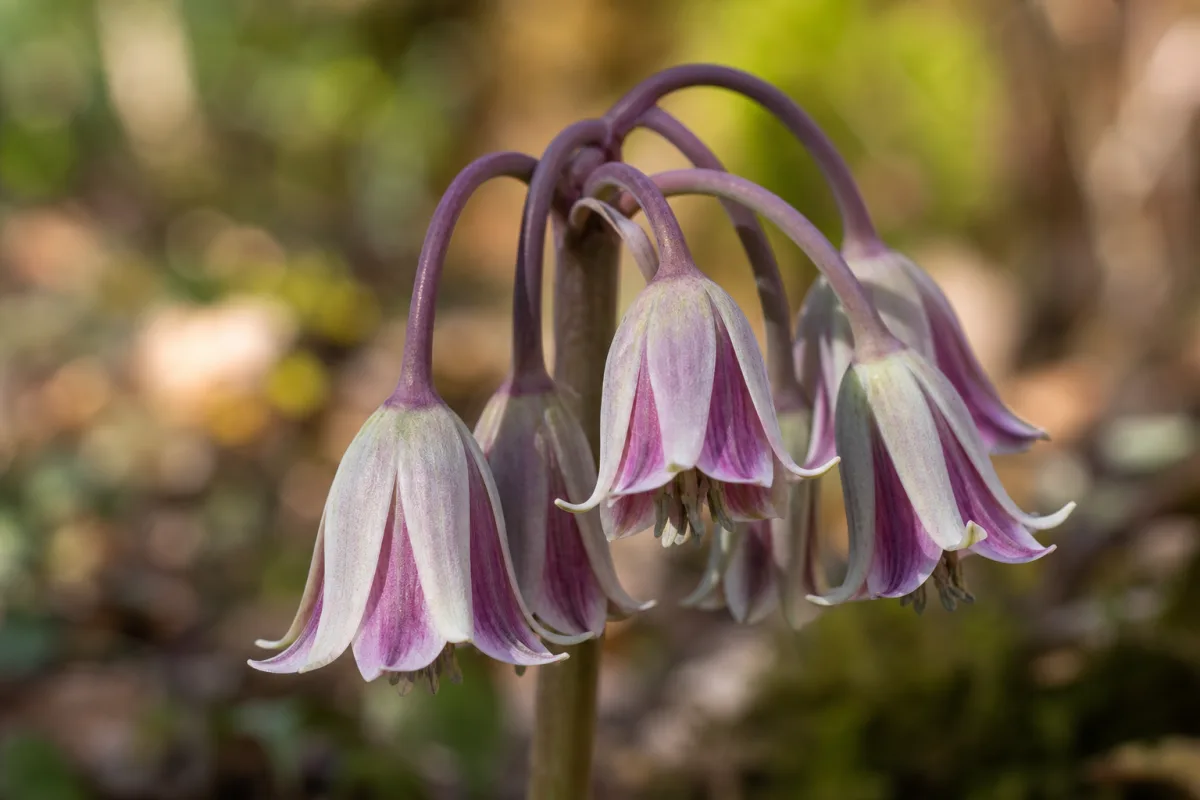
The flowers of Allium siculum are truly in a class of their own within the broader Allium world. Each stem carries a large umbel of 10 to 30 individual florets, all hanging downward in a graceful, pendant arrangement that gives the plant its common name of honey bells. Each individual flower is a delicate pendant bell measuring roughly 1.5 to 2 centimeters in length, coloured in a mesmerizing blend of creamy white, soft green, and dusty rose-pink, with deeper wine-red markings toward the base. This tricolor effect creates a jewel-like quality that catches the eye from considerable distance in the garden.
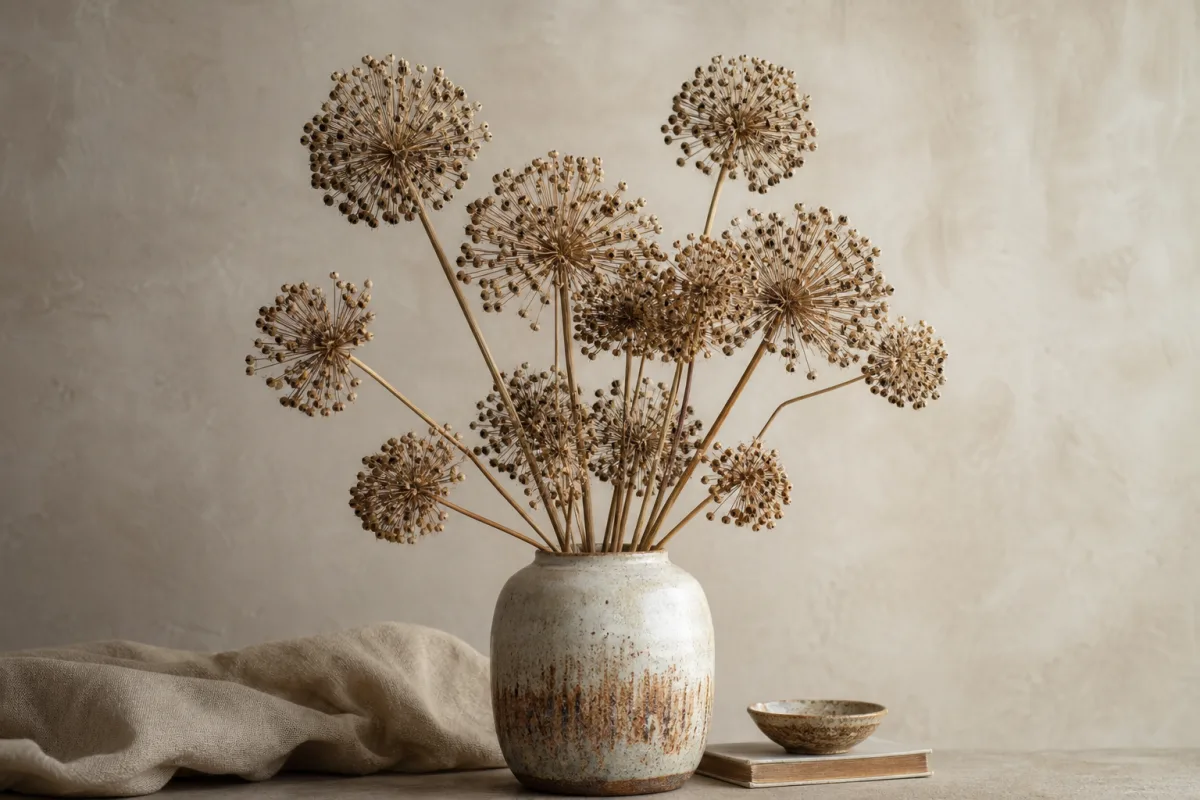
One of the most endearing behavioral traits of Allium siculum is its curious habit of raising its flower heads upward just as the seeds begin to ripen. The florets, which droop elegantly during the blooming period from late spring to early summer, gradually reverse direction and stand erect once pollination has occurred, creating architectural seed heads that are themselves highly decorative. These papery, lantern-like capsules persist on the stems well into autumn, providing months of additional ornamental value and making excellent material for dried flower arrangements.
The color palette of the flowers interacts beautifully with many other garden plants. The soft, muted tones of dusky pink, green, and cream complement blue-flowered perennials such as geraniums, salvias, and alliums with purple globes. They also harmonize wonderfully with the silver foliage of plants like Stachys byzantina and Artemisia, and contrast effectively against the rich burgundy tones of dark-leafed shrubs. Garden designers have long prized this quality, using Allium siculum as a linking plant that knits together disparate color schemes with effortless sophistication.
Growing Conditions and Cultivation Requirements
Allium siculum is a remarkably accommodating garden plant, tolerant of a wider range of conditions than many of its ornamental bulb relatives. It performs best in well-drained soil enriched with organic matter, but will adapt to most soil types provided waterlogging is avoided, particularly during the winter dormancy period. A pH between 6.0 and 7.5 is ideal, though plants grown in slightly acidic woodland soils often thrive equally well. The key is ensuring adequate drainage, as sitting in cold, wet soil during the dormant season is the most common cause of bulb failure.
In terms of light requirements, this species is delightfully flexible. It will flower well in full sun, particularly in cooler climates where summer temperatures remain moderate, but it genuinely excels in partial shade conditions that mimic its native woodland habitat. Planting beneath the canopy of deciduous trees is an especially effective strategy, as the bulbs benefit from the increased light available in early spring before leaf break, and then receive welcome shade during the hotter summer months. This adaptability opens up garden positions that many other flowering bulbs simply cannot occupy successfully.
Planting depth should be approximately three times the diameter of the bulb, typically around 10 to 15 centimeters deep, and spacing of 15 to 20 centimeters allows each clump room to naturalize and expand over time. The bulbs are best planted in autumn, from September through November in the northern hemisphere, to allow root establishment before winter. Like all alliums, Nectaroscordum is largely ignored by deer and rabbits due to its pungent chemistry, making it an excellent choice for gardens in areas where browsing pressure from wildlife is a persistent problem.
Propagation and Garden Management
Allium siculum is one of the most obligingly self-sufficient plants a gardener can choose to grow. Once established in a suitable position, it will naturalize freely by both seed and division, gradually forming generous colonies that increase in visual impact year after year. The plant sets seed prolifically when happy, and the seeds disperse readily around the parent clump, germinating in surprising places and creating that coveted naturalistic, self-sown appearance that characterizes the best informal planting styles. Allowing the seed heads to stand through autumn and winter therefore serves both aesthetic and propagation purposes simultaneously.
For gardeners who wish to propagate more deliberately, division of established clumps is simple and effective. The bulbs can be lifted and divided in early autumn once the foliage has died down completely, typically in late summer. Offsets form naturally around the parent bulb and can be separated and replanted immediately at the appropriate depth. Young bulbs grown from offsets typically reach flowering size within one to two seasons, making this a satisfying and cost-effective way to increase stock. Seeds sown fresh in autumn will germinate the following spring, though they require two to three years to reach blooming size.
Garden management of established plantings is refreshingly minimal. The foliage, which emerges in early spring, may look somewhat untidy as it begins to yellow and die back after flowering, but this process is best tolerated rather than hastened, as the dying leaves are essential for replenishing the energy reserves of the bulb for the following year. Interplanting with late-emerging perennials such as hostas, astilbes, or hardy geraniums is a practical and aesthetically elegant solution, as their expanding foliage naturally conceals the declining allium leaves without competition for root space causing significant problems.
- Plant bulbs in autumn at a depth of 10 to 15 centimeters in well-drained soil
- Allow foliage to die back naturally after flowering to replenish bulb energy
- Divide established clumps every three to four years to maintain vigor
- Leave seed heads standing for ornamental winter interest and natural self-seeding
- Avoid overwatering during summer dormancy to prevent bulb rot
Landscape Design Applications
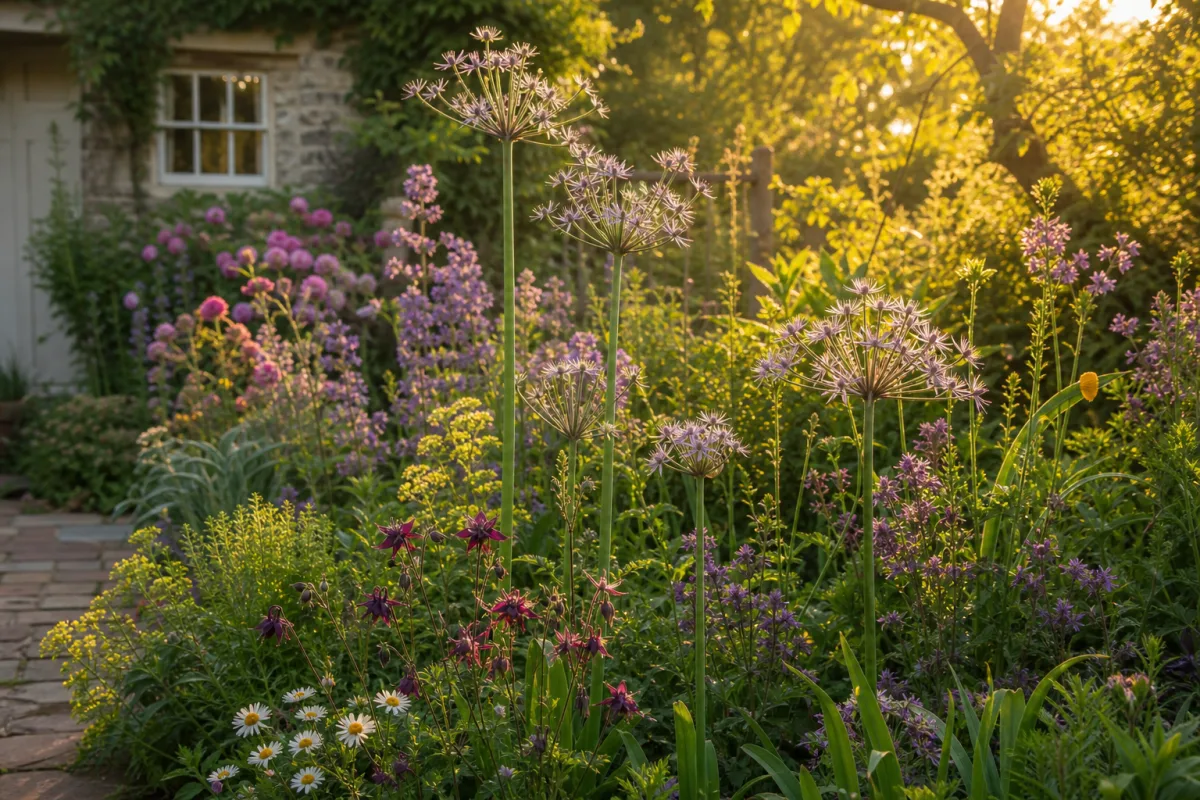
Few plants offer the combination of height, elegance, and naturalistic charm that Allium siculum brings to garden design. In the context of the widely influential New Perennial planting style pioneered by designers such as Piet Oudolf and Noel Kingsbury, this species has become something of a signature plant — one whose airy, transparent quality allows it to be used in generous drifts without ever feeling heavy or oppressive in the planting composition. The tall, slender stems appear to float above lower-growing companions, creating the layered, meadow-like quality that defines this influential aesthetic approach.
In more traditional garden settings, Allium siculum works beautifully in mixed borders where it bridges the gap between the spring bulb season and the full flush of summer perennials. Its late spring to early summer flowering period coincides perfectly with roses, peonies, and early-flowering geraniums, and its cool, muted color palette acts as a sophisticated counterpoint to the more exuberant colors often found in June borders. Used in groups of five to ten bulbs or more, planted in informal drifts rather than rigid blocks, it creates a sense of natural abundance that elevates any border planting.
Woodland gardens and shaded walks represent perhaps the most atmospheric setting for this plant. Naturalized beneath the boughs of ornamental cherries, amelanchiers, or the dappled canopy of an established oak, Allium siculum creates scenes of extraordinary beauty during its peak blooming period. The pendant flowers catch the light filtering through the leaf canopy in a particularly magical way, and the scale of the plant — tall enough to be seen clearly but not so large as to dominate — makes it ideal for creating a sense of layered depth in larger woodland garden compositions.
Companion Planting Suggestions
Selecting the right companions for Allium siculum can elevate a planting scheme from pleasant to truly memorable. Its soft, tricolor palette and vertical habit make it extraordinarily versatile as a companion plant, working with a broad range of perennials, shrubs, and other bulbs. For a naturalistic woodland effect, pairing it with Geranium phaeum, the mourning widow cranesbill, whose deep plum-purple flowers echo the wine-red tones in the allium bells, creates a color combination of understated sophistication. Adding the white-flowered Anthriscus sylvestris ‘Ravenswing’ introduces a contrasting foliage note of dark bronze that further enriches the composition.
In sunnier border positions, Allium siculum combines beautifully with ornamental grasses, whose movement and textural contrast provide a dynamic backdrop against which the structured flower umbels can be appreciated. Stipa gigantea, the golden oats grass, makes a particularly fine companion, its golden, oat-like inflorescences creating a shimmering cloud at roughly the same height as the allium flowers. Lower-growing alliums such as Allium ‘Purple Sensation’ or Allium hollandicum can be planted in the foreground to create a family grouping that extends the interest across a longer season, with the purple globes of the shorter species giving way to the bells of siculum a few weeks later.
For those designing with cutting gardens or productive borders in mind, Allium siculum is an exceptional choice. The flowers are long-lasting in a vase, particularly when cut just as the lower florets of the umbel begin to open, and they hold their architectural quality well as they dry in the arrangement. Combining them with cottage garden favorites such as sweet Williams, foxgloves, and Ammi majus creates fresh, informal bouquets with a distinctly romantic character. The seed heads, harvested once fully formed and hung upside down to dry, make wonderful additions to dried arrangements and everlasting wreaths, maintaining their elegant lantern form for months after cutting.
- Geranium phaeum — echoes the wine-red tones for a cohesive woodland palette
- Stipa gigantea — provides dynamic movement and complementary height
- Rosa ‘Climbing Iceberg’ — creamy white roses amplify the soft color harmony
- Allium ‘Purple Sensation’ — extends the allium season with earlier-flowering purple globes
- Anthriscus sylvestris ‘Ravenswing’ — contributes dark bronze foliage contrast
- Hosta sieboldiana — large leaves conceal dying foliage while adding bold texture
Historical Context and Taxonomic Notes
The taxonomic history of Allium siculum is a fascinating reflection of the ongoing debates within botanical science regarding the boundaries of large, diverse genera. The plant was long classified in the segregate genus Nectaroscordum, established by Lindley in 1826, which was distinguished from Allium primarily on the basis of its triangular stem, pendant flowers, and certain characteristics of the nectaries within each floret. The name Nectaroscordum itself is derived from the Greek words for nectar and garlic, a reference to both the sweet nectar produced by the flowers and the pungent garlicky chemistry shared with its allium relatives.
Modern molecular phylogenetic studies have largely resolved this debate in favor of including Nectaroscordum within Allium, which is the classification followed by most contemporary botanical authorities including the Royal Horticultural Society and Plants of the World Online. However, the old name persists widely in the horticultural trade and in gardening literature, and plants are routinely sold under both Allium siculum and Nectaroscordum siculum with equal frequency. Gardeners searching for this plant in nursery catalogs would be well advised to search under both names to avoid missing available stock, as labeling practices vary considerably between suppliers.
The species has two recognized subspecies that are occasionally distinguished in specialist literature. Allium siculum subsp. siculum is the form native to Sicily and the western Mediterranean, while Allium siculum subsp. dioscoridis is found in Turkey, Bulgaria, and parts of the eastern Mediterranean, and differs primarily in having slightly more pronounced reddish-purple coloring in its flowers. Both subspecies are cultivated ornamentally, and hybrids between them likely account for some of the variation seen in cultivated plants. The name dioscoridis honors Pedanius Dioscorides, the ancient Greek physician and botanist whose first-century work De Materia Medica remained a foundational text in European herbalism for over fifteen centuries.
Ecological Value and Wildlife Benefits
Beyond its considerable ornamental merits, Allium siculum provides genuine ecological value in garden and naturalistic planting contexts. The flowers produce abundant nectar, making them an important resource for pollinators during the late spring and early summer period. Bumblebees are among the most enthusiastic visitors, drawn by both the nectar reward and the accessible structure of the pendant bells, which suit the foraging behavior of longer-tongued species particularly well. Honeybees, solitary bees, and various hover flies are also regular visitors, and on warm sunny days a planting of Allium siculum in full bloom can be alive with pollinating insects in a way that is genuinely impressive.
The long-lasting seed heads that persist through late summer, autumn, and winter provide additional wildlife value beyond the flowering season. Finches, particularly goldfinches, will investigate the papery capsules for seeds, and the structural complexity of the dead stems provides overwintering habitat for small invertebrates. This aligns the plant perfectly with the principles of wildlife-friendly gardening that have gained considerable momentum in recent years, as gardeners increasingly recognize the value of retaining standing dead plant material through the winter months rather than cutting everything back in the traditional autumn garden tidy.
From a broader ecological perspective, the naturalization potential of Allium siculum is worth considering thoughtfully. In the United Kingdom and much of northern Europe, the plant behaves as a perfectly benign garden plant with no invasive characteristics, spreading slowly and predictably in established colonies. Gardeners in these regions can embrace its self-seeding habit without concern. However, as with any non-native bulb, those gardening in regions where the climate closely resembles the plant’s native Mediterranean habitat should remain observant of its spread, particularly near sensitive natural habitats, and manage accordingly to ensure that this beautiful plant remains a garden asset rather than an ecological liability in any local context.








What do you think?
It is nice to know your opinion. Leave a comment.