










The Shoreline Candle: Bringing the Calm of the Coast Into Your Home
The Art and Appeal of Coastal-Inspired Candles
There’s something about the smell of the ocean that just resets you — that mix of salt air, warm sand, and the faint mineral edge of sea glass and driftwood. It’s probably why coastal-inspired candles like the Shoreline Candle have taken off the way they have. Whether you’re lucky enough to live near the water or you’re hours inland dreaming about it, a well-made shoreline candle can pull you out of your day and drop you somewhere quieter — somewhere the horizon is wide and the only sound is waves.
The Shoreline Candle is really more than just a home fragrance — it’s a whole sensory experience, one that’s been carefully put together to create a specific feeling. What sets it apart from your average “ocean” or “aquatic” scent (which often smell a bit flat or artificial) is the layering. The top notes open with sea spray and a hint of citrus, the middle settles into driftwood, warm sand, and white musk, and the base drifts toward something almost meditative — amber, soft vetiver, a little sun-bleached wood. It shifts as it burns, the way the beach itself changes throughout the day.
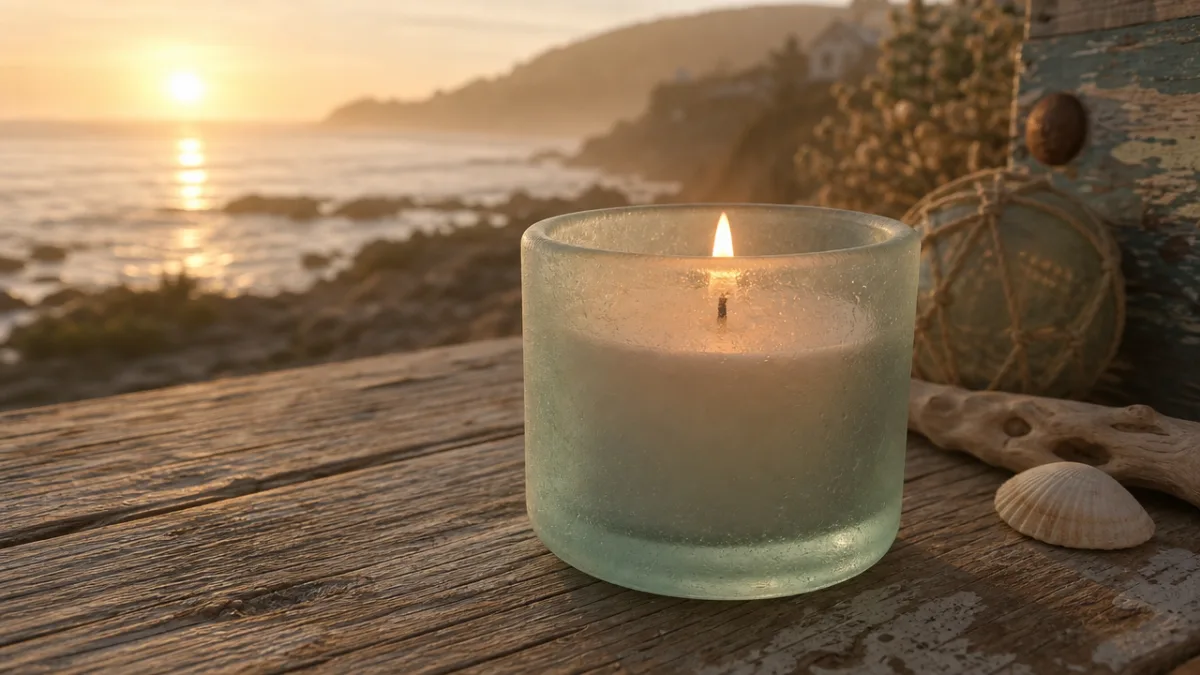
Coastal aesthetics have always had a hold on interior design, and the candle world is no different. People want things that look as good as they smell, and the Shoreline Candle delivers on both fronts. The vessels it comes in — frosted glass, sea-glass green, raw concrete — feel right at home in a coastal-inspired space without tipping into cheesy territory. That balance between beautiful packaging and a genuinely complex scent is exactly why shoreline candles have become such a go-to in home styling.
Understanding the Fragrance Profile: What Makes a Shoreline Scent
If you’ve ever wondered why some coastal candles smell so convincingly like the sea while others just smell like cleaning products, it comes down to how the fragrance is built. Perfumers and candle makers working in this space use something called ozonic accords — synthetic molecules like calone and Hedione that replicate the smell of fresh air and sea breeze. These are what give that immediately recognizable clean, watery impression that your brain translates as “ocean” almost instantly.
But ozonic accords alone don’t tell the whole story. The candle makers who really get it right layer in natural botanicals and resins to add depth and keep things from smelling too synthetic. Real sea salt sometimes makes its way into the wax or fragrance blend, adding a subtle earthy groundedness. Driftwood notes — usually a combination of cedar, sandalwood, and vetiver — bring warmth and texture. White tea and green marine accords keep things bright and refreshing without going sharp or harsh. It’s the interplay of all these elements that takes a shoreline candle from pleasant to genuinely memorable.
There’s also the question of throw — how well the scent actually travels through a room once the candle is lit. A candle that smells incredible cold but barely registers when burning is a letdown. Good shoreline candle makers spend real time testing their fragrance loads, typically landing somewhere between six and ten percent fragrance oil relative to the wax weight. Get it right, and a Shoreline Candle can fill a medium-sized room with that coastal atmosphere within about twenty to thirty minutes of lighting.
Choosing the Right Wax: Soy, Coconut, and Beeswax Compared
The wax matters more than most people expect. It affects how the candle burns, how the scent throws, how it looks in the vessel, and whether it aligns with your values around sustainability. For shoreline candles especially — where presentation is a big part of the appeal — the wax choice can make a real visual difference. The three you’ll see most often in artisan candles are soy, coconut, and beeswax, and each brings something different to the table.
Soy wax is the most common by a wide margin. It’s renewable, biodegradable, burns cleaner and cooler than paraffin, and holds fragrance really well — all of which make it a natural fit for the kind of layered, complex scent profiles that shoreline candles depend on. It also tends to give you a longer burn time, which is nice when you’re paying for quality. The main complaint about soy is frosting — that white crystalline bloom that can appear on the surface over time. Honestly, though, most candle lovers see that as a sign of natural wax rather than a problem.
Coconut wax has been gaining a lot of traction as a premium alternative. It’s slower-burning, incredibly creamy, and has an outstanding scent throw that makes it a favorite among higher-end makers who want to push fragrance complexity. Beeswax is the oldest candle material there is — it burns with a beautiful, bright flame, has natural air-purifying properties, and carries a subtle honey warmth underneath everything. For shoreline candles specifically, a coconut-soy blend has become something of a sweet spot: you get the creaminess and clean burn of coconut with the fragrance-holding power and matte finish of soy, all in a vessel that looks quietly beautiful sitting on a shelf.
Designing the Perfect Coastal Candle Display
A Shoreline Candle really comes into its own when it’s styled well. Interior stylists who work in coastal and Scandinavian-influenced spaces treat candles as anchoring objects — the center of small, intentional compositions that feel warm and considered without looking overdone. The Shoreline Candle, with its beautiful vessel and evocative scent, is a natural focal point for exactly that kind of display, surrounded by a few complementary pieces that reinforce the coastal feeling.
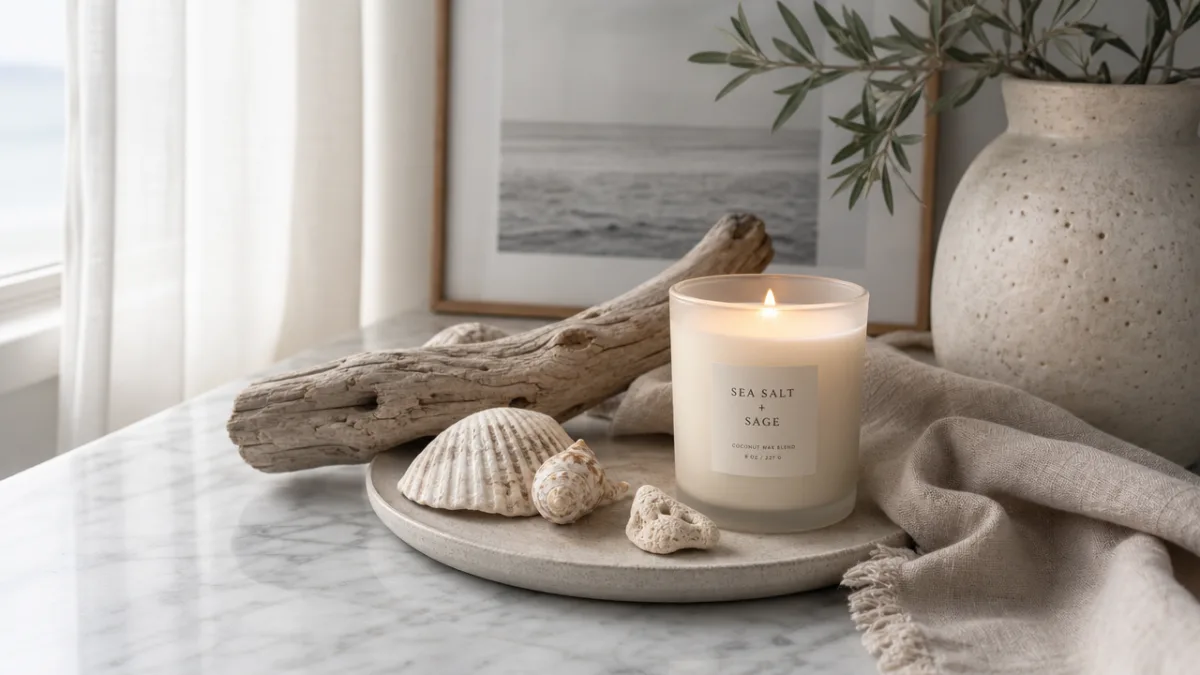
Try grouping it with things you’ve actually picked up from a beach trip — smooth stones, a piece of bleached driftwood, a few shells arranged naturally rather than precisely. The contrast between the crafted candle and raw, found objects creates an interesting tension that feels styled but not stiff. Linen textiles in natural tones — oatmeal, pale sage, sand — work beautifully as a backdrop, softening the whole composition without making it feel overly precious. A small vessel of dried sea grasses or pampas grass gives the display a bit of height and movement without overcrowding it.
Don’t underestimate what lighting does for a coastal display. Natural light near a window creates a softness that plays beautifully off a flickering flame. In the evening, the candle takes over as the light source, casting warm, dancing shadows that make the whole arrangement feel alive. There’s something genuinely magical about that combination — especially with a shoreline-scented candle, where the warmth of the flame reinforces that sensation of sitting around a fire on the beach as the sun goes down.
- Place the candle at varying heights using wooden risers, stacked books, or stone platforms to add dimension to your display.
- Limit your color palette to three to four natural tones: white, sand, driftwood grey, and one muted accent like sage or dusty blue.
- Incorporate texture contrast — rough stone against smooth glass, soft linen against hard ceramic — to keep the display visually interesting.
- Rotate seasonal elements: dried botanicals in winter, fresh greenery in spring, shells and sea glass in summer.
- Keep negative space in your composition; a crowded vignette loses the sense of coastal calm you are trying to create.
The Ritual of Candle Care: Getting the Most from Your Shoreline Candle
A good candle is worth taking care of. The single most impactful thing you can do is trim the wick before every burn — and it really does make a significant difference. A wick that’s too long creates a large, unstable flame that generates too much heat, causes the wax to melt unevenly, and produces soot that can blacken the vessel and dull the fragrance. Keeping it trimmed to about a quarter of an inch before each lighting gives you a clean, steady flame and noticeably extends the life of the candle.
The first burn is also more important than most people realize. Candle wax has a kind of memory — if you put out a new candle before the wax has melted all the way to the edge of the vessel, it will tunnel along that same path for every burn after, wasting fragrant wax and cutting the candle’s life short. For a standard four-inch diameter Shoreline Candle, that first burn should run somewhere between two and four hours. It’s a small act of patience that pays off significantly, giving you an even, beautiful candle from the very first light to the very last.
Storage is something most people don’t think about until it’s too late. Candles are sensitive to both light and heat — sunlight can fade the vessel and break down the fragrance compounds in the wax, while a warm environment can cause the wax to soften and lose its shape. When you’re not burning it, keep your Shoreline Candle somewhere cool and dry, out of direct sunlight, with its lid on if it has one. The lid also helps preserve the cold throw — that lovely scent you get just from having the candle in the room — which is honestly part of what makes owning a quality candle so enjoyable in the first place.
- Trim the wick to one quarter inch before every single burn without exception.
- Allow a full melt pool to reach the edges of the vessel on the very first burn session.
- Never burn for longer than four hours at a time to prevent overheating the vessel and degrading the wax.
- Keep the candle away from drafts, which cause uneven burning and excessive flickering.
- Store with the lid on, away from direct sunlight and heat sources.
- Discontinue use when half an inch of wax remains to prevent heat damage to the vessel.
The Shoreline Candle as a Gift: Thoughtfulness Captured in Wax
There are few gifts that communicate as much genuine care as a beautifully made candle, and the Shoreline Candle sits in a particularly sweet spot for gifting. It’s universally appealing without feeling generic, specific enough to feel like you put real thought into it, and versatile enough to work in almost any home. For someone who lives near the coast, it’s a nod to the place they love. For someone who doesn’t, it’s a small escape — a chance to step out of their day for an hour and into somewhere bigger and quieter. That dual appeal means it works across a surprisingly wide range of people and occasions.
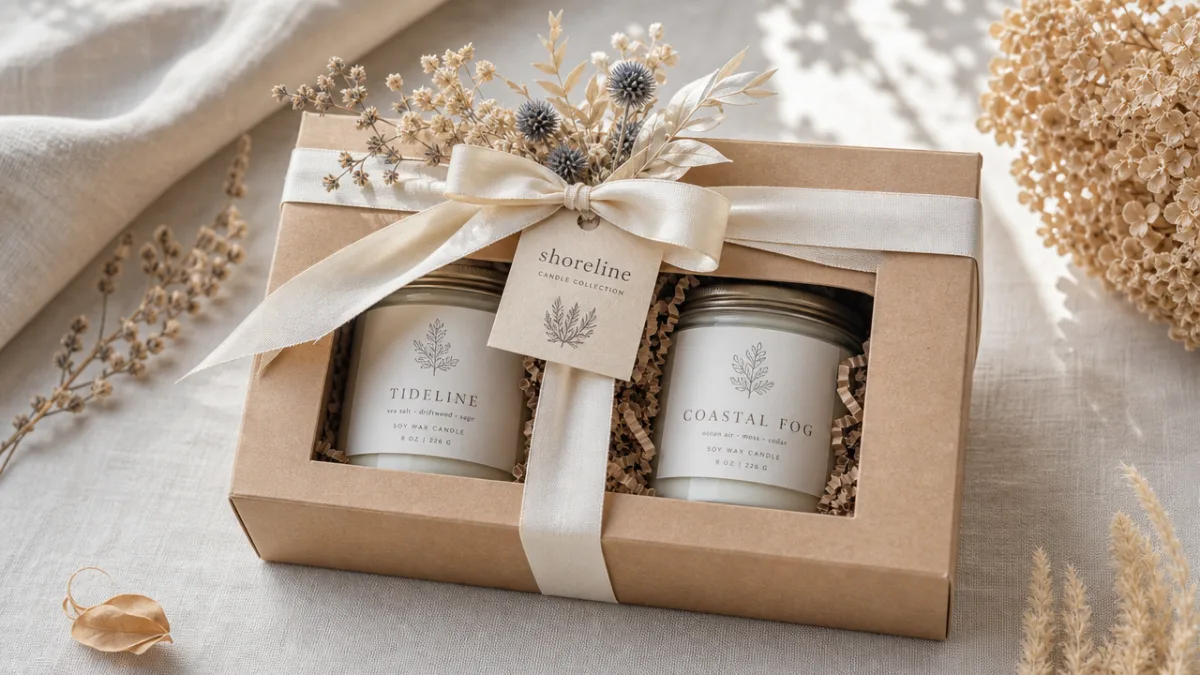
How you present it matters, too. Pairing the candle with a few complementary pieces turns a single purchase into something that feels like a whole experience — a box of long matches with a decorative striker, a small packet of fleur de sel for the bath, a linen hand towel in a coastal hue, or even a curated playlist of ocean sounds to play while it burns. These additions don’t need to be expensive; they just need to feel intentional. And when it comes to wrapping, simple almost always wins: kraft paper, a sprig of dried lavender or eucalyptus, and a handwritten note will land far more warmly than anything elaborate from a big box store.
The Shoreline Candle has also found a real home in lifestyle and experiential gifting — housewarming presents, wedding favors, retreat welcome bags, corporate gifts for clients in creative or wellness-adjacent spaces. It photographs beautifully, which has made it a natural fit for the styled flat-lay aesthetic that’s become shorthand for thoughtful gifting on social media. For brands that have leaned into that, shoreline candles have evolved into something more than products — they’ve become symbols of a certain way of moving through life, slower and more intentional, with a genuine eye for beauty.
Making Your Own Shoreline Candle: A Guide for the Craft-Curious
If you’re drawn to the idea of making your own rather than just buying one, home candle making is genuinely more approachable than it looks. The basic setup is pretty modest: a double boiler or dedicated wax melting pitcher, a kitchen thermometer, wicks sized for your vessel, fragrance oils or essential oil blends, and your chosen wax. A lot of candle supply retailers sell beginner kits specifically for coconut-soy blends, which are a great starting point — they’re forgiving to work with and have excellent scent throw right out of the gate.
Building your own coastal fragrance blend is honestly one of the most fun parts of the whole process. A good starting point for a shoreline scent might combine sea salt and driftwood fragrance oil as your base — both available from reputable fragrance suppliers — with a small percentage of white tea or green marine accord for brightness, and a touch of bergamot or yuzu essential oil to add some citrus lift to the top note. Start with a total fragrance load of around eight percent of your wax weight (for a ten-ounce candle, that’s roughly 0.8 ounces of fragrance oil) and keep notes as you go. Adjusting percentages until you land on exactly the right atmosphere is part of the pleasure.
The vessel you choose is where your personal taste really gets to show up. Thrift stores and flea markets are fantastic hunting grounds for interesting glass, ceramic, and concrete pieces that can be repurposed as candle containers — just look for enough wall thickness to handle heat and an opening wide enough to pour cleanly into. Sea-glass colored vintage jars, squat concrete planters, and simple apothecary-style amber glass all feel coastal without being on the nose about it. Labeling your finished candle with the fragrance name and the date you poured it adds a lovely handmade touch — and if you’re planning to give it as a gift, it transforms something you made into something genuinely one of a kind.








What do you think?
It is nice to know your opinion. Leave a comment.