










Spiderweb Crochet Sweater: The Ultimate Guide to Gothic Aesthetic Shrugs and Handmade Festival Tops
The Allure of Gothic Crochet Fashion
Gothic fashion has always celebrated the beauty found in darkness, intricacy, and craftsmanship, and nowhere is this more elegantly expressed than in handmade crochet garments. The spiderweb crochet sweater sits at a fascinating intersection of ancient textile art and modern subculture style, offering wearers a piece that is simultaneously haunting, beautiful, and deeply personal. Unlike mass-produced clothing, a handmade gothic shrug carries with it the energy of its creator, making each piece a wearable work of art with its own unique character and soul.
The spiderweb motif itself has been a symbol of creativity, patience, and feminine power across countless cultures and centuries. In gothic and alternative fashion, it has become one of the most beloved visual elements, representing the delicate tension between fragility and strength. When this motif is translated into crochet form — with its open lacework, trailing threads, and intricate geometric patterning — it creates a textile experience that is truly breathtaking to behold and to wear against the skin.
What makes the spiderweb crochet shrug particularly special in today’s fashion landscape is its versatility. It can be draped over a simple black dress for a formal gothic evening look, layered over band tees for an edgy streetwear aesthetic, or worn as a statement festival top that draws eyes across a crowded field. The shrug silhouette is flattering on virtually every body type, offering coverage without constriction and adding dimension to any outfit beneath it. In a world of fast fashion homogeneity, this piece is a powerful act of sartorial rebellion and self-expression.
Understanding the Spiderweb Crochet Pattern
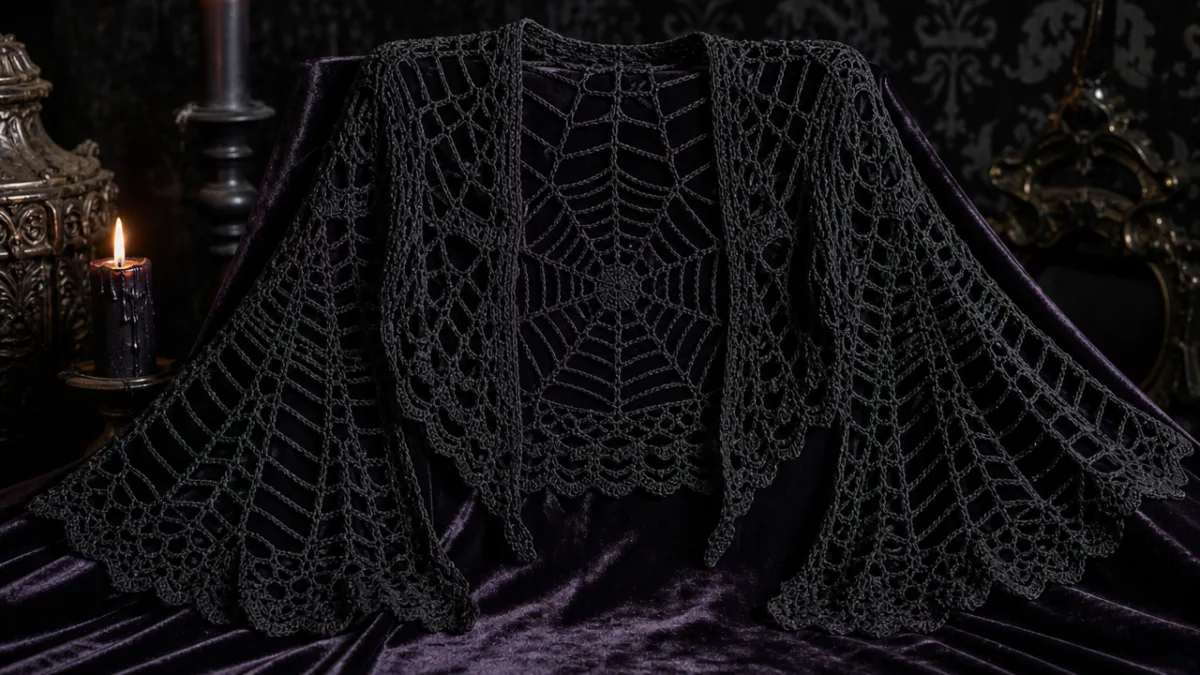
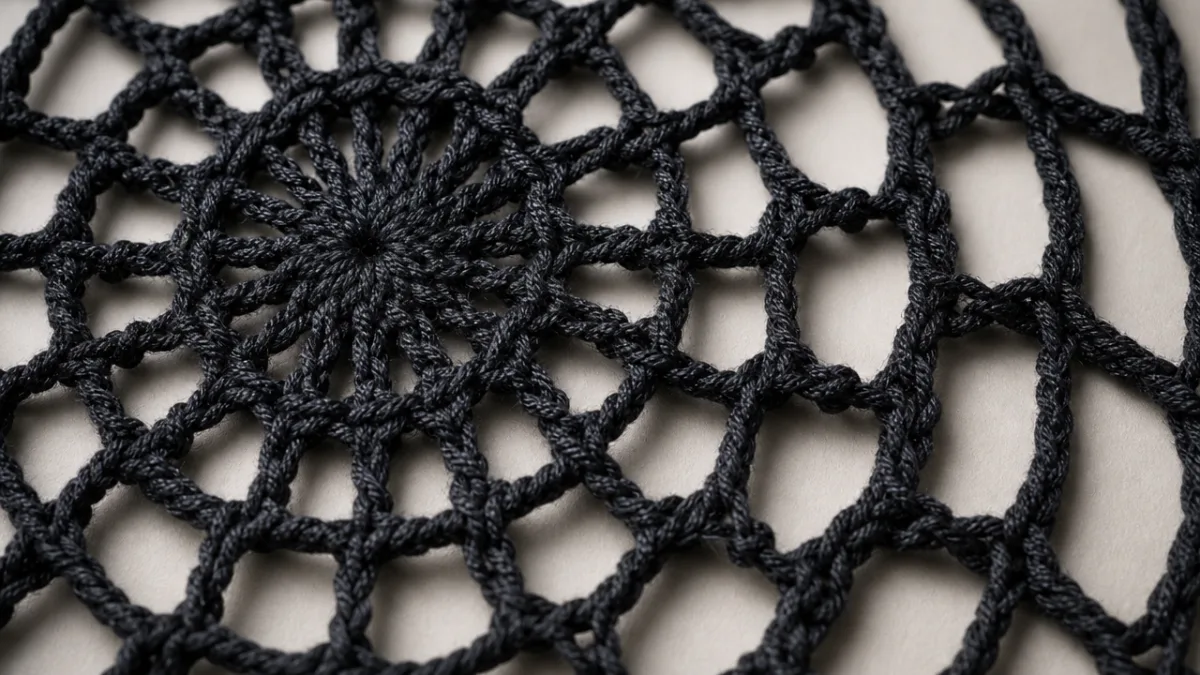
The spiderweb crochet pattern is a specialized lace technique that creates the illusion of delicate webs suspended in textile form. At its core, the pattern relies on a combination of chain spaces, double crochet clusters, and strategic negative space to build the radiating lines and concentric rings that define a spiderweb’s iconic silhouette. Unlike solid crochet fabrics, the spiderweb pattern is primarily open-work, meaning the finished garment is airy, lightweight, and beautifully translucent — qualities that make it ideal for layering and for festival environments where breathability matters.
Most spiderweb crochet sweater patterns begin with the creation of individual web motifs, each worked in the round from a central starting ring. The crocheter builds outward row by row, establishing the spokes of the web first before filling in the connecting threads between them. These individual motifs are then joined together — either as they are worked or in a finishing stage — to create the larger fabric of the shrug. The joining method significantly affects the final aesthetic: a flat slip-stitch join creates clean lines, while a chain-space join maintains more of an open, airy quality between the web sections.
Yarn selection plays an enormously important role in the final character of a spiderweb crochet sweater. Traditional black acrylic or black cotton yarns produce the most classically gothic aesthetic, with high contrast visibility of the web structure and excellent durability for repeated wearing and washing. However, many artisan makers are now exploring deep jewel tones like burgundy, forest green, and midnight purple, as well as specialty fibers including bamboo silk blends that add a subtle sheen and drape that catches light beautifully. The weight of the yarn also matters greatly — fingering weight or lace weight yarns create the most delicate, ethereal effect, while sport or DK weight produces a more structured, substantial garment.
- Fingering/Lace Weight: Creates the most delicate and ethereal web appearance, ideal for warm-weather festivals and layering over lighter garments.
- Sport/DK Weight: Offers more structural integrity and warmth, better suited for cooler evening events and more defined web patterning.
- Bamboo/Silk Blends: Adds natural sheen and drape, creating a luxurious, high-end aesthetic with excellent breathability.
- Cotton: Highly breathable and easy to care for, making it practical for frequent festival use while maintaining shape over time.
- Acrylic: The most budget-friendly option, available in the widest range of deep gothic colors, with easy-care washing properties.
Crafting Your Own Spiderweb Shrug: A Step-by-Step Overview
Beginning a spiderweb crochet sweater project requires some foundational planning before the first stitch is ever made. Start by taking accurate body measurements — bust, back length, sleeve length if applicable, and the circumference at key points where the shrug will rest. Most shrug patterns are designed to drape over the shoulders and upper arms, so shoulder width and upper arm circumference are particularly critical measurements. Once you have your measurements, swatch your chosen yarn with your chosen hook size to calculate gauge, which will allow you to accurately scale any pattern to your specific body dimensions.
The construction process for a typical spiderweb crochet shrug begins with creating a specified number of web motifs based on your size calculations. A standard medium-sized adult shrug might require anywhere from twelve to twenty individual web motifs depending on their size and the desired coverage area. Work each motif carefully and consistently, as small variations in tension across motifs can create an uneven finished fabric. Many experienced makers recommend working all motifs in a single extended session if possible, or at minimum ensuring consistent yarn tension by working in similar conditions of lighting and physical comfort throughout the project.
Assembly is where the magic truly happens. Lay your finished motifs out on a flat, blocking-friendly surface — a foam mat or carpet works beautifully — and arrange them according to your pattern layout. Pin them in position and take a photograph before you begin joining, so you have a reference if any motifs shift during the connection process. The join-as-you-go method, where the final round of each new motif incorporates a connection to its neighbor, creates the most seamless result and eliminates the need for a separate seaming stage. Once all motifs are joined, you’ll typically finish the outer edges of the shrug with a simple border round that can be customized with picots, shell stitches, or additional chain loops for extra decorative impact.
Blocking your finished shrug is a step that many beginners skip but that experienced makers consider absolutely essential. Wet blocking — where the finished piece is soaked in cool water, gently squeezed dry in a towel, and then pinned to shape and allowed to dry completely flat — opens up the lace structure dramatically, allowing the web pattern to fully reveal itself. The difference between a blocked and unblocked crochet lace piece can be genuinely stunning, with blocking sometimes doubling the visibility and openness of the web motifs. Allow at least twenty-four hours for complete drying before wearing or storing the finished shrug.
Styling the Spiderweb Shrug for Festivals and Beyond
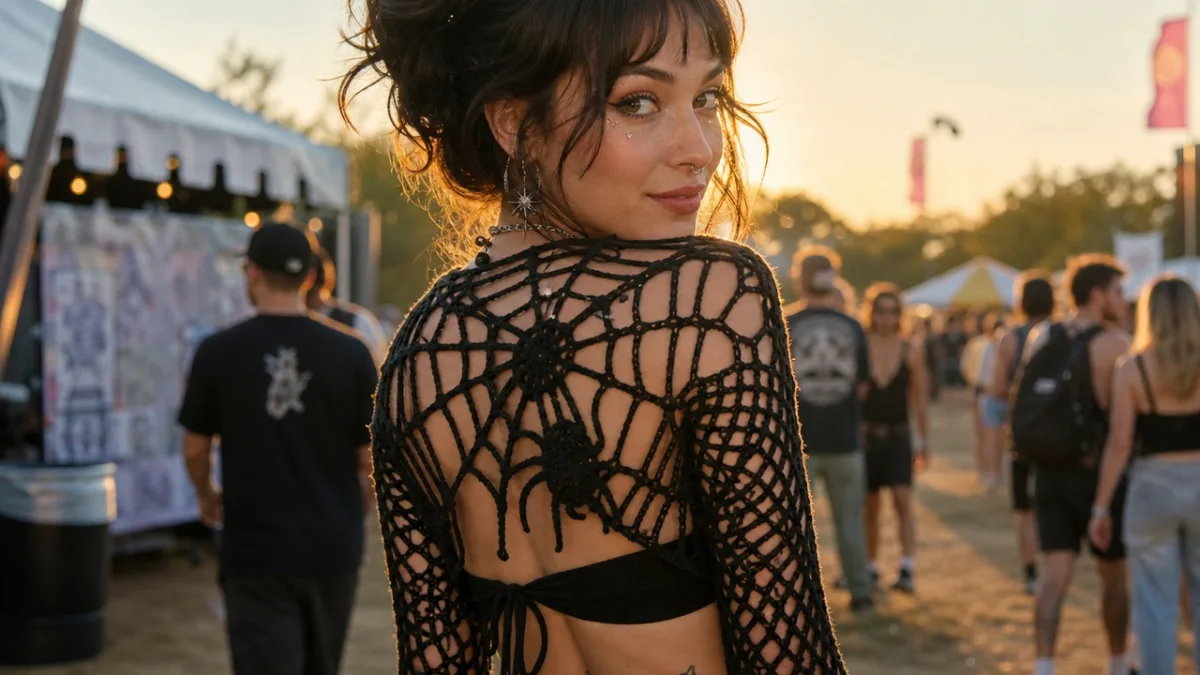
The festival styling potential of a spiderweb crochet shrug is almost limitless, making it one of the most versatile handmade garments in the alternative fashion toolkit. For a classic gothic festival look, layer the shrug over a black bandeau top or bralette, paired with high-waisted black shorts or a flowing asymmetrical skirt. Add platform boots, fishnet tights, and dark statement jewelry — chunky silver rings, layered chains, or large dark crystal pendants — to complete a cohesive aesthetic that feels intentional and powerful rather than simply costume-like.
Beyond strictly gothic styling, the spiderweb shrug has found devoted fans in the broader festival fashion community who appreciate its bohemian texture and handmade quality without necessarily adhering to the full gothic aesthetic. Paired with flowing earth-toned maxi skirts, it creates a dark bohemian look that feels both free-spirited and elegantly moody. Layered over a simple white slip dress, it creates a striking visual contrast that plays beautifully with the tension between light and shadow. The shrug even translates effectively into everyday streetwear when paired with dark denim and a simple fitted tee, worn as an interesting texture layer that elevates a casual outfit without requiring a special occasion.
Hair and makeup choices can significantly amplify or soften the impact of a spiderweb shrug, allowing the wearer to calibrate the overall aesthetic to their preference and the specific context of the occasion. For maximum gothic drama, consider deep oxblood lip colors, heavily lined eyes, and elaborate braided or crimped hair styles that echo the intricacy of the web pattern itself. For a softer, more festival-friendly interpretation, loose beachy waves with minimal makeup lets the garment speak for itself without overwhelming the overall look. The key principle is allowing the shrug to serve as the statement piece around which all other styling choices are organized and calibrated.
- Full Gothic Look: Black bandeau, high-waisted shorts, platform boots, fishnet tights, dark statement jewelry and bold dark lip color.
- Dark Bohemian: Flowing earth-toned maxi skirt, flat sandals, layered gemstone necklaces, loose natural waves.
- High Contrast Ethereal: White slip dress beneath the shrug, silver jewelry, minimal makeup, hair swept up softly.
- Everyday Streetwear: Dark denim jeans, fitted black tee, white trainers or ankle boots, simple silver hoops.
The Handmade Fashion Movement and Ethical Consumption
The spiderweb crochet sweater exists within a broader cultural moment in which handmade, artisan-crafted clothing is experiencing a powerful and meaningful renaissance. As awareness of fast fashion’s devastating environmental and human costs has grown, increasing numbers of fashion-conscious consumers are turning toward handmade alternatives — either by learning to create their own pieces or by supporting independent artisan makers on platforms like Etsy, Instagram, and local craft markets. A handmade crochet shrug represents the antithesis of disposable fashion: it is slow, intentional, resource-conscious, and built to last for years with proper care.
When you purchase a handmade spiderweb crochet shrug from an independent maker, you are participating in an economic and ethical relationship that fast fashion fundamentally cannot offer. Your purchase directly supports the livelihood of a skilled craftsperson, compensating them for the genuine hours of skilled labor that went into creating your garment. A quality spiderweb crochet shrug might represent twelve to twenty or more hours of careful handwork, which puts the pricing of handmade garments in proper perspective — they are not expensive, they are appropriately valued. This stands in stark contrast to the hidden human costs embedded in cheap mass-produced clothing.
The sustainability credentials of handmade crochet fashion extend beyond the economic relationship between buyer and maker. Many independent crochet artisans are deeply thoughtful about their material choices, selecting yarns from ethical producers, prioritizing natural fibers, and deliberately working at small scale to minimize waste. Unlike industrial textile production, which generates enormous quantities of fabric waste and chemical runoff, handmade crochet creates almost no fabric waste whatsoever — yarn is used stitch by stitch, with only minimal ends to weave in and trim. This near-zero-waste production model is one of the most genuinely sustainable approaches to clothing creation available.
Learning to crochet your own garments offers yet another dimension of sustainable engagement with fashion. The knowledge of how to create your own clothing — however slowly and imperfectly at first — represents a fundamental form of self-sufficiency and creative empowerment that has been systematically eroded by the convenience culture of fast fashion. Beginning with smaller projects like scarves or wash cloths before progressing to shrugs and sweaters allows new crocheters to build skills and confidence incrementally. The crochet community, both online and in local craft groups, is extraordinarily welcoming to beginners, with a rich culture of knowledge-sharing, pattern-gifting, and mutual encouragement that makes the learning journey genuinely joyful.
Caring for and Preserving Your Spiderweb Crochet Shrug
A handmade crochet shrug represents a significant investment of time, skill, and creative energy, and caring for it properly is both a practical necessity and a form of respect for the craft. The care requirements for your specific shrug will depend primarily on the fiber content of the yarn used in its creation. Natural fibers like cotton, wool, and bamboo generally require gentler handling than synthetic acrylics, but in return offer superior durability, breathability, and aging characteristics that actually improve over time with proper maintenance. Always check the yarn label or ask your maker for specific fiber content and care recommendations before washing for the first time.
Hand washing is the universally recommended cleaning method for lace crochet garments, regardless of fiber content. Fill a clean basin with cool or lukewarm water — never hot, which can cause shrinkage and distortion in natural fibers — and add a small amount of gentle wool wash or delicate fabric detergent. Submerge the shrug and gently agitate it with your hands, paying particular attention to any areas that have come into contact with skin oils, deodorant, or makeup. Never wring or twist the garment to remove water, as this stresses the delicate lace structure and can permanently distort the web motifs. Instead, lift the garment from the water supporting its full weight, then press it gently between two clean towels to absorb excess moisture.
Storage is equally important to the long-term preservation of a crochet shrug. Folding is generally preferable to hanging for knit and crochet garments, as the weight of a hanging garment can cause the fabric to stretch and distort over time — a particular concern with the open, lacy structure of a spiderweb crochet piece. Store folded shrugs in a clean, dry drawer or shelf away from direct light and heat, both of which can cause fiber degradation and color fading over time. For long-term storage between festival seasons, clean cedar blocks or lavender sachets placed near the garment will discourage moths and other textile pests without the chemical harshness of traditional mothballs.
Minor repairs, when needed, are usually well within the capabilities of even beginner crocheters, which is another advantage of handmade garments over their commercially manufactured counterparts. A loose end that has worked its way free can be re-woven with a tapestry needle in minutes. A broken stitch in a web motif can be repaired with a length of matching yarn and some careful attention to replicating the original pattern structure. Because each motif in a spiderweb shrug is a discrete unit, even significant damage to one web section can potentially be repaired or replaced without affecting the rest of the garment — a level of repairability that is simply impossible in most commercially produced clothing today.
Finding and Supporting Spiderweb Crochet Artisans
The handmade marketplace has never been more accessible for buyers seeking unique, artisan-crafted gothic fashion pieces like spiderweb crochet shrugs. Etsy remains the largest and most well-known platform for independent crochet artisans, with thousands of makers offering both finished garments and custom commission services. When searching, look beyond the first page of results and take time to read maker profiles carefully — the most talented artisans often have smaller shops with fewer reviews simply because they work slowly and thoughtfully, producing limited quantities of genuinely high-quality work rather than operating at production-line volumes that would compromise their craftsmanship.
Instagram and Pinterest have become enormously important discovery platforms for independent crochet fashion artisans, with many makers maintaining active visual presences that showcase their latest work, works-in-progress, and behind-the-scenes glimpses of their creative process. Following makers whose aesthetic resonates with you creates an ongoing relationship that can be deeply satisfying on both sides — you gain early access to new work and the ability to commission custom pieces, while the maker gains a genuinely engaged supporter who values and understands their work. Many artisans accept custom commissions for specific colorways, sizes, or pattern modifications through their social media direct message systems, even if they don’t explicitly advertise this service.
Local craft markets, alternative fashion fairs, and gothic or alternative cultural festivals are also excellent venues for discovering spiderweb crochet artisans whose work you can handle and try on in person before purchasing. The tactile experience of assessing a handmade garment’s quality — feeling the consistency of the stitch tension, examining the neatness of the joins and finishing, assessing the drape and weight of the piece as a whole — is genuinely valuable and cannot be replicated through photographs alone. Meeting makers in person also creates the opportunity for a genuine conversation about their craft, their process, and the specific piece you are considering, enriching the purchasing experience in ways that feel increasingly rare and precious in today’s largely digital commercial landscape.
Whether you choose to make your own spiderweb crochet shrug, commission one from an independent artisan, or begin learning the craft with the goal of one day creating your own, you are engaging with a rich tradition of handmade textile art that stretches back thousands of years. The spiderweb crochet sweater is more than a garment — it is a declaration of values, a celebration of skilled craft, and a wearable piece of dark, beautiful art that connects its wearer to a global community of makers, dreamers, and those who have always found beauty in the shadows. Wear it with the confidence and intention it deserves, and let it tell its story every time you put it on.








What do you think?
It is nice to know your opinion. Leave a comment.