










Skull Bandanas and Witchcore: The Essential Guide to Dark Folk Aesthetic Dressing
What Is Witchcore and Why Does It Matter?
Witchcore is one of the most richly layered aesthetic subcultures to emerge from the internet age, blending centuries of folk magic tradition, gothic romanticism, and an unapologetically dark sensibility toward fashion and lifestyle. Unlike many trend-driven aesthetics that flicker in and out of cultural consciousness with the speed of a social media algorithm, witchcore has genuine roots — in herbalism, in pagan ritual, in the visual language of cunning women and hedge witches who lived at the edges of village society. It draws from these deep wells and translates them into a contemporary wardrobe that feels both ancient and entirely of this moment.
The aesthetic encompasses a surprisingly wide range of visual influences. You will find the crumbling grandeur of Victorian mourning dress sitting comfortably alongside the rough-hewn textures of peasant blouses and aprons. Dark florals, muted earthy tones, layers of lace, and the constant presence of symbolic imagery — moons, herbs, ravens, and yes, skulls — all work together to create something that reads as lived-in and intentional rather than costumed or theatrical. The witchcore practitioner is not dressing up for a weekend event; she is dressing as a philosophy, a daily declaration of who she is and what she believes about the world.
Understanding witchcore also means understanding that it is not monolithic. There are cottagecore witches who lean into soft greens and wildflower prints, dark academia witches who favor leather-bound books and candlelit libraries, and forest witch iterations that go heavy on moss, bark textures, and the suggestion of someone who has genuinely been communing with trees. What all of these variations share is a commitment to symbolic dressing — every garment, every accessory carries meaning — and it is within this framework that the skull bandana becomes such a powerful and articulate piece of the overall aesthetic language.
The Skull Symbol: A History Far Older Than Edginess
Before we talk about how to wear a skull bandana, it is worth sitting with the symbol itself and recognizing just how ancient and cross-cultural it truly is. The skull as a memento mori — a reminder of mortality — appears in Roman mosaics, medieval manuscripts, and the elaborate vanitas paintings of seventeenth-century Dutch masters. These weren’t shock tactics deployed by people trying to seem dangerous; they were sincere philosophical invitations to contemplate the impermanence of life and to live accordingly. The skull was not a death symbol so much as a life symbol, a prompt to ask yourself whether you were spending your time wisely.
In Mexican and Latin American traditions, the calavera skull is a celebration rather than a warning, associated with Día de los Muertos and the idea that death is not an ending but a transformation, a continuation of relationship between the living and those who have passed. Sugar skull imagery is joyful, colorful, and deeply tender in its original context. Similarly, many Indigenous cultures across the Americas used skull imagery in ceremonial contexts that honored ancestors and acknowledged the cyclical nature of existence. The witchcore aesthetic, at its most thoughtful, draws from this broader symbolic tradition rather than simply borrowing the aesthetic of biker subculture or heavy metal album art, though those lineages are also real and worth acknowledging.
For contemporary witchcore practitioners, the skull carries all of this layered meaning simultaneously. It is a memento mori, a connection to ancestor veneration practices, an acknowledgment of the shadow self that Jungian psychology and many magical traditions ask us to integrate rather than deny. When you tie a skull bandana around your head or your neck or your wrist, you are participating in an incredibly long conversation about mortality, transformation, and the kind of unflinching honesty about life’s terms that the witch archetype has always represented. That is a lot of meaning for one piece of fabric to carry, and that is precisely why it carries it so well.
The Skull Bandana: Anatomy of a Perfect Witchcore Accessory
The bandana itself — separate from whatever print it carries — is already a remarkably versatile garment with a fascinating history. It has served as a utilitarian work cloth, a political signifier, a gang identifier, a fashion statement across rockabilly, punk, hip-hop, and country music subcultures, and a staple of festival fashion for decades. It is democratic in the best sense: inexpensive, adaptable, and capable of being read in dozens of different ways depending on context and styling. Within witchcore, the bandana occupies a space that feels both practical and ceremonial, which is a tension the aesthetic generally loves to inhabit.
When it comes to skull bandanas specifically, the design quality and style matters enormously for achieving the right witchcore register. There is a significant difference between a mass-produced polyester bandana with a cartoonish skull print and a well-made cotton or silk bandana featuring intricate hand-drawn skull designs with botanical elements — flowers growing from eye sockets, serpents woven through jawbones, crescent moons resting against brow ridges. The latter communicates the complexity and reverence for symbolism that witchcore demands; the former reads as Halloween costume. When sourcing your skull bandana, look for independent artists on platforms like Etsy, small print studios, and vintage shops where you might find genuine deadstock bandanas with the kind of aged, intentional quality that cannot be manufactured on demand.
Key design elements to look for include skulls paired with botanicals such as roses, nightshade, or moonflowers; skulls incorporated into geometric or alchemical patterns; skull imagery with celestial elements like stars, moons, and planetary symbols; and designs that use a muted or monochromatic palette rather than the bright, high-contrast prints more associated with biker or punk aesthetics. The color of the bandana itself also matters — black is the obvious choice and a reliable one, but deep burgundy, forest green, charcoal grey, and dusty plum all read strongly within the witchcore visual vocabulary. Even an off-white or aged cream can work beautifully when the skull design has sufficient detail and darkness to it.
Styling Your Skull Bandana: The Core Methods
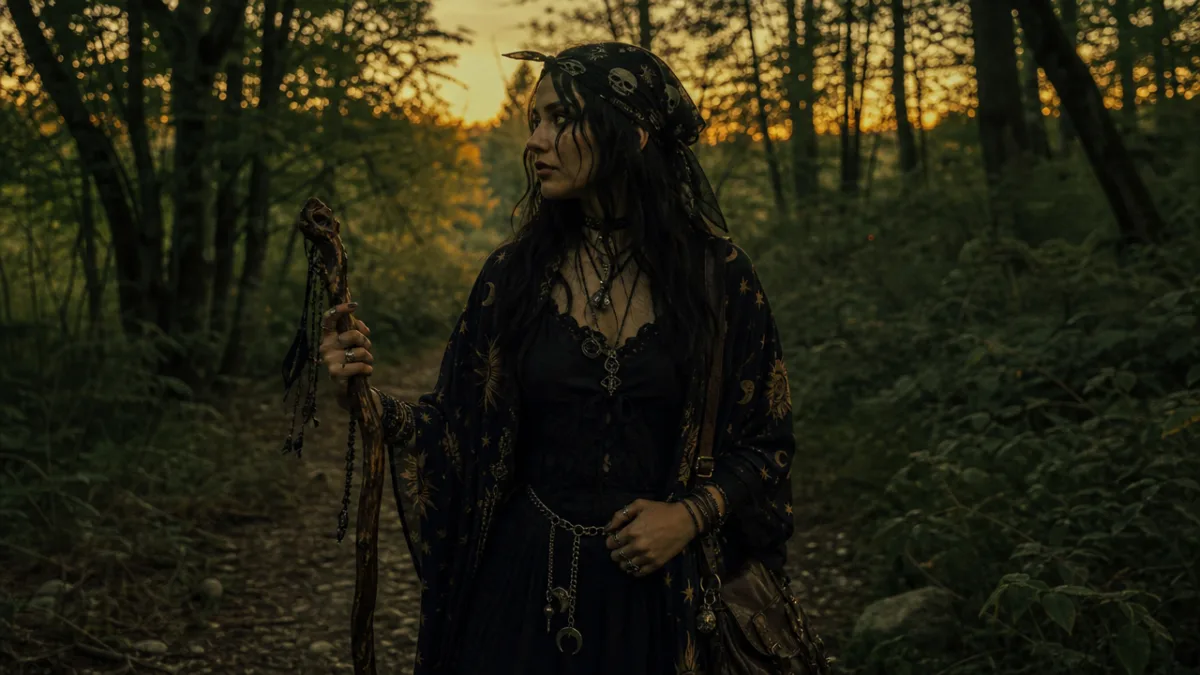
The beauty of the bandana is that no single method of wearing it is definitively correct, and witchcore actually rewards the kind of personal experimentation and idiosyncratic styling choices that suggest genuine relationship with your wardrobe rather than adherence to a formula. That said, certain approaches tend to land particularly well within the aesthetic and are worth having in your repertoire. The head wrap — tied across the forehead with the knot at the back or the side — is perhaps the most immediately recognizable witchcore silhouette, evoking everything from Romani fortune teller imagery to the kind of practical hair management a working herbalist or hedge witch would need. It frames the face dramatically and creates an immediate focal point.
Neck scarves are another strong option, worn loosely knotted at the throat like an ascot or tied tightly as a choker-adjacent accessory. The throat is a symbolically significant location in many magical traditions — it is associated with voice, truth-telling, and expression — so placing a skull bandana there carries a kind of meaningful intentionality that witchcore practitioners will appreciate. Wrist wraps are more subtle but equally effective, and particularly good for building the kind of layered, texture-rich arm situation that the aesthetic loves, combining bandanas with stacked rings, leather cord bracelets, and embroidered cuffs. Bag ties are also underrated — knotting a skull bandana onto the strap or handle of your bag adds movement and visual interest while keeping the symbolism present throughout your look.
Consider also the option of wearing the bandana as a pocket square in an oversized blazer or frock coat, tucked into the chest pocket of a waistcoat, or even used as a belt threaded through the loops of wide-leg trousers or a long skirt. These more unexpected applications signal a genuine engagement with the garment as a styling tool rather than a default accessory choice, and that kind of thoughtfulness is central to doing witchcore well. The aesthetic rewards people who treat their wardrobe as a form of ongoing creative practice rather than a collection of correct items worn in prescribed ways.
Building the Full Witchcore Look Around Your Bandana
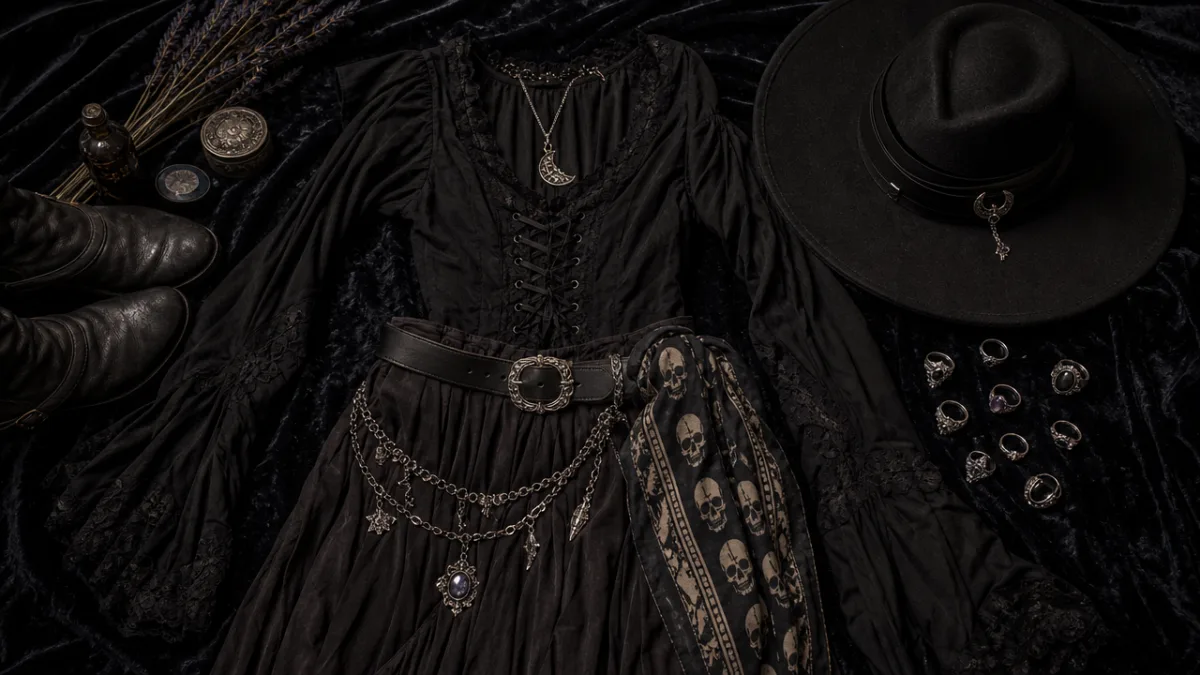
The skull bandana does not exist in a vacuum, and to understand how to deploy it most effectively, it helps to have a strong sense of the broader garment vocabulary it belongs to. Witchcore clothing tends to favor natural fibers — linen, cotton, wool, velvet — in dark or muted tones with occasional bursts of deep jewel color. Silhouettes lean toward the dramatic without being theatrical: long skirts with irregular hemlines, oversized cardigans that suggest someone else’s grandmother and a slightly different century, structured corsets worn over loose shirts, and capes or ponchos that serve as practical layers while also contributing enormously to the overall atmosphere of the look.
Layering is genuinely non-negotiable in witchcore. The aesthetic is built on accumulation — of fabric, of texture, of symbolic objects — and a single well-chosen garment paired with bare skin will almost never land the way multiple intentional layers will. Think about building your look from the inside out: a base layer of soft natural fabric against the skin, a mid layer with visual interest through embroidery, lace, or pattern, and an outer layer that provides both warmth and dramatic silhouette. Your skull bandana then enters this constructed world as one of several carefully chosen accessories that complete and focus the look without overwhelming it. Other accessories to consider include wide-brimmed hats, silver rings worn on multiple fingers, talisman necklaces with botanical or celestial motifs, and boots — always boots, preferably well-worn and with some weight to them.
Color palette management is one of the more nuanced skills in witchcore dressing. The obvious approach — all black, always — is valid and can be executed brilliantly, but the most visually interesting witchcore looks tend to work with a slightly broader palette of darks: black alongside forest green alongside deep burgundy alongside charcoal, with perhaps a flash of antique gold in the jewelry or an unexpected rust-toned linen shirt beneath a black velvet jacket. The skull bandana can serve as a useful palette anchor, particularly if its design incorporates several of the colors you are working with elsewhere in the outfit. This kind of intentional color threading throughout a look is what elevates witchcore from costume to wardrobe.
Essential Witchcore Wardrobe Pieces
- A well-worn wide-brimmed felt hat in black or charcoal, ideally with some signs of genuine age and use rather than a crisp new shape
- At least one long skirt with a full hemline, in velvet, heavy linen, or wool — dark florals and solid darks both work beautifully
- An oversized cardigan or shawl in natural fiber, preferably with some texture such as cable knit or raw edge finishing
- Sturdy leather boots with significant sole, whether ankle or knee-height depending on personal preference and the terrain you actually walk
- A collection of silver rings in botanical, celestial, or skeletal motifs — more is genuinely more in this category
- At least one piece with embroidery, whether a blouse, jacket, or bag — hand-embroidery is ideal, particularly with botanical or folk magic motifs
- A structured outer layer such as a frock coat, tailored blazer, or cape that adds drama and silhouette to any base outfit
Shopping Sustainably for Witchcore: Where to Find the Good Stuff
One of the values that runs quietly but persistently through witchcore culture is a relationship with objects that prioritizes meaning, history, and quality over trend-chasing and disposable consumption. This makes witchcore unusually well-aligned with sustainable and ethical fashion practices, which is worth recognizing and leaning into deliberately. The best witchcore wardrobes are built over time from thrift stores, vintage dealers, small independent designers, and the occasional lucky estate sale discovery. They are accumulated rather than purchased as a complete set, and each piece has a story or a reason for being there beyond simple availability.
For skull bandanas specifically, the secondary market is your best friend. Vintage bandanas from the 1970s through the 1990s often have a print quality and fabric weight that contemporary fast-fashion versions simply cannot match, and finding one with the right skull design feels genuinely like a discovery rather than a transaction. Thrift stores, estate sales, and vintage markets are all good hunting grounds, and the investment of time they require actually serves the witchcore sensibility — you are meant to have a relationship with your objects, and that relationship begins in the finding of them. Online vintage platforms like Depop, Poshmark, and dedicated vintage Etsy shops are also strong resources, particularly for people who do not have access to good physical thrift infrastructure in their area.
Independent artists and small print studios are the right choice when you want something new. Many incredibly talented illustrators and textile designers are producing skull and botanical prints specifically for the witchcore and dark folk markets, and buying directly from them supports the creative community that generates the aesthetic culture you are participating in. Look for designers who talk about their symbolic intentions, who draw from genuine folk magic and historical reference rather than simply producing spooky imagery, and whose work shows the kind of care and detail that will reward extended looking. A bandana you can discover new details in after months of wearing it is one worth having.
Community, Craft, and the Living Practice of Witchcore
Witchcore at its fullest expression is not merely a fashion aesthetic but a broader lifestyle orientation that connects clothing to craft, to seasonal practice, to community, and to an ongoing inquiry into the kind of life you want to be building. The skull bandana, in this context, is a thread in a much larger tapestry — one that might include a home altar with dried flowers and ancestor photographs, a practice of seasonal ritual and mark-making, a kitchen witch approach to cooking and herbalism, and a community of people who share similar values about intentionality, beauty, and the importance of acknowledging death as part of life. Fashion is the most visible and daily expression of this orientation, but it is not the entirety of it.
Online witchcore communities on platforms like Pinterest, Tumblr, and TikTok have done remarkable work in developing and sharing the aesthetic language, but the most nourishing versions of witchcore community tend to be more local and embodied — craft circles, pagan community groups, herbalism workshops, and the kind of friendships built around shared seasonal celebrations and mutual making. These communities are where the aesthetic gets tested against actual lived experience and either deepens into something genuine or reveals itself as only surface. The people who wear witchcore most beautifully and most convincingly are generally people who also practice some form of craft or ritual, who have a genuine relationship with plant medicine or divination or ancestor work, because that lived knowledge shows up in how they hold themselves and why they make the choices they make.
The skull bandana question posed in the original observation — if yours doesn’t have a skull, are you really doing witchcore right? — is, of course, partly tongue-in-cheek, but it points to something real about the role of symbolic commitment in this aesthetic. Witchcore is not a style you can do halfway while maintaining its integrity. It asks for genuine engagement with its symbolic vocabulary, genuine curiosity about its historical and cultural roots, and a genuine willingness to build a wardrobe as a form of ongoing creative and philosophical practice rather than a series of trend-compliant purchases. The skull is a good symbol for this demand: it does not soften itself or make itself more palatable to ease someone else’s comfort. It means what it means, and wearing it with full knowledge of what it means is the whole point.
Starting Points for Deepening Your Witchcore Practice
- Begin studying the folk magic traditions of your own ancestral background — wearing symbols with knowledge of their specific cultural origins transforms the experience of wearing them entirely
- Take a seasonal approach to your wardrobe, allowing the wheel of the year to guide shifts in color palette, texture, and layering weight in ways that connect dressing to natural cycles
- Start a small altar or dedicated shelf where your most symbolic objects can live together — this changes your relationship to those objects and to the act of selecting them each morning
- Explore botanical dyeing or simple textile crafts as a way of building a more embodied relationship to the fabrics you wear and the colors you choose
- Seek out local or online communities organized around craft, seasonal ritual, or folk magic practice rather than exclusively around fashion, and notice how membership in those communities changes the way you dress
Ultimately, the skull bandana is a beautiful, versatile, symbolically rich accessory that deserves to be worn with the full weight of what it represents. It belongs in a wardrobe that is being built thoughtfully, slowly, and with genuine attention to meaning. When you tie it around your head before heading out into the world, you are joining a very long line of people who have used clothing to declare something true about themselves and their relationship to the deeper currents of life and death, darkness and transformation. That is not a small thing to do with a piece of printed cotton. That is, in fact, exactly the kind of magic witchcore is about.








What do you think?
It is nice to know your opinion. Leave a comment.