










Harvest Apron Gathering Bag: The Art of Jute Crochet for Garden and Home
The Timeless Tradition of Harvest Aprons
Long before modern agriculture introduced plastic bins and synthetic totes, farmers and homesteaders relied on wearable gathering tools to bring in their yields. The harvest apron is one of humanity’s most enduring practical inventions, a garment that sits at the intersection of craft, utility, and daily rhythm. From ancient grain fields in Mesopotamia to Victorian kitchen gardens in England, the apron with a generous front pocket allowed workers to keep their hands free while collecting herbs, vegetables, eggs, and small fruits with unhurried efficiency.
What makes the harvest apron so compelling today is precisely its resistance to obsolescence. In an era dominated by disposable convenience, this tool asks something different of us — it asks us to slow down, to move through a garden with intention, and to gather with both hands rather than dragging a cumbersome container behind us. The apron becomes part of the body’s rhythm, swaying gently with each reach and bend, a soft basket suspended at the waist that grows heavier and more satisfying as the harvest progresses.
The contemporary revival of the harvest apron speaks to a broader cultural longing for objects that are beautiful as well as useful. Makers and craft enthusiasts are rediscovering these garments not merely as nostalgic curiosities but as genuinely superior tools for small-scale harvesting, foraging, and kitchen gardening. The jute crochet harvest apron, in particular, has captured the imagination of the handmade community because it combines the structural integrity of natural fiber with the open, breathable mesh that keeps produce fresh and visible from the moment it is picked.
Why Jute Is the Ideal Material for a Crochet Harvest Apron
Jute is one of the most remarkable natural fibers on the planet, and its properties make it uniquely suited to the demands of a harvest gathering bag. Derived from the Corchorus plant, jute has been cultivated for thousands of years across South Asia, where its strength, flexibility, and biodegradability have made it indispensable in everything from rope-making to textile weaving. When twisted into twine and worked into crochet, jute produces a fabric that is simultaneously stiff enough to hold its shape under weight and supple enough to drape naturally against the body.
The natural breathability of jute mesh is particularly important for harvesting applications. Unlike a solid-bottomed bag or a synthetic tote, a crocheted jute apron pocket allows air to circulate freely around freshly picked herbs, cherry tomatoes, berries, or snap peas. This airflow prevents the moisture buildup that causes delicate produce to bruise or spoil within minutes of picking on a warm summer day. The open structure of the mesh also lets loose soil and garden debris fall away naturally, meaning your harvest arrives at the kitchen cleaner and more ready to use.
From a sustainability standpoint, jute is one of the most responsible fiber choices available to modern crafters. It is a fast-growing crop that requires minimal pesticide input, sequesters carbon during its growth cycle, and breaks down completely at the end of its life without contributing to microplastic pollution. A well-made jute crochet apron, cared for properly, can last many harvesting seasons, and when it finally reaches the end of its useful life, it can be composted alongside the garden waste it helped collect. Choosing jute is therefore not just an aesthetic decision but an ethical one, aligned with the values of anyone tending a garden with care for the land.
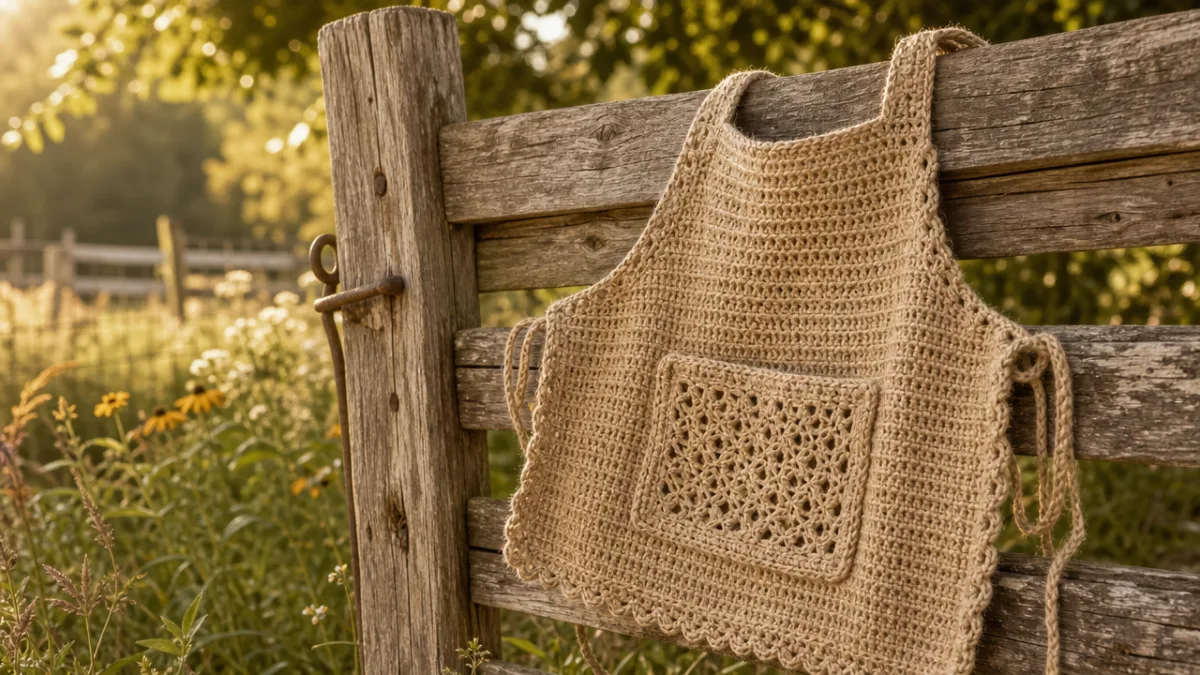
Anatomy of the Jute Crochet Harvest Apron: Design and Structure
The genius of the harvest apron design lies in its elegant simplicity. At its core, the garment consists of a wide waistband — typically crocheted in a denser stitch to provide stability — from which a large, open-mesh pocket extends downward to rest comfortably against the front of the thighs. Long ties extend from either side of the waistband, long enough to wrap around the body and tie securely at the back or front depending on personal preference. This configuration distributes the weight of the gathered harvest across the hips rather than the shoulders, making it genuinely comfortable to wear for extended periods of work.
The large pocket itself is the heart of the apron, and skilled crochet designers give it careful consideration. The depth needs to be generous enough to hold a substantial gathering — a full quart of strawberries, a bundle of fresh herbs, a dozen small zucchini — without the contents spilling over the edge when the wearer bends forward. At the same time, the pocket should not be so deep that lightweight items like flower heads or delicate salad greens become difficult to retrieve. A well-proportioned harvest apron pocket typically measures somewhere between 25 and 35 centimeters in both width and depth, though individual makers adjust these dimensions based on the intended primary use.
Many contemporary jute harvest aprons incorporate thoughtful design refinements that elevate them well beyond purely functional objects. Decorative border stitches along the pocket edge, contrast yarn accents in cotton or linen, small woven tags or labels made from natural leather, and carefully knotted fringe details all contribute to an object that feels genuinely crafted rather than merely produced. These considered details matter because the harvest apron will be worn and seen repeatedly throughout the gardening season, and an object that delights the eye as well as the hand encourages daily use in a way that purely utilitarian tools rarely do.
The Harvest Apron as Wall Hanging: Dual-Purpose Design
One of the most appealing characteristics of a well-made jute crochet harvest apron is its effortless transition from working garden tool to decorative wall hanging during the off-season or whenever it is not in active use. When hung from a wooden dowel, a vintage hook, or a piece of driftwood, the apron reveals its secondary identity as a piece of textile art. The natural tones of jute — warm honey, golden tan, and rich caramel — harmonize beautifully with the earthy palette of a farmhouse kitchen, a potting shed, a cottage mudroom, or a rural-style dining space.
As a wall hanging, the harvest apron continues to serve practical storage purposes even while adding visual warmth to a room. The large front pocket becomes a receptacle for dry goods, seed packets, wooden spoons, rolled kitchen towels, fresh herbs hung upside down to dry, or small bundles of lavender. This repurposing ability gives the object a kind of year-round relevance that purely seasonal tools lack, keeping it visible, accessible, and appreciated rather than tucked away in a drawer for months at a time. It becomes, in the truest sense, part of the home’s living material culture.
Interior designers working in the cottagecore, Scandinavian farmhouse, and slow-living aesthetic traditions have embraced the jute harvest apron wall hanging as a signature element in their projects. It communicates a particular set of values — connection to seasonal rhythms, appreciation for natural materials, respect for handcraft — that resonate deeply with contemporary audiences who are questioning the dominance of mass-produced décor. Hung alongside other natural fiber textiles, handmade ceramics, and living plants, the jute crochet apron contributes to an interior environment that feels genuinely alive and considered.
How to Use Your Harvest Apron: Practical Guidance for the Garden
Getting the most from a jute crochet harvest apron requires a small amount of intentional practice, particularly for those accustomed to carrying a basket in one hand while picking with the other. The first adjustment is positional: the apron should sit high enough on the hips that the pocket opening is easily accessible without the wearer needing to look down or interrupt their picking motion. Spending a few minutes adjusting the tie length before heading into the garden pays dividends in comfort and efficiency over the course of a long harvest session.
Different crops benefit from different handling approaches within the apron pocket. Consider these practical guidelines for common harvest scenarios:
- Soft fruits and berries: Harvest directly into the apron pocket, working gently to avoid pressing earlier-picked fruit under the weight of later additions. Transfer to a shallow tray or colander every ten to fifteen minutes to prevent bruising.
- Herbs and leafy greens: Gather cut stems loosely and allow them to lie across the pocket opening rather than packing them tightly. The mesh allows adequate airflow to keep greens crisp between picking and kitchen.
- Root vegetables: Brush off loose soil before placing carrots, radishes, or beets into the pocket, as excess soil can dislodge through the mesh and create unnecessary mess.
- Flowers for cutting: The wide pocket accommodates generous bundles of cut flowers with stems aligned, making the harvest apron an excellent companion for the flower garden as well as the vegetable patch.
- Dry harvests: Seed heads, dried bean pods, and cured garlic bulbs are ideal apron cargo, as there is no moisture concern and the breathable mesh promotes continued drying during transport.
Caring for the apron between uses requires minimal effort but makes a meaningful difference in its longevity. After each use, shake the pocket out thoroughly and allow the entire apron to hang in fresh air for several hours before storing. Jute does not respond well to prolonged moisture, so if the apron becomes wet during a rainy harvest day, hang it flat or draped over a chair back in a well-ventilated space until fully dry before folding or hanging. Spot cleaning with a damp cloth and mild soap handles most garden stains effectively, and a light misting with water followed by gentle reshaping while damp can restore the apron’s original structure if it has been compressed during storage.
Making Your Own Jute Crochet Harvest Apron: Getting Started
For those with even modest crochet experience, creating a jute harvest apron is a rewarding project that requires only a handful of basic stitches and yields a genuinely functional object within a few evenings of work. The project is an excellent introduction to working with natural fiber twine if you are accustomed to working with wool or acrylic yarn, though it does require some adjustment of technique. Jute has less elasticity than conventional yarn, which means tension must be managed more consciously throughout the work, and a slightly larger hook than the label recommendation often produces the most pleasing results.
To begin your project, gather the following basic materials and tools:
- Natural jute twine in the 2mm to 3mm range, approximately 200 to 300 meters for a standard apron
- A crochet hook in size 4mm to 5.5mm, adjusted to achieve your desired mesh density
- A blunt tapestry needle for weaving in ends
- A measuring tape and stitch markers
- Optional: a small amount of contrasting natural fiber yarn for decorative border details
The most accessible construction approach for beginners is to crochet the pocket and waistband as a single flat piece worked from the top down, then create separate long ties which are attached at either end of the waistband. A simple chain mesh stitch — alternating chains of four or five with single crochet joins — creates an open, flexible fabric well suited to the apron’s gathering function. More experienced makers may wish to experiment with shell stitches, crossed stitches, or combination textures that add visual interest while maintaining the necessary structural openness. Pattern variations abound in the online handmade community, and the jute harvest apron has become a beloved project among crochet designers who share their work through platforms dedicated to craft and homesteading.
The satisfaction of using an object you have made with your own hands adds immeasurably to the experience of working in the garden. There is a particular pleasure in carrying something that bears the evidence of your own time and attention — the slight irregularities in the mesh, the choice of tie length, the specific shade of jute that caught your eye — into the living space of the garden. The harvest apron made by hand becomes not just a tool but a companion, accumulating season after season the small stains and softening that mark a life genuinely lived close to growing things.
The Cultural Significance of Handmade Gathering Tools
The resurgence of interest in objects like the jute crochet harvest apron is part of a much larger cultural conversation about what it means to make, use, and care for things in an age of overwhelming abundance. When we choose a handmade gathering tool over a disposable plastic bag or a mass-produced tote, we are participating, however modestly, in a counter-cultural act that asserts the value of slowness, skill, and material honesty. The harvest apron is a small but genuinely radical object in this sense — it insists on being noticed, handled, and considered in a way that anonymous plastic containers never invite.
Across global craft traditions, the woven or crocheted gathering bag holds a place of particular esteem. From the net bags carried by foragers in Melanesia to the reed baskets of the American Southwest, from the filet crochet market bags of early twentieth-century Europe to the macramé produce holders of the 1970s craft revival, cultures around the world have consistently invested creative energy in the containers used for gathering and carrying food. This investment is not incidental — the gathering bag is one of the objects most intimately connected to sustenance, and adorning it with craft reflects a deep human impulse to honor the work of feeding ourselves and our communities.
The contemporary jute harvest apron belongs to this long lineage. When a maker picks up a hook and a ball of natural twine to create one, they are joining a conversation that stretches back through centuries and across continents — a conversation about the relationship between human hands, growing things, and the beautiful functional objects that mediate between them. In this sense, the humble harvest apron gathering bag is far more than a garden accessory. It is a small, wearable philosophy of care, craft, and connection to the living world that sustains us.








What do you think?
It is nice to know your opinion. Leave a comment.