










7 Crochet Gardening Apron Free Patterns: A Complete Guide to Making Your Own
Introduction to Crochet Gardening Aprons
Crochet gardening aprons are one of those wonderfully practical projects that sit at the intersection of handcraft and everyday utility. If you love spending time in the garden and you love to crochet, then combining the two hobbies by making your own protective apron is a natural and deeply satisfying progression. A handmade apron is not just a functional item — it is an expression of your creativity, your personal style, and your commitment to making things that last.
Unlike store-bought aprons, a crocheted gardening apron can be customized to fit your body perfectly, made in colors that bring you joy, and constructed with pockets and features that suit your specific gardening habits. Perhaps you need extra-deep pockets for seed packets, or you want adjustable straps because you share the apron with a partner. With a free crochet pattern and a few hours of work, you can create something that no shop could ever sell you off the shelf.
The seven free patterns we explore in this article range from beginner-friendly designs that use simple stitches and minimal shaping to more advanced patterns that incorporate intricate textures and structural elements. Whether you are brand new to crochet or an experienced maker looking for your next project, there is something in this collection for you. Each pattern has been selected for its clarity of instruction, its practical design, and the overall quality of the finished apron it produces.
Why Crochet is Perfect for Gardening Aprons
Crochet fabric, when worked in the right yarn and stitch pattern, produces a material that is breathable, flexible, and surprisingly durable. Cotton yarn in particular is ideal for gardening aprons because it is a natural fiber that can handle moisture, resists pilling, and becomes softer with repeated washing. A crocheted cotton apron will not trap heat against your skin the way synthetic fabrics sometimes do, making it a more comfortable choice on warm gardening days.
The construction method of crochet also makes it very easy to add functional elements to an apron. Pockets are among the simplest additions — you can crochet a flat rectangle, attach it to the apron body, and instantly have a sturdy storage solution for small tools, gloves, or your mobile phone. Straps, ties, and waistbands can all be crocheted directly into the pattern, eliminating the need for additional sewing or hardware that might rust or corrode when exposed to garden conditions.
Furthermore, crocheted items are generally easier to repair than woven or sewn garments. If a stitch breaks or a small section becomes damaged, you can undo the affected area and re-work just that portion without having to unravel the whole piece. For a gardening apron that sees regular, rigorous use — being snagged on thorns, stained with soil, or pulled by stubborn roots — this repairability is a genuinely valuable quality that makes the investment of time very worthwhile.
Choosing the Right Yarn and Hook for Your Gardening Apron
The single most important decision you will make before starting any of these seven patterns is your choice of yarn. The yarn determines how your finished apron will look, how it will feel against your skin, how it will hold up under regular use, and how easy it will be to clean. For gardening purposes, cotton yarn is almost universally recommended, and for very good reason. Cotton is machine washable, color-fast when washed correctly, and able to handle the kind of grime and moisture that comes with working in a garden.
Within the category of cotton yarn, you have several options to consider. Worsted weight cotton is a popular choice for gardening aprons because it works up quickly, creates a substantial and sturdy fabric, and is available in a wide range of colors from most major yarn suppliers. Aran weight cotton will produce an even thicker, more protective apron, which is ideal if you work with rough or abrasive materials in the garden. For a lighter, more delicate apron that still provides protection, a DK weight cotton is worth considering, particularly for patterns that use dense, tightly worked stitch combinations.
Blended yarns that combine cotton with a small percentage of polyester or nylon can also work very well for gardening aprons. These blends often have better stitch definition than pure cotton, are slightly more elastic — which helps the apron hold its shape over time — and can be easier on your hands during the crocheting process because they slide more smoothly over the hook. When selecting your hook size, always follow the gauge swatch guidance provided in your chosen pattern, as hook size has a significant impact on the drape and structure of the finished fabric.
Understanding Gauge and Sizing in Apron Patterns
Gauge is a term that causes anxiety for many crocheters, especially beginners, but it is particularly important when making a wearable or functional item like an apron. Gauge refers to the number of stitches and rows that fit within a specific measurement — usually four inches — when you crochet with a given yarn and hook size. If your gauge does not match the pattern’s specified gauge, your finished apron will be a different size than intended, which could affect how it fits, how much yarn you use, and whether the pockets are the right dimensions to hold your tools.
To check your gauge, work a sample swatch of at least six inches square in the stitch pattern specified by your chosen pattern. Measure the center four inches of this swatch without stretching it, and count the stitches and rows within that space. If you have more stitches per four inches than the pattern specifies, try a larger hook. If you have fewer stitches, try a smaller hook. This process may take a couple of attempts, but it is well worth the effort before you invest hours in the full project.
Sizing in apron patterns is often described in terms of waist measurement or overall length, and most free patterns include guidance for adjusting the dimensions. Many crochet apron patterns are designed to be one-size-fits-most with adjustable ties, which simplifies the process considerably. However, if you need to make significant adjustments — for example, if you are tall and need a longer apron, or if you want wider pockets — it is helpful to understand the basic construction of the pattern well enough to add or subtract stitches and rows in a way that maintains the overall proportions of the design.
Pattern One: The Classic Waist Apron
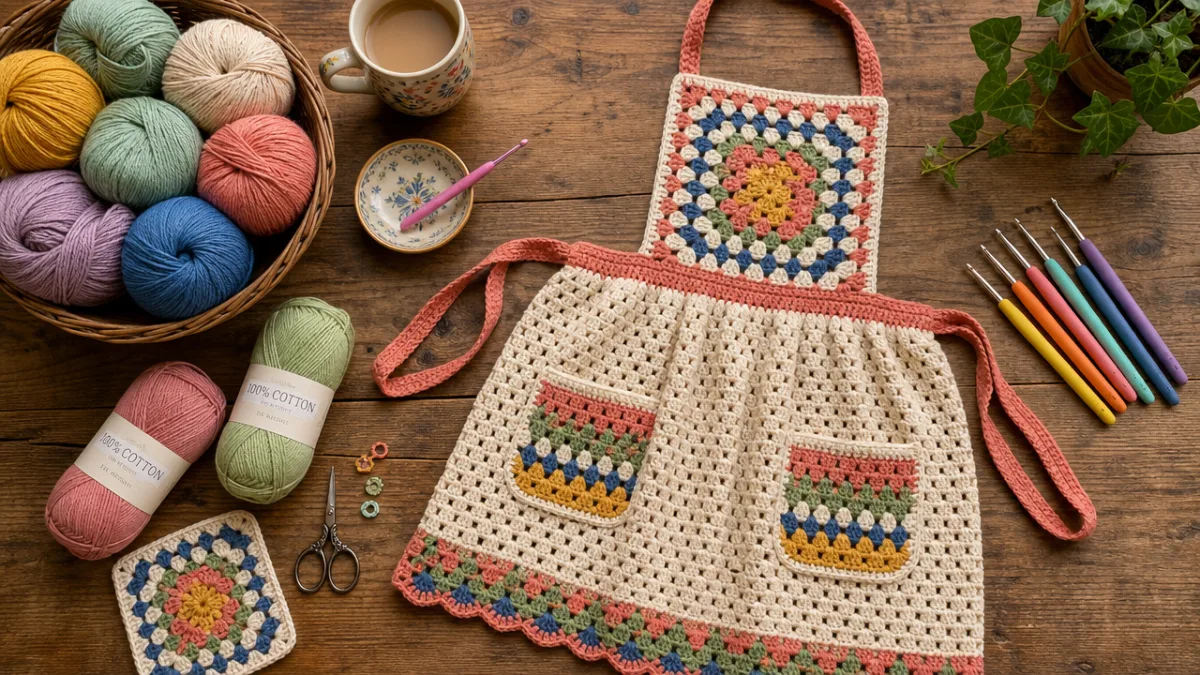
The classic waist apron is the most beginner-friendly design in our collection, and it is an excellent starting point for anyone who has never made a garment before. The pattern uses simple single crochet and double crochet stitches worked in rows to create a flat, rectangular apron body with long ties attached at the top corners. There are no complex shaping techniques, no joining in the round, and no tricky stitch combinations — just clean, straightforward work that results in a polished and professional-looking finished piece.
What makes this pattern particularly appealing is its versatility. The basic apron body is worked in a simple stitch that creates a dense, protective fabric, while an optional border in a contrasting color adds a decorative finish that elevates the overall look. The ties are crocheted as long chains with slip stitches worked back along the chain, which creates a sturdy and flat cord that will not twist or tangle when tied behind the back. This small design detail reflects the practical thinking that goes into a well-designed apron pattern.
The classic waist apron pattern also includes instructions for a large centered pocket, which is the feature most gardeners find most useful. The pocket is wide enough to hold a pair of gardening gloves, and deep enough that they will not fall out when you bend over. Some makers choose to add a vertical line of surface slip stitches down the center of the pocket to divide it into two compartments — one for gloves and one for small hand tools like a trowel or dibber — which is a simple and very effective modification.
Adapting the Classic Waist Apron for Different Uses
One of the great strengths of a simple apron pattern is how easily it can be adapted for different purposes and personal preferences. The classic waist apron, for example, can be lengthened into a full-coverage bib apron by adding a panel above the waist with neck straps. This modification adds only a modest amount of additional crocheting time but significantly increases the protection the apron offers, covering the front of your shirt and keeping it clean even when you are working with wet soil or liquid fertilizer.
You can also adapt the pocket configuration to suit your specific needs. Gardeners who carry a lot of small items — seed packets, plant labels, a pencil, a folding knife — might prefer to replace the single large pocket with a row of three or four smaller pockets, each sized to hold one or two specific items. This kind of organization can make your time in the garden more efficient and more enjoyable, because you always know exactly where to reach for what you need without fumbling through a crowded single pocket.
Color choices are another area where personalization makes a significant difference. A practical consideration for gardening aprons is choosing a color that does not show dirt too easily — deep greens, browns, navy blues, and charcoals are all excellent choices because they will continue to look presentable even after a season of regular use. That said, if you prefer bright colors and do not mind the lived-in look of a well-used gardening apron, there is absolutely no reason not to crochet yours in whatever color brings you the most happiness when you put it on.
Patterns Two Through Four: Intermediate Designs with Added Features
The second, third, and fourth patterns in our collection step up in complexity and introduce additional design features that many experienced gardeners will find particularly useful. These intermediate patterns assume a basic familiarity with crochet techniques such as working in the round, increasing and decreasing stitches to create shaping, and reading a pattern that includes multiple components worked separately and then assembled. If you have completed a few crochet projects successfully, you should be able to tackle these patterns with confidence.
Pattern Two introduces a bib apron format with a shaped neckline and adjustable neck strap. The shaping around the neckline is achieved through a series of decreases that create a smooth curve, and the neck strap is made with a length of chain stitch that can be shortened or lengthened by simply adjusting how many chains you work before finishing off. This pattern also features a large kangaroo-style front pocket that spans almost the full width of the apron, making it ideal for gardeners who carry bulky items like seed catalogues or folded garden plans.
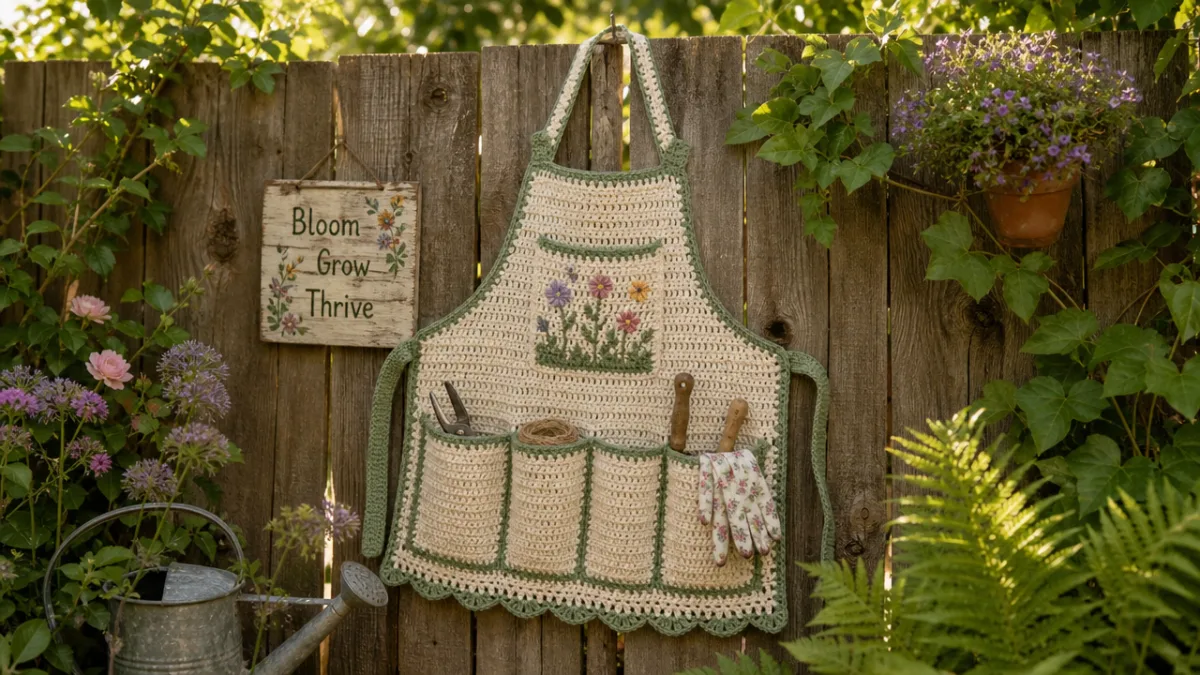
Patterns Three and Four both feature tool-specific pocket designs — long, narrow pockets sized to hold individual hand tools such as secateurs, a hand fork, or a small cultivator. Pattern Three places these tool pockets on the front panel of the apron in a vertical arrangement, while Pattern Four arranges them horizontally along the lower edge, creating an apron that resembles a carpenter’s tool belt in its functionality. Both approaches are valid and the best choice depends on which layout feels most intuitive for your personal working style in the garden.
Stitch Patterns That Add Both Beauty and Durability
Several of the intermediate patterns in our collection make use of stitch patterns that serve both decorative and structural purposes. The moss stitch, which alternates single crochet and chain stitches, creates a fabric with a beautiful texture while also producing a denser and heavier material than plain single crochet. This extra weight helps the apron hang properly and stay in position as you move around the garden, rather than shifting and twisting as lighter fabrics sometimes do.
The half double crochet stitch is another excellent choice for apron bodies because it creates a fabric that is thicker than double crochet but works up faster than single crochet. Many of the patterns in our collection use half double crochet for the main body and single crochet for the pockets, creating a subtle textural contrast that looks intentional and polished. This combination also ensures that the pockets are slightly stiffer and more structured than the main body, which helps them hold their shape when filled with tools and supplies.
For makers who want to incorporate more visual interest into their aprons, some of the patterns suggest using a simple shell stitch or fan stitch border around the edges. These decorative borders add a touch of elegance to what is essentially a utilitarian garment, and they also serve the practical function of stabilizing the edges of the apron to prevent them from curling or stretching out of shape over time. A well-finished edge is one of the hallmarks of a high-quality handmade item, and it is worth taking the time to add even a simple single crochet border around the perimeter of any apron you make.
Patterns Five Through Seven: Advanced and Specialty Designs
The final three patterns in our collection represent the most ambitious and specialized designs, and they are best suited to crocheters who have a solid foundation of skills and are comfortable working from detailed instructions. These patterns incorporate techniques such as colorwork, working with multiple yarn weights simultaneously, and constructing three-dimensional elements like reinforced pockets and structured waistbands. The resulting aprons are genuinely impressive pieces that demonstrate the full potential of crochet as a craft for creating functional and beautiful everyday items.
Pattern Five is a full-length apron with a structured bib, a padded waistband for extra comfort during long gardening sessions, and a system of six individual tool pockets of varying sizes. The padded waistband is created by working a wide band of dense fabric and then folding it in half and joining the edges, creating a double-thickness strap that distributes the weight of a fully loaded apron much more comfortably than a single-layer waistband can. This is a design feature more commonly seen in professional work aprons, and it makes a real difference when you are wearing the apron for several hours at a stretch.
Patterns Six and Seven introduce colorwork elements — stripes in Pattern Six and a simple geometric motif worked in tapestry crochet in Pattern Seven. Colorwork requires managing multiple yarn strands simultaneously and is technically more demanding than single-color crochet, but the results are visually striking and well worth the extra effort. Both patterns include detailed guidance for managing yarn ends and maintaining consistent tension across color changes, which are the two most common challenges that crocheters encounter when working with multiple colors for the first time.
Special Finishing Techniques for a Professional Result
The finishing process is where a handmade apron is transformed from a collection of crocheted pieces into a polished, professional-looking garment. Blocking is one of the most important finishing steps — it involves wetting the finished apron thoroughly, gently stretching it to the correct dimensions, and allowing it to dry flat. Blocking relaxes the stitches, evens out any inconsistencies in tension, and allows the fabric to open up and show its full texture. A blocked apron will always look significantly better than an unblocked one, even if the crocheting itself was worked to a high standard.
Weaving in yarn ends securely is another critical finishing task. Every time you join a new ball of yarn or change colors, you create a yarn end that must be woven into the fabric to prevent it from working loose over time. For a gardening apron that will be washed regularly, it is particularly important to weave in ends carefully and over a sufficient length of fabric — at least two inches — using a sharp-tipped yarn needle. Some makers also add a small drop of fabric glue to the final woven end for extra security, particularly in high-stress areas like the corners of pockets and the bases of straps.
Finally, consider adding practical hardware elements to reinforce the points of greatest stress on your apron. D-rings or swivel clips on the waist ties allow you to unfasten the apron quickly without undoing a bow, which is a small convenience that adds up significantly over the course of a gardening season. Metal or resin buttons can be sewn onto pockets with a simple button loop closure to keep tools from falling out when you bend over. These additions require only basic sewing skills and a few minutes of additional work, but they substantially increase both the practicality and the durability of the finished apron.
Care, Maintenance, and Long-Term Use of Your Crocheted Apron
A well-made crocheted gardening apron, cared for properly, should last for many years of regular use. The care requirements for cotton crochet are generally simple and straightforward, which is one of the reasons cotton is so popular for practical items like aprons. Most cotton yarns are machine washable, and washing your apron regularly is actually beneficial — it removes the soil, plant material, and garden chemicals that accumulate with use, and it also softens the cotton fibers gradually, making the apron more comfortable against your skin over time.
When washing your apron, use a gentle cycle with cold or warm water rather than hot, as high heat can cause cotton yarn to shrink slightly and may cause colors to fade more quickly. A mild detergent without bleach is ideal for maintaining the color and integrity of the yarn. After washing, reshape the apron gently while it is still damp and lay it flat to dry rather than hanging it, which can cause the fabric to stretch under its own weight, particularly when wet. Once dry, your apron should look as good as new and be ready for its next use in the garden.
Inspect your apron regularly for signs of wear, particularly in the areas that receive the most stress: the corners of pockets, the attachment points of straps, and the waistband. Minor damage caught early is always much easier to repair than damage that has been allowed to worsen through continued use. Keep a small amount of the yarn you used to make the apron set aside for future repairs — even a single skein stored away will ensure that you always have a perfect color match available when a repair becomes necessary. With this kind of attentive care, your crocheted gardening apron will become a treasured and indispensable part of your gardening routine for seasons to come.
Sharing Your Finished Apron and Finding Community
One of the most rewarding aspects of making something by hand is sharing it with others who appreciate the craft. The crochet community online is large, enthusiastic, and genuinely welcoming to makers of all skill levels. Sharing photographs of your finished gardening apron on platforms like Instagram, Pinterest, or dedicated crochet communities such as Ravelry allows you to connect with other makers, receive encouragement and constructive feedback, and inspire others who might be looking for their next project. Your finished apron could be the image that encourages someone else to pick up a crochet hook for the very first time.
If you adapt or modify any of the seven patterns in this collection to suit your personal needs, consider documenting your changes carefully and sharing them alongside your finished project photographs. The crochet community thrives on this kind of generosity, and your modifications — whether they are sizing adjustments, pocket configuration changes, or colorwork additions — could be exactly what another maker needs to make the pattern work for them. Contributing to the collective knowledge of the community is one of the most meaningful ways to participate in it.
Finally, a handmade crocheted gardening apron makes an exceptional gift for anyone who shares your love of the garden. A thoughtfully chosen yarn in the recipient’s favorite colors, combined with any of the patterns in this collection, will produce a gift that is genuinely unique, visibly made with care and effort, and useful in a way that a purchased item rarely can be. In a world increasingly filled with mass-produced goods, the handmade object carries a warmth and intentionality that people feel immediately and cherish for a long time.








What do you think?
It is nice to know your opinion. Leave a comment.