










20 Free Crochet Wallet Patterns For All Skill Levels
Introduction to Crochet Wallets: A Practical and Creative Craft Project
Crochet wallets have become one of the most beloved functional accessories that crafters of all experience levels enjoy making. Unlike purely decorative projects, a crochet wallet serves a genuine everyday purpose, making it a deeply satisfying item to complete. Whether you are a seasoned crocheter looking for your next challenge or a complete beginner eager to create something useful from the very start, wallet patterns offer an incredible range of complexity and style to suit your needs and ambitions.
The beauty of crochet wallets lies in their compact size and relatively quick completion time. Most wallet patterns can be finished in a single afternoon or spread across a couple of relaxed evenings, making them perfect for crafters who struggle to commit to large, long-term projects. This accessibility has contributed enormously to their popularity across online crafting communities, Pinterest boards, and crochet forums where makers love to share finished objects and celebrate each other’s work.
Free patterns have democratized the crafting world in a way that few other developments have. With dozens of talented designers generously sharing their work online at no cost, anyone with a hook, some yarn, and a bit of time can create a beautiful, functional wallet that rivals anything found in a boutique shop. This article explores twenty different free crochet wallet patterns spanning every skill level, helping you find the perfect project to dive into right now.
Why Crochet Wallets Make Excellent Projects
Beyond the obvious appeal of creating something you will actually use every single day, crochet wallets offer significant value as gifts. A handmade wallet carries a deeply personal quality that a store-bought version simply cannot replicate, communicating thoughtfulness and care that recipients genuinely appreciate. They work wonderfully as birthday gifts, holiday presents, or simple tokens of friendship and affection for people who love handmade items and the stories behind them.
From a skill-building perspective, wallet patterns introduce crocheters to essential techniques in a low-stakes environment. Working with zippers, adding button closures, creating structured fabric with tighter tension, and learning to work flat pieces that fold correctly are all lessons embedded naturally within wallet construction. Beginners gain confidence rapidly because the small scale means mistakes are easier to spot and correct before they compound into larger problems across the work.
Beginner-Friendly Crochet Wallet Patterns
Starting out in the world of crochet can feel overwhelming when you browse pattern libraries filled with intricate lace shawls and complex garments requiring advanced techniques. Wallet patterns for beginners cut through that anxiety by offering structured, straightforward instructions that rely primarily on the single crochet stitch, the most fundamental technique in the craft. If you can chain, single crochet, and slip stitch, you already possess every skill needed to complete the simplest wallet patterns available.
The basic bifold wallet pattern is perhaps the most popular starting point for new crocheters. This classic design involves crocheting two rectangular panels of identical size and then joining them along three edges to create a pocket structure. Many designers offer step-by-step photo tutorials alongside their written instructions, walking beginners through every stage from starting chain to finishing weave. The result is a clean, minimalist wallet that holds cards and folded bills with ease while showcasing the neat texture of simple crochet fabric.
Another excellent beginner option is the simple card holder wallet, which forgoes the complexity of currency storage entirely and focuses on creating a small, slim case for credit cards and identification. These patterns typically involve working a rectangle and adding a few interior pockets using slip stitch joins. The small dimensions mean that even small yarn stashes are sufficient to complete the project, and the quick finishing time provides that essential feeling of accomplishment that keeps new crafters motivated and engaged with their developing hobby.
Choosing the Right Yarn for Beginner Wallet Projects
Yarn selection makes an enormous difference in both the process and outcome of any crochet wallet project, and beginners in particular benefit from understanding a few key principles before purchasing materials. Cotton yarn is almost universally recommended for wallet projects because of its durability, minimal stretch, and ability to hold structural shape without sagging over time. Acrylic yarns, while perfectly suitable for softer items like scarves and blankets, often lack the firmness needed to create a wallet that maintains its form through daily use.
Worsted weight cotton is the most beginner-friendly option, providing enough thickness to work quickly and comfortably while still creating fabric that is appropriately sturdy for a wallet. Many crafters favor mercerized cotton specifically, which has a subtle sheen that elevates the finished appearance of the piece significantly. Colors in cotton tend to be vibrant and clear, meaning your finished wallet will look polished and intentional rather than homespun, a distinction that matters both for personal use and when gifting your creations to others.

Intermediate Crochet Wallet Patterns With Added Features
Once you have mastered the basics and completed a few simple wallet designs, intermediate patterns open up an exciting new world of functional features and decorative possibilities. These patterns typically introduce zipper installations, button closures, wrist straps, coin pockets, and more sophisticated construction methods that transform a basic pouch into a truly polished accessory. The jump from beginner to intermediate in wallet making is less intimidating than in many other crochet categories because the overall structure remains familiar and the new elements are added incrementally.
The zip-around wallet is perhaps the most iconic intermediate project in this category. These designs feature a continuous zipper that runs around three sides of the wallet, creating a secure closure that keeps contents safely contained. Installing a zipper for the first time can feel daunting, but most patterns that include this feature offer detailed guidance on whipstitching the zipper tape to the crochet fabric in a way that looks clean and professional. Once mastered, zipper installation opens the door to dozens of other bag and accessory projects that use the same technique.
Wristlet wallets represent another popular intermediate design that combines the functionality of a wallet with the convenience of a small handbag. A short wrist strap, typically crocheted or made from hardware store chain, attaches to one corner of the wallet and allows the wearer to carry it hands-free at concerts, markets, and casual outings. These patterns require attention to strap attachment points to ensure the finished piece is strong enough to bear light weight without the seams pulling or distorting over time with regular use.
Incorporating Stitch Patterns Into Intermediate Wallets
One of the greatest joys of intermediate-level wallet making is the freedom to incorporate decorative stitch patterns into the outer panels of the design. While beginner wallets typically use single crochet throughout to maximize fabric density and durability, intermediate crafters can experiment with moss stitch, herringbone half double crochet, basketweave patterns, and even simple shell stitch borders that add significant visual interest without compromising structural integrity. The key is ensuring that any decorative stitch still creates a sufficiently tight fabric that cards and coins cannot slip through gaps.
The moss stitch, sometimes called the linen stitch or seed stitch, is particularly well-suited to wallet projects because it creates a woven textile appearance that looks remarkably sophisticated for its relative simplicity. Alternating between single crochets worked into chain spaces creates a dense, slightly textured fabric with excellent structural properties. Many crafters who first encounter this stitch in a wallet pattern quickly find themselves applying it to tote bags, pouches, and other accessories because of how effectively it mimics woven fabric in the finished piece.
Advanced Crochet Wallet Patterns for Experienced Crafters
Advanced crochet wallet patterns challenge even experienced makers with intricate construction methods, complex stitch combinations, and multi-component designs that require careful planning and precise execution. These projects often draw inspiration from traditional leatherworking and millinery, adapting the structured, compartmentalized designs of professional wallet making into the medium of yarn and hook. The results can be genuinely breathtaking, producing pieces that are indistinguishable from high-end boutique accessories at a fraction of the cost.
The accordion-style travel wallet is one of the most ambitious patterns in this category, featuring multiple expanding card slots, a zippered coin compartment, a currency sleeve, and sometimes even a small document pocket for passports or travel cards. Constructing this type of wallet requires the ability to work multiple pieces simultaneously, join them with invisible or near-invisible seams, and maintain consistent tension across different fabric densities. The organizational benefits of the finished piece make the considerable time investment entirely worthwhile for anyone who travels frequently or simply values having a place for everything.
Fair isle and tapestry crochet techniques bring an entirely different dimension to advanced wallet making, allowing crafters to work intricate two-color or multi-color geometric and pictorial designs directly into the fabric as they crochet. Unlike post-work embroidery or surface embellishment, tapestry crochet creates patterns that are structurally integrated into the wallet itself, meaning the design is visible on the exterior while the carried yarn on the interior adds an extra layer of fabric density that actually improves durability. Mastering color tension management is the central challenge of this approach.
Finishing Techniques That Elevate Advanced Wallets
The difference between a good crochet wallet and a truly exceptional one often comes down entirely to finishing technique rather than the complexity of the crochet itself. Blocking, the process of wetting or steaming finished pieces and pinning them to shape while they dry, is essential for advanced wallets that need to maintain precise dimensions and crisp edges. Cotton yarn responds beautifully to wet blocking, relaxing into perfect flatness that makes assembly dramatically easier and the finished piece far more polished in appearance.
Lining a crochet wallet with fabric is another finishing technique that separates intermediate work from advanced craftsmanship. A fabric lining not only adds structural support and prevents small items from catching on the crochet stitches but also creates a clean, professional interior that completely conceals any messy joining seams or yarn ends. Many advanced patterns include detailed instructions for cutting, folding, and hand-stitching fabric linings using a simple whipstitch that creates a nearly invisible join between the textile and crochet components of the finished wallet.
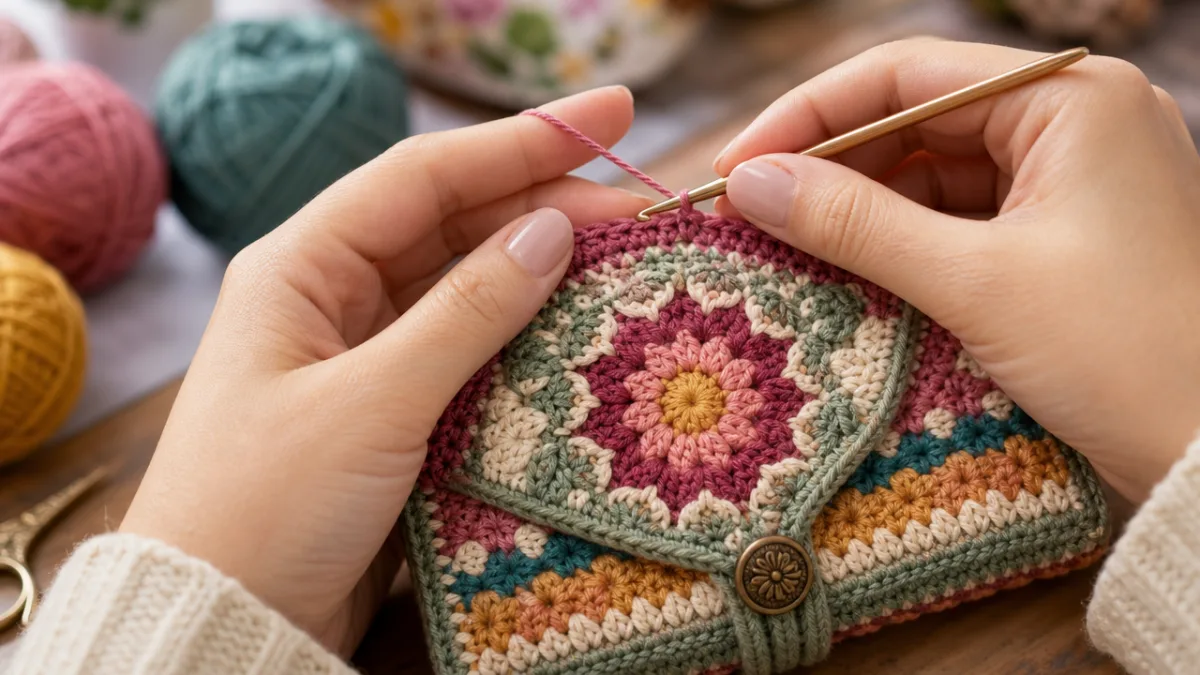
Materials, Tools, and Tips for Making Free Crochet Wallet Patterns
Successfully completing any crochet wallet pattern, regardless of difficulty level, depends heavily on having the right tools and materials on hand before you begin. While crochet is one of the most accessible crafts in terms of startup costs, a few key investments make a significant difference in both the crafting experience and the quality of the finished object. Understanding what you actually need versus what is simply nice to have helps new and experienced crafters alike make smart, economical choices when preparing for a wallet project.
A stitch marker set is perhaps the most underrated essential tool for wallet making. Because wallets involve working flat panels that must be joined with precision, marking specific stitches at regular intervals helps you count accurately, maintain consistent dimensions across multiple pieces, and identify joining points without confusion. Locking stitch markers are particularly useful because they can be clipped onto individual stitches and remain secure even when the work is moved, handled, or set down between crafting sessions without losing their position in the fabric.
Interfacing and stabilizers from the sewing section of craft stores are excellent additions to the wallet maker’s toolkit that many crochet-specific tutorials overlook. Woven interfacing can be ironed onto the fabric lining pieces before they are stitched into the wallet, adding rigidity and body that keeps the finished piece standing upright and maintaining its shape over years of regular use. Heat-and-bond fusible interfacing requires no sewing skill to apply and dramatically upgrades the structural quality of even the simplest wallet design without adding significant complexity to the construction process.
Finding and Using Free Crochet Wallet Patterns Online
The internet offers an almost inexhaustible supply of free crochet wallet patterns through platforms including Ravelry, AllFreeCrochet, Pinterest, Etsy free download sections, and individual designer blogs and websites. Navigating this abundance requires developing a few habits that help you assess pattern quality before committing your time and materials. Always look for patterns that include clear photographs of the finished object from multiple angles, as these give you the best possible understanding of what you are working toward and help you spot potential fit or construction issues before they arise mid-project.
Reading through the complete pattern before purchasing any materials or picking up your hook is one of the most important habits any crocheter can develop. This preliminary read-through helps you identify any techniques you are unfamiliar with, note any specialty materials like zippers or hardware that you will need to source separately, and assess whether the written instructions are clear enough for your current skill level. Many free patterns have accompanying comment sections or Ravelry project pages where other crafters have noted corrections, modifications, and helpful tips that significantly improve the making experience.
Saving and organizing patterns you want to make in the future prevents the frustrating experience of losing track of a design that captured your imagination. Creating a dedicated Pinterest board, a Ravelry queue, or even a simple bookmarks folder organized by difficulty level gives you an instantly accessible personal library of projects ready to begin whenever inspiration strikes. Many crafters find that having a well-curated project queue reduces the decision fatigue that can otherwise interrupt creative momentum and keep them crafting consistently throughout the year.
Caring for Your Finished Crochet Wallet
A well-made crochet wallet, constructed from quality cotton yarn and finished with care, can last for years with appropriate maintenance. Cotton is a naturally washable fiber that handles gentle machine washing without shrinking or distorting, provided you use a cool temperature setting and a mesh laundry bag that protects the wallet from snagging on other items in the load. For wallets with metal zipper hardware, hand washing is preferable to prevent any potential corrosion or discoloration that extended moisture exposure can cause with lower-quality zipper pulls and sliders.
Reshaping your wallet after washing helps maintain its original dimensions and clean lines through repeated cleaning cycles. While the piece is still damp, gently manipulate it back to its correct flat shape, paying particular attention to corners and edges that tend to curl if left to air dry without intervention. Pinning the wallet to a foam blocking board while it dries takes only a few minutes and makes an enormous difference in keeping the finished piece looking as sharp and well-structured as the day it was completed, preserving the quality of your craftsmanship for much longer.

The Community and Culture Around Free Crochet Wallet Patterns
The crochet community is one of the most generous and supportive creative communities in the crafting world, and the culture surrounding free pattern sharing exemplifies this generosity beautifully. Designers who publish free wallet patterns do so out of genuine love for the craft and a desire to contribute to a community that gave them their own start. Many professional designers began their careers by publishing free patterns that built their following and reputation, establishing a pay-it-forward culture that continues to benefit beginners entering the craft today.
Social media platforms, particularly Instagram, Pinterest, and TikTok, have transformed the way crochet wallet patterns circulate and gain popularity. A single designer sharing a beautifully photographed wallet tutorial can reach millions of potential crafters within days, inspiring a cascade of finished projects that each add unique variations in color, yarn, and modification. This viral quality of pattern sharing has accelerated the evolution of wallet design significantly, with each new popular pattern inspiring dozens of derivative designs and innovations from other crafters who build upon the original work.
Crafting circles, local yarn shops, and online communities like Ravelry groups provide spaces where wallet makers can share progress photos, ask questions, troubleshoot problems, and celebrate completions together. The social dimension of making is something that many crafters cite as central to their enjoyment of the hobby, and wallet projects with their relatively quick completion times are particularly well-suited to community makes where everyone works on the same pattern simultaneously and shares their results at a set endpoint. These shared projects build real relationships and deepen commitment to the craft in lasting ways.
Turning Your Crochet Wallet Skills Into a Small Business
Many crafters who begin making wallets for personal use and as gifts eventually discover that their finished pieces attract genuine commercial interest from friends, family, and the wider public. Online marketplaces like Etsy have made it remarkably accessible for individual makers to sell handmade accessories directly to buyers who value the craft and quality of handmade goods over mass-produced alternatives. A well-photographed crochet wallet listed with thoughtful descriptions of materials, dimensions, and care instructions can find buyers consistently across multiple seasons and occasions.
Pricing handmade crochet items fairly is a conversation that the crafting community engages with seriously and passionately. A common framework involves calculating material costs, then multiplying the time spent making by a fair hourly rate, and adding a margin for platform fees and packaging. Many new sellers dramatically underprice their work initially, failing to account adequately for the genuine skill, time, and creativity embedded in each piece. Understanding your worth as a maker and pricing accordingly not only sustains your small business financially but also contributes to normalizing fair compensation across the handmade marketplace as a whole.
Beyond selling finished objects, experienced wallet makers who have mastered numerous free patterns sometimes develop the skills and confidence to design their own original patterns and share them online. Writing a clear, accurate crochet pattern is itself a significant creative skill requiring precise technical language, logical construction sequencing, and thorough testing across multiple yarn weights and hook sizes. Designers who consistently publish high-quality free wallet patterns build loyal audiences that support their work through pattern purchases, Patreon memberships, and workshop attendance, creating sustainable creative careers grounded in the generosity that defines the crochet community at its best.








What do you think?
It is nice to know your opinion. Leave a comment.