










10 Fun and Free Stash Buster Afghan Crochet Patterns
What Is a Stash Buster Afghan and Why Every Crocheter Needs One
If you’ve been crocheting for any length of time, you’ve almost certainly accumulated what crafters affectionately call a “yarn stash” — that glorious, ever-growing collection of leftover skeins, partial balls, and impulse purchases that pile up in baskets, bags, and bins around your home. A stash buster afghan is exactly what it sounds like: a crochet blanket project specifically designed to help you use up those odds and ends sitting in your collection. Rather than letting perfectly good yarn gather dust, these projects transform your scraps into something beautiful, functional, and deeply satisfying to make.
The beauty of stash buster afghans lies in their flexibility and forgiving nature. Unlike precision garments that require exact yardage in a single colorway, these blankets are built around the idea that variety is a feature, not a flaw. You can mix weights, colors, and fiber types in ways that would be considered unconventional in other projects, and the result often ends up looking intentional, eclectic, and wonderfully one-of-a-kind. No two stash buster afghans are ever the same, which means every finished piece is a truly unique creation.
Beyond the practical benefits of clearing out your craft space, stash buster afghans offer a creative challenge that more structured projects simply don’t. When you’re working with what you have rather than shopping for specific materials, you’re forced to make unexpected color combinations work, problem-solve on the fly, and develop a more intuitive sense of design. Many experienced crocheters say that their most beloved finished objects came from stash-busting sessions, precisely because the constraints pushed them toward creative decisions they never would have made otherwise.
How to Choose the Right Pattern for Your Yarn Collection
Before you dive into any stash buster project, it pays to spend a few minutes taking stock of what you actually have on hand. Sort your yarn by weight first — worsted, bulky, DK, and so on — because mixing wildly different weights within the same project can create texture inconsistencies that are difficult to manage unless the pattern is specifically designed for it. Once you know what weight categories dominate your stash, you can choose a pattern that plays to your strengths and makes the most of the largest portion of your collection without requiring you to purchase supplemental yarn.
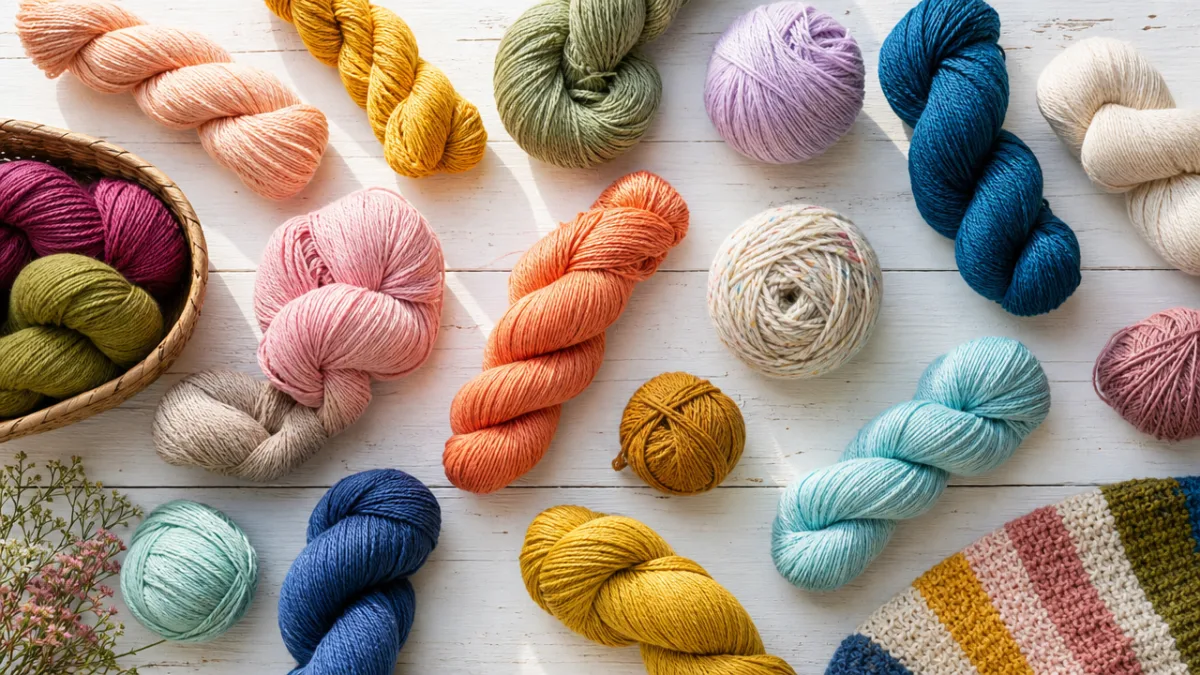
Color is the next major consideration, and it’s where stash busting becomes genuinely fun. Lay out your yarn on a neutral surface and look at the overall palette. Do you have mostly warm tones — reds, oranges, yellows — or do cool blues and greens dominate? Is there a surprising amount of neutrals hiding in there? Understanding your accidental color palette helps you choose a pattern structure that will make those colors sing. Striped afghans, for instance, work beautifully when you have a wide range of colors because each stripe frames the next. Granny square patterns, on the other hand, let you mix multiple colors within each individual motif.
You’ll also want to think about the size of your individual yarn remnants. If most of your leftovers are very small — less than 50 yards — you’ll want to look for patterns that use color in very short bursts, such as thin stripes or small motifs. If you have chunkier amounts in the 100–200 yard range, you have more flexibility and could consider larger blocks or thicker stripes. Patterns that are modular, meaning they’re built from many smaller pieces joined together, are often the most accommodating because you can adjust the number of modules to suit however much yarn you have available at any given moment.
Top Pattern Styles That Work Brilliantly as Stash Busters
Striped afghans are perhaps the most classic and accessible stash buster pattern style, and for very good reason. The construction is straightforward: you work rows or rounds in one color, switch to another, and keep going until you run out of a color or the blanket reaches your desired size. The simplicity of this format means even beginner crocheters can tackle it with confidence, while the endless variation in color sequence keeps the project engaging from start to finish. Some of the most visually striking striped afghans come from completely random color selection — simply reaching into your stash bag and pulling out whatever your hand lands on first.
Granny squares hold a legendary status in the stash-busting world, and they’ve earned every bit of that reputation. Each square is small enough to use up tiny remnants, and the closed nature of each motif means you can confidently exhaust one color before moving to the next without worrying about running short mid-row. Once you have a pile of finished squares, the joining process itself becomes its own creative exercise — how you arrange and combine them determines the overall look of the finished blanket. You can go for a perfectly planned gradient arrangement or an entirely random explosion of color; both approaches produce stunning results.
Planned pooling and color block patterns offer a slightly more structured approach for crocheters who want their stash buster afghan to look more intentional and less improvisational. In a color block design, you work larger sections of each color before transitioning, which creates a modern, graphic aesthetic that looks anything but scrappy. This style works particularly well if your stash happens to contain several colors that complement each other naturally. Some popular color block patterns also incorporate simple texture stitches like the moss stitch or linen stitch within each block, adding dimensional interest without requiring complicated color work.
Five Highly Recommended Free Afghan Patterns to Try Right Now
The Planned Color Block Afghan is a perennial favorite among stash busters for its clean, modern look and its straightforward construction. Worked in simple single or double crochet across a series of color blocks, this pattern is highly adaptable to whatever yarn weights and quantities you have on hand. The key to making it look polished is choosing colors that have good contrast with their neighbors, so each block reads as distinct rather than blending into a muddy middle ground. This pattern is widely available for free on major crochet resource websites and requires no specialized skills beyond basic stitches.
The Scrappy Striped Throw is another outstanding option that truly shines when made with a completely random assortment of colors. The pattern typically involves working double crochet rows of varying widths — sometimes just two rows of one color, sometimes six or eight of another — which creates a rhythm that’s pleasingly unpredictable. Many crocheters who have tried this pattern report that it becomes almost meditative once you get going, because the stitch pattern is simple enough to work while watching television or listening to podcasts, yet the changing colors keep the project from ever feeling monotonous or boring.
For those who love working with motifs, the Rainbow Granny Square Afghan is a joyful project that uses up even the tiniest yarn scraps with remarkable efficiency. Each small granny square uses only a few yards of yarn per round, meaning you can genuinely clear out those infuriating little leftover bits that feel too small to do anything useful with on their own. The finished blanket, assembled from dozens or even hundreds of these cheerful squares, has a wonderful heirloom quality — it looks like something a grandmother might have made from decades of accumulated fabric and fiber, and that sense of history and continuity is part of its considerable charm.
- Planned Color Block Afghan — ideal for medium-sized remnants of 3–4 coordinating colors, works in any weight
- Scrappy Striped Throw — perfect for large collections of small leftovers, beginner-friendly construction
- Rainbow Granny Square Afghan — the ultimate tiny-remnant solution, produces a cheerful heirloom-quality blanket
- Log Cabin Block Afghan — strips of color worked outward from a center square, highly customizable sizing
- Mosaic Stitch Sampler Afghan — uses only two colors at a time, great for pairing contrasting scraps creatively

Tips and Tricks for Managing Your Stash Buster Project Successfully
One of the biggest practical challenges with stash buster afghans is managing yarn ends, because every color change creates two new ends that need to be woven in before the project is truly finished. If you’re working a heavily striped or highly motif-based afghan, you could easily end up with hundreds of ends by the time you’re done, and tackling them all at once at the end of the project can feel genuinely daunting. The solution most experienced crocheters swear by is weaving in ends as you go — after every few color changes, take five minutes to secure and trim the ends you’ve already accumulated, so the task never becomes overwhelming.
Keeping track of which yarns you’ve already used and how much remains of each can also become confusing as the project grows, especially if you’re working from a large stash with many similar colors. A simple system that works well is to keep a small notebook or use a note-taking app on your phone to log each yarn as you introduce it — just jot down the brand, color name, and approximately how many yards you used. This practice helps you avoid accidentally running out of a color you intended to use more of, and it gives you a satisfying record of how many different yarns contributed to your finished piece. Some crafters find it meaningful to see that their blanket contains yarns from fifteen or twenty different projects spanning years of their crafting life.
Tension consistency is worth paying attention to as you switch between different yarns, particularly if your stash includes both smooth commercial acrylics and more textured natural fibers. Different yarn compositions behave differently under tension, and you may find that your rows look slightly looser or tighter when you transition between fiber types. If this happens, simply adjust your hook size slightly for those particular yarns rather than forcing yourself to maintain identical tension at the cost of comfort. A small amount of natural variation in your finished fabric actually adds to the handmade character of a stash buster afghan rather than detracting from it.
Making Your Stash Buster Afghan a Meaningful and Lasting Project
There’s something deeply meaningful about a stash buster afghan that goes beyond its practical function as a clutter-clearing exercise. Each yarn in your stash carries a memory — the skein you bought at that craft fair three years ago, the leftover from your niece’s baby blanket, the impulse purchase you made in a color that turned out to be more adventurous than your usual palette. When you incorporate all of those yarns into a single blanket, you’re creating a kind of textile diary, a physical record of your crafting journey woven together into something warm and useful. These kinds of objects tend to become genuinely treasured items within a family, passed down and pointed to with stories about their origins.
Gifting a stash buster afghan is a beautiful gesture precisely because of this layered history. Unlike a blanket made from a single purchased yarn, a scrappy afghan communicates effort, creativity, and a certain kind of generosity — the maker didn’t just buy materials for this specific recipient, they gave pieces of many different projects, many different moments of their creative life, all assembled with care into something new. Recipients who understand the crafting world will immediately recognize and appreciate what they’re holding. Even those who don’t crochet themselves often sense that there’s something special about the variety and unpredictability of a stash buster piece, something that mass-produced textiles simply cannot replicate.
Finally, completing a stash buster afghan carries its own particular satisfaction that more planned, precision-oriented projects don’t quite match. There’s a wonderful freedom in working without rigid rules — in saying yes to that weird mustard yellow because it’s what you have, in discovering that lime green and burgundy actually look striking together, in finishing a blanket that is entirely your own invention rather than a replication of someone else’s design. Whether you’re an absolute beginner looking for your first big project or a seasoned crocheter with decades of experience, a stash buster afghan offers creative challenge, practical reward, and the deep pleasure of turning accumulated scraps into something genuinely beautiful that will keep someone warm for years to come.








What do you think?
It is nice to know your opinion. Leave a comment.