










No-Mess Earth Day Painting for Toddlers & Preschoolers: A Complete Guide
Why Earth Day Art Matters for Young Children
Earth Day is honestly one of the best excuses to sit down with your little one and make something together. When toddlers and preschoolers dive into Earth-themed art, they’re not just slapping paint around — they’re starting to build a real relationship with the planet they live on. Those early moments plant tiny seeds of curiosity and care that can stick around for a lifetime. And since art is basically the native language of young kids, it’s one of the most natural ways to introduce big ideas like taking care of our world.
Early childhood research backs this up, too — hands-on, sensory activities help young kids absorb ideas in a way that talking at them just can’t. When a child dips a sponge into blue and green paint and presses it onto paper to make something that actually looks like Earth, the whole concept of “our planet” clicks into place. It stops being abstract and starts feeling real, beautiful, and worth caring about — no lecture required.
It also opens the door to some really lovely, low-pressure conversations about nature, recycling, water, and animals. While kids are busy creating, you can casually toss out questions like “What color is the ocean?” or “Where do animals live?” You’re building vocabulary, curiosity, and a genuine emotional connection to the environment all at the same time. The art becomes less of an activity and more of an ongoing conversation between your child and the world around them.
The No-Mess Approach: Why It Works So Well for Toddlers
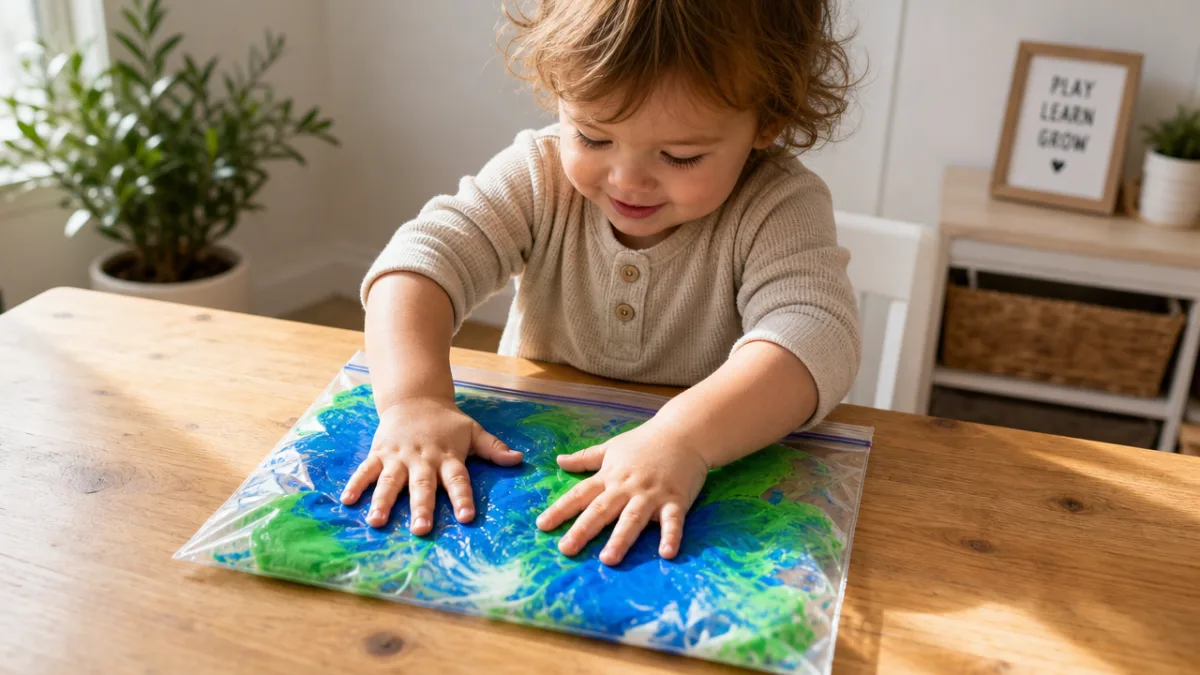
If you’ve ever handed a two-year-old an open cup of paint, you already know how that story ends — approximately thirty seconds later, it’s on the wall, the dog, and somehow the ceiling. The no-mess painting technique sidesteps all of that by sealing paint inside a ziplock bag or under plastic wrap, so kids can smoosh, swirl, and blend to their heart’s content without ever actually touching the paint. For parents who love the idea of art but dread the aftermath, it’s kind of a game-changer.
What makes this method so great is that it removes basically every obstacle that makes caregivers hesitant about art activities with tiny kids. No stripping down to the diaper, no spreading newspaper across every surface, no hovering with a paper towel ready to intercept disaster. Setup takes maybe five minutes, and cleanup is usually just tossing a bag in the recycling. When art is this easy to pull off, it happens more often — which is a win for everyone.
From a developmental angle, it’s also a really smart fit for toddlers. Kids can press, push, pinch, and drag paint across the surface with their fingertips, getting all that satisfying tactile feedback in a totally controlled way. For little ones who are sensitive to messy textures or who panic at the thought of wet paint on their hands, this is a much gentler way in. They get every bit of the sensory and fine motor benefit without any of the overwhelm.
Materials You Will Need
Here’s some good news: you probably already have most of what you need. This isn’t one of those activities that requires a special craft store run or a big spend. The whole point is that it’s simple, affordable, and ready to go whenever you are — which is exactly what busy parents need.
Here’s everything you’ll need to get a no-mess Earth Day painting session going:
- Gallon-size ziplock bags (one or two per child)
- Blue and green washable tempera or acrylic paint
- White cardstock or heavy paper cut into a circle (to represent Earth)
- Strong tape such as duct tape or packing tape to secure the bag
- Optional: white paint for clouds or swirling effects
- Optional: a small amount of hair gel or clear glue to thicken the paint mixture
- A flat, smooth surface for children to work on
One little trick worth knowing: mixing a bit of hair gel or clear school glue into the paint before sealing the bag makes it thicker and more satisfying to work with. It moves more slowly, which means kids get more time to enjoy the swirling before everything blends into one muddy color. Younger toddlers especially tend to get frustrated when thin paint mixes too fast, so the thicker version is much more rewarding. Plus, the results just look cooler — those slow, dragged swirls are genuinely beautiful. If you want to make setup even more fun, loop in an older preschooler to help you mix the ratios.
Step-by-Step Instructions for the Activity
Getting the setup right makes a real difference between a smooth, happy session and one that ends in tears (yours or theirs). Start by slipping the circular white cardstock into the ziplock bag — that white background will show through the paint and give the finished Earth a clean, polished look. Squeeze three or four generous blobs of blue paint and a couple of blobs of green directly onto the paper inside the bag. If you’re using the hair gel trick, mix it with the paint before it goes in. Seal the bag firmly and press out as much air as you can.
Once it’s sealed, run a strip of strong tape along the top edge so curious little fingers can’t pry it open. Set the bag flat on the table in front of your child and show them how to press and drag their fingers across it. Try some circles, some zigzags, some gentle pressing. Honestly, most kids barely need any encouragement once they feel that satisfying give of the paint beneath their fingertips — they just go for it. Give them plenty of free time to explore before gently nudging them toward “swirly oceans” or “grassy lands” if they seem to want a bit more direction.
Here’s a simple step-by-step to follow:
- Place the circular paper inside the bag and add paint blobs.
- Seal the bag tightly and reinforce with tape along all edges.
- Lay the bag flat on a smooth table surface.
- Invite your child to press and swirl the paint with their fingers.
- Allow free exploration for as long as the child is engaged.
- When finished, carefully open the bag and remove the paper.
- Allow the painted Earth to dry flat on a clean surface.
- Display proudly or use as part of an Earth Day card or decoration.
Once it’s dry, the fun doesn’t have to stop there. Preschoolers might love adding continents with a thin marker, or cutting out the circle and mounting it on a dark background to look like Earth floating in space. Some families turn the finished pieces into Earth Day cards to send to grandparents. Others tape them to a window where the light shines through the translucent layers of paint and creates this gorgeous stained-glass effect — kids absolutely love seeing their work lit up like that.

Extending the Learning: Earth Day Conversations and Activities
The painting itself is already full of learning, but the conversations that happen around it can make the whole experience even richer. While kids are working, you have this natural, unhurried window to weave in Earth Day ideas in a way that feels warm and relaxed rather than like a lesson. Talking about why we use blue and green helps them connect those colors to oceans and land they’ve maybe seen in books or on a globe. Asking “Who lives in the ocean?” or “What grows in the green parts?” gets imagination, language, and early science thinking all firing at once.
After you’re done painting, it’s worth keeping the Earth Day thread going through the rest of your day with simple activities that build on the same ideas. Reading a picture book about nature, picking up litter at the park, watering a plant together, sorting recyclables at home — all of it carries that spirit forward into real life. Young children learn so much better when ideas come up again and again in different settings, so even something small like pointing to a bird outside and saying “We take care of Earth so animals like that bird have a home” can land in a surprisingly big way.
For preschool classrooms, this activity works beautifully as the centerpiece of a longer Earth Day unit spanning several days or a whole week. Pair it with a simple water filtration experiment, a dramatic play “nature center,” or a group sorting activity using recyclables kids bring from home. The bag painting tends to stick in kids’ memories — it’s visual and tactile and just plain fun — so it becomes a natural touchstone throughout the unit. “Remember when we made the Earth picture?” can open the door to deeper conversations again and again.
Tips for Success and Adapting for Different Ages
Every kid is different, and even two siblings close in age can react to this activity in completely opposite ways. Younger toddlers between twelve and twenty-four months might just want to press their whole palm flat against the bag and watch the colors move around — and that’s genuinely wonderful and developmentally appropriate. Don’t feel any pressure to steer very young children toward a “finished product.” The process is the whole point. Just sit beside them, narrate what you’re seeing, and follow their lead.
Preschoolers aged three to five will usually be more interested in what the thing looks like at the end and can be guided a bit more intentionally. They might want to try specific shapes, mix colors on purpose, or declare that they’re making “real” continents. Follow where they go with it and try not to jump in and take over. If a preschooler announces that their purple swirl is Antarctica, be enthusiastic about it. The goal here is creative confidence and a warm feeling toward learning about the world — not geographic accuracy. Kids who feel proud of what they made tend to stay curious and engaged as they get older.
A few extra tips that tend to make the whole thing go more smoothly:
- Do the activity at a time of day when your child is rested and not hungry for best engagement.
- Sit beside your child rather than across from them to create a collaborative, side-by-side experience.
- Use a non-slip mat or damp cloth under the bag to keep it from sliding.
- Have a second bag ready in case the first one breaks or a sibling wants to join in.
- Photograph the process, not just the finished piece — children love seeing pictures of themselves creating.
- Allow children to decide when they are “done” rather than imposing a stopping point.
It’s also worth thinking about how to adapt this for kids with different abilities, because it genuinely is a very flexible activity. Kids with limited hand strength can use a soft roller or the heel of their palm instead of fingertips. Children who are sensitive to visual stimulation might do better with a single color combination that has clear contrast. For kids working on specific fine motor goals, the bag painting can actually become a targeted exercise — you can encourage pinching motions, bilateral hand use, or directional strokes in a way that feels like play rather than therapy. The no-mess format already removes a lot of barriers, which makes this activity genuinely inclusive in a way that’s easy to build on.

Making It a Family Tradition
Earth Day is April 22nd every year, and there’s something really sweet about building a family ritual around it. Just like you might have special things you do around the holidays or on birthdays, an annual Earth Day art activity gives kids something to look forward to and a sense of continuity year after year. If you save the finished paintings in a folder or portfolio, you get this lovely record of how your child’s art — and their understanding of the world — has grown over time. From the swirly, paint-blended chaos of toddlerhood to the more intentional work of early school age, it becomes a little time capsule.
You can also open it up beyond your immediate family. A simple Earth Day playdate where kids and caregivers make bag paintings together, then head out to a local park or garden, reinforces the idea that taking care of the Earth is something we do as a community, not just as individuals. Those shared experiences build friendships alongside values, and give children the sense that they’re part of something bigger — a whole group of people who genuinely care about the world they live in.
At the end of the day, no-mess Earth Day painting for toddlers and preschoolers is about so much more than keeping your floors clean. It’s an invitation to wonder. It’s a starting point for real conversations. It’s a small, joyful act of connection between a child and the planet they’re growing up on. When we give young kids beautiful, low-stakes ways to engage with ideas like Earth Day, we’re not just filling an afternoon — we’re helping to shape thoughtful, caring people who carry with them the memory of pressing blue and green swirls across a page and thinking: this is our Earth, and it’s worth loving.








What do you think?
It is nice to know your opinion. Leave a comment.