










The Power of Words in the Crafting World
Crafting is more than just a hobby — it is a form of self-expression that connects the maker to something deeper than the physical act of creating. Whether you are knitting, painting, sculpting, or weaving, the process of making something with your own hands carries a unique kind of magic. Inspirational quotes have long served as a companion to this creative journey, offering a spark of motivation when a project feels difficult, a reminder of purpose when the creative well feels dry, and a sense of community with makers across centuries and cultures.
Words have the remarkable ability to shift perspective. A single sentence, read at the right moment, can transform frustration into determination or self-doubt into confidence. For crafters, who often work in solitude with their materials, a meaningful quote pinned above the workspace or tucked inside a sketchbook becomes a quiet conversation with other artists, writers, and thinkers who understood the struggle and the joy of creating. These words become an invisible thread connecting all makers across time.
The tradition of pairing craft with wisdom is ancient. Artisans throughout history have sought philosophical grounding for their work, from Renaissance painters who studied classical texts to contemporary textile artists who draw on feminist theory and ecological thought. Today, platforms like Pinterest have made it easier than ever to collect and share these fragments of inspiration, building visual libraries of motivation that fuel the creative process and invite others into the conversation about what it means to make something meaningful.
Why Quotes Resonate with Makers
Crafters tend to be deeply reflective people. The repetitive, meditative nature of many crafting activities — the rhythm of a needle through fabric, the patient shaping of clay, the methodical building of a mosaic — creates space for thought and feeling. In these quiet hours, a resonant quote can crystallize something the maker has been sensing but could not quite articulate. It gives language to an experience that is otherwise wordless, making it feel recognized and valid in a way that is profoundly comforting.
There is also a social dimension to sharing crafting quotes. When someone repins an inspirational phrase or writes it on a card for a fellow maker, they are offering both encouragement and solidarity. They are saying, in effect, that the struggle to create is real, that it is shared, and that it is worth continuing. This communal act of sharing wisdom builds a culture of support within the crafting community that sustains individual makers through the inevitable challenges every creative project brings.
Quotes That Celebrate the Creative Process
Some of the most beloved crafting quotes focus not on the finished object but on the act of making itself. “The creation of something new is not accomplished by the intellect but by the play instinct,” Carl Jung once wrote — a sentiment that resonates with crafters who find that their best work emerges when they let go of rigid expectations and allow themselves to experiment freely. The process-oriented quote invites makers to release attachment to outcomes and embrace the joy of exploration as its own reward, worthy of celebration regardless of what the final piece looks like.
Quotes celebrating process often acknowledge that mistakes are not failures but essential teachers. Many experienced crafters hang variations of the idea that there are no mistakes in art, only unexpected opportunities, somewhere visible in their studios. This philosophy is particularly liberating for beginners who may abandon a project at the first sign of imperfection. When the guiding principle is curiosity rather than correctness, every crooked stitch or uneven cut becomes data rather than disaster, a step in the education of a growing maker.
The process-focused quote also speaks to the value of patience. Craft is inherently slow — it resists the acceleration that defines so much of modern life. Quotes that honor slowness and deliberate effort remind crafters that their work is a form of resistance as well as creation. In making something carefully and by hand, they are asserting that some things are worth taking time over, that quality and presence matter, and that the human touch has a value no machine can replicate. This is a quietly radical statement in the contemporary world.
- “Creativity is allowing yourself to make mistakes. Art is knowing which ones to keep.” — Scott Adams
- “The object isn’t to make art, it’s to be in that wonderful state which makes art inevitable.” — Robert Henri
- “Start where you are. Use what you have. Do what you can.” — Arthur Ashe
- “Every artist was first an amateur.” — Ralph Waldo Emerson

Overcoming Creative Blocks with Inspiration
Every crafter, regardless of skill level or experience, encounters the dreaded creative block. It arrives without warning: the blank canvas that offers no invitation, the half-finished quilt that suddenly seems impossible to complete, the clay that refuses to take the shape you imagined. In these moments, turning to inspirational quotes is not merely a sentimental act — it is a practical strategy for reconnecting with the reasons you create in the first place and for reminding yourself that this difficulty is a normal part of the creative cycle rather than evidence of your inadequacy.
Psychologists who study creativity have found that mild frustration can actually precede breakthroughs, that the sense of being stuck often signals that the mind is working hard beneath the surface to solve a problem it has not yet articulated. Quotes that acknowledge this experience — that name the valley between inspiration and execution without minimizing how uncomfortable it feels — can provide real relief to a blocked maker. Knowing that even legendary artists described feelings of creative paralysis makes the experience feel less isolating and more like a rite of passage shared by everyone who dares to make things.
One particularly powerful strategy is to keep a collection of quotes that speak specifically to perseverance and return to them deliberately when the creative energy flags. This is not passive reading but an active ritual of re-motivation. Some crafters write their favorite encouragements in large letters on studio walls, others keep a dedicated notebook, and still others build elaborate digital boards that function as personal manifestos. The medium matters less than the intention: to remind yourself, in your own chosen words, that you are a maker, and makers keep going.
Building a Personal Quote Collection
Curating a personal collection of inspirational quotes is itself a creative act. The quotes you choose reveal something about your values, your creative identity, and the kind of maker you aspire to be. Someone drawn to quotes about precision and mastery may be on a different path than someone who collects sayings about spontaneity and joy, and both paths are equally valid. Your collection evolves as you do, shedding quotes that no longer fit and discovering new ones that speak to where you are in your creative development at any given moment in life.
The act of seeking out quotes also leads crafters into unexpected intellectual territory. Hunting for the perfect sentiment about the joy of making might lead you to the journals of Frida Kahlo, the letters of Vincent van Gogh, the essays of Annie Dillard, or the teachings of a contemporary artist you had never encountered. Each quote is a doorway into a larger conversation about creativity, purpose, and the human need to make meaning through physical objects. Following these threads enriches not just your quote collection but your entire understanding of what it means to be an artist.
Sharing your collection generously with others multiplies its value. When you pass along a quote that changed something for you, you participate in the long tradition of creative mentorship that has sustained artistic communities throughout human history. You become a link in a chain that stretches back through every quilter, weaver, potter, and painter who ever found the right words at the right moment and was moved to keep creating, to keep showing up at the worktable, to keep believing in the worth of what their hands could make.
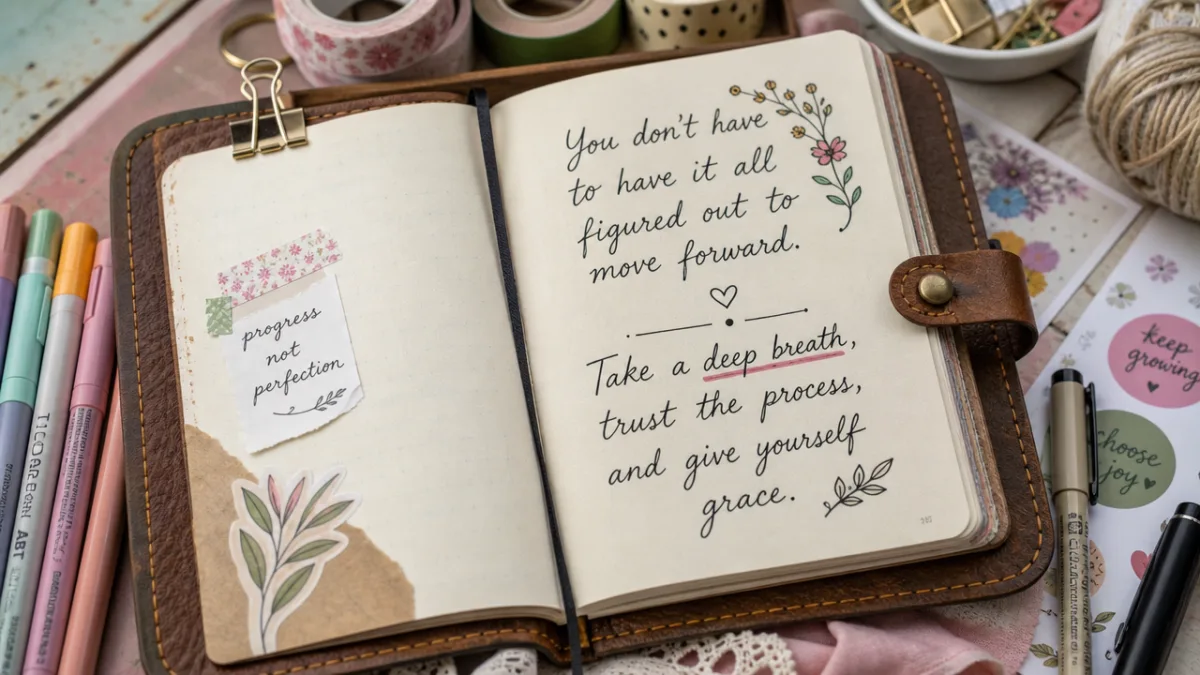
Famous Crafters and Artists on the Joy of Making
The history of art and craft is rich with eloquent statements about the deep satisfaction of working with one’s hands. Georgia O’Keeffe, whose paintings transformed the way Americans saw their own landscape, spoke often about the necessity of doing the thing she most wanted to do rather than what others expected. Her words remind contemporary crafters that the choices we make about how to spend our creative time are not trivial — they are acts of self-determination that shape who we become and what we contribute to the world around us.
William Morris, the visionary behind the Arts and Crafts Movement, believed so passionately in the dignity of handmade objects that he built an entire aesthetic philosophy around it. “Have nothing in your houses that you do not know to be useful or believe to be beautiful,” he famously declared, a standard that continues to inspire makers who see their craft as both artistic practice and social statement. Morris understood that craft was a form of resistance to industrialization and dehumanization, a way of insisting that beauty and quality belonged not only to the wealthy but to everyone who had access to materials and the willingness to learn.
Contemporary makers like textile artist Faith Ringgold and ceramicist Edmund de Waal have added their voices to this tradition, speaking and writing about how their materials connect them to history, memory, and community. De Waal, whose book The Hare with Amber Eyes traces a collection of netsuke through generations of his family, describes the act of holding an object made by another person as a form of intimacy across time. This idea — that the things we make carry something of us within them — is perhaps the most profound reason crafters continue to be inspired by words as much as by materials and tools.
- Georgia O’Keeffe — on following your deepest creative instincts without apology
- William Morris — on the social and aesthetic power of handmade beauty
- Faith Ringgold — on art as storytelling and community memory
- Edmund de Waal — on objects as repositories of human connection across time
- Anni Albers — on the intelligence inherent in working with textile and material
What Modern Crafters Are Saying
The contemporary crafting community has generated its own rich vocabulary of inspiration, much of it circulating through blogs, podcasts, social media, and the kind of vibrant visual platforms that Pinterest exemplifies. Modern crafters write with refreshing candor about perfectionism, comparison culture, the economics of making, and the tension between creating for love and creating for income. Their words feel different from the pronouncements of historical artists — more conversational, more vulnerable, more aware of the complicated realities facing anyone who tries to sustain a creative practice in the twenty-first century.
Quotes from makers like illustrator Lisa Congdon, who began her professional art career in her late thirties, carry particular weight for people who fear they have started too late. Her writings about persistence, daily practice, and the gradual accumulation of skill have encouraged countless crafters who believed the door to creative fulfillment had closed for them. These modern voices democratize inspiration, making it clear that the life of a maker is available to anyone willing to pick up the tools and begin, regardless of age, background, formal training, or prior experience.
Integrating Inspirational Quotes into Your Creative Space
The physical environment in which you craft has a profound effect on your creative state of mind, and the words you choose to place within that space are an important element of its design. Many experienced crafters have found that a thoughtfully arranged studio or craft corner, adorned with personally meaningful quotes, functions almost as a co-creator — a presence that holds certain values steady even on days when motivation is hard to find. The words become part of the atmosphere, working quietly on the subconscious even when you are not actively reading them.
There are many creative ways to incorporate inspirational text into your crafting space. You might embroider a favorite quote onto a hoop and hang it above your worktable, or paint it in large, loose letters directly onto the wall. You might collect beautiful letterpress prints of meaningful phrases, or make your own hand-lettered versions as a way of practicing a new skill while surrounding yourself with encouragement. Some crafters create rotating displays, swapping out quotes seasonally or whenever they feel the need for a fresh perspective, keeping the space feeling alive and responsive to their changing creative needs.
Beyond the physical space, quotes can be woven into creative rituals in other meaningful ways. Starting each crafting session by reading a chosen quote aloud, or copying it into a journal before picking up your tools, can serve as a threshold ritual that signals to the mind a shift from ordinary time to creative time. These small ceremonies of beginning matter more than they might appear to — they build a psychological association between intention and action that makes it easier to enter a focused creative state, even on busy or distracted days when the transition from daily life to creative work feels particularly difficult to make.
- Embroider quotes onto fabric hoops for a textile-friendly display that doubles as a craft project
- Hand-letter favorites onto kraft paper and layer them in gallery-wall arrangements
- Write daily quotes in a dedicated sketchbook as a warm-up practice before the main work begins
- Print and laminate cards to keep in a project bag so inspiration travels with you
- Use a chalkboard wall or panel to rotate quotes weekly or monthly

Making Your Own Inspirational Craft Art
One of the most satisfying ways to engage with inspirational quotes is to transform them into craft projects themselves. Hand lettering, calligraphy, cross-stitch, macramé, and decoupage are all traditions that have long incorporated text, and today’s makers are exploring increasingly inventive ways to render meaningful words in physical form. When you take a quote that matters to you and spend hours carefully stitching or painting or carving it, you internalize it in a way that passive reading never could achieve. The words become literally embedded in the work of your hands.
These text-based craft projects also make deeply personal gifts. A hand-embroidered quote chosen specifically for the recipient — something that speaks to their particular creative journey, struggle, or triumph — carries a weight of care and attention that no purchased item can match. It communicates that you saw them clearly enough to choose words that fit, and that you valued them enough to spend your time and skill making something beautiful specifically for them. In this way, inspirational craft projects become expressions of love as much as demonstrations of skill, weaving connection between makers and the people who matter most to them.
The beauty of using quotes as a starting point for craft projects is that they provide a structure within which enormous creative freedom is possible. The words themselves are fixed, but every other decision — color, texture, scale, material, technique, surrounding imagery — belongs entirely to the maker. This combination of constraint and freedom is one of the most generative conditions for creativity, offering enough direction to prevent the paralysis of a completely blank slate while leaving ample room for genuine personal expression. In this sense, the inspirational quote becomes not just a source of motivation but a genuine creative collaborator, shaping the work while being shaped by it in return.








What do you think?
It is nice to know your opinion. Leave a comment.