










Easy Shirt Display: Transform Your Closet Into a Stylish Showcase
Why Displaying Your Shirts the Right Way Actually Matters
Most of us treat our closets like a holding cell for clothes — shove everything in, shut the door, hope for the best. But how you actually store and display your shirts matters more than you’d think. It affects your daily routine, what you end up wearing, and how long your clothes hold up. When shirts are crammed into drawers or buried under a pile, you end up cycling through the same handful of things on top while completely forgetting that half your wardrobe exists. A better display system changes that pretty quickly.
And yes, a well-organized closet looks great — but an easy shirt display isn’t really about aesthetics at its core. It’s about building a system that actually works with how you live. When you can see every shirt at a glance, mornings get faster and way less annoying. You stop buying that same grey tee for the fourth time because you finally know you already own three. Over time, that saves real money and a surprising amount of mental energy.
There’s also a psychological angle here that doesn’t get nearly enough attention. Research in environmental psychology suggests that tidy, visually appealing spaces genuinely reduce stress and give you a greater sense of control. Your closet is literally the first space you interact with each morning — and walking into something that feels calm and put-together sets a better tone for the rest of the day than digging through a chaotic pile does. A little upfront effort goes a long way when you’re cashing in on it every single morning.
Choosing the Right Display Method for Your Space
Before you start pulling everything out and reorganizing, take a real look at the space you’re working with. A walk-in closet opens up completely different possibilities than a small reach-in, a bedroom wall, or a freestanding rack. The best shirt display is always the one that actually fits your space — not the dreamy Pinterest setup in a sprawling luxury wardrobe. Start by measuring what you’ve got and noticing where light naturally falls, because being able to see your shirts clearly is the whole point.
For smaller spaces, wall-mounted options are usually the smartest move. A simple row of hooks or a horizontal wall rod takes up almost zero floor space while keeping everything visible and within reach. Open shelving works really well for folded shirts too, especially if you pair it with a consistent folding technique like the KonMari file-fold, which lets you see every shirt in a stack rather than just whatever ended up on top. These approaches are great for apartments, small bedrooms, and tight closets where every inch genuinely counts.
If you’ve got more room to work with, freestanding clothing racks have exploded in popularity for good reason — they’re flexible, movable, affordable, and actually look nice when you put a little thought into how you style them. An industrial pipe rack or a simple wooden rail can do double duty as both storage and a design feature in a bedroom or dressing area. Open wardrobes and modular shelving systems take it even further, letting you mix hanging space with folded storage, accessories, and some decorative touches to build something that feels genuinely yours.
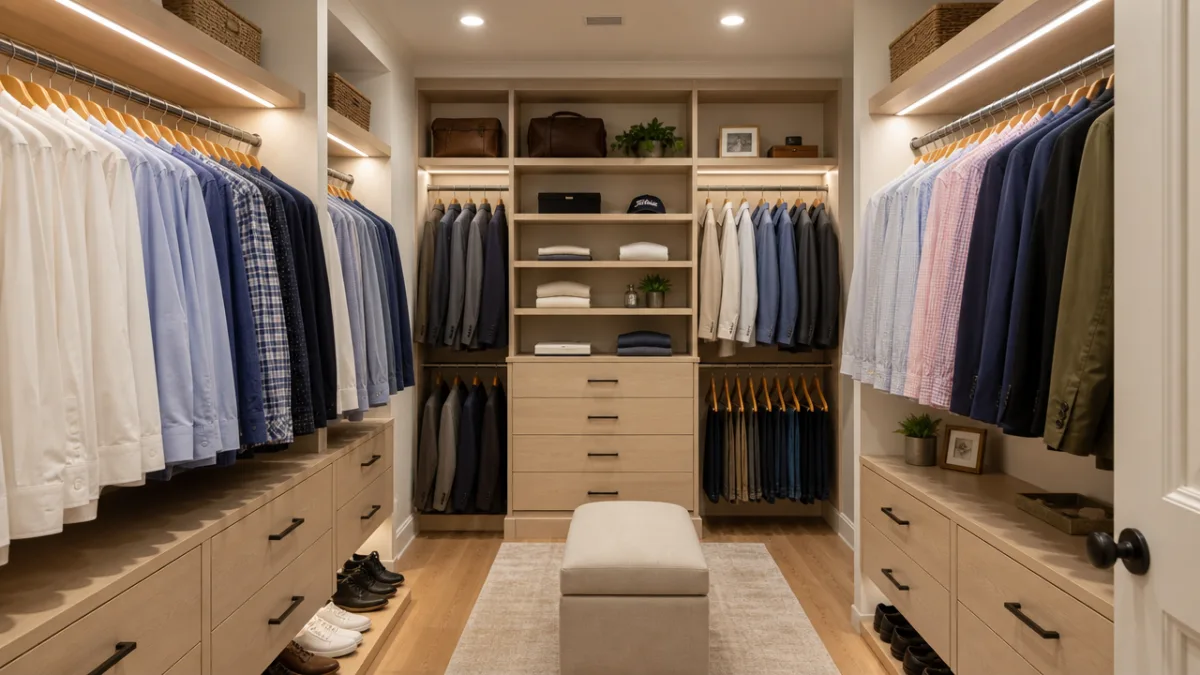
Step-by-Step Guide to Setting Up Your Shirt Display
The first step is always a real, honest edit of what you own. Pull every shirt out of wherever it’s been living and lay it all out on your bed or floor. Seeing everything at once makes it easy to spot duplicates, stuff that no longer fits, things you haven’t touched in years, and shirts that are just plain done. Be a little ruthless here — a display system works best when it holds things you actually love and wear, not when it’s just storing every shirt you’ve ever owned in a slightly tidier way.
Once you’ve trimmed things down, sort what’s left into categories that actually match your life. Some people organize by color, others by type (casual tees, button-downs, polos, workout gear), occasion (work, weekend, athletic), or season. There’s no universal right answer — the best system is whichever one matches how your brain works when you’re getting dressed. If you always think “I need something for the office,” sort by occasion. If you think in colors, sort by color family. Follow your own instincts on this one.
Now it’s time to actually set everything up. Here’s how to get a clean, functional result:
- Install or position your display system — hooks, rod, rack, or shelves — at a height where every shirt is easy to grab without stretching or crouching. Accessibility matters more than you’d think.
- Use matching hangers for anything you’re hanging. Mixed hangers create visual noise and make even a tidy closet look chaotic. Slim velvet hangers are widely considered the best option for shirts — they’re thin, grippy, and make everything look intentional.
- Leave a small gap between hanging shirts so they’re not touching. This lets you see each piece clearly and prevents wrinkling from being pressed together.
- For folded shirts on shelves, file-fold them and store upright in rows rather than stacking flat, so every shirt in the row is equally visible and accessible.
- Face all hanging shirts the same direction on the rod. It’s a small thing, but it makes the whole display look deliberate rather than thrown together.
Once everything is hung or folded and in place, step back and take a look. Notice anywhere that feels crowded or hard to read at a glance. Adjust the spacing, and think about whether color-coding actually helps you navigate it or just feels like extra pressure to maintain. The goal is a system you’ll naturally keep up because it’s genuinely easy and pleasant — not one so perfect that messing it up feels like a failure.
Creative Display Ideas That Go Beyond the Basic Closet Rod
One of the more interesting shifts in home organization over the past decade is the rise of the open wardrobe — borrowed partly from how retail stores display clothing, and partly from the growing influence of Scandinavian and Japanese minimalist interiors. Instead of hiding clothes behind closed doors, an open display makes your wardrobe a deliberate part of the room. When your shirts are curated and displayed with some intention, there’s really no reason to tuck them away. They become part of the decor.
Ladder racks are a particularly stylish and affordable option that works in almost any room. A simple wooden or metal ladder leaned against a wall can hold a surprisingly good number of shirts draped over the rungs, and the casual, artistic quality of it gives a room a lived-in, put-together feel. It works especially well in spaces with a bohemian, Scandinavian, or industrial vibe. It’s also a great way to keep a “current rotation” of your most-worn shirts separate from the rest of your wardrobe, which a lot of people find genuinely helpful for simplifying their morning routine.
Pegboards are another creative option that’s highly flexible and surprisingly cheap. A large pegboard panel on a bedroom or closet wall can hold hooks, small shelves, and hanging rods in whatever configuration you need — and you can rearrange the whole thing any time your needs shift. You can hang accessories alongside shirts, add small shelves for folded pieces, and build something that’s completely tailored to your wardrobe. Painted a contrasting color or left natural, a pegboard wall becomes a real style statement while solving a genuinely practical problem.
If you want to highlight specific pieces you love — a vintage band tee, a beautifully printed shirt, or something special you picked up on a trip — here are a few display-as-art approaches worth considering:
- Framed shirt display: Deep-frame shadow boxes let you mount a special shirt flat against a backing and hang it on the wall like a piece of art, while keeping it protected from dust.
- Decorative wall hooks: A row of beautiful cast-iron, brass, or ceramic hooks can display a few carefully chosen shirts as a curated gallery wall element rather than just functional storage.
- Clear acrylic display rails: Minimalist acrylic floating rails give shirts an almost frameless, gallery-quality presentation that looks really sharp in modern interiors.
- Vintage store fixtures: Antique or vintage retail display rails and fixtures bring real character to a shirt display, and you can often find them for surprisingly little at flea markets and estate sales.
Maintaining Your Shirt Display: Habits That Keep It Looking Great
Even the most beautifully set-up shirt display will fall apart within a few weeks without a couple of simple habits to back it up. The good news is that maintaining it doesn’t take much time at all — it just takes a handful of small habits done consistently. The most important one is what you might call the immediate return: whenever you pull a shirt out to try on and decide against it, or take one off and don’t put it straight in the wash, put it back in its right spot immediately rather than draping it over a chair. That single habit prevents the slow creep of disorder that quietly kills most organization systems.
A monthly refresh is another routine worth building in. Once a month, spend about ten minutes looking over your display and making small adjustments — re-fold anything that’s gotten messy, re-hang anything that slipped, and move anything that migrated out of its zone back where it belongs. It’s also a good time to notice any shirts you haven’t touched since the last time you did this, and ask yourself honestly whether they belong in your active display or whether it’s time to move them to storage or donate them. Keeping the display to only what you actually wear makes the whole system work better.
Seasonal rotation takes this a step further and is especially useful if you live somewhere with real season changes. At the transition between warm and cool weather, take about thirty minutes to swap out your display — bring forward what’s relevant to the coming season and move off-season pieces to secondary storage. It keeps your display lean and practical all year, so you’re never shoving past heavy flannels to reach a summer tee in July, or digging behind rows of short-sleeves to find a thermal in January. A display that reflects the actual season just feels right, and it makes the whole system noticeably more pleasant to use day to day.
Budget-Friendly Tips for an Easy and Beautiful Shirt Display
A lot of people assume that a well-styled shirt display requires expensive custom built-ins or a full wardrobe renovation. It really doesn’t. Some of the most attractive and functional setups are put together almost entirely from affordable or secondhand materials. Thrift stores and secondhand marketplaces are fantastic sources for wooden hangers, vintage clothing racks, and wall hooks at a fraction of retail prices. IKEA’s wardrobe and shelving systems offer modular, good-looking options at reasonable price points, and their components mix and match well enough to work in almost any space.
DIY is another avenue worth exploring if you enjoy that sort of thing. A wall-mounted shirt rod can be built with two pipe flanges, a length of metal or copper pipe, and a couple of hours — total materials usually come in well under thirty dollars, and the result looks genuinely polished. Wooden dowel rods mounted between two wall brackets give a similar effect with a warmer, more natural look. Floating shelves for folded shirts can be cut from basic lumber and finished with paint or stain to match your existing space, creating a custom built-in look at very un-custom prices.
Honestly, the most underrated budget move of all is simply buying matching hangers. Swapping out a random mix of plastic, wire, and wooden hangers for one style of slim velvet hangers runs somewhere between fifteen and thirty dollars for a full closet, and the visual difference is kind of remarkable. The uniformity alone creates a sense of intention and calm that makes even a basic closet rod look like it was thoughtfully designed. Paired with a decent edit of your shirt collection and consistent spacing between garments, this one change can make your existing closet look dramatically more organized — no structural work or big spending required.
The Bigger Picture: How an Easy Shirt Display Improves Your Daily Life
It might sound like a stretch to say that reorganizing your shirts can meaningfully improve your daily life — but honestly, the evidence backs it up, both from research and from the countless people who’ve done it and noticed a real difference. Decision fatigue is a well-documented phenomenon where the quality of our decisions gradually drops after we’ve made too many of them. Getting dressed might feel like a small thing, but when a disorganized closet makes it harder than it needs to be, it chips away at the same mental resources you need for bigger decisions later. A clear, easy-to-navigate shirt display removes that friction and lets you start your day with one less thing draining you.
There’s also something interesting about how your physical environment connects to your sense of self, and it shows up in a real way with clothing display. When your shirts are visible, accessible, and presented in a way that looks nice, you engage with your wardrobe more consciously. You notice pieces you’d totally forgotten about and remember why you bought them. You start making more intentional choices about what you wear instead of defaulting to whatever’s easiest to grab. A lot of people find that reorganizing their closet leads them to develop a clearer, more defined personal style — simply because they can finally see and appreciate what they actually own.
And then there are the plain practical benefits, which add up to real time saved over the long run. Most people spend more time than they realize each week searching for specific clothing, dealing with shirts that got wrinkled from being stored badly and now need re-pressing, or re-buying things they couldn’t find but definitely owned. A well set-up display takes care of most of those friction points. Shirts stay wrinkle-free on proper hangers or in proper folds. Everything is visible and findable in seconds. Getting dressed takes minutes instead of whatever anxious searching your current closet might be putting you through. Over a year, those small time savings actually amount to something real — and the daily calm of a space that just works is something you’ll notice and appreciate every single morning.








What do you think?
It is nice to know your opinion. Leave a comment.