










A Form of Worship: The Sacred Nature of Human Devotion
The Ancient Roots of Worship
Worship might just be the oldest thing humans have ever done. Long before anyone wrote anything down, before religions had names or cities had walls, people were looking up at the sky and feeling something they couldn’t quite describe but couldn’t shake either. We know this because the archaeological record tells us so — ritual spaces, carefully arranged objects, the unmistakable traces of ceremony going back tens of thousands of years. The urge to honor something bigger than yourself turns out to be baked into what it means to be human.
The word itself is worth pausing on. “Worship” comes from the Old English “weorthscipe,” which meant worthiness or honor — the act of saying, this thing matters above all else. In its earliest forms, worship was tangled up with survival in the most direct way. The sun that warmed your crops, the rain that filled your rivers, the forces you couldn’t control but depended on entirely — you revered these things because you understood, in your bones, that you were a small part of something much larger. And acknowledging that wasn’t weakness. It was wisdom.
From the painted caves of Lascaux to the stone circles of Stonehenge, from the ziggurats of ancient Mesopotamia to the burial mounds scattered across the Americas, evidence of human worship turns up on every continent and in every era we know anything about. No culture has ever been without it. That kind of universality isn’t an accident. It points to something running deep in human consciousness — a sense that existence is genuinely astonishing, that gratitude doesn’t have a ceiling, and that some experiences simply demand more than ordinary words can give them.
Worship Beyond Religion: The Secular Sacred
When most people hear the word “worship,” they picture churches, temples, mosques, synagogues — formal institutions with their own rules and rituals and doctrines. That’s a reasonable association. But if you look a little closer, worship turns out to be a much bigger thing than any institution can hold. Wherever someone is moved to genuine reverence, wherever they give their full attention and their deepest care to something beyond themselves, something like worship is happening — whether there’s a religious label on it or not.
Think about a musician who spends hours alone, running the same passage over and over, pushing their ego aside in service of the music itself — the tradition it belongs to, the listeners it will eventually reach. Or the scientist who dedicates decades to a single question about how reality works, not for money or recognition, but because something in them just has to know. These aren’t religious acts in any conventional sense, but they share the basic shape of worship: the whole self, oriented toward something considered genuinely worthy of that level of effort and devotion.
The philosopher Simone Weil put it beautifully when she wrote that genuine, undivided, self-forgetful attention is itself a form of prayer. By that measure, the parent sitting up through the night with a sick child, the teacher who prepares each lesson with real care, the craftsman who won’t let something go until it’s truly right — all of them are doing something that deserves to be called worship. The sacred, it turns out, doesn’t stay inside designated sacred spaces. It shows up wherever people bring their whole selves to something they love.
The Psychology of Devotion
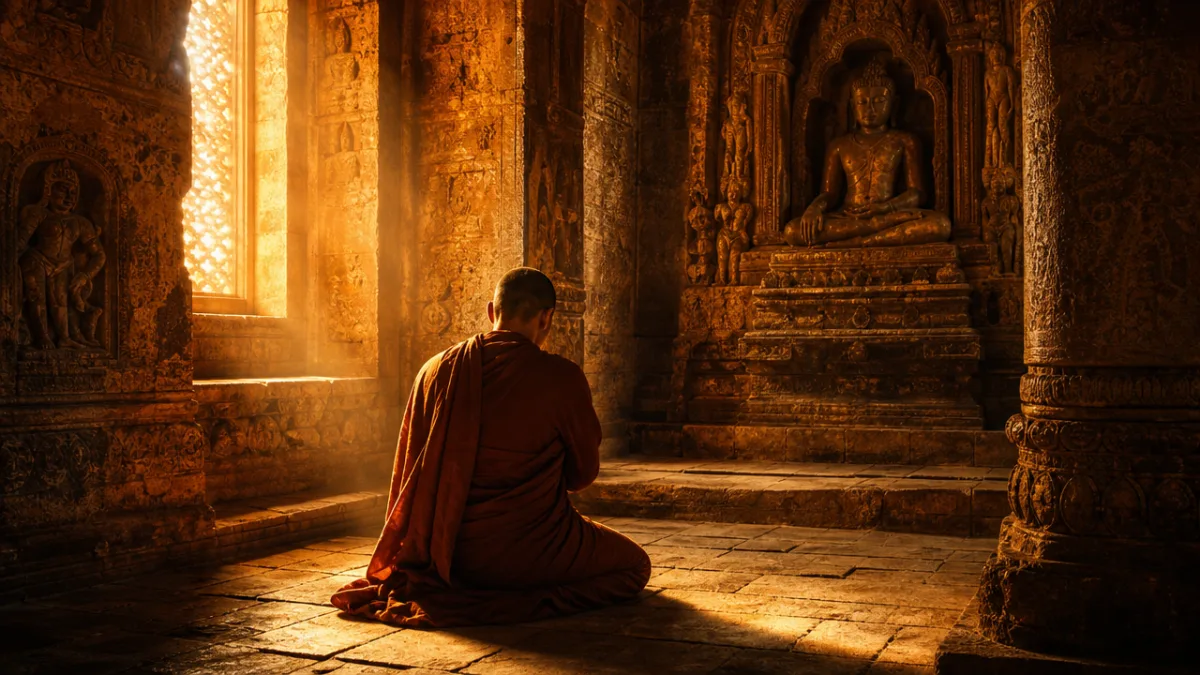
Psychology has been catching up to something that religious traditions have known for a long time: awe and reverence aren’t just pleasant feelings — they’re something we actually need. Researchers like Dacher Keltner and Jonathan Haidt have shown that experiences of awe, those moments when we run into something so vast it temporarily breaks our mental frameworks, have real, measurable effects on well-being, on how we treat other people, and even on physical health. The body, it turns out, responds to worship in ways that are genuinely good for it.
Something shifts when we enter a state of deep devotion or reverence. The nervous system settles. That anxious, status-conscious inner voice — what some researchers call the “small self” — loosens its grip. What rises in its place is a feeling of connection, of being part of something ongoing and much larger than any single life. This isn’t wishful thinking or avoidance. Many psychologists now argue it’s actually a more accurate way of perceiving reality — a momentary clearing of the self-centeredness that usually clouds our view of how relational existence actually is.
There’s also the question of meaning, which turns out to matter enormously. Viktor Frankl, writing from his time in Nazi concentration camps, observed that the people who survived the most extreme suffering were often those who had something to live for — some purpose that gave their pain a larger context. Worship, in its broadest sense, does exactly this. It places you in relation to something that matters absolutely, and that relationship becomes the ground you stand on when everything else is shaking.
The neuroscience is fascinating too. Studies of meditation, prayer, and ritual have found real changes in brain activity, suggesting these aren’t just symbolic gestures but genuine shifts in how the mind processes the self, time, and connection to others. The “default mode network,” which handles all that self-referential mental chatter, tends to quiet during deep spiritual practice. Meanwhile, regions tied to empathy and a sense of interconnection become more active. Worship, in a very literal sense, changes how we think.
Ritual, Repetition, and the Architecture of the Sacred
One thing you notice when you look at worship across cultures is how central ritual is — repeated, structured actions that create and sustain a sense of the sacred. Rituals get dismissed a lot in secular life as empty habits, formality without substance. But that dismissal misses something real. Repetition isn’t a sign of intellectual laziness. It’s a technology for transformation — a way of writing meaning not just into your mind but into your body, your daily rhythms, the shared life of a community.
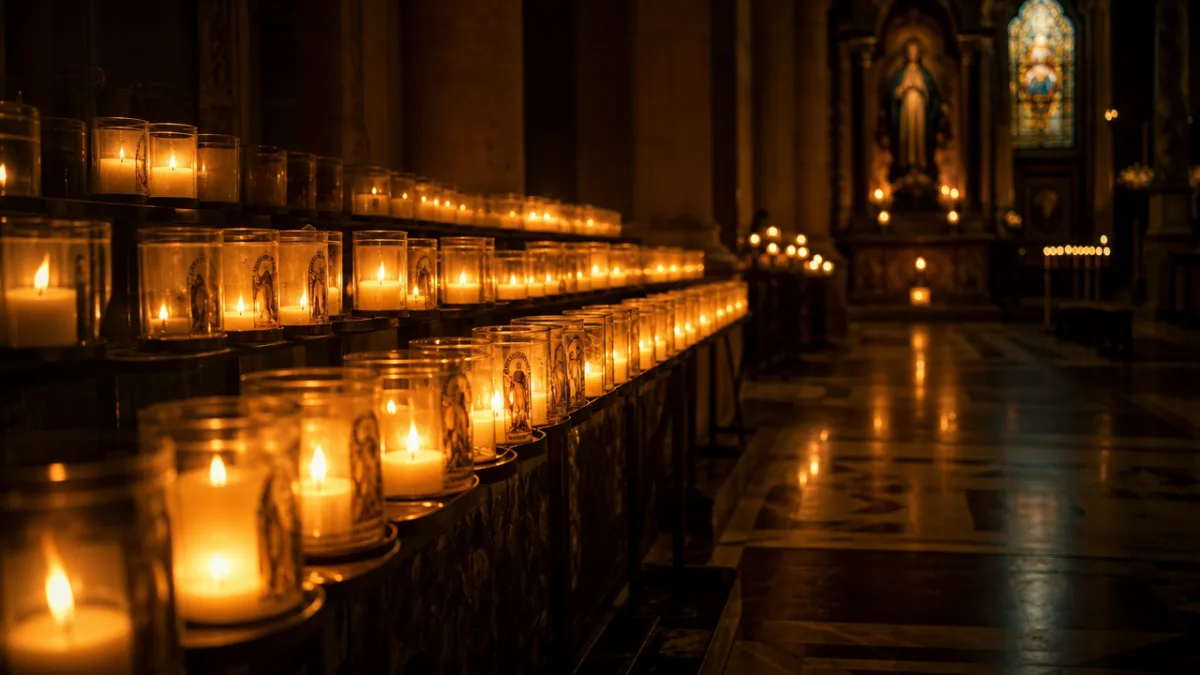
Take the Jewish Sabbath ritual of lighting candles at sundown each Friday. The act is simple enough: candles, a blessing, eyes covered while the prayer is spoken. But what it accomplishes is remarkable. It marks a threshold — the ordinary week stepping aside to make room for sacred time. It connects everyone present to millions of other people doing the same thing at the same moment, and to countless generations stretching back across millennia. The repetition is the whole point. Meaning builds up in repeated actions the way interest accumulates — slowly, quietly, until you look up one day and realize how much has gathered.
You see the same dynamic in places we wouldn’t normally call religious. The rituals of sport — the pre-game handshake, the national anthem, the carefully maintained rules of play — carve out a shared space where genuine human drama can unfold. The rituals of scholarship — peer review, citation, the careful acknowledgment of intellectual debts — keep the communal project of knowledge alive across generations. Even the small rituals of daily life — the morning coffee, the weekly family dinner, the bedtime story — do worshipful work, marking time as meaningful and binding us to each other and to the ongoing story of our lives together.
- Prayer and meditation: Structured practices that quiet the self and open attention toward the transcendent or the deeply real.
- Music and chant: Sound used as a vehicle for states of consciousness that ordinary speech cannot produce or sustain.
- Pilgrimage: The deliberate journey to a place held sacred, where the act of traveling becomes inseparable from the destination.
- Feast and fast: The regulation of bodily appetite as an expression of spiritual priority and communal solidarity.
- Sacred storytelling: The repetition of foundational narratives that locate the individual within a larger framework of meaning and value.
Nature as an Object of Worship
Among the oldest forms of worship — and one of the most enduring — is reverence for the natural world. Indigenous traditions on every continent have maintained deep, sacred relationships with the land, water, animals, and plants that human life depends on. These aren’t primitive superstitions waiting to be replaced by something better. They’re sophisticated responses to the genuine sacredness of the living world, a sacredness that secular modernity has been dangerously slow to take seriously, and has paid a serious price for ignoring.
There’s something about encountering nature in its wildness — standing at the edge of a canyon, watching a storm roll across an open plain, sitting still enough in a forest to finally hear what was always there — that has served as a portal to the sacred for people in every culture and every era. John Muir, who did more than almost anyone to preserve wild land in America, described the mountains and forests of California in explicitly religious language. His advocacy wasn’t purely aesthetic or scientific. It was worshipful. He was convinced, with the certainty of a mystic, that the natural world was holy, and that destroying it was a form of desecration.
In our current moment of ecological crisis, this dimension of worship starts to feel urgently practical. Civilizations that treated the natural world as sacred — as something deserving reverence rather than simply extraction — tended to live within limits that sustained them across generations. The civilization that stripped nature of its sacred character and turned it into raw material has produced a planet in crisis. Recovering a sense of the natural world as genuinely worthy of worship may be one of the most important cultural shifts we need to make, and not only for spiritual reasons — for basic survival too.
It’s worth noting how reliably wilderness experiences produce states that religious practitioners would immediately recognize as spiritual. William James documented this in “The Varieties of Religious Experience,” observing that encounters with vast landscapes, extreme weather, or the overwhelming abundance of an untouched ecosystem consistently generate feelings of unity, of smallness in the best sense, of gratitude too large to contain. Nature, it seems, has always been one of the primary schools of worship — no building required.

Love as the Highest Form of Worship
Across traditions and across centuries, teachers and mystics keep arriving at the same claim: that love, in its fullest expression, is basically indistinguishable from worship. Rumi wrote of love as a fire that burns away everything unreal, leaving only the divine. The Christian mystical tradition, from Augustine to Teresa of Ávila to Thomas Merton, describes the soul’s turn toward God in language borrowed directly from the experience of love. The Jewish tradition’s central commandment — to love God with all your heart, all your soul, all your strength — points toward a total orientation of the self that is both love and worship at once.
That convergence makes sense when you look at the structure the two share. Both worship and love, at their deepest levels, involve the same essential moves: placing someone else’s value above your own comfort, giving your full attention without holding anything back, discovering that your self feels larger rather than smaller through its devotion. The parent who loves a child worshipfully — who sees something precious beyond calculation in that child and organizes their life around it — knows something that theologians and mystics also know. The object of love becomes, in a very real sense, sacred.
This is why reducing love to mere chemistry or sentiment has always felt inadequate to people who have loved most deeply. Real love — the kind that endures, that sacrifices, that sees the beloved clearly and loves them anyway — has the quality of a vow. It makes demands the self didn’t know it could meet. It calls up capacities that weren’t there before. And it orients us toward something beyond ourselves in a way that changes who we are. To love truly is already to worship — to acknowledge that something exists in the world worthy of your absolute devotion, and to live like that’s actually true.
Maybe that’s the deepest thing worship has to teach us: that we’re beings who are completed by our devotion, not diminished by it. The modern world tends to prize autonomy, self-sufficiency, freedom from obligation to anything beyond your own will. But the testimony of wisdom traditions across millennia, and the evidence of human experience itself, tells a different story. We come most fully alive not in our independence but in our devotion — to the people we love, to what we find beautiful and true, to the mystery that holds us all. Worship, rightly understood, isn’t a retreat from life. It’s what life looks like when it’s really being lived.








What do you think?
It is nice to know your opinion. Leave a comment.