







![17 Most Profitable Crafts to Sell to Make Insane Money Online! [Easy Unique Craft Ideas to Sell]](https://i.pinimg.com/originals/04/ca/f4/04caf4dacd9de502e655745666b21ccf.jpg "17 Most Profitable Crafts to Sell to Make Insane Money Online! [Easy Unique Craft Ideas to Sell]")


17 Most Profitable Crafts to Sell Online and Make Serious Money
Why Selling Handmade Crafts Online Is a Legitimate Income Stream
The handmade marketplace has exploded over the past decade, and it shows no signs of slowing down. Platforms like Etsy, Amazon Handmade, and Shopify have made it easier than ever for creative entrepreneurs to reach millions of buyers around the world without ever leaving their homes. Whether you are a seasoned crafter or just getting started, there has never been a better time to turn your skills into a steady and scalable source of income. The global handmade goods market is valued in the billions, and a meaningful slice of that is absolutely within your reach.
What makes selling handmade crafts particularly appealing is the combination of low startup costs and high perceived value. Buyers are increasingly drawn to unique, personalized, and artisan-made items over mass-produced alternatives. This cultural shift toward supporting small creators means that people are genuinely willing to pay premium prices for something made with care and intention. A candle that costs you two dollars to produce might sell for eighteen to twenty-five dollars, and a custom piece of jewelry made for a few dollars in materials can command fifty to a hundred dollars or more depending on your branding and audience.
Beyond the financial upside, selling crafts online offers a flexibility that traditional employment rarely provides. You set your own hours, choose which products to create, and scale at whatever pace suits your life. Many crafters start part-time while keeping a day job, then gradually transition to full-time creative entrepreneurship as their shop gains traction. The key is choosing the right products from the start — crafts that balance profitability, marketability, and your own skills — so that your time and energy translate directly into meaningful earnings rather than busywork.
The Top Crafts That Consistently Sell for the Highest Profit
Not every craft is created equal when it comes to profit potential. Some items might be fun to make but difficult to sell at a price that actually rewards your labor. The crafts that consistently perform best share a few common traits: they are customizable, they photograph well, they solve a problem or fulfill an emotional need, and they can be made in batches without sacrificing quality. Understanding these principles will help you evaluate any craft idea before you invest time and money into it.
Candles remain one of the most reliably profitable crafts on the market. Soy wax candles in particular have surged in popularity because buyers associate them with cleaner burning and environmental consciousness. The materials are inexpensive and widely available, the learning curve is manageable, and the branding possibilities are nearly limitless. A beautifully photographed candle with an evocative scent name and attractive packaging can command fifteen to forty dollars per unit, giving you margins that make the effort genuinely worthwhile. Seasonal scents, custom labels for weddings and events, and subscription boxes are all strong directions to explore.
Resin art and resin-poured items have become enormously popular and represent a craft with outstanding visual appeal and high price points. From resin trays and coasters to jewelry, keychains, and decorative bookends, the range of products you can create with epoxy resin is staggering. Resin pieces photograph stunningly well — a quality that is essential for standing out on visual platforms like Pinterest, Instagram, and Etsy. Starter kits are affordable, and as you develop your technique, the complexity and value of your pieces can rise dramatically, with some artisan resin pieces selling for well over a hundred dollars.

Personalized and Custom Crafts That Buyers Can’t Resist
Personalization is one of the single most powerful drivers of sales in the handmade marketplace. When buyers can see their name, their family’s name, or a meaningful date on a product, it transforms an ordinary item into something irreplaceable. This emotional connection not only drives purchases but also fuels repeat customers and word-of-mouth referrals, which are the lifeblood of any growing craft business. If you can offer customization in your craft, you will almost always outsell competitors who offer generic versions of the same product.
Custom tumblers and drinkware are a perfect example of personalization done profitably. With a vinyl cutting machine or sublimation printer — both of which are now highly accessible to home-based crafters — you can create stunning customized cups, mugs, water bottles, and wine glasses. The turnaround time per item is relatively short, the material cost is low, and buyers consistently pay twenty to fifty dollars for a personalized tumbler they could not get at any big-box store. Wedding parties, corporate gifting, sports teams, and holiday shoppers are among the most enthusiastic customers in this niche.
Personalized wooden signs and home décor items are another category that continues to perform exceptionally well. A Cricut or laser engraver opens up an enormous range of possibilities, from last-name family signs to custom quote boards and nursery wall art. Wood as a material has a timeless, premium feel that supports higher price points, and buyers shopping for housewarming gifts, wedding presents, or nursery décor are typically willing to spend generously. Building a catalog of templates that you can customize quickly for each order is the key to keeping production efficient while maintaining that special, made-for-you feeling buyers are paying for.
Jewelry and Wearable Crafts With Serious Earning Potential
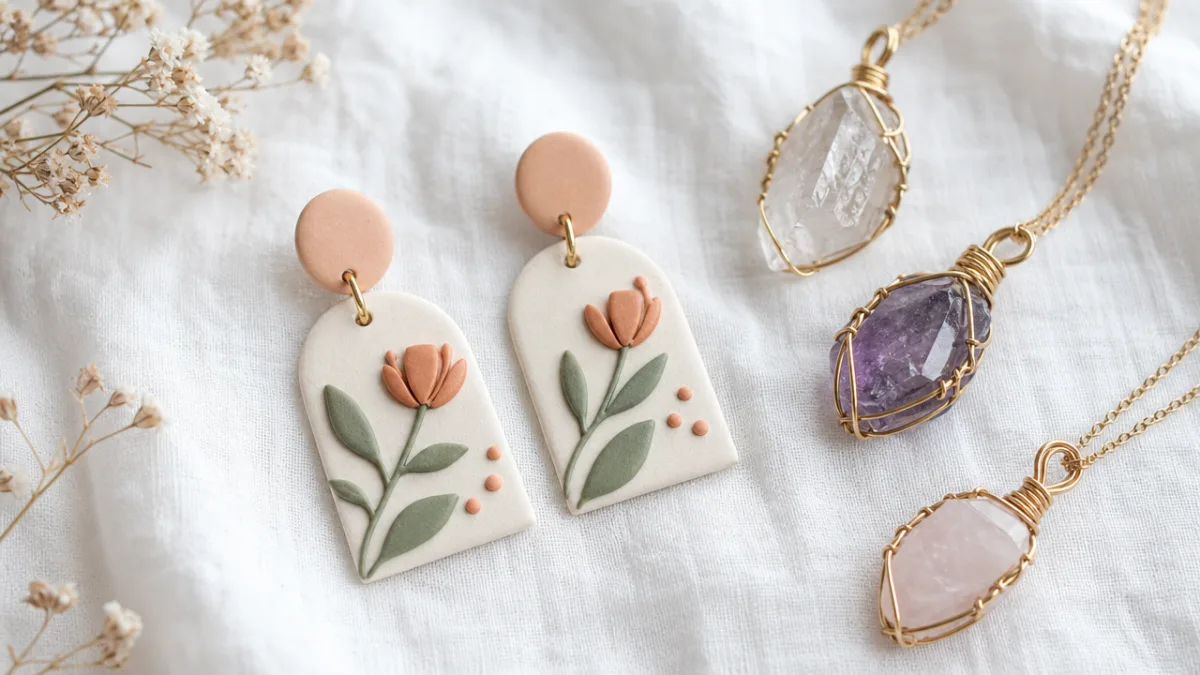
Handmade jewelry has been a cornerstone of the craft-selling world for generations, and it remains one of the highest-earning categories available to independent makers. The markup on jewelry can be extraordinary — a pair of earrings made from polymer clay that costs under a dollar in materials can sell for twelve to twenty-five dollars, representing a profit margin that few other product categories can match. The variety within jewelry alone is enough to build an entire brand around: earrings, necklaces, bracelets, rings, anklets, and hair accessories all have their own enthusiastic buyer communities.
Polymer clay jewelry in particular has had a massive surge in popularity, driven largely by social media. The tactile, handmade quality of polymer clay pieces — their organic shapes, earthy tones, and distinctive textures — gives them an artisan character that resonates deeply with today’s aesthetically minded shoppers. Making polymer clay earrings requires minimal tools and very little startup investment, making it one of the most accessible high-margin crafts available. Creators who develop a distinctive aesthetic and build a social media presence around their process often find that demand grows faster than they can keep up with.
Macramé jewelry and accessories bridge the worlds of fiber arts and wearable fashion in a way that commands real attention and solid prices. Macramé bracelets, chokers, and bag charms tap into a bohemian aesthetic that has maintained steady popularity and continues to attract enthusiastic buyers on Etsy and at craft markets. Beyond jewelry, macramé wall hangings, plant hangers, and table runners are among the best-selling home décor items in the handmade space. The material cost — primarily various grades of natural cotton cord — is very low relative to the prices these pieces command, making macramé one of the better-kept secrets in profitable crafting.
Wire-wrapped gemstone jewelry is a slightly more specialized niche but one with exceptional earning potential for crafters willing to invest in the skill. Natural crystals and semi-precious stones have a massive following, and wrapping them in copper, sterling silver, or gold-filled wire creates pieces that feel both handmade and luxurious. Buyers in the crystal community are passionate and loyal, and they will pay thirty, fifty, or even a hundred dollars or more for a pendant they feel a genuine connection to. Pairing beautiful stones with skillful wrapping and thoughtful branding around the metaphysical properties of crystals is a formula that has proven highly successful for countless independent jewelers.
Digital and Print-on-Demand Crafts for Passive Income
One of the smartest evolutions in the craft-selling world is the integration of digital products alongside physical ones. Digital crafts — printable planners, wall art, SVG cut files, party decorations, sewing patterns, and more — represent an extraordinary opportunity because they require effort only once and can then be sold an unlimited number of times with no additional production cost. A well-designed printable that takes you a few hours to create might sell hundreds or thousands of times over the following years, generating genuinely passive income while you sleep, travel, or work on other projects.
Printable wall art is one of the most popular and accessible digital craft products. Buyers download the file, print it at home or at a local shop, and frame it themselves — making it an attractive impulse purchase at a low price point. While individual sales might only be five to fifteen dollars, the volume potential is enormous, especially if your designs tap into current trends, popular quotes, or evergreen aesthetics like minimalism, botanical illustration, or boho style. Building a catalog of fifty to a hundred printable designs across various themes gives you a genuinely diversified digital storefront that can generate consistent monthly revenue.
SVG cut files for Cricut and Silhouette users represent a highly targeted but extremely passionate buyer market. Crafters who use cutting machines are always looking for fresh, clever, or seasonal designs they can use for their own projects, and they will pay three to five dollars per file without hesitation — sometimes purchasing bundles of twenty or thirty designs at once. If you have graphic design skills or are willing to develop them through free tools like Canva or Inkscape, creating and selling SVG files can become a substantial income stream. The community of cutting machine enthusiasts is enormous, highly active on Pinterest and YouTube, and genuinely supportive of talented independent designers.
Low-Cost Craft Ideas With the Highest Return on Investment
Smart crafters know that profitability is not just about the selling price — it is about the ratio of cost, time, and revenue. Some of the most profitable crafts are surprisingly simple and inexpensive to produce, which means that even modest sales volumes can translate into meaningful income. Identifying these high-ROI products and building your business around them is one of the most effective strategies for turning a creative hobby into a serious financial endeavor. The crafts in this category prove that complexity and profitability are not always correlated.
Bath and body products — particularly handmade soaps, bath bombs, and sugar scrubs — are among the most reliably profitable low-cost crafts available. The raw ingredients are inexpensive in bulk, the production process is learnable in a weekend, and the finished products have a perceived value that far exceeds their material cost. A batch of twelve artisan soap bars might cost eight to twelve dollars to produce and sell for seven to ten dollars each, representing a return that is difficult to beat. Seasonal scents, natural ingredients, and beautiful packaging are the primary levers for commanding premium prices in this category.
Paper crafts — including handmade greeting cards, gift wrap, and origami art — are often overlooked in conversations about profitable crafts, but they deserve serious attention. The materials cost almost nothing, the production time per unit is minimal once you have a process dialed in, and the market for beautiful, one-of-a-kind cards is enormous. Etsy alone has thousands of active buyers searching for unique cards for birthdays, weddings, sympathy, and holidays every single day. Crafters who develop a distinctive illustration style or a clever, witty copywriting voice for their cards often build loyal customer bases that return for every occasion throughout the year.
Upcycled and repurposed crafts are another category with fantastic ROI because your raw materials often cost nothing at all. Transforming thrifted furniture, vintage frames, old windows, or reclaimed wood into stylish, one-of-a-kind pieces taps into the powerful intersection of sustainability and unique home décor. Buyers love the story behind upcycled items — that something beautiful was rescued and reimagined — and that narrative supports pricing that would be impossible for mass-produced goods. A thrifted dresser bought for fifteen dollars and transformed with chalk paint and new hardware can sell for two hundred dollars or more to the right buyer, making upcycling one of the highest-margin opportunities in the entire handmade space.
How to Market Your Crafts and Turn Views Into Consistent Sales
Creating beautiful products is only half the battle — getting those products in front of the right buyers is where many talented crafters stumble. Marketing your handmade business does not require a big budget or a marketing degree, but it does require consistency, strategy, and a willingness to show up regularly across the platforms where your ideal customers spend their time. Pinterest, Instagram, and TikTok are particularly powerful for visual craft businesses because the content itself — photos and videos of your products and process — is inherently engaging and shareable.
Pinterest is arguably the single most valuable platform for craft sellers because it functions as a visual search engine rather than a traditional social media feed. Pins have a remarkably long lifespan compared to posts on Instagram or TikTok — a well-optimized pin can drive traffic to your shop for months or even years after it is first posted. Creating keyword-rich pin descriptions, using vertical images with clean, attractive styling, and consistently pinning across multiple relevant boards are the foundational practices of a strong Pinterest strategy. Many Etsy shop owners credit Pinterest as their primary traffic source, and the intent of users on Pinterest — who are actively planning purchases, projects, and gifts — is exceptionally high.
Building an email list from the very beginning of your craft business is a strategy that pays compounding dividends over time. Unlike social media followers, your email subscribers are not subject to algorithm changes or platform shutdowns — they are a direct line to your most interested and engaged customers. Offering a small incentive like a free printable, a discount code, or an exclusive behind-the-scenes look at your process is an effective way to encourage sign-ups. Sending regular newsletters about new products, seasonal launches, and limited-edition releases keeps your audience warm and ready to purchase, turning occasional buyers into loyal fans who look forward to hearing from you.
Pricing your crafts correctly is one of the most important and most frequently mishandled aspects of running a successful handmade business. Many new sellers dramatically underprice their work out of fear of rejection or imposter syndrome, effectively working for far less than minimum wage once materials, time, and overhead are accounted for. A solid pricing formula — materials multiplied by three, plus your hourly rate for labor, plus platform fees and packaging costs — will give you a foundation that ensures genuine profitability. Remember that buyers who value handmade goods are not looking for the cheapest option; they are looking for quality, story, and uniqueness. Pricing with confidence communicates that your work has real value, and that confidence attracts the right customers who are happy to pay what your craft is truly worth.








What do you think?
It is nice to know your opinion. Leave a comment.