










🌿🌸 Dive into Creativity with a Charming Paper Pond: A Whimsical Craft Guide
Introduction: The Magic of Paper Pond Crafting
There is something deeply satisfying about transforming a few sheets of paper into a living, breathing scene that sparks wonder and imagination. Paper pond crafts have emerged as one of the most beloved DIY projects for creative minds of all ages, blending artistry with a touch of whimsy that few other crafts can match. Whether you are a seasoned paper artist or picking up scissors for the very first time, building your own miniature paper pond offers an experience that is both meditative and joyfully expressive.
The concept behind a paper pond is beautifully simple: using layered paper, thoughtful color choices, and creative embellishments, you construct a small-scale water scene complete with lily pads, flowers, fish, reeds, and rippling water effects. The beauty of this craft lies in its versatility. You can create a flat, framed version to hang on a wall, or build a three-dimensional tabletop display that practically invites you to reach in and dip your fingers. Each iteration tells its own story and reflects the personality of its maker in every carefully placed petal and folded wave.
Beyond the finished product, the process itself carries tremendous value. Paper crafting is widely recognized by educators, therapists, and artists alike as a deeply beneficial activity. It encourages fine motor skill development, nurtures patience, builds concentration, and opens the door to imaginative storytelling. When you sit down to create a paper pond, you are not merely making a decorative object — you are embarking on a small creative journey that engages your mind, calms your nervous system, and produces something genuinely beautiful to share with the world.
Gathering Your Materials: Everything You Need to Begin
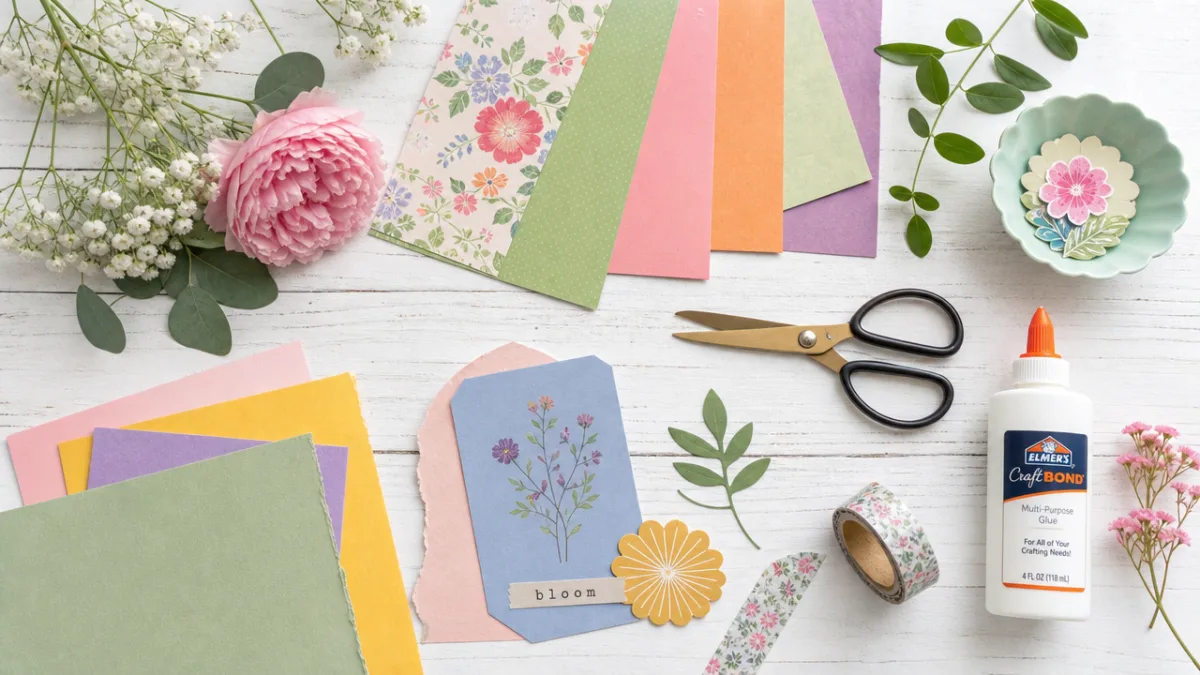
Before you can bring your paper pond to life, you will need to assemble the right collection of materials. The good news is that this craft is wonderfully budget-friendly and accessible, requiring items that are available at any craft store or even found around the house. Starting with a strong foundation material is essential — a thick piece of cardstock or foam board works perfectly as the base onto which your entire scene will be constructed. Choose a size that suits your vision, whether you prefer a compact four-by-six display or a generous twelve-by-sixteen canvas that allows for richer detail.
Paper selection is where your creative instincts really come into play. You will want a variety of colors and Textures to capture the layered complexity of a real pond environment. Blue and teal papers in different shades create the illusion of water depth and gentle movement. Greens ranging from pale lime to deep forest tones will serve as your lily pads, reeds, and surrounding foliage. Soft pinks, whites, and yellows bring flowers to life, while metallic or iridescent papers can simulate the shimmering scales of fish just beneath the surface. Cardstock, tissue paper, crepe paper, and even wrapping paper all have their place in a well-stocked paper pond toolkit.
In addition to paper, gather the following tools and supplies to make the crafting process smooth and enjoyable:
- Sharp scissors and a precision craft knife for detailed cutting
- A cutting mat to protect your work surface
- White craft glue, a glue stick, and a hot glue gun for different bonding needs
- A bone folder or similar tool for creating clean, crisp folds
- Watercolor paints or colored pencils for adding hand-painted details
- Washi tape and decorative stickers for quick embellishments
- Wire or pipe cleaners for giving stems and reeds structural support
- A ruler and pencil for measuring and marking before you cut
With your materials assembled and your workspace prepared, you are ready to begin the most exciting phase of the project: construction. Take a moment before you start cutting to visualize the finished scene in your mind. Where will the main flower cluster sit? Will your fish be peeking out from beneath a cluster of lily pads? Is there a dragonfly hovering near the edge? Having even a loose mental picture of your intended composition will make the building process feel more intentional and help you achieve a balanced, visually pleasing result that exceeds your initial expectations.
Building the Base: Creating Your Water Foundation
The water layer is the soul of your paper pond, and getting it right will set the tone for everything that comes after. Begin by cutting your base material to size and covering it completely with your chosen water papers. Rather than using a single flat sheet of blue, consider layering two or three shades of blue and teal, tearing some edges to create organic, irregular boundaries that mimic the way water actually looks when light plays across its surface. Overlap these pieces loosely, allowing slight variations in tone to create the impression of depth and gentle movement beneath the surface.
To enhance the water effect further, try crumpling your paper slightly before smoothing it back down and gluing it in place. This subtle texture catches light differently across its surface and gives your pond a wonderfully realistic sense of dimensionality. Alternatively, you can use tissue paper layered over white cardstock to create a translucent, luminous quality that looks remarkably like sunlight filtering through shallow water. Adding thin, flowing lines of lighter blue or white using colored pencils or a fine paintbrush over the top of your water layer will suggest ripples and movement, bringing the scene to life in a way that a flat sheet of paper never could on its own.
Once your water base is dry and secure, consider adding a subtle border around the edges of your scene to frame the pond and distinguish it from its surrounding environment. Strips of brown paper torn into rough edges can simulate muddy banks or wooden dock planks. Soft green tissue paper crumpled and layered along one or two sides suggests grassy shores and distant vegetation. This contextual framing gives your pond a sense of place and grounds it within a larger, implied world that extends beyond the edges of your base, creating the feeling that this small window into nature is just one corner of a much larger, thriving landscape.
Crafting the Flora: Lily Pads, Reeds, and Flowers
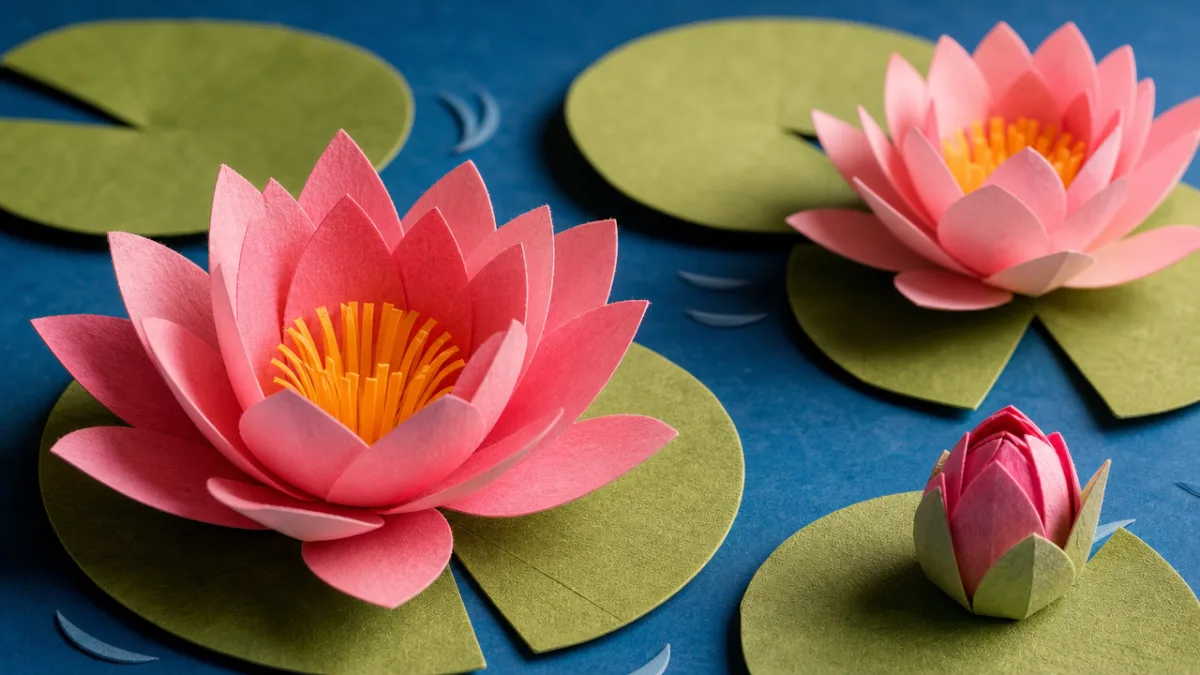
The plant life surrounding and floating upon your paper pond is where your craft truly begins to bloom — both literally and figuratively. Lily pads are among the most iconic elements of any pond scene, and they are also among the most enjoyable to create. Cut circular shapes from green cardstock in varying sizes, then make a single straight cut from the outer edge to the center of each circle, overlapping the two cut edges slightly to create a gentle cup shape that mimics the way real lily pads curl upward at their edges. A few small notches cut along the outer edge add further realism, and a fine-tipped marker can be used to draw the distinctive radiating vein lines that give lily pads their characteristic appearance.
Water lilies and lotus flowers are the crowning jewels of any paper pond, and crafting them is a wonderfully satisfying process that rewards patience and attention to detail. Begin by cutting multiple petal shapes in graduated sizes — larger petals for the outer layers and smaller, more pointed petals for the inner layers of the bloom. Gently curl each petal around a pencil or scoring tool to give it a natural, three-dimensional shape before layering them together from the outside in, securing each layer with a small dot of glue. A cluster of tiny yellow paper strips frilled at the tips makes a gorgeous center stamen. Consider making blooms in multiple colors — pale pink, creamy white, and soft lavender — to create visual variety and a sense of a naturally diverse plant community thriving in your miniature ecosystem.
Reeds and tall grasses add vertical interest and a sense of movement to your composition, preventing it from feeling too flat or uniform. Create them by cutting long, narrow strips of green paper — some straight, some gently curved — and attaching pipe cleaners along their backs to give them the structural support needed to stand upright if your project is three-dimensional. Brown cattail tops can be made by rolling small pieces of brown tissue paper tightly around the tip of a thin wire stem. Arrange your reeds and grasses in small clusters toward the edges and background of your scene, overlapping them at varying heights to create the lush, layered quality of real wetland vegetation growing freely at the water’s edge.
Adding Fauna: Fish, Dragonflies, and Other Pond Creatures
No paper pond would be complete without its inhabitants, and adding fauna to your scene is where your creativity and sense of whimsy can truly run free. Paper fish are delightfully simple to create and have an enormous visual impact. Cut basic fish body shapes from bright, jewel-toned cardstock — orange, gold, red, and deep blue work beautifully — then use metallic paper or iridescent cellophane for the scales and fins to suggest the shimmer of a fish in motion. Layer a small fin on top of the body and a graceful tail fan at the back, then add a tiny circle of black paper with a white highlight dot for the eye. Tuck some fish partially beneath lily pads and layer others at different depths within the water to create a sense of an active, populated underwater world.
Dragonflies are another magical addition to a paper pond scene, and their geometric beauty translates remarkably well into paper form. Cut four elongated wing shapes from translucent vellum paper or wax paper and draw delicate vein patterns on them using a fine-tipped silver or gold pen. A thin rolled tube of iridescent paper makes a perfect dragonfly body, and tiny bead eyes or a small dot of metallic paint complete the effect. Attach your dragonflies to thin wire stems so they can hover above the surface of the pond, and bend the wire slightly so each one appears to be caught mid-flight, lending a sense of spontaneous life and motion to your carefully composed scene.
Beyond fish and dragonflies, consider adding a frog perched on a lily pad, a snail making its slow journey along the bank, or a small butterfly passing overhead. These additional creatures enrich the ecological storytelling of your paper pond and give viewers multiple points of discovery as they explore the scene. A tiny frog can be cut from bright green cardstock, with legs bent and positioned to suggest a ready leap, and simple dot eyes that convey a charmingly cartoonish personality. Each creature you add deepens the sense that this is a living, breathing world in miniature — a complete ecosystem existing within the borders of your creative vision.
Finishing Touches and Display Ideas
The finishing stage of your paper pond project is where careful attention to small details transforms a good craft into a truly extraordinary one. Step back from your work and assess the overall composition with fresh eyes. Look for areas that feel too sparse or too crowded and make adjustments accordingly. Add additional small elements — a few floating petals drifting on the water surface, a scattering of tiny paper bubbles suggesting fish activity just below, or a cluster of small stones along the bank crafted from torn brown and gray paper — to fill gaps and enhance the sense of natural abundance that makes a pond scene so visually satisfying.
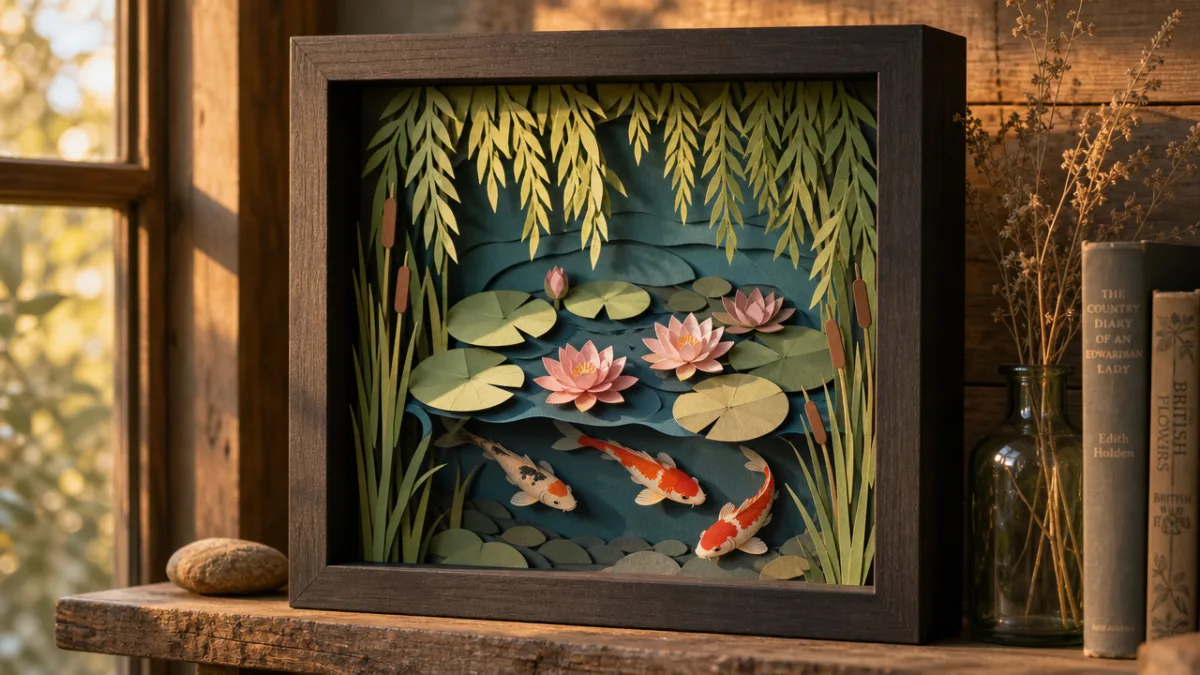
Consider the dimension of your scene carefully as you finalize it. Adding height variation by raising some elements on small folded cardstock platforms or accordion-folded paper springs creates shadows and depth that make the entire composition feel more alive and dynamic. Flowers can be elevated above the water surface, reeds can be given varying heights, and leaves can be layered at different angles to catch light differently across the scene. If you are creating a framed version of your pond, a deep shadow box frame works beautifully, allowing enough depth for the three-dimensional elements while protecting the delicate paper surfaces from dust and handling.
There are many wonderful ways to display and share your finished paper pond, each suited to different spaces and purposes:
- Frame it in a deep shadow box and hang it as wall art in a nursery, living room, or craft room where it can be admired daily.
- Display it on a bookshelf or mantelpiece as a freestanding tabletop scene, perhaps adding small fairy lights beneath the base for a magical glowing effect.
- Use a smaller version as a unique and heartfelt handmade greeting card or gift topper for a birthday, anniversary, or thank-you gesture.
- Create multiple individual pond elements as a mobile by suspending them from a wooden dowel with varying lengths of thread for a nursery or child’s bedroom.
- Photograph your finished pond in natural light and share the images as inspiration for other crafters in your community or on social media platforms.
The Broader Benefits: Why Paper Crafting Matters
Creating a paper pond is far more than a pleasant way to spend an afternoon — it is an act that connects you to a rich tradition of paper artistry that spans centuries and cultures. From Japanese origami and kirigami to European paper cutting and quilling, human beings have long found profound meaning and beauty in the act of transforming a flat sheet of paper into something dimensional and alive. When you engage with paper crafting, you are participating in this ancient lineage of creativity and contributing your own unique voice to an ongoing artistic conversation that transcends time and geography.
The mental and emotional benefits of paper crafting are supported by a growing body of research in the fields of occupational therapy and psychology. The repetitive, focused nature of cutting, folding, and arranging paper activates the parasympathetic nervous system, reducing stress hormones and inducing a calm, focused state often described as similar to meditation. Creating something beautiful with your hands provides a tangible sense of accomplishment and competence that boosts self-esteem and counteracts the feelings of helplessness that often accompany anxiety and depression. Many craft therapists specifically recommend projects like paper ponds because their nature themes connect makers to a sense of the natural world, even when they are working indoors.
Paper pond crafting is also a wonderful communal activity that brings people together across generations. Grandparents and grandchildren can work side by side, each contributing elements suited to their skill level. Classrooms can create collaborative large-scale pond murals that teach children about ecosystems while developing their artistic abilities. Community centers and maker spaces can host paper pond workshops that build social connection among participants who might not otherwise meet. The beauty of this craft is that it scales effortlessly — a single flower made by a beginner and a master-level sculptural lotus both have a place in the same pond scene, and both makers can find pride and joy in what they have contributed to the whole.
Tips for Taking Your Paper Pond to the Next Level
Once you have mastered the fundamentals of paper pond crafting, a world of creative possibilities opens up before you. One of the most effective ways to elevate your work is to invest time in studying reference photographs of real ponds and water gardens. Pay attention to the way lily pads overlap and vary in size, how light creates darker and lighter areas on the water’s surface, and how plant elements recede into the background with decreasing detail and color saturation. Applying these real-world observations to your paper compositions will give them a naturalistic quality that immediately sets them apart from more purely decorative or stylized interpretations of the same subject.
Experimenting with mixed media is another powerful way to push your paper pond crafting further. Incorporating elements beyond paper — small glass beads for water droplets, pressed real flowers for organic texture, fabric ribbon for water reflections, or even thin copper wire for naturalistic stems — creates visual and tactile richness that pure paper constructions sometimes lack. Watercolor washes applied over assembled paper elements blend the boundaries between different pieces in a way that unifies the composition and creates beautiful, luminous color gradations. Resin coating your finished pond scene not only protects it from damage but adds a glossy, liquid-looking finish that is genuinely stunning when light catches it at different angles.
Finally, consider the power of narrative in elevating your paper pond from a decorative craft to a true piece of storytelling art. Every element you place in your pond can be part of a story — a frog watching a particularly fat dragonfly, a fish following the shadow of a passing cloud, a single fallen petal drifting toward the edge of the frame. When you approach your craft with a storyteller’s eye, asking not just what looks beautiful but what is happening in this scene and why, the finished work acquires an emotional depth that resonates with viewers long after they have moved on. Your paper pond becomes not just a thing to look at but a world to inhabit, if only for a moment — and that is the truest measure of creative success in any medium.








What do you think?
It is nice to know your opinion. Leave a comment.