










Victorian Ghosts: Spirits, Séances, and the Haunted Imagination of the 19th Century
The Victorian Obsession with Death and the Afterlife
The Victorian era — roughly 1837 to 1901 — was a strangely death-obsessed time, even as steam engines and scientific breakthroughs were rewriting the rules of everyday life. Queen Victoria herself set the mood when Prince Albert died in 1861: she wore black for the remaining forty years of her reign and kept his shaving kit laid out every single morning, as if he might yet walk back through the door. Her very personal grief became a kind of national template, and the question of whether the dead could somehow reach back to the living turned into one of the great preoccupations of the age.
Death was also far more present in Victorian daily life than most of us can really imagine. Cholera and tuberculosis swept through communities regularly, infant mortality was heartbreakingly common, and without modern medicine, most families had known profound loss up close. When someone died, their body was laid out in the parlor for days so neighbors and relatives could come to pay their respects. Death wasn’t something that happened somewhere else, behind closed hospital doors — it happened at home, in the middle of ordinary life. The Victorians weren’t morbid about this so much as they were genuinely, earnestly trying to understand what death actually meant.
Religion was still a powerful force, but Darwin’s ideas and secular philosophy were chipping away at old certainties, leaving many people in a real state of spiritual uncertainty. The traditional promises of Christian resurrection didn’t always feel like enough for someone who had just lost a child or a spouse and desperately needed to know whether that person still existed somewhere. Into that emotional and intellectual gap stepped a remarkable movement that would come to define the era’s whole relationship with the supernatural: Spiritualism, built entirely on the idea that the dead hadn’t really gone anywhere — they were just on the other side of a very thin veil, waiting.
The Rise of Spiritualism and the Séance Tradition
The modern Spiritualist movement traces its origins to 1848 and two sisters from Hydesville, New York — Kate and Margaret Fox — who claimed they could communicate with the ghost of a murdered peddler through a system of knocking sounds. The story spread with almost viral speed, and within a decade it had jumped the Atlantic and taken firm hold in Victorian Britain, attracting converts from every walk of life. Part of Spiritualism’s appeal was its democratic spirit: the dead, apparently, didn’t care whether you were a factory worker or a duchess. Any parlor could become a doorway to the beyond.
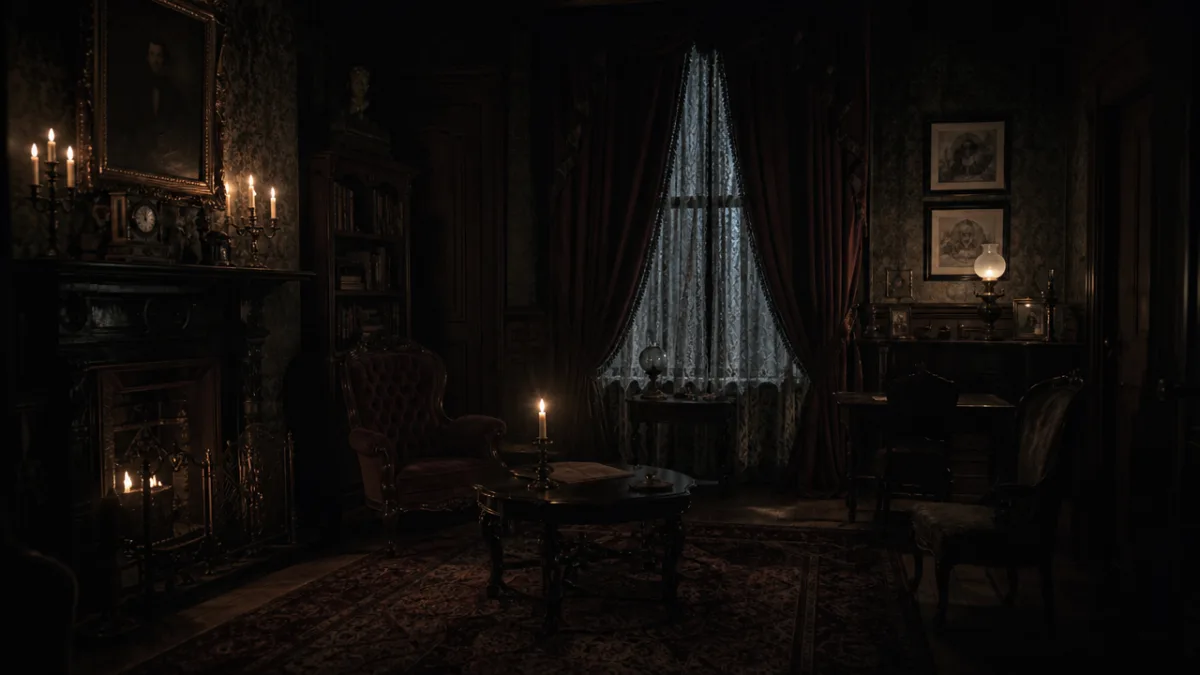
The séance was where all of this came together. Typically, a group of participants would sit around a darkened table, join hands, and wait while a medium entered a trance to make contact with the dead. What reportedly happened at these gatherings ranged from subtle to jaw-dropping. Rapping sounds and tables that tilted on their own were fairly standard. But some sessions allegedly produced floating trumpets through which spirits could speak, materializing hands reaching out of the darkness, and even full-body apparitions that wandered among the sitters. The medium Florrie Cook was said to materialize a spirit figure called “Katie King” who would walk around the room, talk to people, and let herself be touched before simply dissolving back into nothing.
It would be a mistake to write Spiritualism off as a fringe curiosity. Serious, respected intellectuals and public figures became committed believers — among them Alfred Russel Wallace, who co-developed the theory of natural selection alongside Darwin, and Sir Arthur Conan Doyle, the man who invented Sherlock Holmes, the most relentlessly rational mind in all of fiction. The Society for Psychical Research, founded in 1882, made a genuine attempt to investigate mediumistic phenomena using scientific methodology, conducting hundreds of carefully documented experiments. The line between real inquiry and wishful thinking was blurry at best, but the sincerity of the people involved was hard to question.
Victorian Ghost Lore: The Anatomy of a Specter
The Victorian ghost was a much more fully realized figure than the cartoonish white sheet floating down a hallway. Drawing on centuries of older tradition and shaping it through the era’s deep interest in psychology and storytelling, the Victorians created a genuinely sophisticated ghost mythology. In their understanding, a ghost was almost always tied to a specific place or person through some form of unfinished business — a wrong that needed righting, a secret still unspoken, someone not yet properly mourned. That gave the Victorian ghost its characteristic sadness; haunting wasn’t really about malice, it was about suffering.
Victorian folklore and literature sorted ghostly encounters into recognizable types. The most commonly reported was the crisis apparition — the experience of seeing or sensing a distant loved one at the very moment of their death, before any ordinary means of communication could have carried the news. The Society for Psychical Research collected thousands of these accounts and their statistical analysis led researchers like Edmund Gurney and Frederic Myers to argue they couldn’t simply be dismissed as coincidence. These cases formed the foundation of their landmark 1886 publication, Phantasms of the Living.
Beyond crisis apparitions, Victorian ghost tradition included haunted houses, poltergeist activity, and a relatively new concept that’s still discussed in paranormal circles today: the residual haunting. The idea here was that a moment of intense emotion could somehow imprint itself on the physical fabric of a building, replaying over and over like a kind of psychic recording for anyone sensitive enough to pick it up. It’s a distinctly Victorian invention, and you can see how the era’s fascination with new technologies like the phonograph — the idea that physical matter could hold impressions of the past — fed directly into it. In a strange way, the Victorian ghost was a product of the scientific age.
- Crisis Apparitions: Visions of a person experienced by others at the moment of that person’s death, often reported across great distances before news could travel by conventional means.
- Residual Hauntings: Ghostly scenes or figures believed to be emotional imprints left on a location, replaying endlessly without awareness of the living.
- Intelligent Apparitions: Spirits that appeared to interact with the living, responding to questions or attempting to communicate specific messages.
- Poltergeists: Invisible presences associated with physical disturbances such as moving objects, strange sounds, or unexplained fires, often centered around adolescents.
Ghost Stories as Victorian Literature and Art
The ghost story hit its creative peak during the Victorian period in a way it arguably hasn’t matched since. Strangely enough, Christmas became the traditional season for ghost stories in Britain — a custom Charles Dickens practically invented with A Christmas Carol in 1843 and kept alive through decades of Christmas annuals and fireside readings. There’s a logic to it, though: the long dark nights of midwinter, the gathering of family, and that particular quality of the season where the past feels somehow closer all seem to naturally invite a reckoning with the dead. Dickens was fascinated by the supernatural his whole life, editing ghost story collections and returning to the genre again and again throughout his career.
The best Victorian ghost stories hold up remarkably well, and a big part of that is their psychological depth. Sheridan Le Fanu, the Irish master of the form, built hauntings that worked as elaborate portraits of guilt, repression, and psychological unraveling. His novella Green Tea — about a clergyman tormented by a demonic monkey that only he can see — reads just as convincingly today as a study of mental illness as it does as supernatural horror. Henry James took the genre to its most refined literary heights with The Turn of the Screw in 1898, a story so carefully constructed that readers are still arguing about whether its ghosts are real or projections of its narrator’s disturbed mind. James almost certainly intended the debate, and probably enjoyed it enormously.
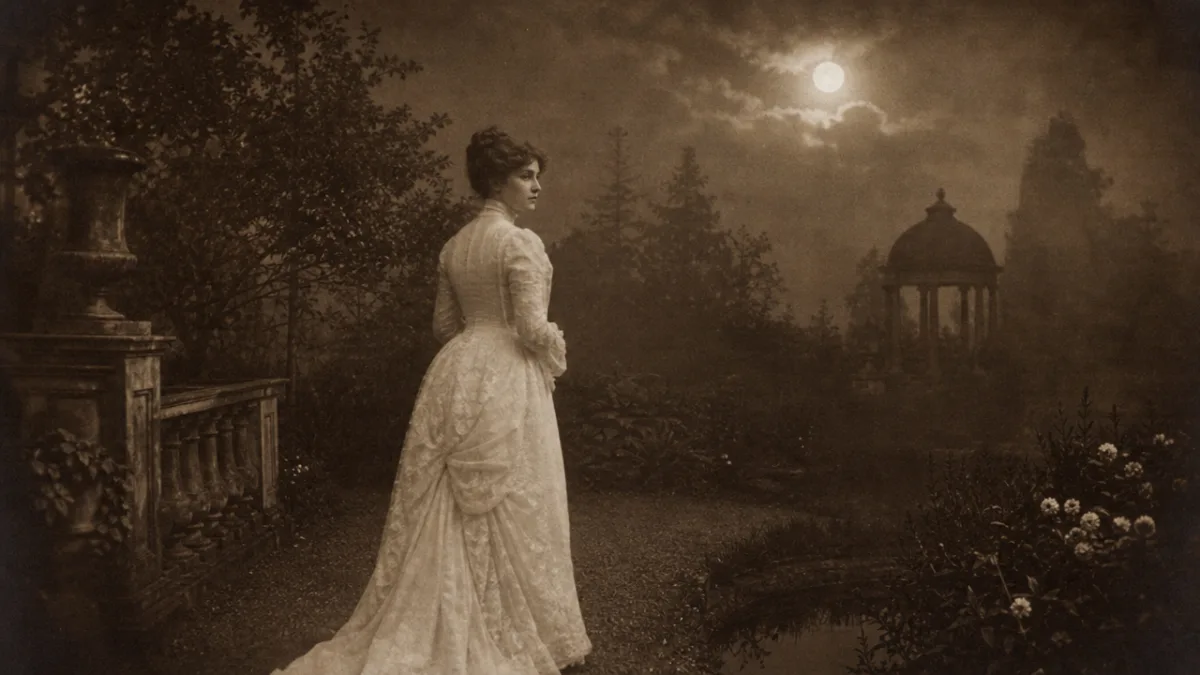
Visual art got in on it too. The Pre-Raphaelite Brotherhood filled their paintings with a haunted atmosphere — pale, otherworldly figures in landscapes that seemed to exist slightly outside of real time. William Holman Hunt’s The Awakening Conscience and Dante Gabriel Rossetti’s portraits of women who seem simultaneously alive and already gone both carry an unmistakable spectral quality. And then there was spirit photography, which exploited the public’s still-shaky understanding of how cameras worked to produce double-exposed portraits supposedly capturing the dead alongside the living. Grieving Victorians sometimes bought these images with genuine hope, wanting desperately to believe that the blurry second figure beside their portrait really was the person they’d lost.
Mediums, Frauds, and the Question of Belief
Not everyone left a Victorian séance a believer, and the history of Spiritualism can’t really be told without the history of how it kept getting caught. The same era that produced passionate true believers also produced brilliant debunkers. Harry Houdini — though mostly working in the early twentieth century — spent much of his later life methodically exposing fraudulent mediums, attending séances in disguise and showing audiences exactly how every “supernatural” effect could be pulled off with sleight of hand, hidden contraptions, or good old-fashioned theatrical staging. The Fox sisters themselves confessed in 1888 that their famous spirit rappings had been produced all along by cracking their toe joints. It was a bombshell that shook the movement — but, remarkably, didn’t kill it.
There’s another dimension to Victorian Spiritualism that’s easy to overlook: the way it handed women a form of public authority that almost nothing else in their society would allow. Women dominated mediumship, and the trance state gave them a uniquely sanctioned context for speaking boldly, making pronouncements, holding controversial opinions, and commanding rooms full of powerful men — all while technically being just a passive vessel for spiritual messages, not acting on their own behalf at all. Scholars have made a compelling case that mediumship was actually a form of female empowerment, operating within the only framework Victorian society would tolerate, using the language of passivity to achieve real and striking forms of influence.
What Victorians actually believed, underneath all of this, is genuinely hard to pin down. Many séance attendees seem to have held a kind of conscious ambivalence — engaging with the whole thing as emotional consolation without ever fully committing to a literal belief in life after death. Others, like the physicist William Crookes, became deeply convinced investigators who staked their professional reputations on what they’d witnessed. The Victorian encounter with ghosts — in the séance room, in ghost stories, in their own dark bedrooms at three in the morning — was really a sustained cultural negotiation between the demands of the modern world and the very human need to believe that death isn’t the end of the story.
The Victorian Ghost’s Enduring Legacy
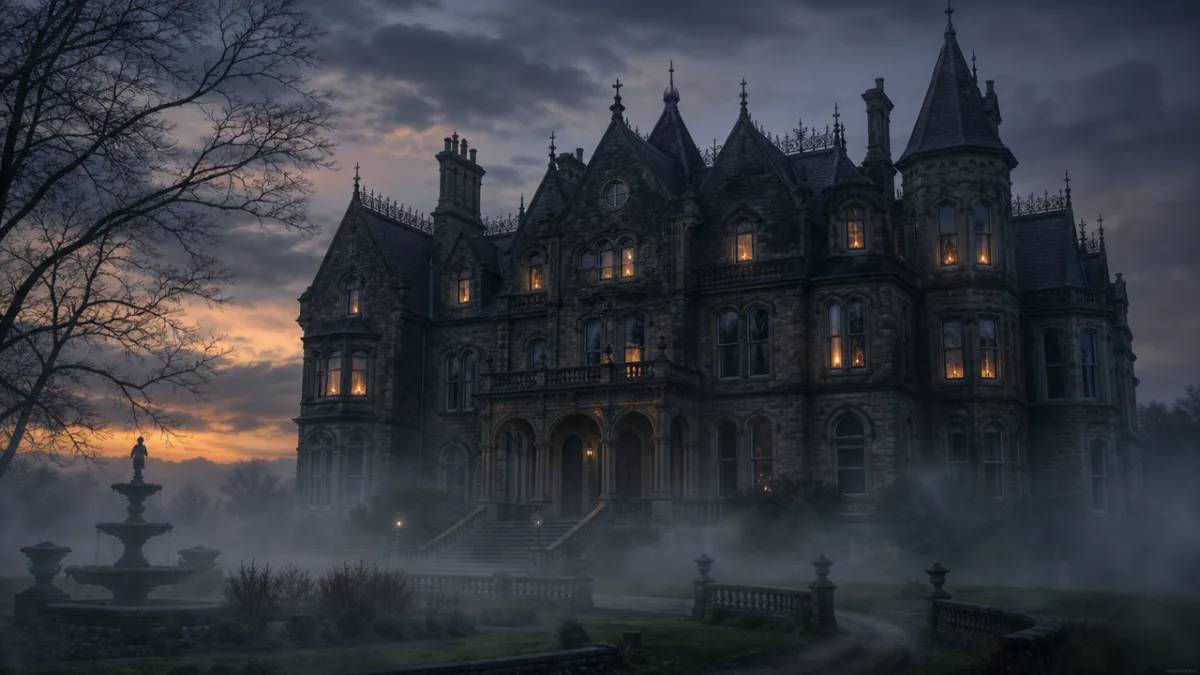
What’s remarkable is just how thoroughly the Victorian vision of ghosts has stuck around. The imagery, the vocabulary, the emotional logic of how we imagine hauntings — the pale figure in old-fashioned clothes, the melancholy haunted house, the idea that the dead linger because of unfinished business — most of that was essentially established during the Victorian period and has been reproduced so many times since that it feels almost like it came out of nowhere, like it was always just the way ghosts worked. When a horror film today shows a ghost in a white nightgown drifting through darkened hallways, it’s drawing directly from a visual and narrative tradition that’s well over a hundred years old.
The Society for Psychical Research, founded in 1882, is still active and still publishing research — making it one of the longest-running organizations ever dedicated to the scientific investigation of paranormal claims. Its Victorian founders set methodological standards and assembled documentary evidence that researchers in the field still reference today. Whether you see that legacy as a monument to human curiosity or a cautionary tale about the lengths we’ll go to avoid confronting our own mortality, it’s hard to dismiss the scale and seriousness of what the Victorians built. These weren’t gullible eccentrics — they were among the sharpest minds of their generation, wrestling with questions that no one since has definitively answered.
Maybe the most lasting contribution, though, is what the Victorian ghost story did for supernatural fiction as a form. The haunted house became a metaphor for the haunted mind, and the ghost became a figure for everything we can’t cleanly bury — trauma, guilt, suppressed desire, historical injustice. That metaphorical richness is exactly why the form has survived so far beyond its original context. From Henry James to Shirley Jackson to contemporary writers like Sarah Waters, the tradition of the psychologically rich ghost story descends in a clear and unbroken line from those Victorian parlors where the candles burned low and people held their breath, hoping — or maybe fearing — that something might speak from the dark.
- Literary Legacy: The Victorian ghost story tradition directly shaped twentieth-century horror fiction and continues to influence contemporary supernatural literature and film.
- Psychological Framework: Victorian theories of haunting as residual emotional impression prefigured many concepts in modern psychology, including trauma and repressed memory.
- Paranormal Investigation: The systematic, evidence-based approach to ghost investigation pioneered by the Society for Psychical Research established the template for all subsequent paranormal research.
- Visual Iconography: Victorian ghostly imagery — the white-clad figure, the mist-shrouded manor, the pale translucent face — remains the dominant visual language of supernatural representation in popular culture.
- Spiritual Seeking: The Spiritualist movement’s attempt to reconcile scientific modernity with personal grief and spiritual longing anticipated many of the tensions that continue to define Western religious and secular life.
The Victorian ghost, born out of grief and wonder and the peculiar anxieties of an age caught between faith and reason, has never really left. It’s still here — in our literature, our cinema, our old buildings, and our deepest uncertainties about what it means to die and what, if anything, persists afterward. In that sense, maybe the Victorians were onto something: some things simply refuse to rest.








What do you think?
It is nice to know your opinion. Leave a comment.