










The Art of Vanilla Scented Candles: A Complete Guide to the World’s Most Beloved Fragrance
The Timeless Appeal of Vanilla: Why This Scent Captivates Us
There aren’t many fragrances that feel as universally warm and comforting as vanilla. Originally drawn from the pods of the Vanilla planifolia orchid, this scent has quietly woven itself into human experience across centuries and cultures. Whether you catch a whiff of it in a bakery, recognize it in a favorite perfume, or breathe it in from a softly flickering candle, vanilla triggers something almost instinctive — a sense of safety, sweetness, and home that very few other scents can pull off quite so reliably.
The science behind why vanilla affects us so strongly is actually pretty fascinating. Research in olfactory psychology suggests that vanilla contains chemical compounds similar to those found in human pheromones, which might be part of why it so effortlessly evokes feelings of attraction and calm. Vanillin — the primary aromatic compound in vanilla — interacts with the limbic system, which is the brain’s emotional hub, in ways that lower cortisol and encourage relaxation. This isn’t just something people say; controlled studies have shown measurable drops in anxiety among participants who were exposed to vanilla-based scents.
Beyond the neuroscience, vanilla carries a lot of cultural weight too. In Western traditions, it’s deeply tied to home baking, childhood memories, and the comfort of a family kitchen. In the perfume world, it’s a go-to base note that lends warmth and depth to countless iconic fragrances. Translate that beloved scent into a candle and it becomes something even more intimate — a small, glowing source of sensory comfort that genuinely transforms the feel of whatever room it’s in.
Understanding Vanilla Candle Ingredients: What Goes Into the Perfect Burn
Making a truly great vanilla candle comes down to paying close attention to every ingredient. The wax is the first — and maybe most important — decision. Soy wax has become a favorite among artisan candle makers because it burns cleaner and longer than traditional paraffin, releases fewer toxins, and holds fragrance oils really well. Coconut wax is another premium pick, prized for its beautifully smooth finish and its knack for carrying complex fragrance blends without muddying the lighter top notes.
Paraffin wax is older and gets a bit of a mixed reputation, but it still has plenty of fans. It produces an exceptionally strong scent throw — meaning the fragrance spreads more aggressively through a room — and it’s considerably more affordable, which is why so many commercial candle brands still use it. Beeswax, on the other hand, burns the longest of any natural wax and gives off a natural honey undertone that pairs beautifully with vanilla, adding an extra layer of warmth to the overall scent without any extra effort on the blending side.
The fragrance oil or essential oil is just as important as the wax. Pure vanilla essential oil is technically an absolute or extract rather than a steam-distilled oil, and it can be tricky to work with in candle making because it doesn’t always bind cleanly with wax at standard temperatures. That’s why most high-quality vanilla candles use carefully crafted fragrance oils that combine synthetic vanillin with natural vanilla extract and supporting notes like benzyl benzoate — which adds a smooth, slightly powdery quality that gives vanilla candles that distinctly luxurious feel.
- Soy wax — clean burn, eco-friendly, excellent fragrance retention
- Coconut wax — premium texture, superior scent clarity and throw
- Beeswax — longest burn time, natural honey undertone
- Paraffin wax — strongest scent throw, most affordable option
- Fragrance oils — blended vanillin with supporting aromatic compounds
- Cotton or wooden wicks — affects burn quality and aesthetic experience
The Art of Scent Layering: Vanilla as a Base Note and Blending Partner
One of the more nuanced parts of vanilla candle creation is understanding how vanilla actually functions within a larger fragrance. In both perfumery and candle making, scents are typically organized into three layers: top notes, middle (or heart) notes, and base notes. Vanilla is a quintessential base note — it’s the scent that lingers longest, anchors the whole composition, and creates that warm, enveloping finish that hangs in the air long after the lighter notes have faded. That structural role makes it a wonderful partner for a surprisingly wide range of other aromas.
Vanilla and sandalwood is one of the most celebrated pairings in candle making — the creamy sweetness of vanilla softens sandalwood’s earthy, slightly medicinal edge into something that feels simultaneously grounded and indulgent. Vanilla with amber produces a rich, resinous warmth that a lot of people describe as reminiscent of aged libraries or candlelit rooms — opulent in a quietly mysterious way. If you prefer something lighter, vanilla paired with citrus top notes like bergamot or orange creates a bright, cheerful fragrance that still carries vanilla’s characteristic comfort without tipping into heavy or cloying territory.
Floral and vanilla combinations have their own devoted fan base. Vanilla and lavender is probably the most recognizable pairing, widely used in sleep-focused products because both scents independently trigger calming responses in the nervous system — a genuinely useful combination. Vanilla and rose offers a more romantic take, where vanilla’s sweetness lifts the floral richness of rose into something that manages to feel both classic and fresh at the same time. And for those who like something more adventurous, vanilla with tobacco or black pepper produces a sophisticated, almost masculine-leaning composition that pushes back nicely against the idea that vanilla has to be soft and feminine.
Choosing the Right Vanilla Candle for Your Space and Purpose
Not every vanilla candle is going to be the right fit for every situation, and picking the right one for your space takes a little thought. Start with the practical stuff: room size. A single-wick candle in a small jar is perfect for a bathroom, a bedside table, or a compact home office — somewhere that calls for an intimate, concentrated fragrance experience. Larger living rooms, open-plan kitchen and dining spaces, or master bedrooms usually need a multi-wick candle or a bigger vessel to generate enough scent throw to actually fill the space without the fragrance just disappearing into the air.
The quality of the vanilla fragrance itself varies enormously depending on where you shop. Budget candles often rely on synthetic vanillin alone, which gives you a sharp, almost sugary sweetness that some people enjoy but that lacks real depth. Mid-range and luxury candles invest in more nuanced blends — often combining natural vanilla absolute with synthetic complements — and the result is a scent that actually evolves as it burns. You might notice a slightly brighter, more floral sweetness at first, then settle into deeper, richer base notes as the wax pool develops. That evolution is honestly a lot of what separates a candle you enjoy from one you just tolerate.
Don’t overlook the vessel either, because it’s genuinely part of the experience. Clear or amber glass jars have a clean, modern feel that works well in contemporary spaces. Matte ceramic vessels bring a more artisanal, tactile quality that suits natural textures and earthy palettes. Tins are portable and casually charming — great for relaxed, informal spaces. The visual warmth of the flame, combined with whatever the vessel looks and feels like, all adds up to the overall atmosphere the candle creates in your home. It’s worth caring about.
- Determine the size of your room to match candle size and wick count appropriately.
- Check the wax type for burn quality and clean air considerations.
- Read ingredient labels to assess fragrance oil quality and complexity.
- Consider burn time in relation to price for true value assessment.
- Choose a vessel material and style that complements your interior aesthetic.
- Check for phthalate-free and cruelty-free certifications if these matter to you.
How to Burn Vanilla Candles Correctly: Maximizing Fragrance and Longevity
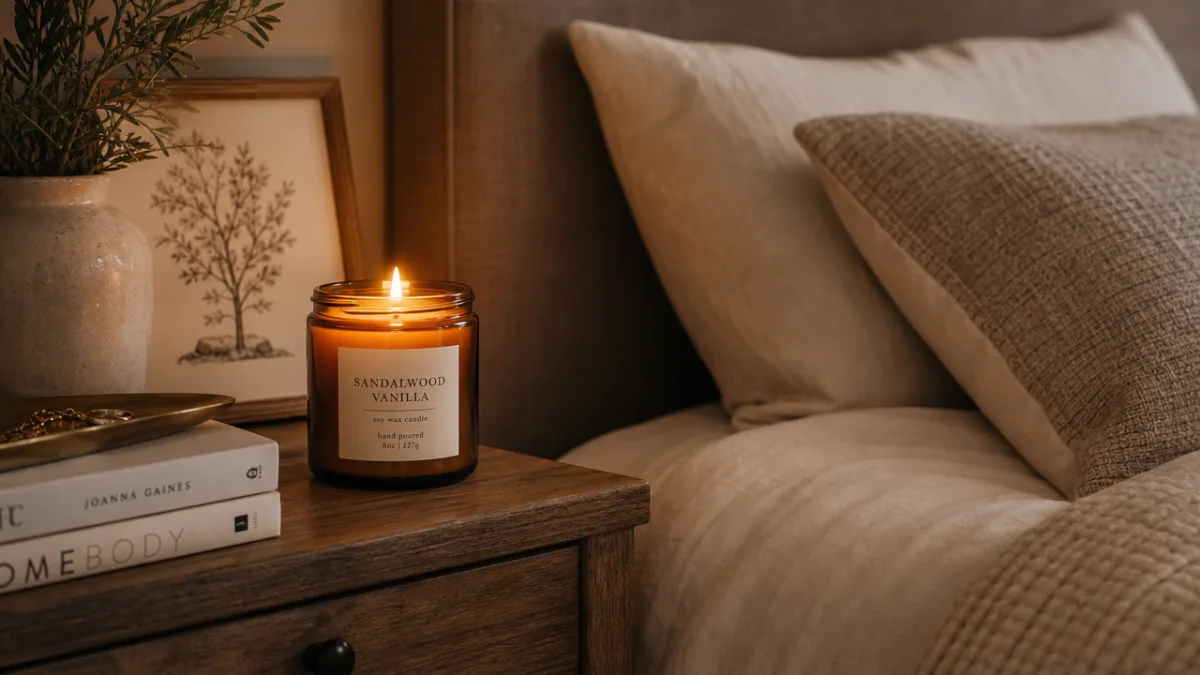
Even a beautifully made vanilla candle will disappoint you if you burn it wrong. The single most important habit to build is letting the wax pool reach the full edge of the vessel on that very first burn. This is called achieving a full melt pool, and it typically takes two to four hours depending on how wide the candle is. If you blow it out before the melt pool reaches the edges, you create tunneling — a depression forms around the wick that gets deeper with every subsequent burn, leaving thick walls of unmelted wax that never contribute any fragrance and essentially mean you’ve wasted a chunk of what you paid for.
Wick maintenance matters more than most people realize, for both safety and performance. Before every burn, trim the wick down to about six millimeters — roughly a quarter inch. When you skip this, the wick develops a carbon mushroom at the tip that causes the flame to burn too large and too hot. The result is black soot that discolors your vessel, marks nearby surfaces, and sends unnecessary particulates into your air. A properly trimmed wick gives you a calm, steady flame that maximizes fragrance diffusion and keeps smoke and soot to a minimum. Dedicated wick trimmers are worth having if your candles sit in deep vessels.
Where you burn your candle also makes a real difference. Air currents from open windows, fans, or air conditioning cause uneven flickering that speeds up wax consumption without giving you any extra fragrance payoff — in fact, strong drafts can actually suppress scent throw by dispersing fragrance molecules before they have a chance to build up and saturate the room. Burn your candle somewhere relatively still, away from direct airflow, and let the warm air rising from the flame carry fragrance molecules outward naturally. That’s what builds the rich, enveloping vanilla atmosphere you’re actually after.
Making Your Own Vanilla Scented Candle: A Beginner’s Craft Guide
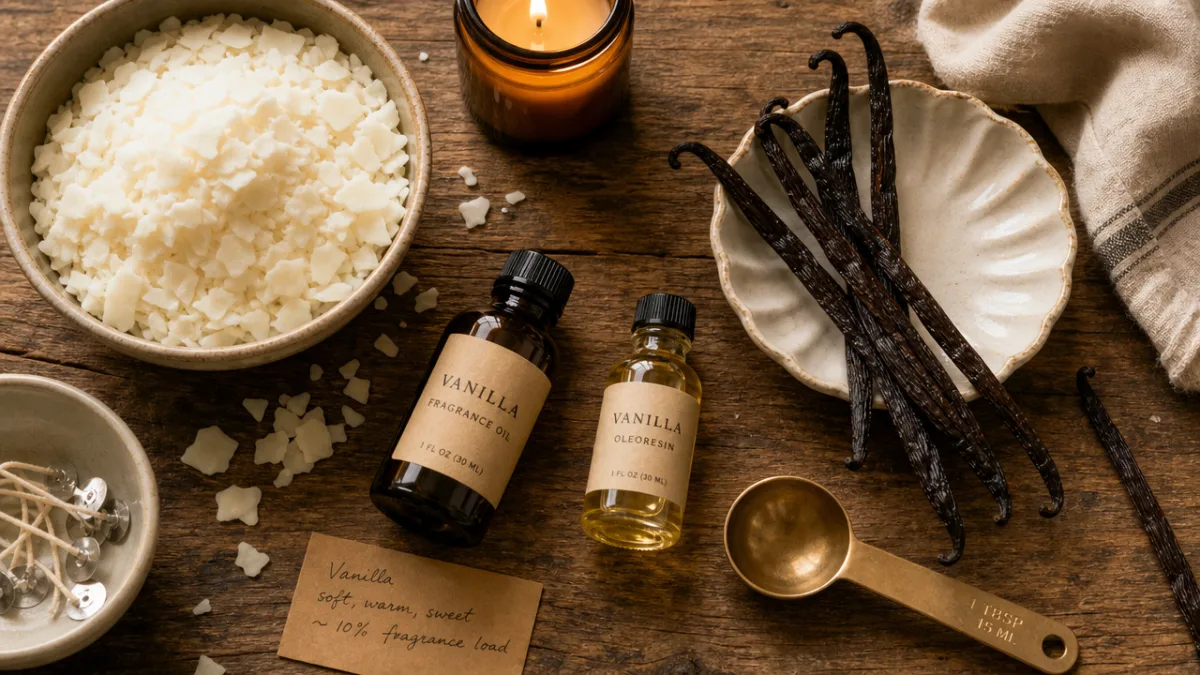
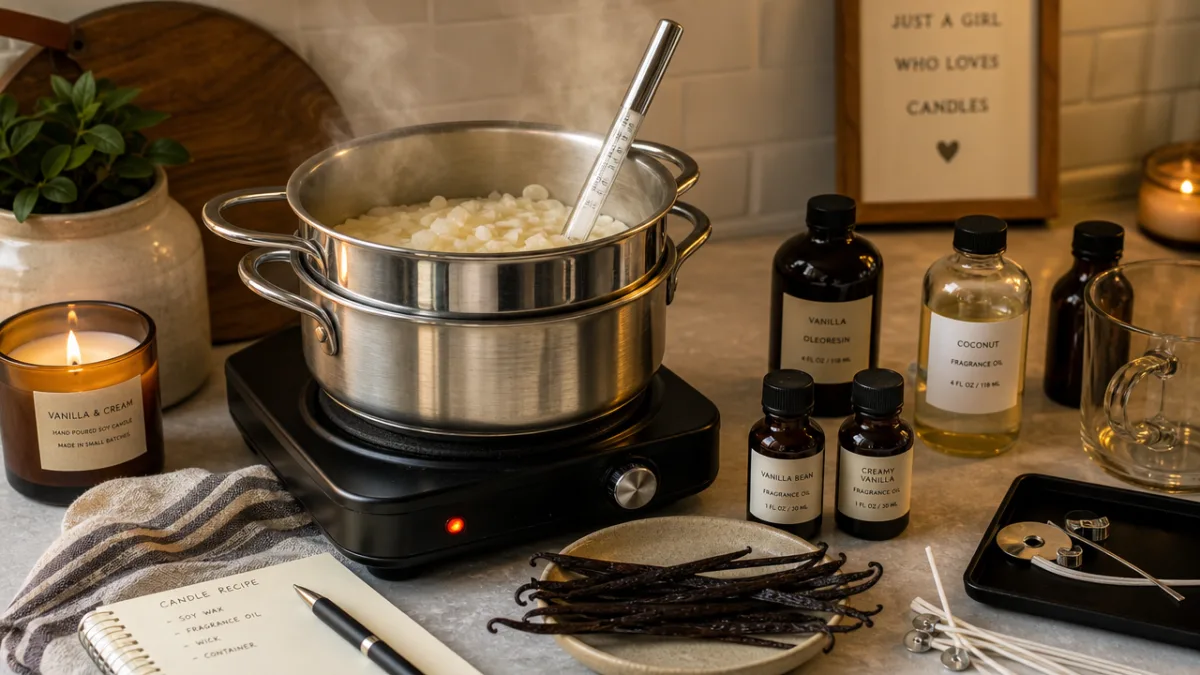
Making your own vanilla candle at home is one of those projects that’s genuinely satisfying from start to finish — and you end up with something both beautiful and actually useful. The startup cost is pretty modest, and the process is approachable enough for total beginners while still offering plenty of room to experiment as you get more comfortable. You’ll need a heat-safe pouring pitcher, a thermometer, a kitchen scale for precise measurements, your chosen wax, a good vanilla fragrance oil, pre-tabbed wicks in the right size for your vessel, something to center the wick (dedicated tools work great, but chopsticks and tape do the job perfectly well), and your containers — all of which you can find from candle-making suppliers or online without spending a fortune.
The fragrance load — how much fragrance oil you use relative to the total weight of your wax — is the variable that most directly controls how strongly your finished candle smells. With soy wax, most experienced makers settle on eight to ten percent by weight. Go past twelve percent and the fragrance oil tends to seep out of the wax instead of binding with it, leaving an oily film on the surface and potentially creating a fire hazard. Temperature matters just as much; add your fragrance oil at around 55 to 60 degrees Celsius for most soy waxes, which gives you thorough incorporation without cooking off the top notes of your vanilla blend before the wax even sets.
Once your candles are poured, patience really is the secret ingredient. Let them cure for at least 48 hours before you light one, and a full week if you can manage it. During curing, the fragrance oil molecules fully bond with the wax, and the difference in scent throw compared to a freshly poured candle is noticeable. Vanilla candles in particular seem to benefit from longer curing periods — many experienced makers swear by two full weeks, finding that the warmth and sweetness of the vanilla develops a richer, more rounded quality over time. It’s worth labeling each batch with the pour date, fragrance load, and wax type so you can actually track what’s working and refine things as you go.
- Melt wax slowly using a double boiler to avoid overheating and discoloration.
- Always use a thermometer — temperature precision affects fragrance binding and surface texture.
- Add fragrance oil at the correct temperature for your specific wax type.
- Stir fragrance oil thoroughly for at least two full minutes to ensure even distribution.
- Pour at the recommended temperature to minimize sinkholes and surface imperfections.
- Allow full curing time before performing a test burn to evaluate scent throw.
The Wellness Benefits of Vanilla Candles: Aromatherapy and Everyday Ritual
Vanilla’s relationship with how we feel goes well beyond simply smelling nice. Aromatherapy practitioners have long valued it for its almost adaptogenic quality — the way it can feel simultaneously calming and uplifting depending on context and the person experiencing it. Worked into a consistent evening wind-down routine, a vanilla candle can become a powerful environmental cue, something that signals to your nervous system that the day’s demands are fading and rest is coming. That kind of scent conditioning, built up gradually over time, can genuinely make it easier to transition from a busy, wired state into sleep.
Vanilla’s anxiety-reducing properties make it especially useful in spaces meant for relaxation, creativity, or focused work. Researchers at Memorial Sloan Kettering Cancer Center actually studied vanilla as an anxiety-reducing agent for patients undergoing medical procedures and found it produced measurable drops in reported anxiety. A candle on your desk is obviously a different setting than a medical facility, but the underlying mechanism is the same — vanilla molecules interacting with olfactory receptors that connect directly to the brain’s emotional processing centers, creating a biochemical environment that’s more hospitable to calm, focused thinking.
There’s also something genuinely valuable in the ritual side of candle use that has nothing to do with aromatherapy chemistry. The simple, deliberate act of lighting a candle — choosing to bring a little warmth and fragrance into your space — is a small act of self-care that carries real psychological weight. It’s a quiet signal to yourself that the present moment is worth making more beautiful, more sensory, more intentional. In that sense, a vanilla scented candle becomes more than a home fragrance product. It becomes a small but meaningful practice of presence — a daily invitation to actually inhabit your surroundings with a little more awareness and appreciation for the good things already around you.








What do you think?
It is nice to know your opinion. Leave a comment.