










Revive & Reimagine: The Beauty of Repurposed Furniture
The Art of Seeing Potential Where Others See Waste
There’s a certain kind of eye that a seasoned furniture restorer has — the kind that lets you walk past a battered dresser sitting on a curb and see not the peeling paint or the broken drawer pull, but the solid oak underneath, the graceful curves some craftsman shaped decades ago, the life still quietly humming inside all that worn wood. At its heart, repurposing furniture is an act of imagination. It’s about looking past the surface damage and into the deeper story of something that has already survived a lot.
That philosophy sits in quiet but powerful contrast to how we treat stuff today. We live in a world where furniture is often designed to last maybe five years — flat-packed in a box, assembled with a little Allen key, the pressed wood already starting to soften before the first winter’s out. Against that backdrop, the repurposed furniture movement isn’t just a design trend. It’s a kind of quiet rebellion, a refusal to accept that everything beautiful has to eventually get thrown out, and a belief that patience and creativity can bring back what the marketplace has written off.
What’s also great about this hobby is how accessible it really is. You don’t need a professional workshop or a design degree to get started. A secondhand armchair from an estate sale, a tin of chalk paint, some sandpaper, and a free afternoon — that’s often all that stands between you and a genuinely stunning piece of home decor. Restoration and reimagining communities share their before-and-afters on social media every day, and the results are consistently jaw-dropping. It’s pretty hard to argue with the proof: with a little care and intention, the discarded can become the most treasured thing in a room.
A Brief History of Furniture Repurposing Through the Ages
Repurposing furniture is a much older idea than any modern sustainability movement. For most of human history, furniture was expensive and labor-intensive to make — too valuable to throw away just because it had aged or gone out of style. In medieval Europe, a chest that had done storage duty for a generation might get new hinges, fresh carved decoration, or a padded lid to double as seating. The idea of tossing out a functional piece of furniture would have seemed not just wasteful but genuinely baffling.
Through the Victorian era and into the early twentieth century, upcycling kept going in less glamorous but equally practical ways. Working-class households regularly repainted and refinished pieces as they passed between families, and skilled tradespeople made a living reupholstering chairs and sofas that might otherwise have been retired. Even wealthier homes weren’t immune — antique furniture was frequently altered to keep up with the times, with legs shortened, veneers swapped out, and hardware replaced to bring an older piece in line with whatever style was current.
It wasn’t until the postwar economic boom of the mid-twentieth century — with its explosion of affordable mass manufacturing — that Western culture really started treating furniture as disposable. But that trajectory has been reversing steadily since at least the 1990s, pushed along by growing environmental awareness and a renewed love of craftsmanship. Today, furniture repurposing sits in a fascinating cultural spot: it’s a sustainability practice, a creative hobby, a professional design discipline, and a form of personal storytelling all rolled into one.
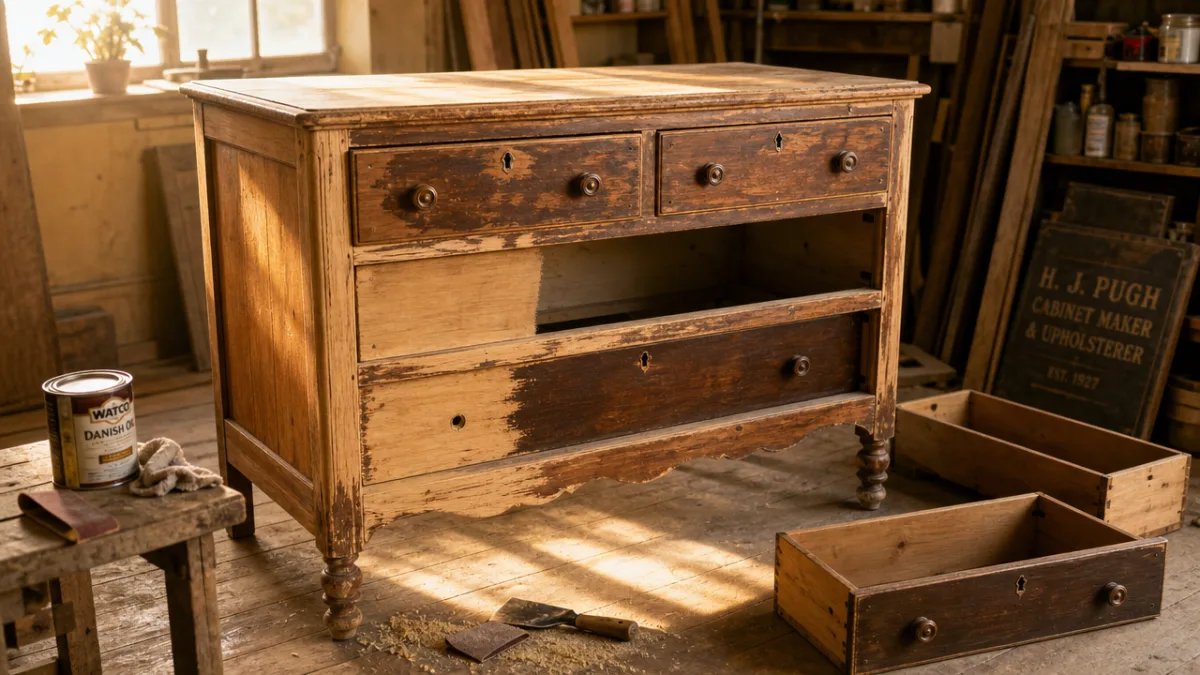
Popular Techniques That Transform the Ordinary Into the Extraordinary
The world of furniture repurposing has built up a rich toolkit of techniques over the years, each one suited to different materials, styles, and end goals. Getting familiar with even a handful of foundational methods opens up a huge range of creative possibilities, even if you’ve never picked up a paintbrush for this kind of project before. The most important thing to understand early on is that there’s no single “right” technique — the best approach always depends on the specific piece, the look you’re going for, and how hard the finished furniture actually needs to work.
Chalk painting has probably become the most popular starting point for beginners, and it’s easy to see why. It sticks well to most surfaces without a lot of prep, dries quickly, and produces a beautifully matte, slightly textured finish that works with both rustic farmhouse aesthetics and more refined vintage styles. A chalk-painted piece can be left as is for a clean, modern look, or lightly sanded along edges and high points to let the wood or previous paint layers show through — creating that lovely sense of gentle age and wear that so many people find appealing.
Beyond paint, some of the most impressive transformations involve structural changes and creative recontextualization. Here are some popular approaches that have sparked thousands of home projects:
- Decoupage: Applying printed paper, fabric, or tissue to furniture surfaces and sealing it with varnish to create intricate decorative patterns, ranging from delicate botanical prints to bold geometric designs.
- Reupholstering: Stripping old fabric from chairs and sofas and replacing it with something new — often a contrasting or boldly patterned material that completely reinvents the piece’s personality.
- Staining and bleaching: Chemically altering the natural color of wood to either deepen its richness or lighten it toward a pale, Scandinavian-inspired look.
- Hardware swaps: Swapping out original drawer pulls, knobs, and hinges for new ones in a different metal or style — a small change that can have a surprisingly dramatic effect on the whole character of a piece.
- Structural repurposing: Converting one type of furniture into something else entirely, like turning an old door into a dining table, a vintage suitcase into a side table, or a ladder into a bookshelf.
Every one of these techniques rewards practice and patience, and most can be picked up with a modest time investment and a willingness to experiment. One of the best things about working with secondhand furniture is that the stakes feel so much lower — if an experiment goes sideways, the piece cost very little in the first place, and the lessons you take away are genuinely priceless for the next project. Ask any experienced restorer, and they’ll probably tell you their most spectacular failures taught them far more than their early wins ever did.
Sustainability, Ethics, and the Environmental Case for Upcycling
The environmental case for repurposing furniture is compelling — and honestly, it gets more urgent every year. The furniture industry is a significant driver of global deforestation, with demand for new wood putting constant pressure on forests that serve as critical carbon sinks and biodiversity habitats. Manufacturing new furniture also burns through substantial energy at every stage — logging, transport, milling, treating, assembling, finishing, and shipping. When you choose to restore and repurpose a piece that already exists, you’re opting out of that entire chain of resource consumption.
The landfill numbers around furniture are genuinely sobering. In the United States alone, millions of tons of furniture are thrown out every year, with the vast majority ending up in landfills rather than being recycled or donated. A huge portion of that waste is made up of pieces that could have been restored with pretty modest effort. The pressed wood and synthetic upholstery in cheaper modern furniture are especially problematic environmentally — they’re hard to recycle and can release harmful chemicals as they break down in landfill conditions. Older, solid wood furniture, by comparison, can last for generations with proper care.
There’s also an ethical dimension to the secondhand furniture economy that’s worth thinking about. Buying from charity shops, estate sales, and local restorers rather than large multinational furniture retailers keeps money circulating within local communities, supports small independent businesses, and reduces demand for goods produced in often-exploitative labor conditions. In that sense, the repurposed furniture movement connects to a broader vision of economic and social sustainability — one where skilled work and local exchange are valued and celebrated, rather than undercut by an endless race to the bottom on price.

Finding Your Next Project: Where to Source Repurposable Pieces
One of the genuine pleasures of this hobby is the hunt itself. There’s a particular thrill to finding a diamond in the rough — a chair with beautiful bones buried under layers of ugly paint, or a sideboard with excellent joinery that just needs its veneer freshened up and its handles swapped out. Knowing where to look is just as important as knowing what to look for, and experienced restorers usually keep a varied mix of sourcing channels that they check regularly and with real enthusiasm.
Some of the most consistently productive sources for repurposable furniture include the following, each with its own character and rhythm:
- Charity shops and thrift stores — Often the first stop for beginners, these shops receive a steady flow of donated furniture and price it affordably. But competition from other restorers means the best pieces go fast. Getting in early in the week, when fresh stock is most likely to have just hit the floor, can give you a real edge.
- Estate and house clearance sales — These sales, often held when a property is being emptied after a bereavement or a move, can be treasure troves of older, higher-quality furniture. Pieces are usually priced to move quickly, and the stock tends to be far more substantial than what you’d find at a typical thrift store.
- Online marketplaces — Secondhand selling platforms have genuinely transformed how restorers source pieces, making it easy to search for specific items, styles, or materials across a wide area without leaving home. When something good comes up, acting quickly matters — desirable pieces attract multiple inquiries almost immediately.
- Curbside and skip finds — Free furniture left on the pavement or in skips outside houses can occasionally turn up remarkable finds, particularly in affluent neighborhoods or during the seasonal moves that cluster around the end of summer. Always ask permission before taking from a skip, and check pieces carefully for structural integrity and any signs of damp or pest damage before you load them up.
- Auctions — Local auction houses and online platforms regularly handle furniture from house clearances and commercial premises. Going in person lets you inspect pieces hands-on before bidding, which is always worth doing when structural quality is what you’re counting on.
Learning to assess a piece quickly and accurately is a skill that develops with time. The key things to look for are structural soundness — joints that are still tight, legs that are even, frames that haven’t warped or twisted — because cosmetic issues are almost always fixable, while structural problems can be a much bigger undertaking. It’s also worth developing a feel for different wood types and construction methods, since these will have a big influence on which restoration approaches are likely to work best for any given piece.
Styling Repurposed Pieces in Contemporary Interiors
One of the most common misconceptions about repurposed furniture is that it only belongs in rustic farmhouse kitchens or heavily vintage-styled spaces. In reality, a thoughtfully restored piece can work beautifully in almost any interior — from a sleek modern apartment to a traditional country home — as long as it’s styled with some care and intentionality. The key is understanding how a repurposed piece will interact with everything around it: its scale, its finish, its color, and the story it carries. Get that right, and combinations that mix eras and origins feel considered and layered rather than random.
In contemporary interiors, a repurposed piece often works best as a statement anchor — one substantial item that brings warmth, texture, and a bit of history into a space that might otherwise feel a little cold or generic. A beautifully refinished mid-century sideboard in a calm, neutral living room, or a lovingly restored Victorian writing desk positioned under a window in an otherwise modern home office — these combinations work because they create a dialogue between different eras. The space feels like it was assembled thoughtfully over time, not ordered from a single catalog on a Tuesday afternoon.
Color is one of the most powerful tools you have when bringing a repurposed piece into a modern interior. Painting it in a shade that already appears somewhere else in the room — a cushion, a rug, a piece of artwork — anchors it visually and makes it feel deliberately chosen. On the flip side, using a repurposed piece to introduce a new accent color that plays off the room’s dominant palette can give the whole space a dynamic energy that’s genuinely hard to achieve with matching, bought-new furniture sets. The freedom to pick exactly the right color, rather than accepting whatever the manufacturer decided to produce this season, is one of the quietly underrated joys of repurposing.
Mixing periods and styles, when done with confidence, produces interiors with real personality and depth. There are no rigid rules about which combinations work, but a few principles can help guide things. Scale matters enormously — a very large Victorian piece can easily overwhelm a small room and make it feel heavy, while a delicate antique chair can look lost and fragile in a big, open modern space. Repeating certain elements — a metallic finish on hardware, a particular wood tone, a recurring color — creates visual coherence even when individual pieces come from completely different eras. And giving each piece a bit of room to breathe, rather than crowding everything together, lets you appreciate what makes each one special.

Building a Practice: Growing From Hobbyist to Skilled Restorer
For a lot of people, repurposing furniture starts as a casual weekend project and quietly becomes something much more absorbing — a genuine practice that takes up a real part of their creative and emotional life. That evolution tends to happen pretty naturally, as each completed project builds both skill and confidence and the results get more and more impressive. The journey from a tentative first coat of chalk paint to executing a complex French polish or a detailed stenciling project isn’t a short one, but it’s consistently rewarding at every step along the way.
Having a dedicated workspace — even a modest one — makes an enormous practical difference. A corner of a garage or a spare room can absolutely work, as long as there’s adequate ventilation for paints and solvents, good lighting so you can actually see what you’re doing, and enough floor space to move freely around a piece. Gradually investing in quality tools — good brushes, proper sanding blocks, clamps for gluing joints, a reliable worklight — pays off in the quality of your results. A lot of experienced restorers will tell you that the difference between a mediocre and an excellent finish often comes down less to technique than to preparation, and good tools make that preparation significantly easier.
The furniture restoration community, both online and in person, is one of the warmest and most generous creative communities you’re likely to come across. Sharing works in progress, asking for advice on tricky problems, and cheering each other’s transformations are just how this world operates — and the accumulated knowledge available through forums, social media groups, and hands-on restoration workshops is genuinely remarkable. Whether your interest is primarily aesthetic, environmental, financial, or simply the deep satisfaction of making something beautiful out of something broken, there’s a place for you in this world. And there are endless possibilities waiting in every scuffed surface and forgotten corner.








What do you think?
It is nice to know your opinion. Leave a comment.