










The Real Design Rules Behind Cozy Cottagecore Living Rooms
What Cottagecore Actually Means for Your Living Space
Cottagecore is far more than an aesthetic trend that swept through social media — it is a deeply considered design philosophy rooted in nostalgia, slowness, and a genuine reverence for the natural world. At its heart, cottagecore living rooms are spaces that feel as though they have been loved and lived in for generations, layered with objects that carry meaning, warmth, and a quiet kind of beauty. Understanding this before you begin decorating is essential, because cottagecore cannot be purchased wholesale from a single store. It must be built thoughtfully, piece by unhurried piece.
The aesthetic draws from the visual language of English countryside cottages, rural European farmhouses, and the kind of grandmother’s sitting room that smells faintly of dried lavender and wood smoke. Think uneven linen slipcovers, hand-thrown ceramic mugs left on side tables, botanical prints in mismatched frames, and afternoon light filtering through sheer curtains. Every element signals that the occupant values comfort over perfection, and lived experience over curated minimalism. This is a space that invites you to sit down and stay for a very long time.
One of the most common misunderstandings about cottagecore interiors is that they require a literal cottage. They do not. The principles translate beautifully into apartments, townhouses, and suburban homes, because the aesthetic is fundamentally about atmosphere rather than architecture. You are layering in texture, warmth, softness, and organic materials until the room breathes with a kind of gentle aliveness. The square footage matters far less than your commitment to the feeling you are trying to create.
The Foundation: Color Palettes That Feel Truly Cozy
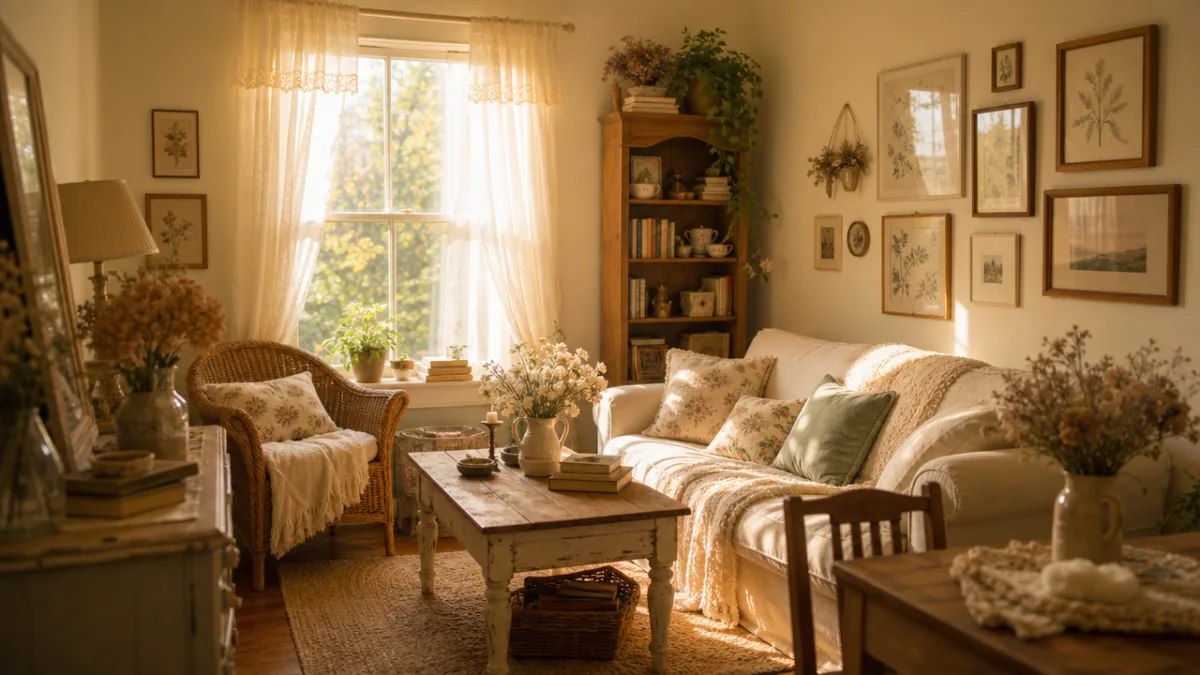
Color is the single most powerful tool you have when building a cottagecore living room, and choosing wrong here can undermine every other decision you make. The palette should feel as though it was borrowed from nature at its most gentle — think the soft green of lichen on stone, the warm cream of old linen, the blush of a dried rose, the dusty sage of herb gardens in late summer, and the deep earthy terracotta of garden pots left in the rain. These are not loud colors. They are colors that settle into a room and make it sigh with comfort.
Your base tones — the walls, the larger upholstered pieces, and the floor coverings — should lean toward muted neutrals with warm undertones. Brilliant white is generally too harsh and too contemporary for cottagecore; instead reach for off-whites, warm creams, aged parchment tones, or pale wheat. These shades bounce soft light around the room and create the feeling of warmth even on a grey afternoon. If you are working with walls you cannot paint, layer warm-toned textiles heavily enough that the walls recede into the background.
Accent colors give a cottagecore room its personality, and here you have more room to express yourself. Dusty pinks, faded lavender, deep forest green, and burnt sienna all work beautifully as accent tones introduced through throw pillows, ceramics, floral arrangements, and small decorative objects. The key rule is that every color you use should look as though it has faded slightly in the sun — saturated, modern brights will immediately break the spell. When in doubt, ask yourself whether the color looks like it belongs in a watercolor painting of a wildflower meadow.
Furniture Selection: Choosing Pieces With History and Soul
The furniture in a cottagecore living room should look as though it arrived over time — some pieces inherited, some found at a market, some purchased new but chosen for their timeless quality. The aesthetic actively resists the matched furniture set or the showroom floor arrangement. Instead, you are building a room where a Victorian velvet armchair might sit companionably beside a 1970s rattan side table and a farmhouse-style sofa draped in a patchwork quilt. The eclecticism is intentional, and it is what gives the room its warmth.
When selecting sofas and armchairs, prioritize upholstery that reads as soft and lived-in. Linen, cotton slipcovers, worn velvet, and bouclé all work exceptionally well. Avoid anything with sharp, architectural lines or visible metal hardware, as these elements read as too contemporary and too deliberate. Curved silhouettes — rolled arms, tufted backs, cabriolet legs — feel more aligned with the aesthetic. Slipcovers in particular are a cottagecore staple because they look pleasantly rumpled and can be washed, dried in the sun, and tumbled back into place without ceremony.
Wood is the dominant material for tables, shelving, and accent furniture, and the older and more characterful it looks, the better it serves the aesthetic. Seek out pieces with visible grain, slight imperfections, patina from age and use, and joinery details that speak to craft rather than mass production. Painted furniture in muted tones — particularly pieces showing genuine or artfully applied distressing — adds another layer of history. The goal is furniture that looks as though it could tell stories, because in a cottagecore room, every object should feel as though it has arrived with a small, quiet narrative attached.
Textiles and Layering: The Secret to That Irresistible Softness
If there is one area where cottagecore decorating distinguishes itself most dramatically from other design styles, it is in the extraordinary generosity of its textile layering. Where minimalism removes, cottagecore adds — and then adds again. The goal is a room that looks abundantly soft, where every surface invites touch, and where the layering of different fabrics creates visual depth and tactile richness that photographs cannot fully capture. You should be able to walk into the room and feel the temperature drop a degree or two with all that gathered warmth.
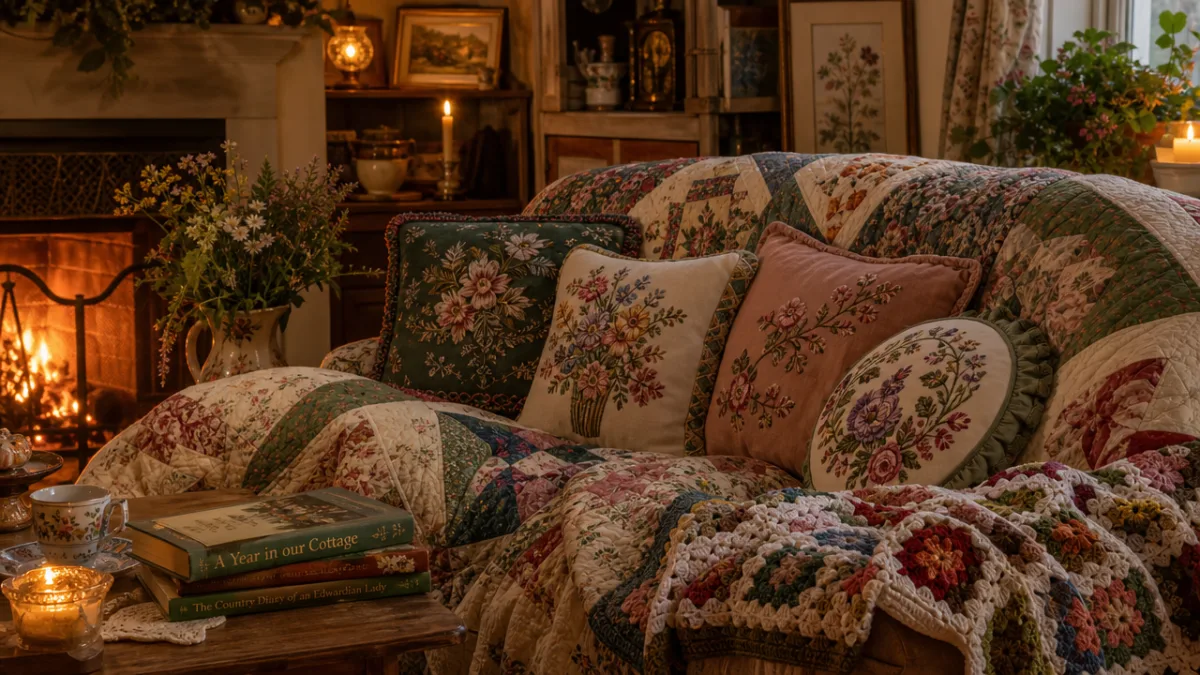
Begin with rugs, and layer them if your space allows. A large jute or sisal rug provides the base; a smaller vintage-style floral or kilim rug placed on top adds color, pattern, and personality. Over your sofa and chairs, drape quilts, crocheted blankets, and chunky knit throws — not folded neatly, but loosely arranged as though someone has just gotten up from beneath them. Cushions should be plentiful and mismatched: embroidered linen, velvet, floral chintz, and needlepoint all living together without apology. The mix of patterns and textures is what creates the richness.
Window treatments in a cottagecore room deserve particular attention because they profoundly affect how light enters and how the space feels. Sheer white or ivory linen panels that billow gently in a breeze are almost synonymous with the aesthetic. You can layer these beneath heavier curtains in floral or toile patterns for rooms that need more warmth and privacy. The curtains should be generously cut — falling to the floor and slightly pooling, giving the impression of luxurious abundance rather than practical economy. Curtain hardware should be simple and unobtrusive, ideally in aged brass or wrought iron.
- Layer at least three different textile textures in any given seating area — smooth linen, something knitted or crocheted, and something with surface embroidery or print
- Choose natural fibers whenever possible: linen, cotton, wool, jute, and silk all age beautifully and contribute to the organic warmth of the aesthetic
- Do not match your cushion covers precisely — slight variations in scale, color, and pattern make the arrangement feel genuinely collected rather than purchased as a set
- Vintage and secondhand textiles, including old quilts, grain sack fabric, and antique lace, add authenticity that new textiles simply cannot replicate
- Wash your linens before using them and allow them to air-dry — the softness and slight irregularity this creates is central to the cottagecore look
Bringing Nature Indoors: Plants, Botanicals, and Organic Elements
Cottagecore living rooms maintain an almost devotional relationship with the natural world, and this is expressed most visibly through the presence of plants, flowers, and botanical elements woven throughout the space. This is not the spare, curated plant styling of a Scandinavian interior, where a single fiddle-leaf fig stands alone in an architectural pot. Cottagecore embraces abundance, layering plants at different heights and in different vessels, mixing the cultivated with the wild-gathered, and allowing the room to feel as though nature has been warmly invited inside and made genuinely comfortable.
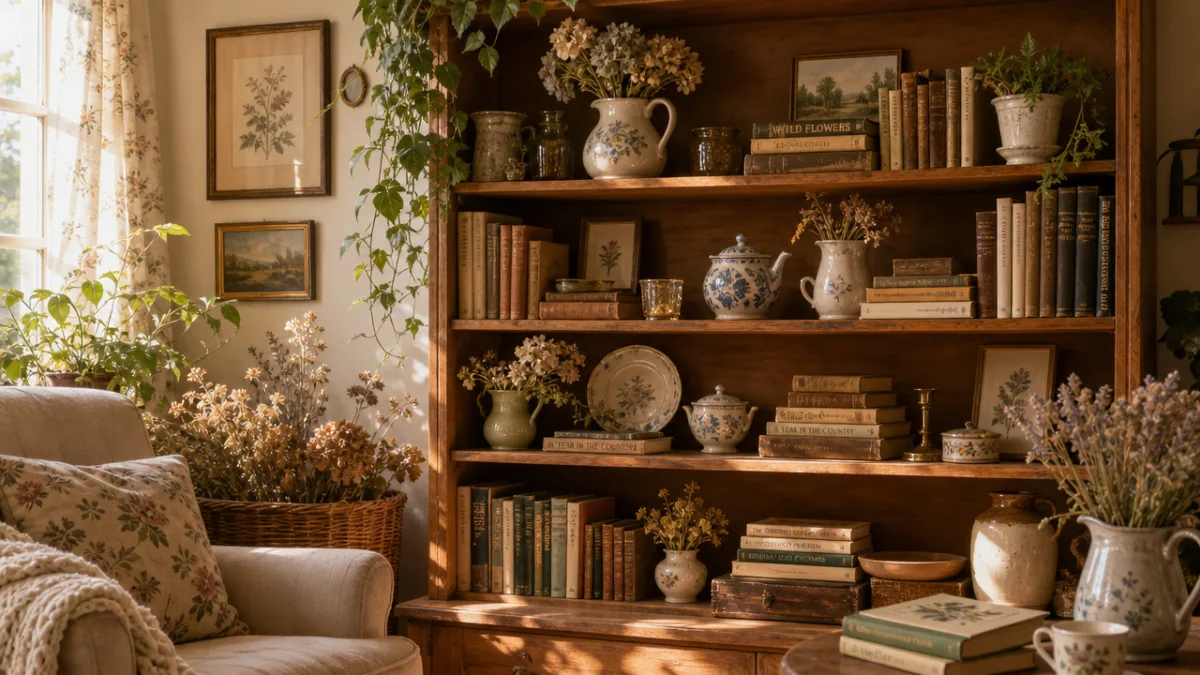
Fresh flowers in mismatched vessels — a chipped enamel pitcher, a collection of old glass bottles, a ceramic jug with a hairline crack running down one side — are a cornerstone of the aesthetic. Do not limit yourself to florist flowers; garden cuttings, foraged greenery, herbs in small pots, and wildflower bundles all belong here. Dried flowers and botanicals are equally important, and they allow you to maintain the look through seasons when fresh flowers are scarce. Dried lavender, pampas grass, eucalyptus, and pressed botanicals in frames all carry the aesthetic beautifully through winter months.
Beyond flowers and plants, organic elements extend to the use of natural materials throughout the room. Wicker and rattan baskets used for storage, wooden bowls holding fruit or collected objects, river stones and pinecones gathered on walks and arranged informally on shelves, beeswax candles in assorted holders, and hand-thrown pottery in earthy glazes all contribute to the sense of a room deeply connected to the natural world. The cumulative effect of all these organic elements is a space that breathes and lives, that changes slightly with the seasons, and that never feels static or finished in the way that more formal interiors do.
Lighting: Creating the Warm Glow That Makes Everything Magical
Lighting may be the most underestimated element of cottagecore design, and yet it is responsible for more of the aesthetic’s famous warmth and magic than almost anything else. The harsh, flat overhead lighting that characterizes so many modern interiors is deeply antithetical to the cottagecore spirit. What you are seeking instead is layered, low, warm light that mimics the quality of candlelight or the golden glow of late afternoon sun — light that softens edges, creates shadows, and makes every surface look as though it is being gently kissed by something warm and ancient.
Build your lighting scheme in layers, never relying on a single overhead source. Table lamps with fabric shades cast a warm, diffused glow that is ideal for primary ambient light. Floor lamps tucked into corners add depth. Candles — real ones in candlesticks, hurricanes, and lanterns, as well as high-quality flameless alternatives — add flicker and intimacy. Fairy lights woven through bookshelves, around mirrors, or along mantels provide a soft, magical quality that no other light source quite replicates. String all warm-toned bulbs; cool-toned white light will immediately strip the coziness from even the most beautifully designed cottagecore room.
The fixtures themselves should align with the aesthetic: ceramic table lamp bases in earthy glazes, rattan pendants if overhead lighting is necessary, candlestick-style floor lamps, and vintage-inspired sconces with fabric shades. Avoid anything with a contemporary, industrial, or architectural quality. If you find a beautiful old lamp at a flea market, have it rewired and use it — the patina and idiosyncrasy of a genuinely old light fixture contributes enormously to the atmosphere you are building. Remember that in a cottagecore room, even the fixtures are part of the story, and the story should always feel long, layered, and beloved.
Personal Touches and Collected Objects: Making It Genuinely Yours
The final and perhaps most important rule of cottagecore design is also the simplest: the room must feel personal. It must look as though a specific, curious, feeling human being lives there — someone who reads poetry and tends a garden and collects odd vintage things and finds beauty in the overlooked and the imperfect. This is what separates a truly successful cottagecore living room from a themed hotel lobby or a catalogue shoot. The personal objects, the collections, the imperfections, and the quirks are not decorating afterthoughts; they are the whole point.
Books are perhaps the single most important personal element you can introduce into a cottagecore living room. Not styled spines-turned-inward nonsense, but real books, stacked horizontally and vertically on shelves, piled on coffee tables, tucked into baskets, left open and face-down on the arm of a chair as though their reader has just stepped out. The books you choose to display say something real about who you are, and a cottagecore room should never pretend otherwise. Surround them with the things you genuinely love: pressed flowers in small frames, a collection of vintage postcards, inherited china, objects brought back from travels, handmade gifts from people you care about.
Display your collections with generosity and without apology. Cottagecore living rooms have no room for the anxiety that drives people to hide their enthusiasms or pare back to only the most tasteful and defensible objects. If you collect vintage botanical illustrations, frame thirty of them and hang them in a glorious salon-style wall arrangement. If you love old teacups, line them up on a shelf and use them. If you have a weakness for small ceramic animals, let them gather on your windowsill. The cottagecore aesthetic celebrates the collector, the accumulator, the person who finds magic in small and beautiful things — and it asks you, above all else, to be genuinely and unapologetically yourself within its warmly forgiving walls.








What do you think?
It is nice to know your opinion. Leave a comment.