










The Ancient Art of Herbal Candle Making for Creativity and Focus
People have been turning to the natural world for mental clarity and creative inspiration for a very long time. Long before productivity apps and focus playlists, there were plants. Herbal intention candles sit at this wonderful crossroads of old wisdom and modern wellness — they combine the real therapeutic properties of specific botanicals with the meditative quality of candlelight, and the result is a multisensory experience that artists, writers, entrepreneurs, and spiritual practitioners keep coming back to as part of their daily creative routine.
An intention candle is really something more than glorified aromatherapy. When you light a candle that’s been infused with herbs chosen to stimulate your mind and open up creative channels, you’re stepping into a tradition that spans cultures and thousands of years. Ancient Egyptian priests burned kyphi — a complex blend of resins and herbs — in their temples. Today, designers and musicians light candles to prepare their creative space. The thread connecting all of them is the same: intentional scent and flame have long been understood as powerful triggers for a sharper, more inspired mind.
What makes herbal intention candles so relevant right now, in our overstimulated world, is their ability to create what psychologists call an environmental anchor. The specific mix of scent, warmth, and soft flickering light sends a signal to your brain that it’s time to shift into a particular mental state. The more consistently you use it, the stronger that signal becomes — and the faster you can drop into a focused, inspired flow. This isn’t wishful thinking. It’s grounded in the well-documented science of associative conditioning and how powerfully scent ties to memory.
Key Herbs That Ignite Creative Fire and Sharpen Mental Clarity
The herbs in a creativity-focused intention candle aren’t chosen at random. Each one brings specific compounds with documented effects on cognition, mood, and neurological function. Rosemary is probably the most celebrated herb for mental clarity — and for good reason. It contains a compound called 1,8-cineole that’s been shown in clinical studies to raise acetylcholine levels in the brain, a neurotransmitter closely tied to memory, learning, and mental agility. Just breathing in rosemary aroma has been linked to measurable improvements in the speed and accuracy of mental tasks.
Lavender is often pigeonholed as a sleep herb, but it plays a much more interesting role in a creativity candle. Rather than making you drowsy, its linalool content works to quiet the anxiety and mental noise that so often gets in the way of creative flow. Most creative blocks aren’t really about having no ideas — they’re about not being able to reach ideas that are being drowned out by stress, self-doubt, and mental chatter. Lavender softens that noise without dulling the mental sharpness you actually need to get good work done.
Beyond rosemary and lavender, a well-crafted herbal creativity candle might include any of these botanicals, each adding its own layer to the experience:
- Frankincense: Revered across cultures for thousands of years, frankincense contains compounds that cross the blood-brain barrier and act on ion channels in the brain, creating feelings of warmth, expanded awareness, and openness — exactly the kind of state where creative breakthroughs tend to happen.
- Peppermint: That sharp, clean scent does more than wake you up. Peppermint is a well-documented cognitive stimulant tied to increased alertness, better memory retrieval, and a physical energy that can carry you through long creative sessions.
- Clary Sage: Traditionally associated with visionary states and clear perception, clary sage contains linalyl acetate, which can bring cortisol levels down while lifting both mood and mental clarity at the same time.
- Cedarwood: Warm and grounding, cedarwood helps anchor the creative mind. Instead of letting excitement scatter your energy in ten directions, it channels that energy into sustained, focused output.
- Orange Peel: Citrus aromatics have a well-earned reputation for promoting positive mood and motivation. Orange in particular is associated with optimism, enthusiasm, and the kind of playful energy that makes creative risk-taking feel possible.
The real artistry in blending these herbs is finding a balance that’s both stimulating and grounding, expansive and focused. Lean too hard into stimulating herbs and you get a buzzy, anxious energy that actually works against flow. Too many calming botanicals and you end up relaxed but without a spark. The best herbal creativity candles are blended with the kind of care a master perfumer brings to a fine fragrance — considering how individual notes interact, how they evolve as the candle burns, and how they’ll land differently depending on where you are mentally when you strike the match.

The Ritual of Setting Creative Intentions
Lighting a creativity candle is most powerful when you treat it as a deliberate ritual rather than a casual habit. The word “ritual” can sound a little intimidating or overly mystical, but in practice it just means bringing your full attention to something and giving it meaning. When you light your herbal intention candle at the start of a creative session, take a moment to pause, breathe deeply, and clearly state — either out loud or in your head — what you’re calling into your work today. Research in psychology shows that this kind of intention-setting meaningfully improves follow-through, focus, and creative output.
Think about building a consistent pre-creative ritual with your candle at the center. It might start with clearing your physical workspace — removing anything unrelated to what you’re working on. Then, as you light the candle, take three slow, deliberate breaths and let the rising herbal scent fill your awareness. Some people like to speak their intention out loud: “I call in clarity, inspiration, and focused creative energy.” Others prefer to write a line or two in a journal before starting. The specific form matters a lot less than doing it consistently and meaning it.
Many creatives find that the ritual of putting the candle out at the end of a session is just as important as lighting it. Rather than blowing it out without a second thought, they use that moment to acknowledge what was made, feel grateful for whatever flow came through, and consciously signal to themselves that the formal creative session is over. That closing ritual helps prevent the blurry boundary between work and rest that so often leads to creative burnout — keeping your creative energy focused in intentional bursts rather than slowly leaking out across the whole day until there’s nothing left.
Choosing and Caring for Your Herbal Creativity Candle
Not every candle that calls itself herbal or an intention candle actually lives up to the label, and knowing what to look for can make a real difference in your experience. The wax base is probably the most fundamental thing to consider. Paraffin wax is made from petroleum, and when burned it releases a range of potentially harmful compounds — including benzene and toluene — that you really don’t want to be inhaling during long creative sessions. Look instead for candles made with natural wax bases like soy, beeswax, or coconut wax. They burn cleaner and let the herbal fragrances come through truer and more therapeutically effective.
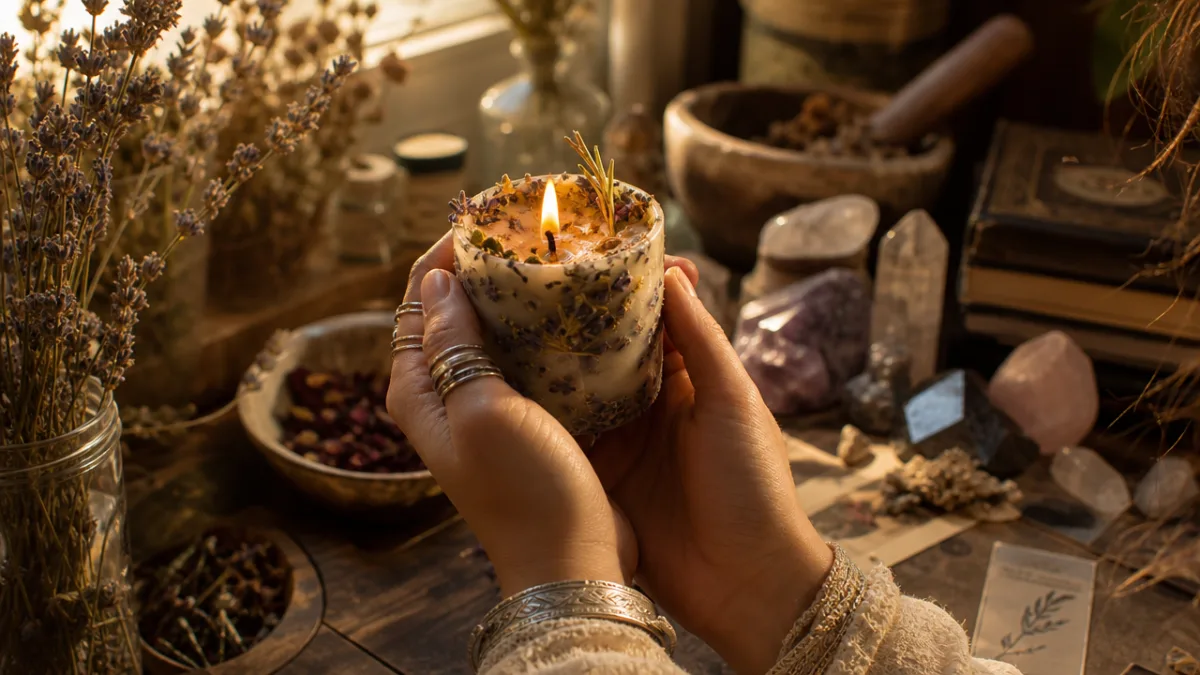
The quality and sourcing of the herbs themselves matters just as much. Candles made with synthetic fragrance oils — even when those fragrances are named after herbs like “rosemary” or “lavender” — simply don’t deliver the same benefits as candles made with genuine essential oils and real dried botanicals. When you’re evaluating a creativity candle, look for makers who are transparent about their ingredients. Good makers will tell you exactly which essential oils they use, where they come from, and whether they’re organic or wildcrafted. Visible dried herbs in or on the candle are a good sign too, as long as they’re placed thoughtfully to avoid any fire hazard.
Taking care of your candle properly will get you the most out of it — both in terms of how long it lasts and how well it works. Here’s what to keep in mind:
- First burn matters most: The first time you light it, let the candle burn until the entire surface has turned into a pool of liquid wax — usually two to four hours. This prevents tunneling and makes sure you get the full aromatic and herbal benefits in every burn after that.
- Trim your wick: Before each use, trim the wick down to about a quarter of an inch. This keeps soot minimal, ensures an even burn, and holds the flame at the ideal height for the scent to diffuse well without overheating the wax.
- Burn in a focused space: Keep your candle in the spot where you actually do your creative work instead of moving it around the house. This reinforces the environmental anchoring effect and lets the space itself gradually absorb the beneficial herbal scent over time.
- Never burn for more than four hours: Burning longer than that can cause the wick to shift, generate too much heat, and start to degrade the wax and fragrance. Four hours is the generally recommended maximum for any candle.
- Store it thoughtfully: When it’s not in use, keep your candle away from direct sunlight and temperature extremes. Cover it when you can to protect the herbal aroma and keep dust off the surface.
Integrating Herbal Candles into a Holistic Creative Practice
An herbal creativity candle does its best work not as a standalone tool but as one piece of a broader, intentionally designed creative practice. The most consistently creative people throughout history seem to have understood something important: creativity isn’t a random gift from the muse. It’s a skill that can be cultivated and reliably accessed through the right combination of environment, mental habits, and physical practices. Your candle is a powerful anchor within that ecosystem — but it works best when other supportive elements are around it.
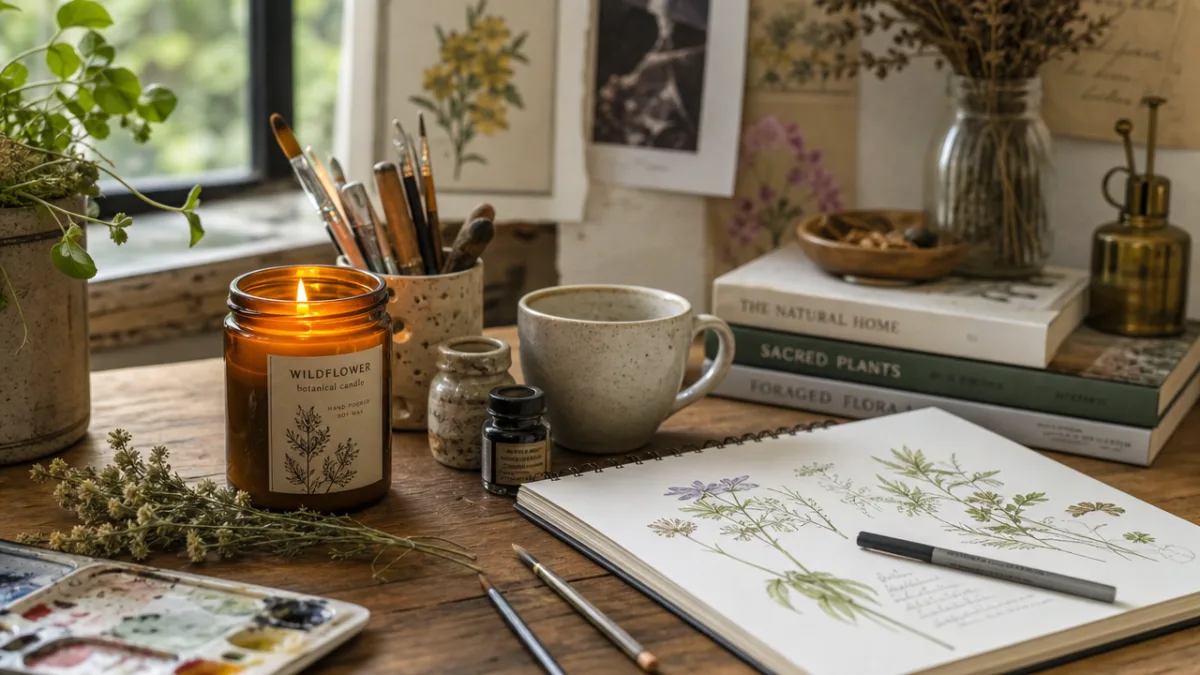
Physical environment has a profound effect on creative output. Research in environmental psychology consistently shows that light quality, air circulation, temperature, sound levels, and even the presence of natural elements all measurably affect how well we think and create. When you can, position your workspace near natural light. Bring in living plants — they improve air quality and offer a grounding, calming connection to the natural world. Think about your acoustic environment too, since some people do their best work with soft background music or ambient nature sounds, while others need quiet. Your herbal candle fits naturally into this kind of sensory design, adding scent and soft light to the palette of your creative space.
Mental and physical practices that support your nervous system will amplify everything your candle does. Even five or ten minutes of meditation or breathwork before you light the candle can help you arrive at your work in a calmer, more open state. Regular movement — a morning walk, a yoga practice, whatever you actually enjoy — is one of the most evidence-backed ways to enhance neuroplasticity and creative thinking. Good sleep, consistent hydration, and a diet rich in omega-3s and antioxidants all support the kind of vibrant brain function that creative work calls for. When those foundations are in place, your herbal creativity candle becomes the elegant final signal that your prepared mind and body are ready to create.
The Deeper Meaning of Creative Intention Setting
At its deepest level, lighting a herbal creativity candle and setting an intention is an act of honoring the creative force within you. Across cultures and throughout human history, creativity has been understood as more than a practical skill — it’s been seen as a form of connection. To deeper layers of the self. To the shared human experience. To something larger and more mysterious than any individual mind. When you build a ritual around your creative work, you’re acknowledging that what you do matters, that making something — a painting, a business plan, a poem, a meal, a piece of music — is a real and meaningful expression of your presence in the world.
That might sound expansive if you tend to think of your creative work in purely practical terms, but even the most pragmatic creative professionals benefit from approaching their work with a little more reverence. Studies of peak performers across creative fields consistently find that those who keep some kind of ritual or intentional preparation before their work sessions report higher satisfaction with what they produce, greater access to flow states, more consistent creative output over time, and a stronger sense of meaning connected to what they do. The specific form of the ritual — an herbal candle, a particular song, a cup of tea, a few minutes of quiet — matters far less than the act of consciously preparing.
As you develop your own relationship with your herbal creativity candle, you may find that it gradually shifts from being a tool to being something more like a companion — a familiar presence that’s been with you through breakthroughs and dry spells, through the blank page and the finished work. Over months and years of consistent use, the scent of your candle will embed itself in your olfactory memory, tied to your most inspired and productive creative states. Eventually, even a brief whiff of those herbal notes will be enough to bring you back to yourself as a creator — grounded, open, and ready to make something new. That’s the real gift of the herbal intention candle: not magic, but meaning, and the quiet, transformative power that meaning brings to everything we make.








What do you think?
It is nice to know your opinion. Leave a comment.