










Birthday Cake: A Complete Guide to Celebrating with the Perfect Centerpiece
The Rich History of Birthday Cakes
The tradition of birthday cakes stretches back thousands of years, weaving through ancient civilizations and evolving into the beloved celebration staple we know today. The ancient Greeks are often credited with some of the earliest birthday cake rituals, offering round honey cakes to Artemis, the goddess of the moon. These cakes were sometimes adorned with lit candles to mimic the glowing light of the moon, a practice that feels remarkably familiar to modern celebrations.
During the medieval period in Germany, a tradition called Kinderfest emerged, which involved celebrating a child’s birthday with a cake surrounded by candles — one for each year of life plus an extra candle symbolizing the hope of living another year. This practice, known as Geburtstagskuchen, laid much of the groundwork for the candle-blowing rituals we still observe at birthdays around the world. The number of candles held meaning, and blowing them all out in a single breath was believed to make a birthday wish come true.
By the 18th and 19th centuries, as sugar became more widely available and baking technology improved, birthday cakes began to resemble what we recognize today. Elaborate layered cakes with creamy frostings started appearing at celebrations for both children and adults. The Industrial Revolution further democratized the birthday cake by making ingredients and baking tools more accessible to ordinary households, allowing families of all backgrounds to participate in the joyful tradition of celebrating another year of life with a beautifully crafted sweet centerpiece.
Essential Ingredients for the Perfect Birthday Cake
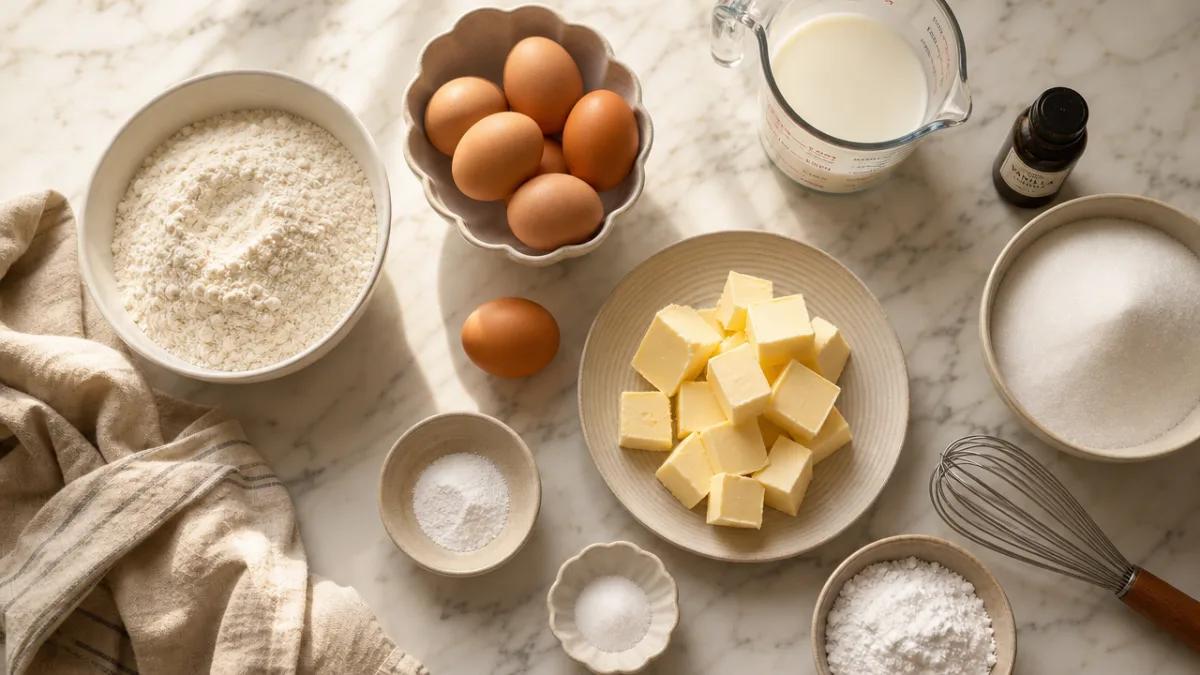
Understanding the core ingredients of a birthday cake is the foundation of baking success. Every great cake begins with a careful selection of quality components, each playing a specific and vital role in the final product. Flour provides the structural backbone of the cake, with all-purpose flour being the most commonly used variety for its balanced protein content. Cake flour, with its lower protein level, produces a finer, more tender crumb that many bakers prefer for celebration cakes where texture is especially important.
Sugar does far more than simply sweeten the batter. It contributes to the browning of the cake’s exterior through caramelization, helps retain moisture to keep the crumb soft and tender for days, and plays a key role in creating a light and airy structure when creamed with butter. Eggs provide structure, richness, and stability while also acting as an emulsifier that helps blend fat and liquid ingredients into a smooth, cohesive batter. The fat content in eggs, particularly from yolks, adds an unmistakable depth of flavor and a velvety mouthfeel that distinguishes a truly excellent birthday cake from a mediocre one.
Leavening agents such as baking powder and baking soda are the invisible workhorses of a birthday cake, creating the lift and lightness that makes each slice feel celebratory rather than dense. Vanilla extract, though used in modest quantities, provides an aromatic warmth that ties all the other flavors together. Dairy ingredients like whole milk, buttermilk, or sour cream add tenderness and moisture while also contributing a subtle tang that balances the sweetness of the cake. Choosing high-quality butter with a good fat content makes a noticeable difference in both flavor and texture.
For those with dietary needs or preferences, modern baking has opened up a wealth of alternatives that perform impressively well. Common ingredient swaps include:
- Gluten-free flour blends for those with celiac disease or gluten sensitivity
- Plant-based milks such as almond, oat, or coconut milk in place of dairy
- Flax eggs or aquafaba as egg substitutes for vegan bakes
- Coconut sugar or maple syrup as natural sweetener alternatives
- Vegan butter or refined coconut oil instead of traditional butter
Popular Birthday Cake Flavors and Styles Around the World
One of the most exciting aspects of birthday cake culture is the extraordinary variety of flavors and styles that exist across different cultures and personal preferences. In the United States, classic yellow butter cake with chocolate buttercream frosting remains a perennial favorite, beloved for its nostalgic flavor and crowd-pleasing appeal. Red velvet cake, with its dramatic crimson interior and tangy cream cheese frosting, has also become an iconic American birthday choice that continues to captivate new generations of cake lovers.
In Japan, the traditional birthday cake takes a remarkably different form. The Japanese strawberry shortcake, known as Ichigo Shortcake, features light and airy sponge layers filled with fresh whipped cream and sliced strawberries. Unlike the rich, heavy frosted cakes common in Western countries, this style emphasizes freshness, delicacy, and natural flavors. The aesthetic presentation is equally important, with perfectly arranged strawberries and smooth cream creating an elegant, minimalist appearance that reflects broader Japanese design sensibilities.
German Black Forest cake, or Schwarzwälder Kirschtorte, brings together chocolate sponge, whipped cream, and tart Morello cherries in a combination that has charmed birthday celebrants for well over a century. The addition of kirsch, a cherry brandy, adds a sophisticated depth of flavor that elevates this cake into special-occasion territory. Meanwhile, in the United Kingdom, the classic Victoria sponge — two layers of buttery cake sandwiched with jam and cream — remains a beloved birthday staple that prioritizes simplicity and quality ingredients over elaborate decoration.
Some of the most celebrated birthday cake styles found around the world include:
- Tres Leches Cake — A Latin American classic soaked in three types of milk for an intensely moist texture
- Opera Cake — A French layered masterpiece of almond sponge, coffee buttercream, and chocolate ganache
- Chiffon Cake — Light, oil-based cake popular across Southeast Asia for its incredibly tender crumb
- Dobos Torte — A Hungarian showstopper with multiple thin sponge layers and caramel-topped finish
- Prinsesstårta — A Swedish dome-shaped celebration cake wrapped in green marzipan
Mastering Frosting, Decoration, and Presentation
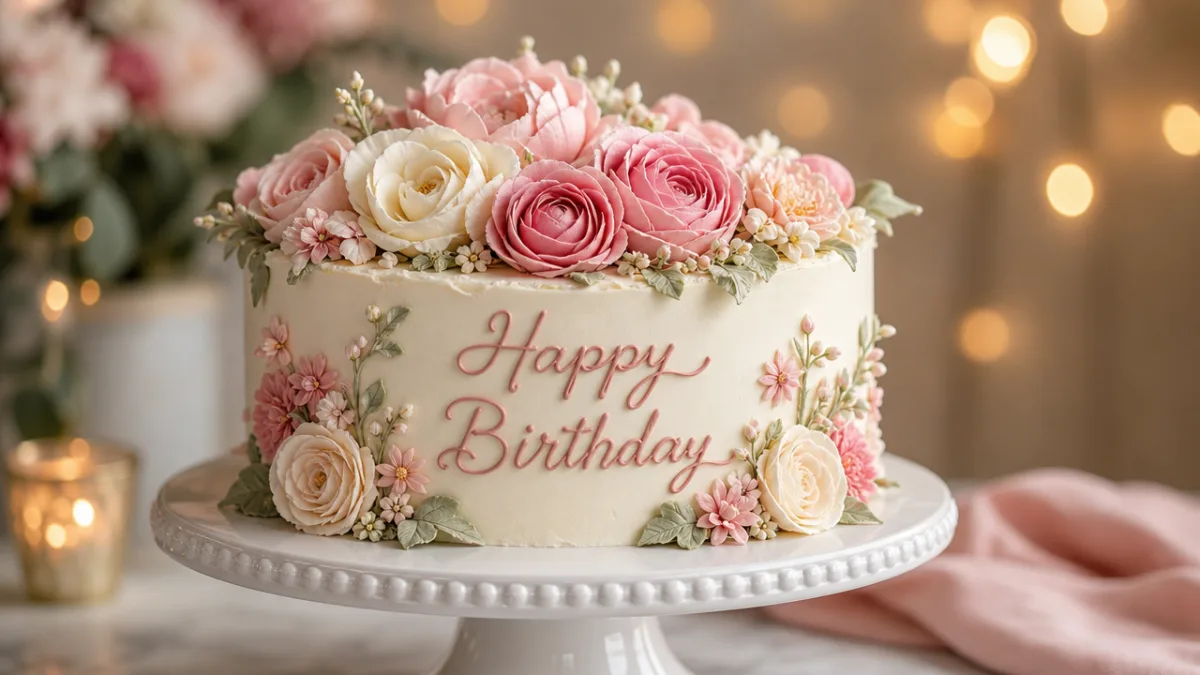
The frosting and decoration of a birthday cake transforms a simple baked good into a true work of art and a powerful emotional statement. Buttercream, in its many varieties, remains the most popular choice for home bakers and professionals alike. American buttercream, made from butter, powdered sugar, and a splash of milk or cream, is exceptionally easy to prepare and pipes beautifully into rosettes, borders, and lettering. Its sweetness and stability make it ideal for detailed decorating work, especially in warmer environments where other frostings might struggle to hold their shape.
Swiss meringue buttercream and Italian meringue buttercream represent more advanced but deeply rewarding alternatives. These frostings begin with a cooked meringue base that produces a silky, less sweet finish with an almost cloud-like texture on the palate. They spread effortlessly with an offset spatula and create the kind of smooth, professional finish seen on high-end bakery cakes. Cream cheese frosting, with its subtle tang and rich body, pairs magnificently with carrot cake, red velvet, and banana cake, providing a complementary counterpoint to sweeter cake bases.
Fondant offers the most sculptural possibilities of any cake covering. Rolled out into thin sheets and draped over a cake, fondant creates a porcelain-smooth surface that can be painted, stamped, embossed, or used as a canvas for sugar flowers, figurines, and elaborate three-dimensional decorations. While its flavor is not to everyone’s taste, many bakers apply a generous layer of buttercream underneath to compensate and ensure each slice remains delicious. Edible printing technology has also expanded creative possibilities, allowing photographic images, intricate patterns, and personalized designs to be transferred directly onto cakes with stunning precision.
For those seeking a spectacular finish without advanced technical skills, several decorating techniques are beautifully beginner-friendly:
- Naked cake style — minimal frosting on the sides to showcase the cake layers
- Drip technique — poured ganache or glaze dripping artfully down the sides
- Sprinkle coat — pressing colorful sprinkles into fresh buttercream for a festive look
- Floral decoration — pressing fresh or dried edible flowers onto a frosted surface
- Ombre effect — blending two or three colors of frosting from light to dark around the sides
Tips for Baking a Birthday Cake from Scratch
Baking a birthday cake from scratch is one of the most meaningful gifts you can offer someone, and approaching the process with the right knowledge makes all the difference between a cake that simply exists and one that truly shines. The single most important step before you even begin measuring ingredients is to ensure everything is at room temperature. Butter, eggs, and dairy products that have been brought to room temperature incorporate far more smoothly into the batter, producing a more uniform crumb and a better rise in the oven. Cold butter, for instance, will not cream properly with sugar, resulting in a dense, uneven texture.
Measuring ingredients accurately is equally critical. Baking is a science, and even small deviations in quantities can noticeably affect the outcome. Investing in a digital kitchen scale and measuring by weight rather than volume is the single most reliable way to ensure consistent results every time. When measuring flour by volume, use the spoon-and-level method — spooning flour gently into the measuring cup and leveling it off with a straight edge — rather than scooping directly from the bag, which compacts the flour and leads to a drier, denser cake than intended.
Oven temperature calibration is a frequently overlooked but essential factor in birthday cake success. Many domestic ovens run hotter or cooler than their displayed temperature, which can lead to overbrowning, uneven baking, or collapsed centers. An inexpensive oven thermometer placed inside the oven provides a much more accurate reading and allows you to adjust accordingly. Baking your cake on the middle rack ensures the most even heat distribution, and resisting the urge to open the oven door during the first two-thirds of baking prevents the temperature fluctuations that cause cakes to sink in the middle.
Cooling and assembly also require patience and attention. Removing a cake from its pan before it has cooled adequately risks breaking or crumbling. Once out of the pan, cakes should cool completely on a wire rack before any frosting is applied, as even slightly warm cake will melt buttercream and cause it to slide off. If making a layered cake, leveling each layer with a serrated knife creates a stable, professional-looking stack. A thin crumb coat of frosting applied before the final decorating coat traps stray crumbs and ensures a polished, bakery-worthy finish.
Making Your Birthday Cake a Memorable Experience
Beyond the recipe and technique, a birthday cake carries an enormous emotional weight that elevates it far above ordinary dessert. It is a symbol of love, effort, and celebration — the tangible expression of wishing someone well as they mark another year of their life. Personalizing a birthday cake to reflect the recipient’s personality, passions, or favorite flavors transforms it from a generic sweet into something deeply meaningful. A cake decorated with miniature book covers for an avid reader, or flavored with lavender and honey for someone who loves botanical things, communicates thoughtfulness in a way that a store-bought alternative simply cannot replicate.
The ritual surrounding the birthday cake matters just as much as the cake itself. The gathering of friends and family, the darkening of the room, the procession with glowing candles, the collective singing of the birthday song — these are the moments that lodge themselves in memory for decades. Research in psychology suggests that shared rituals significantly strengthen social bonds and create a sense of belonging and continuity. The birthday cake ritual, repeated year after year throughout childhood and into adulthood, becomes a powerful anchor to identity and community, reinforcing the feeling that one is loved and remembered.
For those who want to push their birthday cake experience into truly extraordinary territory, commissioning a custom cake from a skilled local cake artist is an increasingly popular option. These artisans can sculpt cakes into elaborate three-dimensional shapes, paint photorealistic images directly onto frosting with edible pigments, or construct multi-tiered architectural wonders that double as conversation pieces. The result is not merely a dessert but a centerpiece that sets the entire tone for a celebration and becomes one of the most photographed and talked-about elements of any party.
Storing and serving the birthday cake thoughtfully also contributes to the overall experience. Most frosted cakes are best served at room temperature, where the butter in the frosting and the crumb soften to their most pleasant texture. A cake that has been refrigerated should be removed at least an hour before serving to allow it to come back to its ideal state. Slicing with a warm, clean knife — dipping the blade in hot water and wiping it dry between cuts — produces clean, attractive slices that look as beautiful on the plate as the whole cake looked on the stand.
Ultimately, whether you bake a simple homemade cake with hand-piped lettering or commission a spectacular sculpted masterpiece, the birthday cake serves the same timeless purpose: to make someone feel celebrated, cherished, and seen. It is the sweetest way humans have found to say, across centuries and cultures, that another year of your existence is worth celebrating, and that the people around you are glad you are here. In that sense, every birthday cake — no matter how humble or grand — is a small and beautiful act of love made edible.








What do you think?
It is nice to know your opinion. Leave a comment.