










Banana Pudding Soy Wax Candle: The Ultimate Guide to Making and Enjoying This Irresistible Scent
Introduction to Banana Pudding Candles
Few scents evoke the warmth of home quite like the rich, creamy aroma of banana pudding. This beloved Southern dessert has inspired one of the most delightful candle fragrances available today, combining the sweet, tropical notes of ripe banana with the warm, vanilla-laced creaminess of classic pudding. Whether you are a candle enthusiast, a DIY crafter, or simply someone who appreciates a beautifully scented home, a banana pudding soy wax candle is something truly special worth exploring.
Soy wax has become the preferred medium for artisan candle makers for good reason. Derived from soybean oil, this natural wax burns cleaner and longer than traditional paraffin, releasing fragrance more gradually and evenly throughout a room. When paired with a carefully crafted banana pudding fragrance oil, the result is a candle that fills your living space with a scent so authentic, your guests may genuinely wonder if something sweet is baking in the kitchen. It is a warm, inviting, and utterly comforting olfactory experience.
The growing popularity of food-inspired candles reflects a broader cultural shift toward comfort and nostalgia in home décor. People increasingly seek sensory experiences that connect them to cherished memories — a grandmother’s kitchen, a summer cookout, a childhood birthday party. Banana pudding, with its layers of vanilla wafers, fresh banana, and silky custard, is one of those iconic flavors that carries deep emotional resonance for many people. Translating that memory into a candle form is both an art and a science, and the results can be absolutely extraordinary.
Why Food-Inspired Scents Are So Popular
The psychology behind food-scented candles is fascinating and well-documented. Our sense of smell is directly connected to the limbic system, the part of the brain responsible for emotions and memory. This means that a single whiff of a familiar food scent can instantly transport us back in time, triggering feelings of comfort, joy, and belonging. Banana pudding, in particular, is strongly associated with gatherings, celebrations, and home cooking, making it an ideal candidate for a candle fragrance that resonates on a deeply personal level.
Beyond nostalgia, food-inspired candles also satisfy a craving without any of the calories. There is genuine pleasure in experiencing the sensory aspects of a beloved food — the smell, the warmth, the visual appeal — without necessarily indulging. For people who are mindful of their diet or simply love the idea of surrounding themselves with delicious aromas throughout the day, a banana pudding candle offers pure enjoyment with zero guilt. It is a small but meaningful luxury that makes everyday life feel a little more indulgent and special.
The artisan candle market has exploded over the past decade, with makers experimenting with increasingly creative and complex fragrance profiles. Banana pudding as a scent falls into the “bakery and dessert” category, which consistently ranks among the top-selling fragrance families in home fragrance products. Its broad appeal crosses generational and demographic lines, making it a favorite for gift-giving as well as personal use. A well-made banana pudding soy candle is the kind of product that sells out quickly at craft fairs and online shops, beloved by people of all ages and backgrounds.
Choosing the Right Soy Wax and Supplies
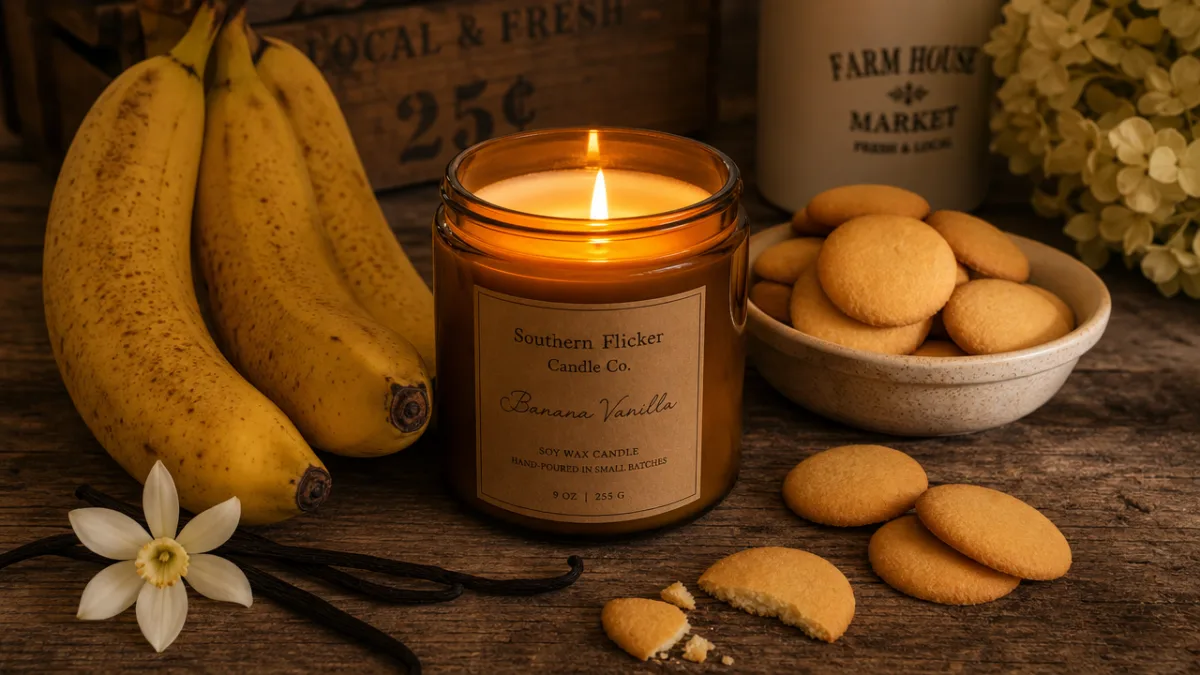
Creating a banana pudding soy wax candle begins with selecting the right type of soy wax, and this choice significantly impacts the final product. There are several varieties of soy wax available to crafters, each with distinct characteristics. Container soy wax, such as Golden Brands 464 or 444, is specifically formulated for candles poured into jars or tins. It has excellent fragrance throw, meaning it releases scent effectively both when burning (hot throw) and when unlit (cold throw), making it ideal for richly scented candles like banana pudding.
The quality of your fragrance oil is equally important. Not all banana pudding fragrance oils are created equal, and investing in a high-quality option from a reputable supplier will make a dramatic difference in the authenticity and complexity of the final scent. Look for fragrance oils that describe top notes of fresh banana, middle notes of vanilla custard and cream, and base notes of warm pastry or brown sugar. This layered profile creates a scent that evolves beautifully as the candle burns, revealing different aspects of the banana pudding experience over time.
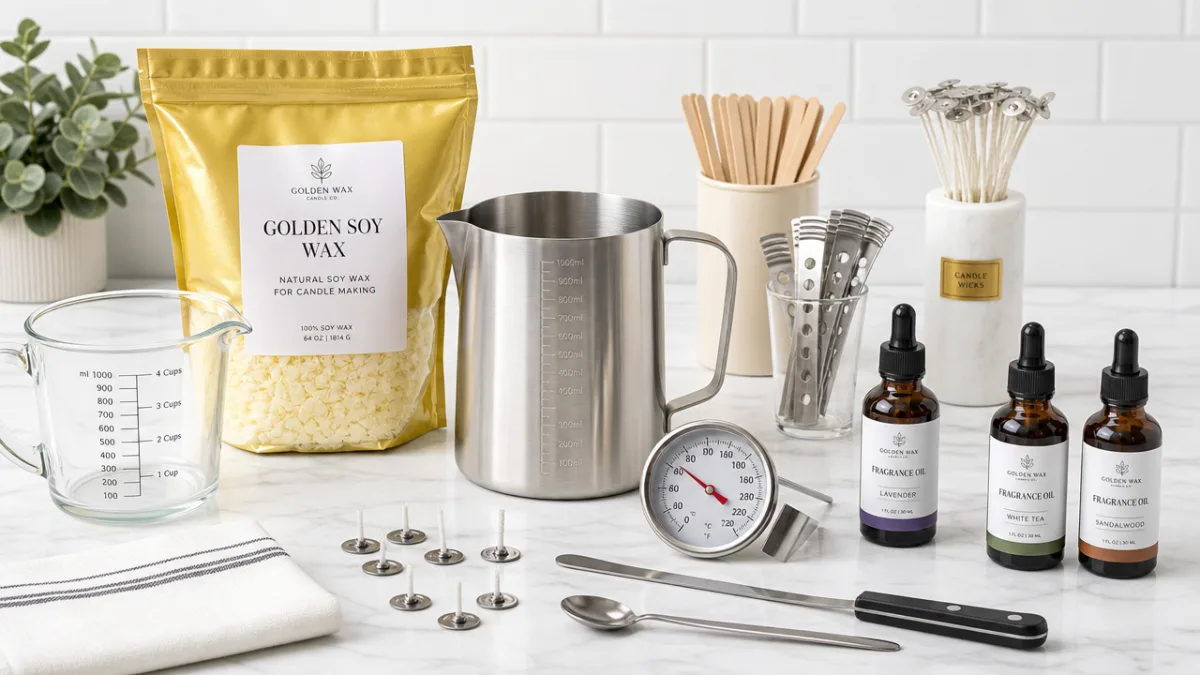
Beyond wax and fragrance, you will need several other supplies to complete your project successfully. The wick is critically important — too thin and the candle will tunnel, leaving wasted wax around the edges; too thick and it will produce excessive soot and consume the fragrance too quickly. For container soy candles, cotton core wicks in sizes CD-18 or ECO-6 are popular starting points for standard 8-ounce jars, though testing is always recommended. Other essentials include a double boiler or dedicated melting pitcher, a reliable thermometer, containers, wick holders or centering tools, and a kitchen scale for precise measurement.
Recommended Equipment and Materials
Gathering the right tools before you begin is one of the most important steps in ensuring a successful candle-making experience. Experienced crafters consistently emphasize that improvising with kitchen equipment can lead to uneven results, wasted materials, and frustration. A dedicated candle-making setup, even a modest one, pays for itself quickly in improved outcomes and saved materials. The following items represent the core toolkit any serious banana pudding candle maker should have on hand before beginning.
- Soy container wax (464 or 444 blend) — These are the most popular choices for beginners and experienced makers alike, offering excellent fragrance retention and smooth tops.
- High-quality banana pudding fragrance oil — Source from reputable suppliers like Brambleberry, Candle Science, or Natures Garden for consistent, authentic-smelling results.
- Pre-tabbed cotton core wicks — Properly sized to your container diameter, with wick stickers or glue dots to secure them to the bottom of the jar.
- Glass or tin containers — 8-ounce mason jars, amber glass vessels, or decorative tins all work beautifully and contribute to the aesthetic presentation.
- Digital kitchen scale — Measuring by weight rather than volume ensures consistency and accurate fragrance load calculations every time.
- Thermometer — An infrared or probe thermometer helps you add fragrance at the right temperature and pour at the optimal point for smooth tops.
- Wooden or silicone stir sticks — For thoroughly blending fragrance oil into the melted wax without introducing air bubbles.
Color is an optional but appealing addition to banana pudding candles. A soft, creamy yellow or warm ivory color created with candle-safe dye chips or liquid dye reinforces the visual identity of the scent and makes for a more attractive finished product. Some makers also add a light dusting of mica powder on top after pouring for a subtle shimmer effect. Whatever aesthetic choices you make, ensure that any colorants you use are specifically designed for candle use, as other dyes can clog wicks, produce unsafe fumes, or affect fragrance performance.
Step-by-Step Candle Making Process
The process of making a banana pudding soy wax candle is approachable for beginners but offers plenty of room for refinement as your skills develop. Begin by calculating how much wax you need using a simple formula: fill your containers with water, measure the volume, then multiply by 0.86 to get the weight of soy wax required (since soy wax is less dense than water). Your fragrance load should be between 6% and 10% of the wax weight, with 8% being a reliable starting point for most banana pudding fragrance oils, which tend to be well-behaved in soy wax.
Melt your soy wax in a double boiler or dedicated melting pitcher set over a pot of simmering water. Heat slowly to between 170°F and 185°F, stirring occasionally to ensure even melting. Once fully liquid, remove from heat and allow the wax to cool to between 140°F and 150°F before adding your fragrance oil. This temperature range is critical — too hot and the fragrance molecules will burn off before the candle even sets; too cool and the fragrance will not bind properly with the wax, leading to poor scent throw and potential separation issues like frosting or oil pooling on the surface.
Add your fragrance oil to the cooled wax and stir slowly but thoroughly for at least two full minutes. This extended stirring is important for ensuring complete fragrance integration and preventing hot or cold spots in the finished candle. While stirring, prepare your containers by securing pre-tabbed wicks to the bottom center using wick stickers or a small drop of hot glue. Use wooden dowels, clothespins, or dedicated wick centering tools balanced across the top of the jar to keep the wick perfectly centered during pouring and cooling. Pour your scented wax at around 130°F to 140°F for the smoothest tops.
Troubleshooting Common Candle Making Issues
Even experienced candle makers encounter challenges, and understanding how to troubleshoot common problems will save you time, materials, and frustration. Sinkholes, which appear as craters or depressions around the wick after the candle sets, are among the most frequently reported issues with soy wax candles. They occur when the wax contracts as it cools and air pockets form beneath the surface. The solution is to perform a second pour using leftover melted wax heated to approximately 10°F above your original pour temperature, filling in the depression to create a smooth, level top.
Frosting is another common phenomenon in soy candles, appearing as a white, powdery coating on the surface or sides of the candle. While alarming to newcomers, frosting is actually a natural characteristic of pure soy wax and is a sign of its natural origin — it does not affect scent throw or burn performance in any way. However, if aesthetics matter to you, pouring at slightly higher temperatures, using a wax blend that contains a small percentage of paraffin or coconut oil, or adding UV inhibitors can help minimize frosting significantly.
Weak scent throw is perhaps the most disappointing problem a candle maker can face, particularly when working with a fragrance as compelling as banana pudding. If your candle smells wonderful right after pouring but loses strength over time, the issue is usually one of three things: insufficient fragrance load, fragrance oil added at too high a temperature causing accelerated evaporation, or inadequate cure time. Soy wax candles benefit greatly from a curing period of at least 48 hours before their first burn, and many makers find that the scent throw continues to improve over two weeks as the fragrance fully binds with the wax.
Burning, Care, and Safety
Getting the most out of your banana pudding soy wax candle requires understanding proper candle care and burning technique. The most important rule is the first burn rule: on the very first lighting, allow the candle to burn long enough for the entire surface to melt into a full, even wax pool that reaches the edges of the container. This process typically takes two to four hours depending on the diameter of the container. Extinguishing the candle before a full melt pool forms creates a “memory” in the wax, causing it to tunnel down the center on subsequent burns and wasting a significant amount of scented wax.
Wick maintenance is another essential aspect of candle care that dramatically affects both performance and safety. Before each burn, trim your wick to approximately one quarter of an inch using a wick trimmer, scissors, or even your fingers once the wax has fully cooled. A properly trimmed wick produces a cleaner, more controlled flame with minimal soot and mushrooming — the carbon buildup at the tip of the wick that occurs when too much wax is being consumed. Untrimmed wicks can also lead to excessively large flames that may cause the container to overheat or crack.
Never burn your candle for more than four hours at a time, and always allow the wax to cool and re-solidify between burns. Place candles on heat-resistant surfaces away from drafts, flammable materials, and anything that could fall into the flame. Keep candles out of reach of children and pets, and never leave a burning candle unattended. When the wax level drops to approximately half an inch from the bottom of the container, discontinue use — burning beyond this point can cause the container to overheat dangerously. Following these simple guidelines ensures a safe, enjoyable, and long-lasting candle experience.
Maximizing Fragrance Performance
To truly experience the full banana pudding fragrance profile of your soy candle, a few strategic practices can make a meaningful difference. Room size matters significantly — a single 8-ounce candle is best suited for small to medium rooms of approximately 200 to 300 square feet. For larger spaces, consider burning two candles simultaneously or choosing a larger format vessel. Burning in a room with good air circulation, but without a direct draft on the flame, allows the fragrance to circulate naturally and fill the space evenly without extinguishing the flame.
The time of day and ambient temperature in your home also influence how strongly you perceive the scent. Fragrance diffuses more readily in warm environments, so candles tend to smell more prominent in summer or in a heated room. Cold throw — the scent released by an unlit candle — is another way to enjoy your banana pudding candle without burning it, particularly effective in small spaces like bathrooms, closets, or car cup holders when using travel-size tins. Simply placing an unlit candle in an enclosed space allows the fragrance to perfume the area gently over time.
Some candle enthusiasts also enjoy layering their banana pudding candle with complementary scents to create a more complex aromatic environment. Pairing it with a subtle vanilla or caramel candle in an adjacent room creates a beautiful, enveloping warmth throughout the home. Alternatively, a light citrus scent in the same space can add brightness and prevent the banana note from becoming overwhelming. Experimenting with fragrance combinations is part of the joy of candle culture, and a banana pudding scent pairs surprisingly well with a wide range of complementary notes.
Gifting, Packaging, and Creative Ideas
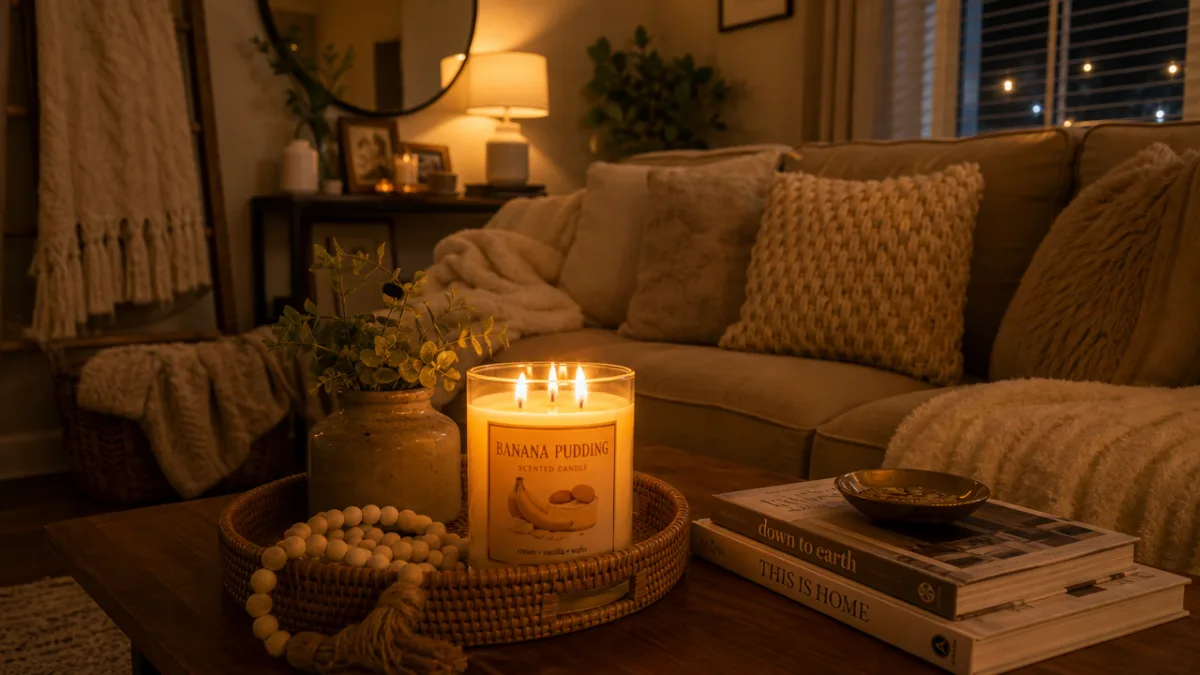
A banana pudding soy wax candle makes an exceptional gift for virtually any occasion, from birthdays and holidays to housewarming celebrations and thank-you gestures. The key to elevating a handmade candle into a truly memorable gift lies in the packaging and presentation. A clean, well-designed label that lists the scent name, burn time, and care instructions immediately communicates quality and thoughtfulness. Many crafters invest in custom label designs that reflect the personality of the fragrance — warm, rustic typography for a Southern comfort vibe, or clean, modern design for a more contemporary aesthetic.
Consider building themed gift sets around the banana pudding candle concept. A “Southern Comfort” gift basket might include the candle alongside a recipe card for homemade banana pudding, a package of vanilla wafers tied with a ribbon, and a coordinating hand lotion or room spray in the same fragrance. A “Self-Care Sunday” set could pair the candle with a luxurious bath bomb, a face mask, and a cozy pair of socks. These thoughtful combinations tell a story and transform a simple candle into a curated experience that recipients remember long after the wax has burned down.
For crafters looking to sell their banana pudding candles, building a brand identity around this signature scent can be a powerful business strategy. Food-inspired candles consistently perform well on platforms like Etsy, at farmers markets, and in boutique retail settings. Offering the scent in multiple size formats — from small 2-ounce votives ideal for impulse purchases to large 16-ounce statement pieces for dedicated fans — allows you to capture buyers at every price point. Seasonal variations like “Banana Foster” for fall or “Frozen Banana Pudding” with a light, airy cold cream note for summer can keep the product line feeling fresh and exciting throughout the year.
Personalizing Your Banana Pudding Candle
One of the greatest joys of making your own candles is the unlimited opportunity for personalization and creative expression. Your banana pudding candle does not have to smell exactly like everyone else’s — in fact, it absolutely should not. Experienced candle makers blend fragrance oils to create signature scents that are uniquely their own. Consider starting with a base of banana pudding fragrance and adding small percentages of complementary scents to develop your own distinctive take on the classic.
Popular additions to a banana pudding fragrance base include brown sugar or caramel for added depth and warmth, a touch of coconut for a tropical island twist, a hint of cinnamon or nutmeg for a spiced version perfect for autumn, or a dash of fresh banana fragrance to amplify the fruit-forward quality of the scent. Each addition should be introduced in small increments — typically 5% to 10% of the total fragrance load — and thoroughly tested before finalizing your blend. Keep detailed notes on every variation you try, as recreating a successful blend from memory alone is nearly impossible.
The vessel you choose for your candle is another rich avenue for personalization. Repurposed vintage teacups, antique mason jars, minimalist concrete vessels, or whimsical food-shaped ceramic containers all create entirely different aesthetic experiences around the same fragrance. The container becomes part of the story your candle tells. A banana pudding candle poured into a charming yellow ceramic bowl with a hand-lettered label feels entirely different from the same fragrance in a sleek black tin with modern typography — yet both can be beautiful, marketable, and deeply satisfying to create and give.
The Benefits of Soy Wax and Sustainable Candle Making
Choosing soy wax for your banana pudding candle is not only a practical decision but also an environmentally conscious one. Soy wax is derived from soybeans, a renewable and domestically grown agricultural product in many parts of the world. Unlike paraffin wax, which is a byproduct of petroleum refining, soy wax comes from a plant-based source that can be grown season after season. This makes soy candles a more sustainable choice for environmentally aware consumers and crafters who want their purchases and creations to align with their values.
The clean-burning properties of soy wax also have real benefits for indoor air quality. Paraffin candles are known to release small amounts of volatile organic compounds and black soot when burned, which can accumulate on walls, ceilings, and furniture over time and contribute to poor indoor air quality. Soy wax, by contrast, burns with significantly lower soot production and without the petroleum-derived compounds associated with paraffin. For people with allergies, asthma, or general sensitivity to air pollutants, switching to soy wax candles can make a noticeable difference in their comfort and wellbeing.
From an economic standpoint, supporting artisan soy candle makers often means supporting small, independent businesses and local entrepreneurs rather than large multinational corporations. When you purchase or create a handmade banana pudding soy candle, you are participating in a craft economy that values quality, creativity, and personal connection over mass production. Many soy candle makers also prioritize other sustainable practices in their businesses, such as using recycled or recyclable packaging, sourcing fragrance oils that are phthalate-free and skin-safe, and offering refill programs that extend the life of beautiful candle vessels rather than discarding them after one use.
Building a Sustainable Candle Making Practice
Incorporating sustainability into your candle making goes beyond simply choosing soy wax. Every aspect of the process offers opportunities to reduce waste and environmental impact. Buying fragrance oils and wax in bulk reduces packaging waste compared to purchasing small quantities repeatedly. Reusing or repurposing failed candles — those with sinkholes, frosting, or imperfect throws — by melting them down and repurposing the wax for fire starters or wax melts ensures that no material goes to waste. Even the paper towels and stirring tools used during cleanup can be minimized through careful, methodical technique.
Many candle makers also explore the use of other natural waxes to complement or blend with soy, including beeswax and coconut wax. Beeswax is a natural byproduct of honey production and burns with a beautiful, natural honey scent that can complement the warm notes in a banana pudding fragrance beautifully. Coconut wax offers an exceptionally smooth surface finish and excellent fragrance throw, and is increasingly available from sustainable, fair-trade sources. Experimenting with wax blends not only allows for creative refinement of your candle’s performance but also gives you a deeper understanding of and appreciation for the materials involved in your craft.
Ultimately, making and enjoying banana pudding soy wax candles is about far more than filling a room with a pleasant smell. It is about connecting with craft, honoring the pleasure of the senses, creating something beautiful with your own hands, and sharing that creation with the people you love. Whether you make one candle as a personal project or build an entire product line around this beloved fragrance, the process is deeply rewarding. A banana pudding soy wax candle represents the best of what handmade goods can offer: warmth, authenticity, care, and the irresistible, memory-laden sweetness of something that smells exactly like home.








What do you think?
It is nice to know your opinion. Leave a comment.