










What Is a Cottage-Style Herb Garden and Why You Should Create One
A cottage-style herb garden is more than just a collection of plants — it is a carefully cultivated sanctuary that blends beauty, function, and a deep sense of calm. Rooted in the traditions of English country gardens and old-world apothecary practices, this style of gardening emphasizes an informal, overflowing aesthetic where herbs spill over stone pathways, climb rustic trellises, and tuck themselves between flowering perennials. The result is a space that feels both wild and intentional, like a garden that has been lovingly tended for generations.
The appeal of cottage-style herb gardening has grown significantly in recent years, as more people seek ways to reconnect with nature from the comfort of their own homes. Whether you have a sprawling backyard, a modest patio, or even a sunny windowsill, this approach to gardening can be adapted to almost any space. The philosophy behind it is simple: grow what you love, use what you grow, and let the garden be a place where you feel genuinely restored each time you step into it.
Beyond aesthetics, cottage herb gardens serve a deeply practical purpose. The herbs you cultivate can be used for cooking, natural remedies, aromatherapy, and even homemade beauty products. Lavender calms the nervous system, rosemary sharpens focus, chamomile soothes anxiety, and peppermint eases digestion. When you surround yourself with these plants daily, their benefits become woven into the fabric of your routine, turning your garden into what many cultures have historically called a healing space — a place where body and mind find equilibrium.
The History Behind Healing Herb Gardens
The concept of a dedicated healing herb garden stretches back thousands of years, with roots in ancient Egyptian, Greek, Roman, and medieval European traditions. Monastery gardens of the Middle Ages were among the most sophisticated examples, where monks cultivated medicinal herbs with meticulous care, using them to treat illness long before modern pharmaceuticals existed. These physic gardens were organized by purpose — herbs for the heart, herbs for the stomach, herbs for the mind — and they formed the foundation of Western herbal medicine.
The cottage garden style, as we recognize it today, emerged in Victorian England as a deliberate reaction against the rigid formality of grand estate gardens. Ordinary people began filling their small plots with a mix of edible, medicinal, and flowering plants, prioritizing abundance and personal meaning over symmetry and prestige. Writers and artists of the Arts and Crafts movement, particularly Gertrude Jekyll, helped romanticize and codify this aesthetic, and their influence continues to shape how we think about informal, soul-nourishing garden design today.
Understanding this history gives your own cottage herb garden a richer sense of meaning. You are not simply planting basil and thyme in a pretty pot — you are participating in an unbroken human tradition of turning to the earth for healing, sustenance, and beauty. There is something profoundly grounding about that continuity, and it adds a layer of intention to every seed you plant and every harvest you gather.

Choosing the Right Herbs for a Peaceful Healing Space
Selecting the right herbs is the most important decision you will make when designing your cottage-style healing garden. The best approach is to think in terms of purpose — what do you want this garden to do for you? If stress relief is your primary goal, prioritize plants like lavender, lemon balm, holy basil (also known as tulsi), and passionflower. These herbs have well-documented calming properties and release soothing fragrances when their leaves are brushed or warmed by the sun, creating an almost effortless aromatherapy experience simply by walking through the garden.
For those interested in culinary and digestive wellness, a different selection comes to the fore. Peppermint, spearmint, fennel, dill, chamomile, and ginger are all traditional digestive aids that also happen to be beautiful garden plants. Fennel, in particular, is a showstopper in a cottage garden — its feathery fronds reach impressive heights, sway gracefully in the breeze, and attract butterflies and beneficial insects that help the whole garden thrive. Pairing these plants with flowering companions like calendula and echinacea adds visual depth while doubling down on the medicinal value of the space.
Do not overlook the importance of sensory variety when choosing your herbs. A truly immersive healing space engages all five senses: the visual softness of silver-leaved sage, the velvety texture of lamb’s ear, the sharp freshness of lemon verbena crushed between your fingers, the quiet hum of bees visiting borage flowers, and the gentle rustling of tall angelica stems in a light wind. Designing with all the senses in mind transforms your herb garden from a functional planting bed into a living, breathing experience that actively engages your nervous system and promotes a state of deep relaxation.
Recommended Herbs by Healing Purpose
To help you plan your garden with intention, consider organizing your herb selection by the kind of healing each plant supports. This approach mirrors the historical physic garden tradition and gives your space a thoughtful, purposeful structure beneath its beautiful, informal surface. You can arrange these plants in clusters or let them mingle freely — both approaches work beautifully in the cottage style.
- Stress and Anxiety Relief: Lavender, lemon balm, holy basil, chamomile, ashwagandha, valerian
- Digestive Support: Peppermint, fennel, dill, ginger, lemon verbena, licorice root
- Immune Boosting: Echinacea, elderberry, thyme, oregano, rosemary, garlic
- Mood and Mental Clarity: Rosemary, sage, St. John’s wort, ginkgo, lemon balm
- Skin and Beauty: Calendula, rose, aloe vera, comfrey, yarrow
When you purchase herbs for your healing garden, try to source organically grown, open-pollinated varieties whenever possible. These plants have stronger aromatic profiles, more robust medicinal qualities, and greater genetic diversity than their mass-produced counterparts. Local nurseries, heritage seed companies, and herb farms are all excellent sources, and connecting with a local herbalist or botanical garden can give you access to rarer varieties that will make your garden truly distinctive.
Designing the Layout of Your Cottage Herb Garden
One of the most liberating aspects of the cottage garden style is that it actively resists rigid planning. Unlike formal knot gardens or geometric kitchen gardens, the cottage aesthetic celebrates informality, asymmetry, and happy accidents of self-seeding and sprawl. That said, a little structural thinking at the outset will make maintenance easier and ensure that every plant gets adequate light, air circulation, and root space. The trick is to establish a loose framework and then allow nature to fill in the details with its own beautiful imprecision.
Begin by considering the bones of your garden — the permanent elements that will anchor the space year after year. These might include a central focal point such as a sundial, an old ceramic pot, a stone birdbath, or a simple wooden bench. Pathways are equally important in a cottage herb garden, both for practical access and for the way they invite you to slow down and move through the space deliberately. Traditional materials like reclaimed brick, rough-cut flagstone, or gravel all complement the rustic, time-worn character of the cottage style beautifully.
Once your bones are in place, think about height and layering. Cottage herb gardens look their most lush and abundant when plants are arranged in loose tiers — taller herbs and flowering perennials at the back or center, mid-height plants in the middle zone, and low-growing, spreading herbs at the edges where they can soften pathways and spill over borders. This layered approach also creates microclimates within the garden, where taller plants provide dappled shade for more delicate herbs that might otherwise bolt or struggle in full afternoon sun.
Small-Space and Container Adaptations
Not everyone has the luxury of a large plot, but a cottage-style healing herb garden can be created beautifully in a very small footprint. Container gardening is an ideal solution for balconies, patios, and urban spaces, and it actually offers some advantages — you can move pots to optimize sun exposure throughout the seasons, control soil quality more precisely, and bring tender herbs indoors before the first frost. The key to making containers feel like a true cottage garden rather than a tidy arrangement of pots is to cluster them together in overlapping groups, mix heights and textures freely, and allow trailing herbs to spill over the rims.
Raised beds are another excellent option for small or challenging spaces. A single raised bed measuring just four feet by eight feet can accommodate an impressive variety of herbs when planted thoughtfully, and the elevated soil warms faster in spring, extends your growing season, and makes harvesting and tending significantly easier on your back and knees. Line the inside of your raised bed with landscape fabric rather than plastic sheeting to allow drainage while retaining moisture, and fill it with a rich blend of compost, aged manure, and good quality topsoil to give your herbs the nutrient-dense foundation they need to thrive.
Vertical gardening elements can add tremendous character to a small cottage herb garden while dramatically increasing your planting capacity. A weathered wooden ladder leaned against a sunny wall, fitted with terracotta pots at each rung, creates an instantly charming vignette. Wicker or wire wall planters, old wooden crates mounted to a fence, and repurposed wooden pallets standing upright can all become productive planting surfaces that bring the layered, abundant look of a full cottage garden to even the most compact outdoor space.
Creating Atmosphere: Décor and Sensory Details That Make a Healing Space
The difference between a functional herb bed and a true healing sanctuary lies in the atmosphere you create around the plants themselves. A healing space should feel intentional and personal — a place that has been curated with your own wellbeing in mind. This means attending to the non-plant elements of the garden with as much care as you give to your planting choices. Texture, color, sound, and fragrance all play crucial roles in creating a space that genuinely calms the nervous system and invites you to linger.
Seating is perhaps the single most important atmospheric element in a healing herb garden. A comfortable bench, a pair of weathered wooden chairs, or even a simple wooden stool placed in a sheltered spot among the herbs signals that this is a place meant for sitting and being, not just working. Position your seating to face a pleasing view within the garden — perhaps toward a beautiful climbing rose or a patch of sunlit lavender — and consider adding a small side table where you can rest a cup of herbal tea brewed from your own harvest. This simple ritual of sitting, watching, and sipping transforms a gardening session into a genuine act of self-care.
Sound is a often-overlooked element in garden design, but it has a profound effect on how peaceful and immersive a space feels. Wind chimes hung from a garden arch or pergola add a gentle, meditative quality to breezy days. A small solar-powered water feature — even a modest tabletop fountain or a glazed pot with a recirculating pump — introduces the deeply calming sound of moving water that many people find more soothing than any other environmental sound. Combined with the hum of bees and the rustling of tall herbs, these sound layers create an acoustic environment that actively encourages your mind to slow down and settle.
Lighting for Evening Enjoyment
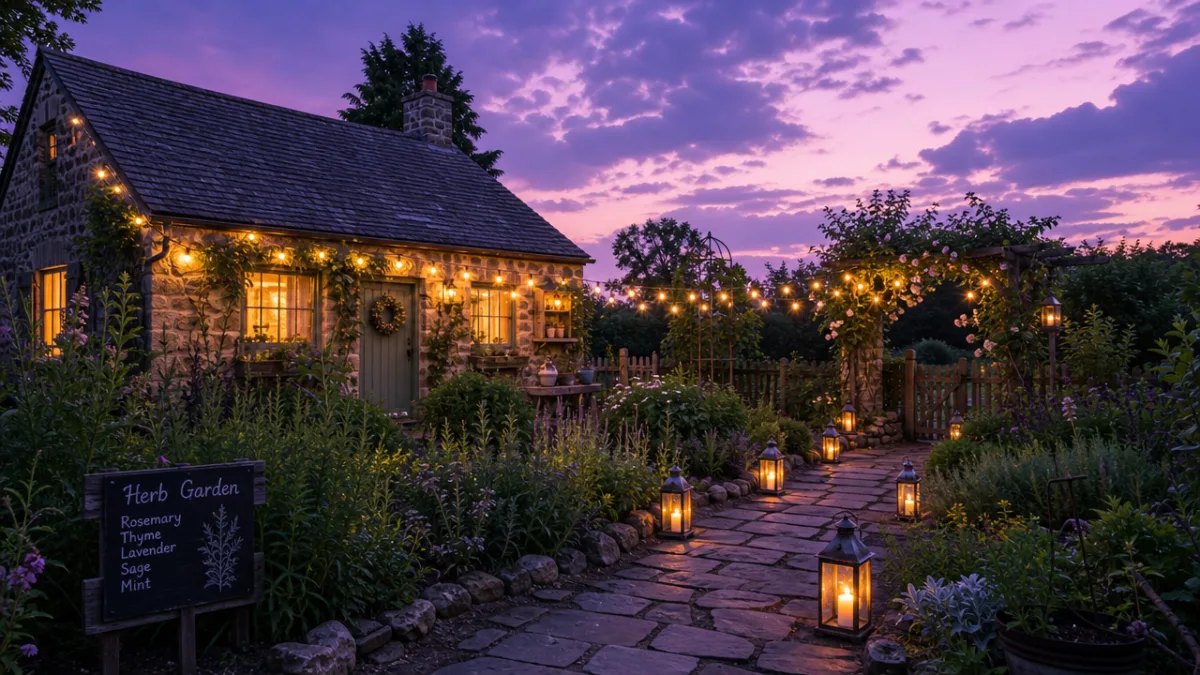
Extending the usability of your healing herb garden into the evening hours is a wonderful way to maximize its restorative benefits, particularly during the long days of summer when outdoor evenings are warm and fragrant. Solar-powered fairy lights woven through climbing herbs and along trellises create a magical, softly glowing effect that transforms the garden into an entirely different — and equally beautiful — space after dark. Look for warm-toned bulbs rather than cool white LEDs, which tend to feel harsh in a cottage garden setting and work against the relaxed, romantic atmosphere you are cultivating.
Lanterns and candles are another beautiful lighting option that fits naturally with the cottage aesthetic. Group clusters of mismatched lanterns along pathways or on a garden table, using either real candles for the warmest possible glow or battery-operated flameless candles if you prefer a safer, lower-maintenance option. Citronella candles serve the dual purpose of illumination and natural insect repellent, allowing you to enjoy the evening garden without the distraction of mosquitoes — an eminently practical cottage garden solution.
Harvesting, Preserving, and Using Your Healing Herbs
Growing a cottage-style healing herb garden is only the beginning of a deeply satisfying practice that extends through every season of the year. Knowing how and when to harvest your herbs is essential to getting the maximum benefit from each plant and encouraging continued, healthy growth throughout the growing season. As a general rule, most herbs are best harvested in the morning after the dew has dried but before the heat of the day causes their volatile oils — the compounds responsible for both fragrance and medicinal action — to begin evaporating from the leaf surface.
The timing of harvest also matters in relation to the plant’s growth cycle. Most leafy culinary and medicinal herbs, including basil, mint, lemon balm, and sage, are at their peak potency just before they begin to flower, when the plant’s energy is concentrated in leaf production. Once flowering begins, the flavor and medicinal strength of the leaves can decline. For this reason, many herb gardeners practice regular deadheading — removing flower buds as they appear — to prolong the productive leafy stage. However, in a cottage garden, allowing some plants to flower fully is also valuable, both for the visual beauty of the blooms and for the pollinators that depend on them.
Preserving your harvest properly ensures that the healing benefits of your garden extend far beyond the growing season. Drying is the simplest and most traditional preservation method — bundle small handfuls of cut herbs with twine and hang them upside down in a warm, well-ventilated space away from direct sunlight. Within one to two weeks, most herbs will be fully dried and ready to store in glass jars. Alternatively, freezing herbs in olive oil using an ice cube tray is an excellent method for culinary herbs like basil and parsley that lose much of their character when dried, locking in fresh flavor for use in winter cooking.
Simple Ways to Use Your Herbs Every Day
The ultimate purpose of a healing herb garden is to weave the benefits of these plants into the fabric of daily life, and there are countless simple, satisfying ways to do so. A daily cup of herbal tea made from fresh or dried herbs you have grown yourself is perhaps the most direct and nourishing way to engage with your garden’s harvest. Chamomile and honey before bed, fresh mint with lemon in the morning, or a warming blend of thyme, rosemary, and ginger during cold and flu season — these small rituals connect you to your garden and to a long tradition of plant-based self-care that is both practical and profoundly comforting.
Beyond tea, your herb harvest opens the door to a rich world of homemade wellness products. Lavender-infused oil, made by steeping dried lavender in a carrier oil like sweet almond or jojoba for several weeks, can be used as a massage oil, added to bath water, or applied to temples and wrists for stress relief. Calendula salve, made by combining calendula-infused oil with beeswax, is one of the most effective and gentle natural remedies for dry, irritated, or damaged skin, and it costs a fraction of commercial alternatives. These homemade preparations also make beautiful, meaningful gifts — a handmade jar of herbal salve or a bundle of dried herbs tied with ribbon carries a warmth and intentionality that no store-bought product can replicate.
Finally, consider keeping a garden journal as part of your healing practice. Recording what you plant, when you harvest, what preparations you make, and how those preparations affect your health and wellbeing creates a personal herbal record of enormous value over time. You will notice patterns — which plants thrive in your particular microclimate, which remedies work best for your body, which seasonal rituals bring you the most joy — and these observations will deepen your relationship with your garden year after year. In this way, your cottage-style healing herb garden becomes not just a beautiful outdoor space, but an ongoing, evolving practice of self-knowledge and natural living.








What do you think?
It is nice to know your opinion. Leave a comment.