










Are Bath and Body Works Candles Safe for Dogs? What Every Pet Owner Needs to Know
Understanding What’s Inside Bath and Body Works Candles
Bath and Body Works candles are genuinely popular — and it’s easy to see why. The scents are rich, they last a long time, and there always seems to be a new seasonal collection to get excited about. But the very things that make them so appealing to us are the same things that give dog owners reason to pause. Before you strike a match on that Mahogany Teakwood or Eucalyptus Spearmint candle, it’s worth taking a closer look at what’s actually going into the air your dog is breathing every day.
Most Bath and Body Works candles are built on a paraffin wax base. Paraffin is a petroleum byproduct, and when it burns, it releases compounds like toluene and benzene — volatile organic compounds (VOCs) that can irritate the respiratory systems of both people and animals. In a well-ventilated room, the levels from a single candle are relatively low. But dogs that spend a lot of time in enclosed spaces with candles burning regularly can end up accumulating a meaningful amount of exposure over time.
The fragrance oils are where things get even trickier. Bath and Body Works uses proprietary blends that can contain hundreds of synthetic chemical components — and most of those components don’t have to be individually disclosed on the label. Some of them, including certain phthalates and artificial musks, are known endocrine disruptors and potential irritants. And here’s the thing: a dog’s sense of smell is estimated to be 10,000 to 100,000 times more sensitive than ours. What registers as a pleasant, cozy scent to you hits your dog on an entirely different level.
How Dogs Experience Scent Differently Than Humans
To really understand what a scented candle might mean for your dog, you have to appreciate just how remarkable the canine nose is. Dogs have around 300 million olfactory receptors compared to our roughly 6 million, and the part of their brain dedicated to processing smells is proportionally about 40 times larger than ours. So something that smells pleasantly mild to you — a candle flickering on the coffee table — can be a genuinely overwhelming sensory event for the dog stretched out on the rug nearby.
When a strongly scented candle burns, it doesn’t just create a nice atmosphere. It fills the air with microscopic fragrance particles. For a dog lying on the floor in a closed living room, that’s a prolonged, concentrated experience with no way to describe how it feels. Dogs can’t tell us when something is bothering them, so they show us instead — through restlessness, sneezing, watery eyes, or quietly avoiding the room altogether. These signs are easy to dismiss or chalk up to something else, which is part of what makes candle-related discomfort so easy to miss.
Breed matters here too. Dogs with flat faces — Bulldogs, Pugs, Shih Tzus, French Bulldogs — already have compromised airways that make filtering airborne irritants harder than it is for other dogs. Even a brief encounter with heavy candle fragrance can make their breathing noticeably worse. On the other end of the spectrum, scent hounds like Beagles and Bloodhounds are so nose-driven in their daily lives that the overpowering artificial scents in these candles can be especially disorienting for them.

Specific Ingredients in Bath and Body Works Candles That May Harm Dogs
Bath and Body Works doesn’t publish a full breakdown of what’s in their fragrance blends, but we know enough about commonly used candle ingredients to flag some real concerns for pet owners. Benzaldehyde, which gives products that almond or cherry scent, can irritate a dog’s respiratory tract. Limonene, found in citrus-scented products, is listed as toxic to dogs by the ASPCA. Linalool — used in lavender and floral scents — is another ASPCA-flagged compound that can be toxic to dogs, especially in concentrated amounts.
Paraffin candles also produce soot when they burn. That fine black particulate is a sign of incomplete combustion, and it’s also a respiratory hazard for small animals. Because dogs spend most of their time closer to the floor, they can actually inhale more of this particulate than we do. Over time, regular soot inhalation can inflame the airways and make conditions like bronchitis or tracheal problems noticeably worse in dogs that are already prone to them.
Essential oils are worth mentioning too. While Bath and Body Works mostly uses synthetic fragrance oils, some products do contain real essential oil components. Oils like tea tree, cinnamon, clove, thyme, and oregano are known to be toxic to dogs even in small amounts — and the risk isn’t just from direct contact or accidentally eating something. When oils are aerosolized or diffused into the air, they can settle onto a dog’s coat and get ingested during grooming. It’s an exposure route that a lot of pet owners don’t think about, especially when the candle is sitting safely on a high shelf.
Recognizing Signs That Your Dog Is Being Affected by Candle Fumes
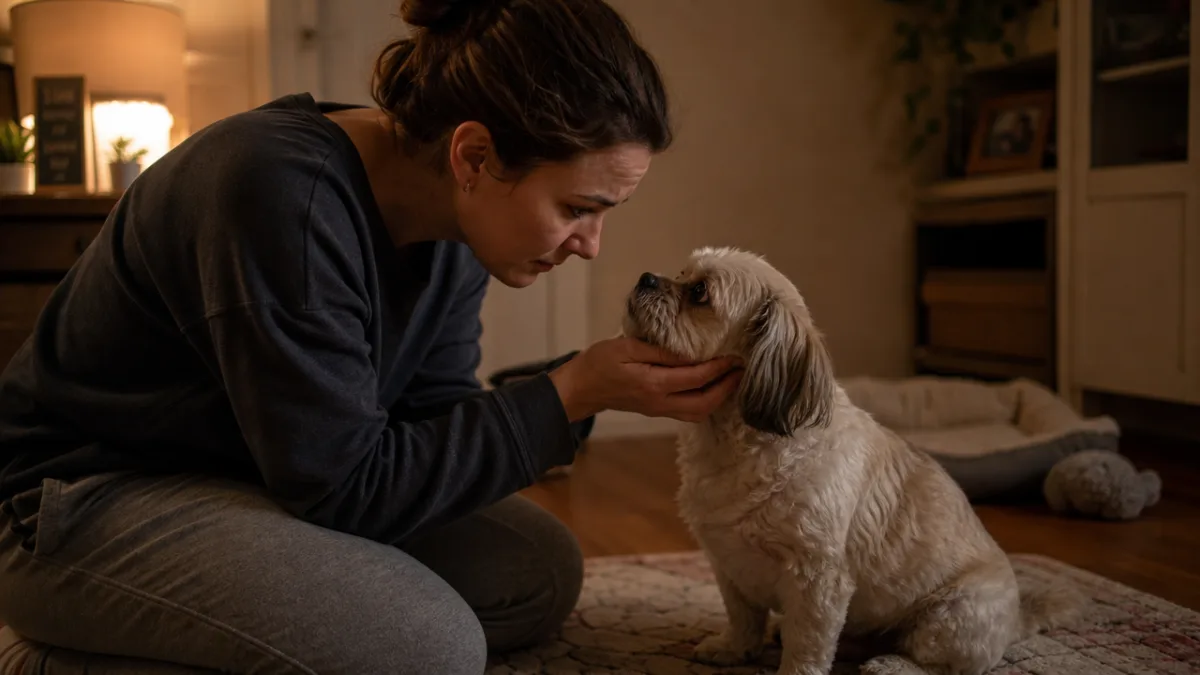
One of the most useful things you can do as a dog owner is learn to recognize when your pet might be reacting to candle smoke or fragrance. Since dogs can’t tell us what’s wrong, we have to read the signals they’re sending. Early signs of respiratory irritation include frequent sneezing, coughing, wheezing, nasal discharge, and pawing at the face or nose. These can seem pretty minor at first — easy to wave off as a passing thing — but if they keep showing up whenever candles are burning, that pattern is worth paying attention to.
More serious warning signs include labored breathing, gums that look bluish (cyanosis), sudden extreme lethargy, vomiting, or loss of coordination. If you see any of these, get your dog into fresh air right away and call your vet. Symptoms like these suggest something beyond mild irritation — your dog may be having a toxic reaction to what they’ve been inhaling. A single brief exposure to a scented candle probably won’t trigger a response this severe, but prolonged exposure in a poorly ventilated space? That’s a different story.
Behavioral changes can be just as telling as physical symptoms. A dog who normally loves hanging out in the living room but has started avoiding it when candles are lit is probably self-regulating for a reason. If your dog seems unusually restless, keeps pacing, or gravitates toward cooler and airier parts of the house while a candle is going, they may be reacting to the fragrance concentration in the air. These subtle shifts are your dog’s way of communicating that something feels off — and they’re worth taking seriously rather than writing off as random quirky behavior.
Safer Alternatives to Bath and Body Works Candles for Dog Owners
There’s good news here: you don’t have to give up candles entirely. Beeswax candles are one of the best swaps you can make if you have dogs at home. Beeswax is a natural substance that burns cleanly, produces very little soot, and doesn’t release the same VOCs you get from petroleum-based paraffin. Many beeswax candles are unscented or use only minimal natural additives, which keeps the fragrance load in the air much lower. They tend to cost more than conventional candles, but the improvement in indoor air quality — for both you and your dog — is genuine.
Soy wax candles are another reasonable option. Soy burns cleaner and longer than paraffin and comes from a renewable plant source rather than a petroleum byproduct. That said, soy candles can still cause problems if they’re loaded with synthetic fragrances or essential oils that are toxic to dogs. If you’re shopping for soy candles with your pet in mind, look for ones explicitly labeled as pet-safe, fragrance-free, or scented only with dog-safe botanicals. There are quite a few small independent candle makers now producing products designed with pet health as a real priority.
If what you’re really after is ambiance rather than scent, flameless LED candles are worth considering. They give you the visual warmth of a real candle without any combustion, fumes, or fragrance. For those who do want a pleasant scent in the house, passive options like dried herbs or natural potpourri made with pet-safe botanicals — think dried chamomile or rose petals — offer a much gentler, more diffuse experience that’s far less likely to overwhelm a dog’s nose. And whatever you choose to use, keeping windows cracked and maintaining good ventilation is one of the simplest, most effective things you can do to reduce the impact on your pet.
Best Practices for Candle Use Around Dogs
If you decide to keep using Bath and Body Works candles or other strongly scented products, there are practical ways to reduce the risk to your dog. Burn candles only in well-ventilated rooms with a window cracked open, so fragrance compounds don’t build up to high concentrations. Avoid burning multiple candles at the same time, and keep burn times reasonable — an hour or two is a lot safer than running a candle for six-plus hours in a single day. Short, infrequent use is much easier on your dog than extended daily burning.
Where you place your candles matters too. Keep them on elevated surfaces away from where your dog rests, and definitely away from their bed, food and water area, or anywhere they spend a lot of time. This helps limit their direct exposure to fumes at nose level. Just as importantly, make sure your dog always has a clear exit from the room and access to a candle-free area in the house. Keeping a dog in a heavily fragranced, enclosed space with no way out isn’t just stressful — it’s potentially harmful to their health over time.
Regular vet visits are a cornerstone of good pet ownership, and your vet is genuinely useful here. If your dog has a history of respiratory issues, allergies, or skin sensitivities, bring up your candle and air freshener habits in conversation. Your vet can help you figure out whether your home environment might be contributing to those symptoms and suggest specific changes. A lot of pet owners are surprised to find out their dog’s chronic sneezing or skin irritation is tied to indoor air quality rather than food or something they encountered outside.
It’s also worth staying current on the research. The science around indoor air quality and pet health is still developing, and guidance can shift as new studies emerge. Organizations like the ASPCA, the American Kennel Club, and the American Veterinary Medical Association all publish updates on household hazards for pets, and keeping an eye on those resources is a smart habit. Being a thoughtful pet owner means being willing to question everyday products and make adjustments — even small ones — when your dog’s wellbeing is on the line.

The Bottom Line on Bath and Body Works Candles and Dog Safety
The honest answer isn’t a simple yes or no. Bath and Body Works candles aren’t guaranteed to be safe for dogs, and for some dogs — particularly flat-faced breeds, those with respiratory conditions, or dogs with heightened sensitivities — they can pose a real risk to both health and comfort. The mix of paraffin wax, synthetic fragrance compounds, and potentially toxic botanical ingredients creates an indoor air environment that’s considerably more challenging for dogs than for people, given how much more sensitive their noses are and how much more time they spend close to the floor where heavier particles settle.
That doesn’t mean every dog owner who lights one of these candles is automatically harming their pet. Context matters a lot. A large home with good airflow, a healthy adult dog with no known sensitivities, and occasional short candle use is a very different situation from a small apartment, a dog with a breathing condition, and candles burning for hours every day. The key is being honest about your specific circumstances, paying attention to how your dog actually responds, and being willing to put their health first when you’re weighing the options.
When it comes to our pets, the precautionary mindset is usually the right one. If there’s real uncertainty about whether something in your home could be affecting your dog, and genuinely safer alternatives are available, choosing those alternatives is just part of taking good care of an animal who trusts you completely. Your dog can’t speak up for their own comfort or safety. That’s your job — and it’s one of the most meaningful parts of sharing your life with them.








What do you think?
It is nice to know your opinion. Leave a comment.