










Aesthetic Candlelight Setup for Couples: The Ultimate Guide to a Romantic Atmosphere
There’s something about candlelight that never gets old. Long before electricity turned our evenings into a wash of artificial brightness, couples were drawn together by flickering flames that cast soft, golden shadows across faces and rooms. That intimacy hasn’t faded one bit, and these days, putting together a thoughtful, aesthetic candlelight setup has become both a form of creative expression and a genuinely loving gesture. Whether you’re planning an anniversary dinner, a spontaneous date night at home, or just want to turn an ordinary Tuesday into something that feels special, knowing how to use candles well can completely change the feel of a space.
The modern approach to candlelight isn’t just about plopping a few tea lights on a table and calling it a night. A truly beautiful arrangement thinks about height, texture, color, scent, and the way light and shadow play off each other to create something that feels both intentional and effortless. Couples who take the time to think through these details often find that the atmosphere itself becomes part of the memory — something they hold onto long after the last candle has burned out.
This guide walks you through everything that goes into a romantic candlelight setup, from picking the right candles to arranging them with purpose, choosing complementary décor, layering in fragrance, and staying safe without killing the vibe. By the end, you’ll have everything you need to create an evening that feels luxurious and genuinely personal.
Choosing the Right Candles for a Romantic Setting
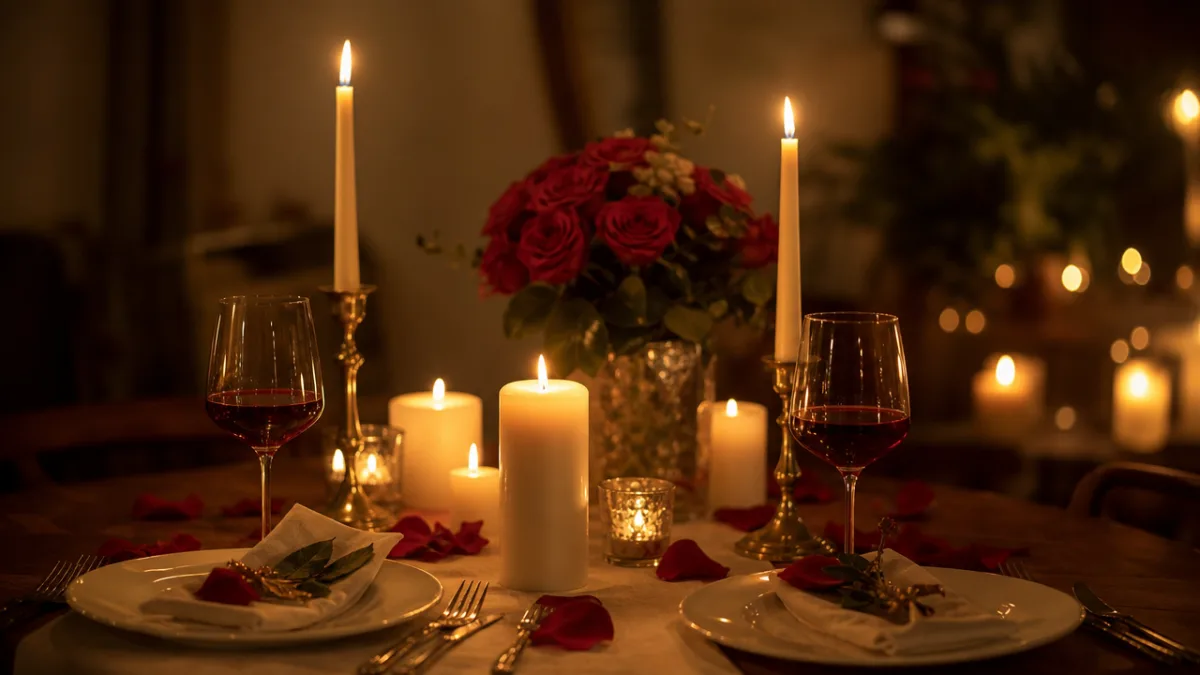
Not all candles are created equal, and the type you choose will shape the entire mood of your setup. Pillar candles are a classic pick for romantic arrangements — they have a solid, sculptural presence and they burn for a long time. You can cluster them together or place them solo on decorative holders to create dramatic focal points. Their weight and ceremony make them especially well-suited for milestone occasions like anniversaries or Valentine’s Day dinners.
Taper candles have a completely different energy — they lean elegant and a little old-world. Set in tall candlestick holders, they add vertical drama to a table and cast light in a way that creates beautifully elongated shadows. Mixing tapers of different heights gives the arrangement visual rhythm and keeps things from feeling too stiff or uniform. If you love the look of a candlelit European dining room or an old ballroom, tapers are a great place to start.
Tea lights and votive candles are small but mighty. Scattered across a surface, floated in shallow bowls of water, or nestled inside lanterns and glass holders, these little flames multiply the warmth of your setup in a big way. Used in abundance, they create a constellation effect that feels genuinely magical. They’re also really affordable, which means you can go generous with them — layering light across multiple surfaces so the whole space feels wrapped in a soft, continuous glow.
Wax Type and Flame Quality
The wax a candle is made from affects how it burns and how the flame looks. Beeswax candles are widely considered the gold standard for romantic settings — they burn slowly and cleanly, and they give off a subtly sweet, natural scent without any added fragrance. The flame tends to be especially warm and golden, the kind of light that’s flattering to everyone. They cost more than other options, but for a truly special occasion, they’re worth it.
Soy wax candles have become a popular alternative that’s more sustainable and easier on the budget. They burn cleanly, produce minimal soot, and hold fragrance really well — making them a great choice when scent is part of your plan. Paraffin candles are the most widely available option and can work perfectly well, though it’s worth looking for higher-quality versions that burn evenly and don’t drip excessively. Whatever wax type you go with, always trim your wicks to about a quarter inch before lighting — it makes a noticeable difference in how cleanly and steadily the flame burns.
Arranging Candles for Maximum Visual Impact
This is where the real artistry comes in. A well-composed candlelight setup draws the eye naturally from one element to the next, feeling harmonious rather than haphazard. One of the most effective things you can do is vary the heights. When candles of different elevations are grouped together, they create a layered, dimensional landscape of light that’s so much more interesting than a flat row of identical flames. Think of it like composing a small scene — tall tapers as trees, medium pillars as rolling hills, scattered tea lights as stars along the ground.
Clustering is another technique that really pays off. Instead of spreading candles evenly across a surface, gather them into intentional groupings with deliberate breathing room between clusters. This creates moments where the light pools richly, and moments of gentle shadow that add depth and a little mystery. A central cluster on a dining table with smaller groupings near the edges or on nearby surfaces draws you and your partner’s attention inward — toward each other — while keeping the rest of the space softly lit.
Mirrors and reflective surfaces are a secret weapon in candlelight design. Placing candles in front of a mirror, on a mirrored tray, or near metallic surfaces multiplies the light and creates a sense of warmth and depth that feels almost endless. Vintage mirrors with slightly aged or tinted glass are especially beautiful for this — they give reflections a softened, dreamy quality. Gold or brass metallic accents complement candlelight naturally, warming up the whole palette in a way that feels rich and inviting.
Surface and Height Considerations
Thinking vertically is key to a setup that feels immersive rather than flat. Beyond candlestick holders and pillar stands, try using stacked books, decorative boxes, or wooden crates to lift certain candles and bring interesting texture into the mix. This kind of layering gives the setup an organic, editorial quality that feels thoughtful without being overdone. A linen cloth draped loosely over a stack of books beneath a candle cluster adds softness to the base and keeps things from looking too rigid.
For floor-level impact, lanterns placed on the ground or along a pathway leading into the dining or lounge area create a beautiful sense of arrival. Walking through a softly lit corridor tells both of you, without a word, that this evening is different — that someone put care into it. This element extends the candlelight experience beyond a single table and makes the whole space feel transformed.
Incorporating Flowers, Fabrics, and Complementary Décor
Candles rarely do their best work alone. The most memorable romantic setups weave together several complementary elements that enhance the light and build a layered, sensory experience. Fresh flowers are the most natural companion to candlelight — the two have been paired together in romantic settings forever. Deep red roses are a timeless choice, but if you prefer something more modern, blush peonies, ivory garden roses, ranunculus, or loosely arranged wildflowers give a softer, more organic feel. Just keep your arrangements low enough that they don’t block the view across the table.
Fabric matters more than people often realize. A linen tablecloth in ivory or warm white gives you a clean, elegant foundation that lets the candlelight shine without visual competition. Velvet runners in deep jewel tones like burgundy, forest green, or navy bring richness and a sense of luxury — they absorb light in a way that makes the flames look even brighter by contrast. Silk ribbons loosely tied around candle clusters or woven through flowers add a little movement and a delicate energy that feels genuinely romantic.
Scatter a few additional small details throughout the setup to create points of interest without overloading it. Raw crystal clusters, smooth river stones, dried botanicals, vintage pocket watches, or something personally meaningful to you both can all find a natural place in a candlelight arrangement. The goal is curation, not accumulation — each element should feel like it belongs, adding something visual or sentimental to the story of the evening.

Color Palette and Cohesion
Deciding on a color palette before you start pulling things together makes the whole process easier and keeps the result from feeling jumbled. Warm romantic palettes tend to draw from deep reds, soft blush pinks, warm creams, rich golds, and earthy terracottas — all colors that feel naturally at home in candlelight and reinforce that sense of warmth and intimacy. Cooler palettes with dusty mauves, sage greens, and warm whites can be just as beautiful, offering a more modern, quieter take on romance.
Keeping your candle colors within your chosen palette ties everything together and avoids visual clutter. Mixing cream with ivory or blush with dusty rose is completely fine, but bringing in wildly contrasting colors tends to pull the arrangement apart and distract from the overall effect. When the tone stays consistent — even with variation in texture and height — the whole setup has that quality of feeling both deliberate and effortless, which is really what you’re going for.
The Role of Fragrance in a Candlelight Experience
Scent is one of the most powerful elements of a romantic atmosphere, and it’s surprisingly easy to underestimate. Our sense of smell connects directly to the part of the brain that handles memory and emotion, which means the right fragrance can immediately evoke feelings of closeness, comfort, and desire. When choosing scented candles, think about which fragrances actually support the mood you’re going for rather than just picking something that smells nice in the store. The fragrance should feel like an invisible layer of the experience — enriching everything without announcing itself.
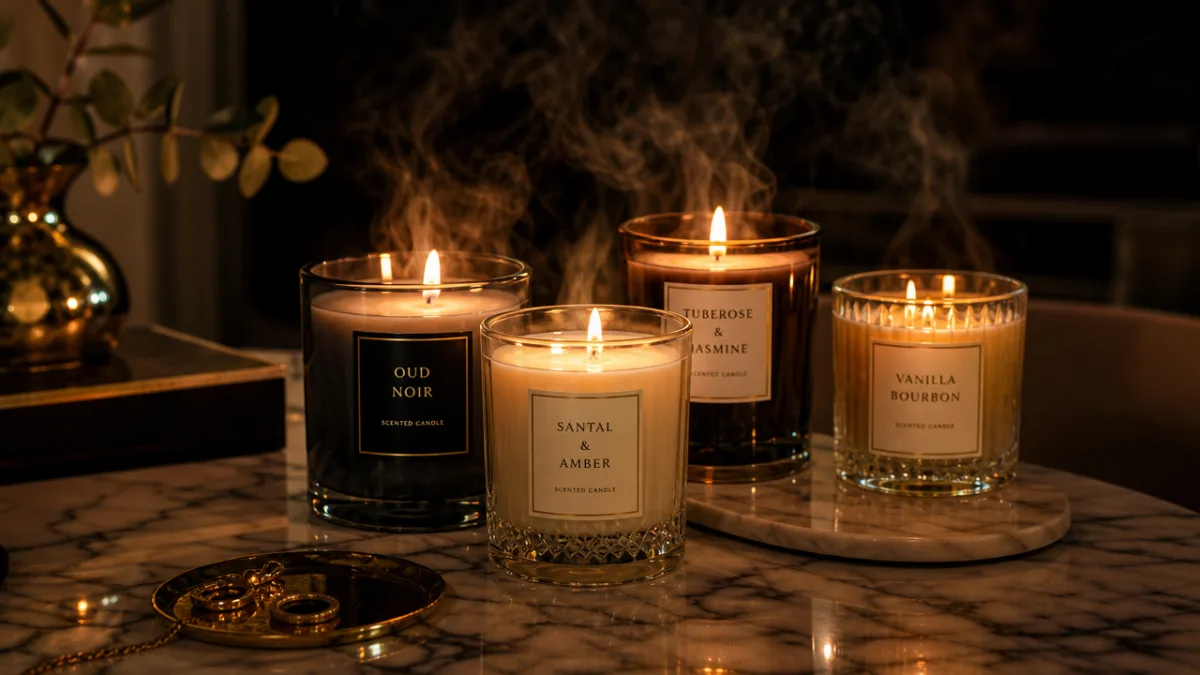
Some of the most beloved romantic scents for candles are warm florals like rose, jasmine, and gardenia, which carry associations of beauty and sensuality. Warm gourmand notes — vanilla, sandalwood, amber — create a feeling of closeness and comfort, wrapping the space in something that mirrors the emotional warmth of the evening. Woody or resinous notes like cedarwood, oud, or frankincense add depth and a touch of mystery, suggesting sophistication without trying too hard. Many luxury candle brands now offer complex fragrances that shift as they burn, which can create a really lovely evolving olfactory experience as the night progresses.
Restraint is important when it comes to layering scented candles — too many competing fragrances can quickly become overwhelming and even headache-inducing. As a general rule, choose candles that share a similar fragrance family or base note so they blend rather than clash. Or keep it simple: one or two well-chosen scented candles, with the rest of the arrangement filled out with unscented ones. You might also consider lighting a single high-quality reed diffuser or using a room spray before your partner arrives, so the fragrance is already present when the evening begins.
Timing and Fragrance Layering
When you light your candles matters, too. Lighting scented candles about thirty minutes before the evening starts gives the fragrance time to develop and fill the space naturally, so the full effect is there the moment someone walks in. This is especially true of soy wax candles, which need a full melt pool of liquid wax to properly release their scent. Thicker pillar candles and larger vessels can take even longer to hit their peak fragrance throw, so factoring this into your prep time means the experience is complete right from the start.
Safety Tips That Preserve the Beauty of the Setup
A beautiful candlelight setup should never come at the cost of safety — and the good news is that a few simple precautions are all it takes to feel completely at ease with open flames. The most basic rule is to never leave burning candles unattended. This one is especially easy to forget when you’re absorbed in a good conversation and lose track of time. Building candle snuffing into the natural flow of the evening — like extinguishing them when you move from the dinner table to the living room — keeps things safe without making it feel like a chore.
Keeping candles away from flammable materials is essential but can get overlooked when your setup includes fabric runners, paper menus, dried botanicals, or flowing curtains. As a rule, keep a clear twelve-inch radius around every open flame, and make sure nothing — fabric, foliage, paper — is sitting above or right beside a burning candle. With taper candles in particular, make sure the holders are the right size and stable enough to prevent tipping, and always use a candle tray or dish underneath everything to catch drips or pooling wax before they become a problem.
Flameless LED candles have come a long way in quality and realism, and weaving a few into your arrangement is a smart move. In low light, modern flameless candles with a warm flicker setting are nearly indistinguishable from the real thing, and they’re especially useful in spots where a real flame would be risky — on a bed, inside a paper lantern, or near a drafty window. Using a mix of real and flameless candles gives you the genuine beauty and fragrance of authentic candlelight while keeping the evening relaxed and worry-free for both of you.
Key Safety Checklist Before Lighting
- Trim all wicks to approximately one quarter inch to ensure a clean, controlled flame and prevent excessive smoking or dripping.
- Inspect all candle holders and stands to confirm they are stable, heat-resistant, and appropriately sized for the candle being used.
- Clear a twelve-inch radius around every candle of all flammable materials including fabric, paper, dried flowers, and decorative foliage.
- Place candle trays or decorative dishes beneath all candles to catch wax drips and protect surfaces from heat damage.
- Keep a candle snuffer nearby and establish a plan for extinguishing all flames at the close of the evening or when moving to a different area.
- Never place candles on or directly above upholstered furniture, and keep pets away from any areas with burning candles.
- Ensure that the room has adequate ventilation, particularly when burning multiple scented candles simultaneously, to maintain air quality and prevent headaches.
Beyond the checklist, staying gently aware of your candles throughout the evening is the most important habit you can develop. A setup that’s been thoughtfully prepared and kept in mind lets you relax fully into the experience, knowing everything has been taken care of. The whole point, after all, is an evening of genuine presence and connection — and nothing supports that more than the quiet confidence of knowing you’ve prepared both beautifully and responsibly. When safety and aesthetics work together, the candlelight stops being decoration and becomes something more: a real expression of care for the person you’re sharing the evening with.








What do you think?
It is nice to know your opinion. Leave a comment.