










Lofos® Wine Red – Lophospermum: The Cascading Jewel of the Garden
Introduction to Lofos® Wine Red
Among the most captivating climbing and trailing plants available to home gardeners and landscape professionals alike, Lofos® Wine Red stands out as a truly exceptional specimen. This stunning cultivar of Lophospermum, a genus native to the mountainous regions of Mexico and Central America, produces an abundance of rich, wine-red tubular flowers that cascade elegantly over walls, trellises, and hanging baskets. The plant’s vigorous growth habit and prolific blooming season make it an outstanding choice for gardeners seeking vertical interest and long-lasting color throughout the warmer months.
Lophospermum belongs to the family Plantaginaceae, which may come as a surprise to those who associate the genus primarily with the ornamental climbing plants they admire in garden centers. The genus name itself is derived from the Greek words for “crested seed,” a reference to the distinctive winged seeds the plant produces. The Lofos® series, developed through careful horticultural breeding programs, represents some of the finest selections within this genus, offering improved vigor, disease resistance, and flower density compared to older cultivated varieties. Wine Red, in particular, has earned a devoted following among gardeners for its deep, luxurious coloring and exceptional performance even in challenging conditions.
What sets Lofos® Wine Red apart from many other ornamental climbers is its remarkable versatility. Whether planted in large containers on a sunny patio, trained up a decorative obelisk in a border, or allowed to spill dramatically from a hanging basket or elevated planter, this plant adapts readily to a wide range of growing situations. Its twining stems cling naturally to supporting structures, making it an easy-care option even for gardeners who prefer low-maintenance planting schemes. The combination of glossy, heart-shaped foliage and the continuous production of velvety, trumpet-shaped blooms in deep wine-red hues ensures that this plant remains a focal point in any garden setting from late spring through the first frosts of autumn.
Botanical Characteristics and Flower Description
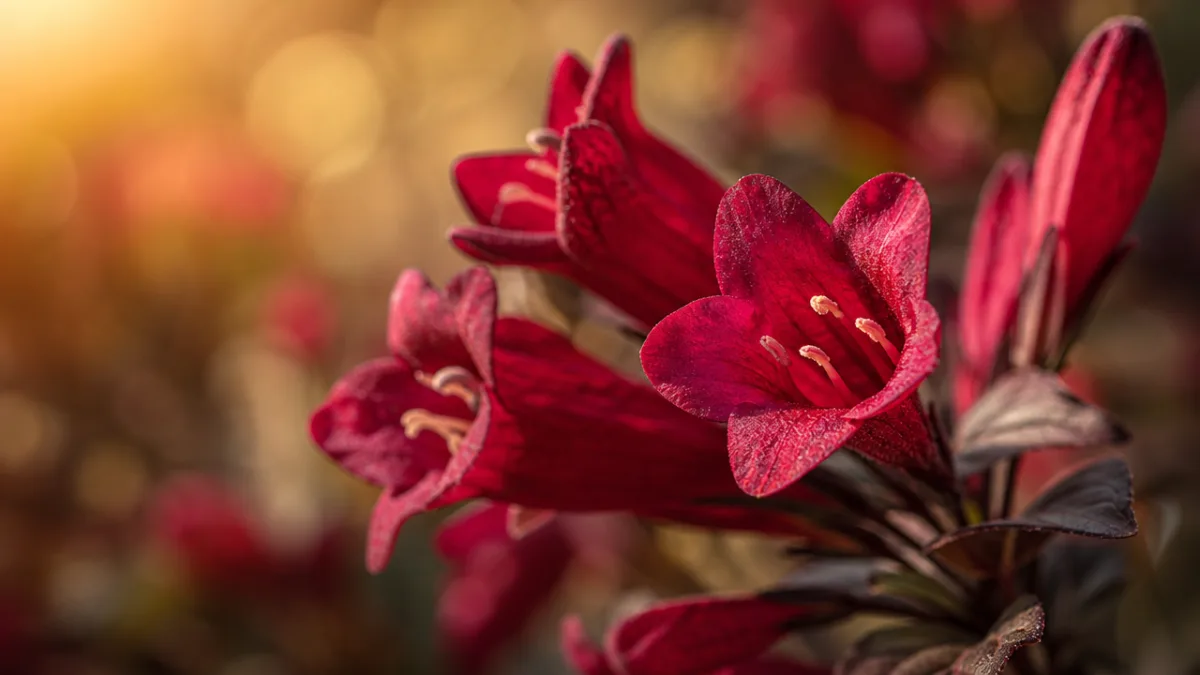
The flowers of Lofos® Wine Red are undeniably its most arresting feature, and examining them closely reveals a level of detail and craftsmanship in nature that is truly remarkable. Each individual bloom is a tubular trumpet measuring approximately four to five centimeters in length, flaring gently at the mouth into five rounded lobes that give the flower an almost petunia-like appearance from the front. The coloring is a deep, saturated wine red with subtle purple undertones, a shade that looks almost velvet-textured in certain lighting conditions, particularly in the warm, golden light of late afternoon or early morning.
The interior of each flower often displays a lighter throat, a delicate contrast that adds visual depth and draws the eye inward. This patterning is not merely decorative; it serves as a landing guide for the pollinators the plant depends on for reproduction. Hummingbirds are among the most enthusiastic visitors to Lofos® Wine Red flowers, and the deep tubular structure is perfectly adapted to accommodate their slender bills. Bumblebees and other long-tongued insects also visit regularly, making this an excellent choice for gardeners wishing to support local pollinator populations while simultaneously enhancing their outdoor spaces with outstanding ornamental value.
Beyond the flowers, the foliage of Lofos® Wine Red is itself a worthy ornamental feature. The leaves are broadly ovate to heart-shaped with slightly toothed margins, carried on slender petioles that give the plant a graceful, slightly informal quality. The leaf surface has a soft, slightly velvety texture that is characteristic of the genus and contributes to the plant’s tactile appeal. The stems are notably flexible and twining, capable of winding around supports with minimal assistance from the gardener. New growth emerges with a fresh, bright green color that gradually deepens as the leaves mature, providing a pleasing backdrop that sets off the wine-red blooms to full effect throughout the growing season.
Growing Conditions and Site Requirements
Achieving the best possible performance from Lofos® Wine Red begins with selecting an appropriate growing site and understanding the plant’s fundamental requirements. Like most members of the Lophospermum genus, this cultivar thrives in positions that receive full sun to partial shade, though it will produce the most abundant flowering when given at least six hours of direct sunlight per day. In regions with very hot summers, some protection from the harshest midday sun can prevent leaf scorch and help the plant maintain its vigor through the most challenging periods of the growing season.
Soil quality plays a significant role in determining the health and productivity of Lofos® Wine Red. The plant performs best in well-drained, moderately fertile soil with a slightly acidic to neutral pH, typically in the range of 6.0 to 7.0. Waterlogged conditions are particularly damaging and should be avoided at all costs, as the roots are susceptible to rotting in consistently wet soil. When growing in containers, a high-quality, peat-free multipurpose compost mixed with additional perlite or coarse grit will provide the excellent drainage the plant requires while retaining sufficient moisture and nutrients to support vigorous growth.
Temperature tolerance is an important consideration when planning where and how to grow Lofos® Wine Red. As a tender perennial in its natural habitat, this plant is not frost-hardy and should be treated as an annual in most temperate climates, including the majority of the United Kingdom, northern Europe, and colder parts of North America. In USDA hardiness zones 9 and above, or in equivalent mild maritime climates, overwintering may be possible if the plant is provided with frost protection and kept relatively dry during the cooler months. For most gardeners, however, the simplest approach is to treat Lofos® Wine Red as an annual bedding plant, purchasing fresh specimens each spring from garden centers or raising new plants from seed or cuttings taken in late summer.
Planting, Propagation, and Care
Planting Lofos® Wine Red successfully requires some attention to timing and technique, particularly in regions where spring weather can be unpredictable. Young plants should not be placed outdoors until all risk of frost has passed and nighttime temperatures remain consistently above ten degrees Celsius. Hardening off is an important step that is often overlooked; spend one to two weeks gradually acclimatizing plants to outdoor conditions by placing them outside in a sheltered spot during the day and bringing them back indoors or under cover at night. This process reduces transplant shock and helps young plants establish more quickly once they are moved to their final growing positions.
Propagation of Lofos® Wine Red can be achieved through several methods, each with its own advantages and considerations. Growing from seed is entirely possible and offers the satisfaction of raising plants from scratch, though it requires patience, as germination can be somewhat slow and irregular. Seeds should be sown indoors in early spring at a temperature of around twenty degrees Celsius, and seedlings pricked out individually once they are large enough to handle. Alternatively, semi-ripe cuttings taken in late summer from healthy, non-flowering shoots can be rooted in a propagating mix under gentle bottom heat. This method reliably reproduces the parent plant’s exact characteristics and is the preferred approach for maintaining named cultivars like Lofos® Wine Red.
Ongoing care for established plants centers on a few key practices that together ensure continuous, abundant flowering throughout the season. Regular feeding with a high-potassium liquid fertilizer, applied every seven to ten days from early summer onward, will sustain vigorous growth and encourage the production of flower buds. Consistent watering is equally important, particularly during hot, dry spells; the compost in containers can dry out surprisingly quickly on warm days, and plants under water stress will drop flower buds and begin to look ragged. Deadheading spent flowers, while not strictly necessary since Lofos® Wine Red tends to self-clean reasonably well, can help stimulate additional flowering flushes and keeps the plant looking its best throughout the season.
- Water regularly, allowing the top centimeter of compost to dry slightly between waterings to prevent root rot while avoiding prolonged drought stress
- Feed with a balanced, high-potassium liquid fertilizer every seven to ten days during the active growing season from late spring to early autumn
- Pinch back growing tips in early summer to encourage branching and a bushier, more floriferous habit
- Provide a suitable support structure such as a trellis, obelisk, or wire framework to allow the twining stems to climb naturally
- Monitor for common pests including aphids, whitefly, and red spider mite, treating promptly with appropriate organic or chemical controls if infestations develop
- Remove dead or damaged growth regularly to maintain good air circulation and reduce the risk of fungal diseases
Landscape Design Applications and Companion Planting
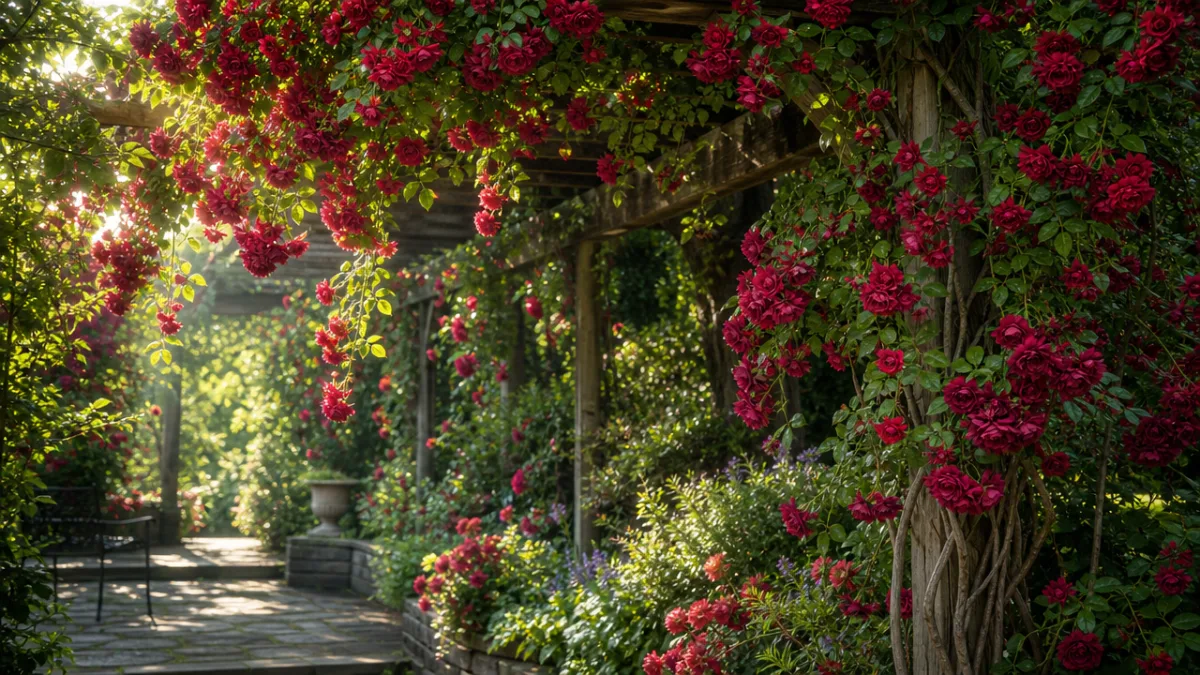
The design potential of Lofos® Wine Red in garden and landscape settings is remarkably broad, making it a favorite among professional garden designers as well as enthusiastic amateur gardeners. Its climbing habit makes it a natural choice for bringing vertical interest to garden spaces, an element that is often underutilized in domestic garden design. Trained up an elegant metal obelisk positioned at the back of a mixed border, it adds height and drama without taking up valuable ground space. Equally, when allowed to tumble from elevated containers, window boxes, or the edges of raised beds, its trailing stems create a lush, romantic effect that softens hard landscaping and adds movement on even the slightest breeze.
Container gardening is perhaps where Lofos® Wine Red truly excels as a design tool. When planted in a large, statement pot positioned as a focal point on a patio, terrace, or courtyard, a well-grown specimen becomes a genuinely spectacular display plant. The deep wine-red flowers look particularly striking against pale stone or rendered walls and create an especially sophisticated effect in formal garden settings with a classical or Mediterranean aesthetic. For a more relaxed, cottage-garden feel, try planting Lofos® Wine Red in a terracotta pot alongside silver-leaved herbs like sage or lavender, or combine it with soft pink geraniums and trailing white bacopa for a container combination that balances rich depth with delicate freshness.
Companion planting in borders and beds opens up further creative possibilities for gardeners willing to experiment with color relationships and textural contrasts. The wine-red flowers harmonize beautifully with the silvery foliage of plants such as Stachys byzantina (lamb’s ears) or Artemisia, which help to cool and lighten the intensity of the deep red coloring. For bolder, more dramatic combinations, pairing Lofos® Wine Red with deep purple salvias, burgundy heucheras, or the dark foliage of Sambucus nigra cultivars creates a rich, jewel-toned palette that is particularly striking in late summer when all these plants are at their peak. Contrasting it with lime-green flowering plants such as Nicotiana ‘Lime Green’ or Alchemilla mollis provides an exciting complementary contrast that makes both planting partners appear more vibrant by comparison.
Pest, Disease Management, and Seasonal Considerations
Like all garden plants, Lofos® Wine Red is susceptible to a range of pests and diseases, though its overall health and resilience are generally good when cultural conditions are favorable. Aphids represent perhaps the most common challenge, particularly in spring when new growth is soft and sappy and aphid colonies build up rapidly in warm conditions. Regular inspection of shoot tips and the undersides of leaves will allow early detection, and infestations caught promptly can often be dealt with effectively by simply rubbing the insects off by hand or directing a strong jet of water at affected areas. For more serious infestations, insecticidal soap or neem oil-based products offer effective control with relatively low impact on beneficial insects.
Whitefly and red spider mite can both become problematic in warm, dry conditions or when plants are grown under glass or in sheltered outdoor positions with poor air circulation. Red spider mite in particular thrives when humidity is low and can cause significant damage to foliage, creating a mottled, bronze discoloration that severely disfigures plants and reduces their photosynthetic efficiency. Maintaining adequate soil moisture and occasionally misting the foliage in hot weather can help deter spider mite infestations. Biological control agents, including predatory mites of the species Phytoseiulus persimilis, are highly effective options for gardeners who prefer to avoid chemical pesticides and who are growing plants in enclosed or semi-enclosed environments.
As the growing season draws to a close and temperatures begin to drop in early autumn, it is worth considering whether any material from Lofos® Wine Red plants is worth preserving for the following year. Healthy, uninfested stems can be used as a source of cuttings, which should be taken promptly before the first frost. These cuttings can be rooted in a heated propagating environment and the resulting young plants overwintered on a bright, frost-free windowsill or in a heated greenhouse, ready to be grown on and planted out again the following spring. This approach offers a cost-effective way to maintain particularly fine specimens from year to year while also providing the opportunity to share plants with friends and fellow garden enthusiasts who may have admired your display during the summer months.
- Take semi-ripe cuttings from healthy stems in late August or early September before temperatures drop significantly
- Root cuttings in a mixture of perlite and peat-free compost in a propagating environment with gentle bottom heat of around eighteen to twenty degrees Celsius
- Once rooted, pot cuttings individually into small pots of multipurpose compost and move to a bright, frost-free location for overwintering
- Water sparingly throughout winter, allowing compost to partially dry between waterings to prevent root rot in the cooler, lower-light conditions
- Begin feeding and increasing watering frequency in late February or early March as light levels improve and growth resumes
- Harden off and plant out again in late spring once all frost risk has passed and conditions are favorable for active growth

Why Choose Lofos® Wine Red for Your Garden
Having considered the botanical characteristics, cultural requirements, design applications, and care needs of Lofos® Wine Red in detail, it becomes clear why this plant has established such a strong and well-deserved reputation among gardeners and horticulturalists. Its combination of outstanding ornamental impact, long flowering season, and adaptability to a wide range of growing conditions makes it one of the most valuable tender climbers available to modern gardeners. Whether you are a seasoned plantsperson looking for something with genuine wow factor to elevate an already accomplished garden design, or a relative newcomer seeking a reliable performer that will reward reasonable care with spectacular results, Lofos® Wine Red has something important to offer.
The contribution this plant makes to supporting garden wildlife should not be underestimated. In an era when the decline of pollinator populations has become a matter of serious environmental concern, planting nectar-rich flowers that provide food for bees, hoverflies, and other beneficial insects is a meaningful act with genuine ecological value. The deep, tubular flowers of Lofos® Wine Red are particularly attractive to longer-tongued pollinators that may struggle to access the nectar of shorter, more open flowers, making it a valuable resource in a diverse, wildlife-friendly garden planting scheme. By choosing plants with genuine ecological as well as ornamental value, gardeners can contribute positively to biodiversity while simultaneously creating beautiful, inspiring outdoor spaces.
Ultimately, Lofos® Wine Red represents a beautifully balanced combination of the best qualities a garden plant can possess: striking beauty, practical versatility, reasonable ease of cultivation, and meaningful ecological value. Its deep, jewel-like flowers in a shade of wine red that shifts and deepens with the changing light throughout the day make it a plant that rewards close observation as well as providing impressive impact from a distance. For anyone looking to add a touch of drama, romance, and genuine horticultural distinction to their garden, patio, or outdoor living space, this exceptional Lophospermum cultivar deserves a prominent place on the planting list. Few plants of its type deliver such consistent, generous, and visually arresting performance across such a wide range of garden situations and growing conditions.








What do you think?
It is nice to know your opinion. Leave a comment.