










Tulip Field Soy Candle: Bringing the Magic of Spring Blooms Into Your Home
The Art and Allure of Floral Soy Candles
There’s something almost magical about the moment you touch a flame to a wick and watch a room slowly come alive with fragrance. Floral soy candles hold a special spot in the world of home aromatherapy because they do something genuinely remarkable — they capture the essence of nature and let it unfold gradually, like a half-remembered dream. A tulip field soy candle, in particular, brings that crisp, dewy freshness of early spring right into your living room, conjuring up vast open fields painted in pink, red, yellow, and white stretching toward the horizon under a wide, pale sky.
Soy wax has quietly become the go-to choice for artisan candle makers who care about what they’re putting into their products. Made from soybeans, it burns much cleaner than paraffin, releasing far fewer nasty compounds into the air you’re breathing at home. It also runs cooler, which means your candle will last noticeably longer than a conventional one of the same size — more hours of that lovely tulip scent drifting through your space.
What really sets a tulip fragrance apart is how layered it feels. A well-crafted blend doesn’t just smell like “flowers” — it opens with a bright, slightly green note that’s almost like a freshly cut stem, then softens into the powdery floral heart of the bloom itself, before settling into a clean, faintly musky base. That progression makes the whole experience feel alive rather than flat, and it’s surprisingly close to what it actually feels like to wander through a tulip garden on a cool spring morning after light rain.
Why Soy Wax Is the Superior Choice for Fragrance Candles
Put soy wax and paraffin side by side and the differences show up pretty quickly, both in how they perform and what they’re made of. Paraffin is a petroleum byproduct, and burning it can release compounds like benzene and toluene into the air — not exactly what you want floating around while you’re trying to unwind. Soy wax is renewable, biodegradable, and burns with a much cleaner flame, so the air in your home stays fresher even as the candle fills it with fragrance.
Soy wax is also genuinely good at holding and releasing scent. Candle makers talk about “cold throw” — the smell a candle gives off when it’s just sitting unlit — and “hot throw,” which is what you get once the wick is burning and the wax starts to melt. Soy excels at both. The fragrance oils bind deeply into the wax and disperse evenly once a melt pool forms. For something as delicate as tulip, that matters a lot — you want a wax that lets those green, powdery, and musky layers breathe rather than getting lost or muddled.
There’s also an ethical dimension to the choice. Soybeans are largely grown in North America, so soy wax often supports local farming communities. And candle makers who choose soy tend to be thoughtful about the rest of their supply chain too — phthalate-free fragrance oils, lead-free cotton wicks, recyclable vessels. When you pick up a tulip field soy candle from a maker who’s put that kind of care into it, you’re not just buying a pretty jar. You’re supporting a whole approach to making things that’s a little more mindful and a lot more human.
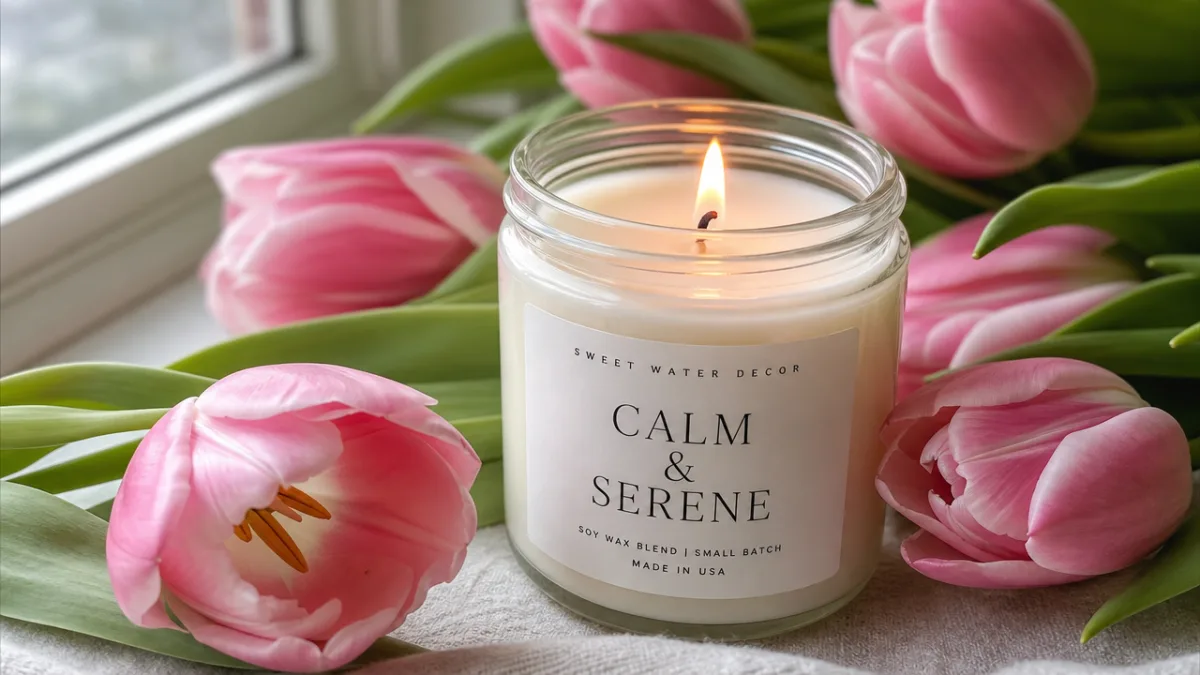
The Fragrance Profile of a Tulip Field: What You Actually Smell
Pinning down what a tulip actually smells like takes a bit of care, because unlike roses or jasmine, tulips aren’t known for being intensely fragrant. Their scent is quiet, elegant, a little elusive — which is exactly what makes capturing it in a candle such a skilled job. A good fragrance blender working on a tulip field scent will layer several elements together to create something that genuinely reads as a tulip garden rather than just a generic spring floral.
The topnotes are where things get interesting first. Fresh green notes — crushed leaves, dewy stems, that faintly vegetal quality you get from a just-picked bouquet — immediately establish the outdoor, garden-fresh feeling of the scent. These are the notes that hit you the moment you lift the lid off the jar or first strike a match. They’re bright, slightly cool, and a little invigorating, like that first deep breath you take when you step outside on a sunny April morning and realize winter has actually, finally let go.
As the candle burns and the melt pool develops, the heart notes come forward. This is where the soft, powdery sweetness lives — that gentle floral quality most people associate with spring blooms, never heavy or cloying. Depending on the blend, a maker might weave in a touch of light violet, soft peony, or delicate rose to give the tulip heart more dimension and body. Then the base notes settle in quietly underneath it all: clean musk, a hint of warm wood, maybe a whisper of white amber. They ground the whole fragrance and give it a pleasant staying power even after the flame goes out.
How to Properly Care for and Burn Your Soy Candle
Even a beautifully made tulip field soy candle can underperform if you don’t burn it right — and honestly, a lot of people are surprised to find out there’s any technique involved at all. The single most important thing you can do with a brand-new candle is nail the first burn, sometimes called the “memory burn.” The first time you light it, let it go long enough for the entire top layer of wax to melt all the way to the edges of the vessel — a complete, edge-to-edge melt pool. That can take anywhere from two to four hours depending on how wide the jar is, but it’s worth every minute.
Wick trimming is the other habit that makes a real difference. Before every single burn, trim the wick down to about a quarter of an inch above the wax. A wick that’s too long produces a bigger, hotter flame than the candle was designed for, which burns through the wax too fast and often leaves a ring of black soot on the inside of the glass. A properly trimmed wick gives you a steady, moderate flame that melts the wax at the right pace and lets the fragrance develop the way the maker intended.
A few more things worth knowing: keep your candle away from drafts, which cause uneven burning and can lead to tunneling. Don’t burn it for more than four hours at a time, and always let the wax fully re-solidify before you light it again. When there’s about half an inch of wax left at the bottom, it’s time to retire it — burning past that point can cause the vessel to overheat. The good news is that a nice glass or ceramic candle jar cleans up beautifully and makes a charming little storage container once the candle is done.
- Always trim the wick to one quarter inch before every single burn to ensure a clean, steady flame and prevent excess soot from building up inside the glass vessel.
- Allow the full melt pool to form on the first burn, which typically requires two to four hours and prevents tunneling from developing in the center of the candle.
- Keep the candle away from open windows, air vents, and fans, as drafts disrupt the flame and cause uneven wax consumption over time.
- Never burn the candle for more than four consecutive hours, and always allow the wax to solidify completely between burn sessions before relighting.
- Store unused candles in a cool, dark location with the lid on to protect the fragrance from fading and to keep dust out of the wax surface.
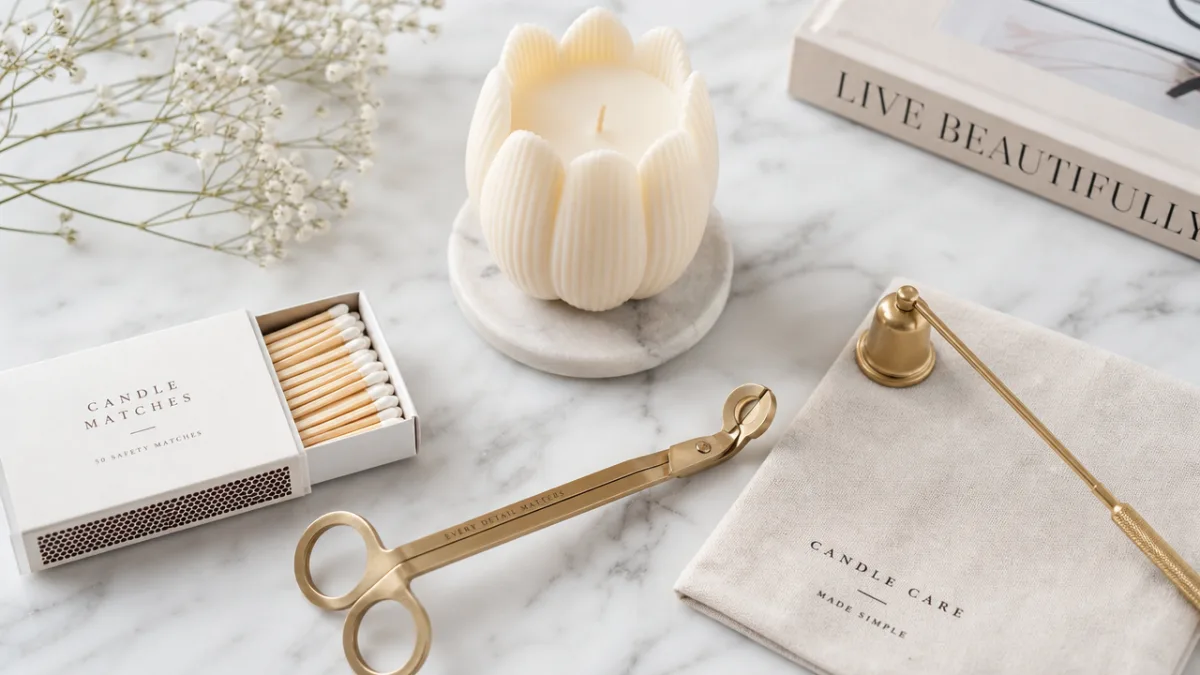
The Mood and Atmosphere a Tulip Field Candle Creates
Scent has a stronger pull on our emotions than almost anything else, and researchers have documented just how powerfully specific fragrances can shift our mental state. Floral scents as a category tend to ease anxiety and promote a general sense of openness and well-being. Spring florals like tulip carry an extra layer of that effect because of how deeply spring is tied, culturally and psychologically, to renewal and fresh starts. Just catching a whiff of something that smells like spring flowers can be enough to trigger a little lift in mood — a feeling of lightness and possibility that’s hard to manufacture any other way.
Light a tulip field soy candle in a room and the atmosphere shifts almost immediately. The soft, dancing flame adds warmth and a sense of intimacy even in a bigger space, while the fragrance builds gradually and settles into the air without ever feeling like it’s been sprayed on. After ten or fifteen minutes, the scent is simply there — as natural and unassuming as if someone had tucked a generous bunch of fresh spring flowers in the corner and quietly left the room.
That kind of ambient fragrance becomes especially valuable in the darker months, when everything outside is gray and bare and the cumulative weight of it starts to press down a little. Burning a tulip field candle on a dim winter afternoon is a small act of pushback against all that heaviness — a way of keeping spring present even when it’s still months away. A lot of devoted candle people will tell you that their floral soy candles become a genuine part of how they manage their mood through autumn and winter, and honestly, it’s hard to argue with that.
Gifting a Tulip Field Soy Candle: Perfect Occasions and Presentation Ideas
A good tulip field soy candle is one of those gifts that somehow manages to feel both personal and broadly appealing at the same time — which is a harder trick to pull off than it sounds. You don’t need to know someone’s exact taste to give them a beautiful spring floral candle. It works for a close friend, a family member, a coworker, a host or hostess — pretty much anyone on your list. It sits in that sweet spot between practical and luxurious, and when it comes from a small artisan maker rather than a big-box retailer, it feels genuinely considered rather than grabbed off a shelf.
There’s no shortage of occasions that fit. Spring birthdays are the obvious choice, but a tulip candle is just as welcome at a housewarming, where it helps a new space smell warm and lived-in from day one. Mother’s Day is a natural fit too — the season, the florals, and the sense of care all line up nicely. And during the winter holidays, a tulip candle makes a refreshing change of pace from all the cinnamon and pine that tends to take over that time of year.
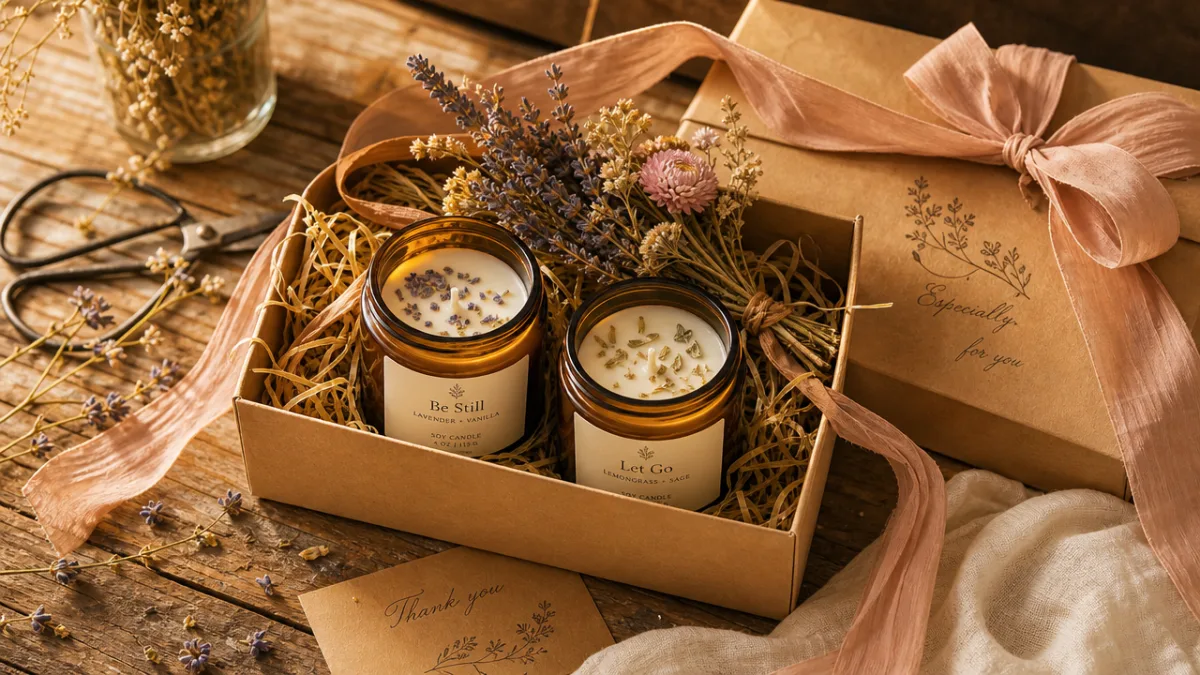
As for presentation, a well-made candle in a nice vessel does a lot of the work on its own. But a few small touches can turn it into something really lovely. Nestle it in tissue paper inside a simple kraft box, tuck in a few dried flowers or a small sprig of eucalyptus, and add a handwritten note — even just a line or two about the fragrance and when to light it. That little bit of extra care tells the person receiving it that you actually thought about them, and it turns a beautiful candle into a complete experience from the moment they unwrap it.
- Spring and summer birthdays, where the fresh floral fragrance perfectly matches the season and creates an immediate connection to the celebratory mood of warmer months.
- Housewarming parties, where a candle helps a new space feel immediately welcoming, warm, and filled with the kind of lived-in comfort that makes a house begin to feel like a home.
- Mother’s Day celebrations, where the spring floral character of the tulip fragrance communicates warmth, appreciation, and beauty in a way that feels genuinely personal rather than obligatory.
- Teacher appreciation events, office farewell parties, and other semi-professional gifting occasions where a candle strikes the ideal balance between generosity and appropriateness.
- Self-care and wellness gift sets, paired with bath salts, a soft face mask, or herbal tea to create a complete at-home spa experience built around the theme of floral relaxation.
Supporting Artisan Candle Makers and the Small Batch Economy
Every handcrafted tulip field soy candle has a real person behind it — someone who spent serious time, money, and creative energy developing that product. The artisan candle world is largely made up of small operations, often run by just one or two people out of a home studio, who put genuine expertise and care into every batch they make. Choosing one of these makers over a large commercial brand isn’t just a lifestyle statement. It has real economic weight for that person and their community.
Small-batch candle makers work very differently from industrial producers. They build relationships with their fragrance suppliers, wax sources, and vessel makers — often choosing partners whose values match their own. They burn dozens of test candles before landing on exactly the right fragrance-to-wax ratio. They hand-pour each candle one at a time, paying close attention to temperature, wick placement, and set time in a way that simply can’t be replicated by a machine running at scale. What you end up with is a product that reflects real human skill and attention, not just optimized output.
There’s also something bigger going on when you shop this way. Supporting artisan candle makers is part of a broader shift toward buying with more intention — choosing quality over volume, craftsmanship over convenience, and genuine connection over a frictionless transaction. Many small candle brands are deeply rooted in their local communities, working with other makers, sourcing nearby where they can, and giving back to causes they actually care about. When you bring home a tulip field soy candle from a maker like that, you’re part of something, even in a small way — a quiet vote for an economy that values the people making things, and a genuinely beautiful object to show for it.








What do you think?
It is nice to know your opinion. Leave a comment.