










17 Holiday Crafts Kids Can Make: A Complete Guide to Festive Family Fun
The Magic of Holiday Crafting with Children
There is something truly special about sitting around a table covered in glitter, glue, and colorful paper with the little ones in your life, creating something beautiful together during the holiday season. Holiday crafts for kids are more than just a fun way to pass an afternoon — they are an opportunity to build memories, develop fine motor skills, and instill a sense of pride and accomplishment that lasts long after the decorations come down. Whether you have toddlers or tweens, there is a craft project perfectly suited to every age and skill level.
The holiday season can sometimes feel overwhelming for children, filled with anticipation, schedule changes, and a whole lot of waiting. Crafting provides a wonderful outlet for that pent-up excitement, channeling energy into something productive and creative. When children make their own ornaments, cards, or decorations, they develop a personal connection to the season that store-bought items simply cannot replicate. The handmade snowflake hanging on the tree becomes a cherished keepsake, pulled out year after year with delight and nostalgia.
Another beautiful benefit of holiday crafting with kids is the way it naturally encourages conversation and connection. As small hands work on cutting shapes or painting pinecones, big feelings, funny stories, and sweet questions tend to flow freely. Parents and caregivers who set aside time for craft sessions often find that these become some of the most meaningful moments of the entire holiday season — unhurried, creative, and full of genuine togetherness that no scheduled activity can fully replace.
Essential Supplies to Stock Before You Start
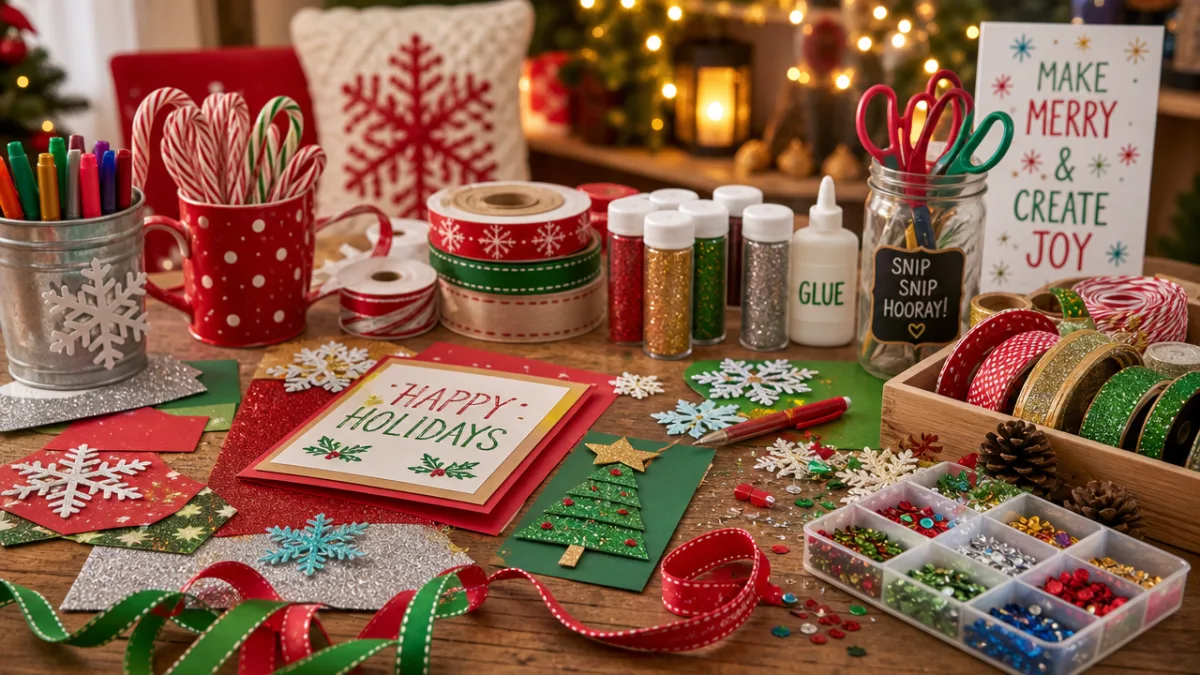
Before diving into any holiday craft project, having the right supplies on hand makes all the difference between a smooth creative session and a frustrating scramble through junk drawers. The good news is that most holiday crafts for kids require only basic, affordable materials that are easy to find at any craft store or even the dollar store. Taking thirty minutes to gather and organize your supplies ahead of time will pay dividends when eager little hands are ready to get started and you want to maintain the momentum of their enthusiasm.
A well-stocked holiday craft station should include a variety of papers — construction paper in red, green, white, silver, and gold are the essentials. Beyond paper, you will want washable glue sticks and liquid glue, child-safe scissors in multiple sizes, and a generous assortment of markers, crayons, and watercolor paints. Craft foam sheets are endlessly versatile and particularly great for younger children who find paper too delicate to work with. Keep a roll of washi tape on hand as well, since it is forgiving, decorative, and can be repositioned without tearing delicate projects.
Natural materials gathered from the outdoors can elevate holiday crafts beautifully and at no cost. Pinecones, twigs, dried leaves, acorns, and seed pods all make wonderful starting points for rustic ornaments and centerpieces. Beyond the basics, consider stocking up on items like googly eyes, pom-poms in assorted sizes, pipe cleaners, wooden craft sticks, and string or twine. Glitter is optional — beloved by children and tolerated by parents — but biodegradable glitter is now widely available and a more environmentally conscious choice for families who want the sparkle without the guilt.
- Construction paper in holiday colors (red, green, white, gold, silver)
- Washable glue sticks and liquid white glue
- Child-safe scissors in various sizes
- Markers, crayons, and watercolor paint sets
- Craft foam sheets and wooden craft sticks
- Pipe cleaners, pom-poms, and googly eyes
- Natural materials: pinecones, twigs, acorns
- Ribbon, twine, and washi tape
- Recyclables: cardboard tubes, egg cartons, tin cans
Simple Crafts for Toddlers and Preschoolers
The youngest crafters need projects that are open-ended, process-focused, and designed to accommodate short attention spans and still-developing fine motor skills. For toddlers, the joy is entirely in the doing — squishing paint, tearing paper, and sticking stickers — rather than in producing a polished final product. That said, the results of toddler holiday crafts are often wonderfully charming in their imperfection, and parents frequently find these early creations become their most treasured keepsakes. The key is to set up an environment where mess is expected and exploration is encouraged.
Handprint and footprint crafts are perennial favorites for the youngest children, and for good reason — they are quick, easy, and capture a fleeting moment in time that parents will treasure forever. A child’s handprint in green paint becomes a Christmas tree when you add a brown trunk and tiny sticker ornaments. Two overlapping handprints in white create a dove for a more peaceful winter theme. Footprints dipped in red or brown paint transform into reindeer with the addition of googly eyes and pipe cleaner antlers. These crafts require minimal prep and produce results that feel deeply personal and special.
Cardboard tube crafts are another excellent option for toddlers and preschoolers, since the tubes are sturdy enough for small hands to grasp and paint without frustration. Toilet paper and paper towel rolls can become santas, reindeer, snowmen, elves, or Christmas trees with just a bit of paint, paper, and a handful of craft supplies. Egg carton sections make perfect little bells or flower shapes for wreaths. For children who are just beginning to use scissors, pre-scored cardboard strips that they can tear rather than cut give them the satisfying sensation of participation without the challenge of cutting tools.
Best Toddler Holiday Craft Ideas
Sensory-based crafts work particularly well for the two-to-four age group. Consider setting up a holiday sensory bin filled with dried pasta dyed red and green, small jingle bells, fake snow, and holiday-themed figurines that children can explore freely before using the materials in a guided craft. This kind of unstructured exploration primes their imagination and makes the transition to a more structured craft activity feel natural and exciting rather than imposed. Always supervise closely with small parts around very young children, and substitute larger alternatives when necessary to keep everyone safe.
Sticker crafts and dot painting are brilliantly suited to toddlers who have not yet developed the pincer grip needed for detailed cutting and gluing. Large foam holiday stickers applied to pre-cut shapes — stars, trees, stockings — allow very young children to create genuinely appealing decorations entirely on their own, which does wonders for their sense of autonomy and pride. Dot markers, sometimes called Bingo daubers, produce cheerful polka-dot artwork with minimal mess and no need for brushes, making them one of the most parent-friendly toddler craft tools available.
Torn paper collages are wonderfully accessible for the youngest crafters and teach early concepts of texture, color, and composition without requiring any cutting skills at all. Pre-draw a simple holiday shape — a Christmas tree, a star, a snowman — on cardstock, then let your toddler fill it in by tearing and gluing scraps of tissue paper, magazine pages, or wrapping paper. The results are colorful and textured, often resembling stained glass when tissue paper is used, and the process of tearing paper is deeply satisfying for little hands that are still mastering control of their movements.
Engaging Crafts for School-Age Children
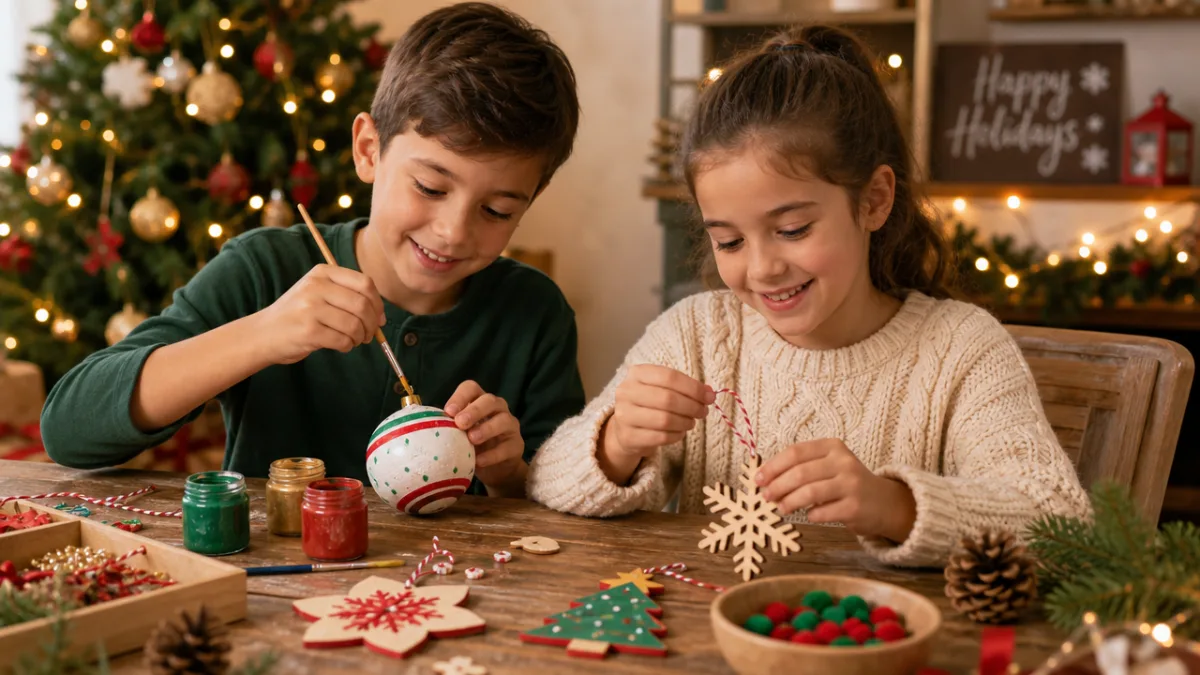
Children between the ages of five and twelve are in a sweet spot for holiday crafting — they have developed enough fine motor control to handle more complex projects, they can follow multi-step instructions, and they are old enough to feel genuine pride in a polished finished product. At the same time, they still bring a delightful enthusiasm and lack of self-consciousness to creative projects that can begin to fade in the teenage years. This age group benefits enormously from crafts that involve a satisfying sequence of steps and produce a result they can display, give as a gift, or use.
Paper-based crafts reach new levels of sophistication for school-age children. Origami snowflakes, paper chain garlands, pop-up holiday cards, and paper quilling ornaments are all well within reach for children in this age group with a bit of practice and patience. Salt dough ornaments are a classic for a reason — the dough is easy to make from pantry staples, it holds detailed impressions beautifully, and the ornaments can be painted and personalized once dried. A child who makes a salt dough ornament at age seven may still be hanging it on the tree at age twenty-five, and that kind of longevity is the hallmark of a truly great craft project.
Craft projects that double as gifts are especially meaningful for school-age children, who are often old enough to feel genuine pleasure in giving something they have made themselves. Decorated picture frames, painted flower pots, homemade bookmarks, and personalized mugs using paint markers are all thoughtful gifts that a child of this age can make with modest adult supervision. When children know their craft will be used and appreciated by someone they love, their investment in the process increases dramatically, and the pride they feel in presenting a handmade gift is one of the most valuable emotional experiences the holiday season can offer.
Step-by-Step Craft Projects for Ages Five to Twelve
Beeswax ornaments and bayberry candles offer an introduction to working with natural materials that school-age children find genuinely fascinating. Rolling thin sheets of beeswax around a wick to create a simple taper candle is a craft that takes less than ten minutes, produces a beautiful and useful result, and introduces children to a centuries-old tradition of candle making. Similarly, pressing dried flowers and herbs into the surface of beeswax ornaments creates delicate, jewel-like decorations that look far more sophisticated than their simple process would suggest. These crafts lend themselves beautifully to conversations about natural materials and traditional skills.
Yarn bombing and fiber arts projects are another wonderful avenue for this age group. Simple weaving on a cardboard loom, finger knitting, or even basic cross-stitch on plastic canvas mesh can all be adapted to holiday themes with seasonal colors and motifs. A child who learns to finger-knit during the holiday season has acquired a genuine skill they can continue to develop, and a finger-knitted garland in red, green, and white is a genuinely lovely decoration. These projects also teach valuable lessons in patience and incremental progress that are increasingly rare in a world of instant digital gratification.
Nature-based crafts have a timeless appeal for children who love to spend time outdoors and bring the outside in. Pinecone bird feeders rolled in peanut butter and birdseed are a classic that teaches kindness to animals and awareness of wildlife needs during winter months. Twig stars bound together with twine and decorated with small jingle bells or dried cranberries make beautiful rustic ornaments. Pressed leaf prints dipped in metallic paint and used to stamp wrapping paper or cards produce stunning results that never fail to impress recipients. These crafts also open doors to wonderful conversations about nature, seasons, and the interconnectedness of living things.
Unique and Memorable Holiday Craft Ideas for the Whole Family
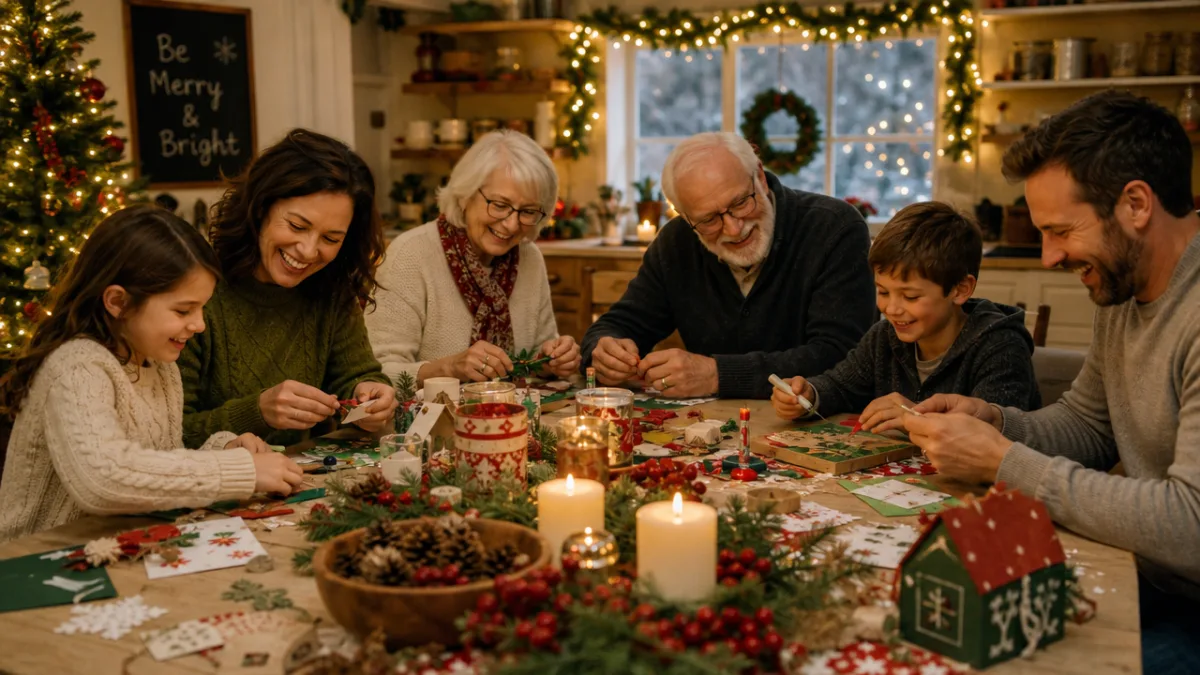
Some of the best holiday craft projects are those that transcend age groups entirely and become genuine family activities where everyone — from a four-year-old to a grandparent — has a meaningful role to play. Family craft nights centered around a shared project, such as building a gingerbread house, assembling a holiday wreath, or creating a collaborative advent calendar, produce not just a finished item but a story that will be retold for years. These shared creative experiences become part of a family’s holiday mythology, referenced and remembered with warmth long after the decoration itself has worn out or been replaced.
A DIY advent calendar is one of the most rewarding family craft projects you can undertake, requiring a modest investment of time but delivering daily delight throughout the entire month of December. Small paper bags, envelopes, or fabric pouches numbered one through twenty-four and hung on a length of twine make a charming and customizable advent calendar that children can help decorate and fill with small treats, activities, or notes. Involving children in the making of the advent calendar — even if they do not know all of what goes inside — gives them ownership over the holiday season and creates something that can be reused and added to in future years.
Holiday memory books and scrapbook pages are crafts that grow more valuable with every passing year. Setting up a simple journaling station with holiday-themed stickers, washi tape, patterned paper, and photo-safe glue sticks, then encouraging children to document their holiday season in pictures and words, creates a record of childhood that is infinitely more personal than a photo album alone. Children can write or dictate their favorite holiday memories, tape in ticket stubs or pressed flowers from winter walks, draw pictures of their hopes for the season, and create pages that capture exactly who they are at this moment in time — a gift to their future selves.
- Pinecone ornaments with ribbon hangers and biodegradable glitter
- Salt dough ornaments stamped with cookie cutters and nature prints
- Paper chain garlands in holiday colors for the mantle or tree
- DIY advent calendars using numbered envelopes or paper bags
- Handprint and footprint keepsake art on canvas or cardstock
- Beeswax taper candles rolled with dried flowers and herbs
- Cardboard tube Santas, reindeer, and snowmen
- Painted picture frame gifts for grandparents and teachers
- Homemade wrapping paper using potato stamps and paint
- Twig stars and natural material wreaths
- Finger-knitted garlands in festive colors
- Pressed leaf and flower holiday cards
- Pinecone bird feeders for backyard wildlife
- Snow globe jars with waterproof figurines and distilled water
- Origami stars and snowflakes for window displays
- Decoupage holiday luminaries using tissue paper and glass jars
- Holiday memory scrapbook pages
Tips for Making Holiday Crafting Stress-Free and Joyful
The greatest threat to an enjoyable holiday craft session is not spilled glitter or a project that does not turn out as planned — it is adult perfectionism. Children sense when a grown-up is more focused on the outcome than the process, and this can quickly transform a joyful creative experience into an anxiety-producing performance. The most important mindset shift a parent or caregiver can make before sitting down to craft with children is a genuine release of attachment to results. The crooked snowman, the overly glittered star, the Santa whose beard is slightly off-center — these imperfections are not flaws, they are the entire point.
Preparation and organization are the practical keys to a smooth crafting experience. Setting out all materials before calling children to the table, protecting surfaces with a plastic tablecloth or kraft paper, having paper towels and a damp cloth within reach, and preparing a designated drying area for finished projects all contribute to a session that flows well and ends with everyone still in good spirits. For younger children especially, having everything ready to go the moment they sit down helps capture and maintain their attention before restlessness sets in. A little preparation time is always well spent.
Flexibility is perhaps the most underrated ingredient in successful family crafting. Sometimes a project takes an unexpected turn when a child decides their snowman would prefer to be purple, or when a planned ornament spontaneously becomes a spaceship. These moments of creative deviation are to be celebrated rather than redirected, as they represent a child’s genuine imaginative engagement with the materials. Following a child’s creative lead, even when it diverges entirely from the original plan, teaches them that their ideas have value and that creativity is not about replicating a template but about expressing something true and personal.
Crafting Tips by Age Group
For toddlers and preschoolers, the most important principle is to focus entirely on process rather than product. Offer open-ended materials — paint, paper, stamps, stickers — without a predetermined outcome in mind, and let their exploration guide the session. Resist the urge to fix, guide, or improve their work, even when you can see that a small intervention would make the result more recognizable. Their version of a holiday tree may look nothing like a tree to you, but it looks exactly right to them, and that is what matters most at this stage of development and confidence-building.
School-age children benefit from a balance of guidance and autonomy. Providing a clear starting point — a template, a set of materials, a demonstrated first step — gives them the scaffolding they need to get going without feeling overwhelmed by a blank canvas. From there, stepping back and allowing them to make their own creative decisions produces far more satisfying results than hovering and directing. When things go wrong, as they inevitably will, model a problem-solving attitude rather than distress: a smeared piece of paint becomes a blended background, a torn piece of paper becomes a mosaic, a dropped ornament becomes an intentionally deconstructed design.
Perhaps most importantly, holiday crafting should never feel like an obligation or a performance for social media. The most meaningful sessions are often the quiet, unplanned ones — a child who wanders into the kitchen and asks if they can make something, a rainy afternoon that turns into an impromptu craft marathon, a grandparent who sits down at the table and remembers how to fold a paper crane. Holiday crafts for kids are at their best when they are infused with genuine presence, unhurried time, and the simple pleasure of making something with your hands alongside people you love. That, more than any particular project or technique, is what children will carry with them long into adulthood.








What do you think?
It is nice to know your opinion. Leave a comment.