










How to Grow and Care for Weigela Shrubs
Introduction to Weigela Shrubs
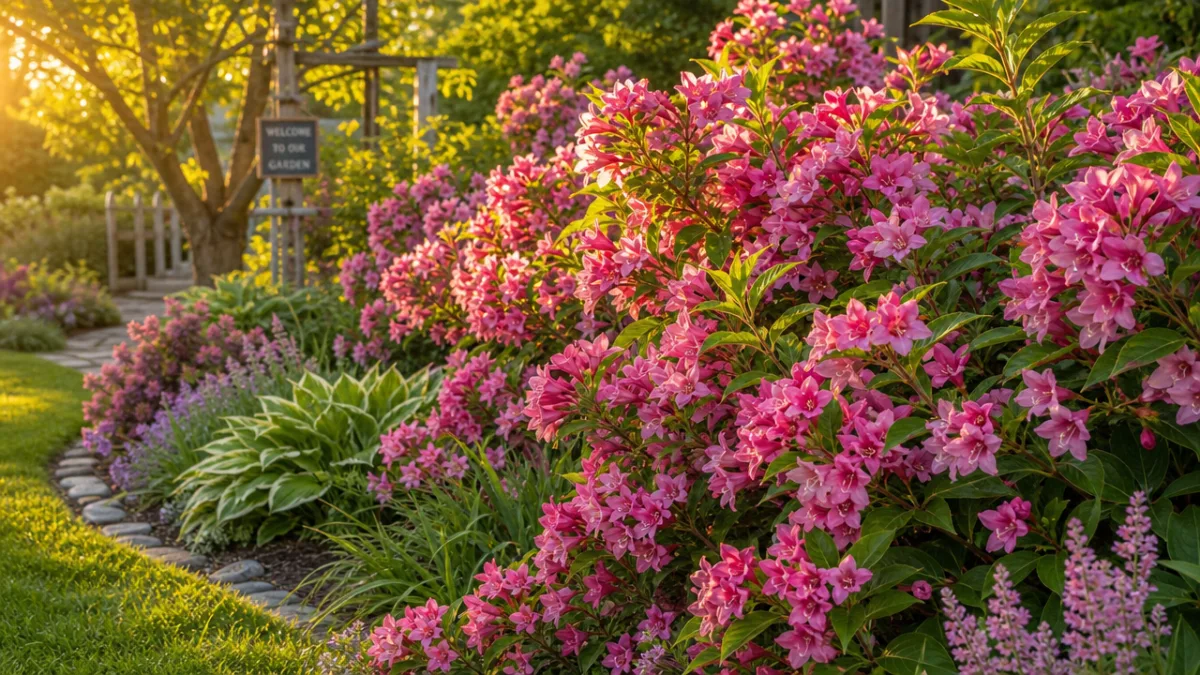
If you’re looking for a flowering shrub that really delivers, weigela is hard to beat. It’s been growing in Western gardens since the mid-1800s — originally from Asia — and it’s easy to see why it’s stuck around. Those trumpet-shaped blooms in pink, red, white, and magenta show up in late spring and often come back for a second act in late summer, so you’re getting a lot of bang for your buck across the season.
It belongs to the Caprifoliaceae family and typically grows somewhere between 3 and 10 feet tall, depending on the variety. Modern cultivars have really opened up the options — there are compact forms that work perfectly in smaller gardens, varieties with gorgeous burgundy or golden foliage, and even dwarf types that do surprisingly well in containers. Whether you’re a seasoned gardener or just getting started, weigela is one of those plants that tends to forgive beginner mistakes and adapt to a wide range of conditions.
One thing that makes weigela genuinely special is how good it is at pulling in pollinators. Hummingbirds absolutely love the tubular flowers, and bees are regular visitors throughout the growing season. So when you plant one, you’re not just adding something pretty to your yard — you’re also doing something genuinely helpful for local ecosystems at a time when pollinator populations could use all the support they can get.
Choosing the Right Variety for Your Garden
There are dozens of weigela cultivars out there, so it’s worth taking a little time upfront to find the right fit for your space and style. If you’re working with a smaller yard or a tight border, compact varieties like ‘Midnight Wine’ and ‘Tango’ are great options — they typically top out at just 2 to 3 feet tall and wide, so they won’t crowd out everything around them. They also work really nicely in containers.
If you want something that looks interesting even when it’s not blooming, go for a variety with standout foliage. ‘Wine and Roses’ has deep burgundy leaves that pop beautifully against its bright pink flowers. ‘Looymansii Aurea’ brings golden-yellow leaves that can brighten up a shadier corner. And variegated types like ‘Variegata’ have a creamy white edge to the leaves that adds visual interest all season long. Just keep in mind that foliage color tends to be richest in full sun, so placement matters.
For a more traditional look with serious flower power, you can’t go wrong with classics like ‘Bristol Ruby’ or ‘Eva Rathke.’ These are bigger plants — often 6 to 8 feet — and they put on a stunning show in late spring. Whatever variety catches your eye, always check the mature size on the tag before you buy. It’s much easier to choose the right plant from the start than to spend years trying to prune an oversized shrub into submission.
- Compact varieties: ‘Midnight Wine,’ ‘Tango,’ ‘My Monet’ — ideal for small gardens and containers
- Foliage interest: ‘Wine and Roses,’ ‘Looymansii Aurea,’ ‘Variegata’ — striking leaf color year-round
- Large, traditional types: ‘Bristol Ruby,’ ‘Eva Rathke,’ ‘Newport Red’ — bold presence and abundant blooms
- Reblooming varieties: ‘Sonic Bloom’ series — extended flowering from late spring through fall
Planting Weigela: Location, Soil, and Timing
Of all the decisions you’ll make when planting a weigela, where you put it matters most. These shrubs really want full sun — at least six hours of direct light per day, and more is even better. They can handle some shade, but you’ll notice the trade-off pretty quickly: fewer flowers, and if you’ve chosen a colorful-leafed variety, the foliage tends to look washed out. Give it the sunniest spot you’ve got and it’ll reward you for it.
The good news on soil is that weigela isn’t terribly fussy. It’ll grow in everything from loam to clay, as long as the drainage is decent. What it truly can’t handle is sitting in wet soil for extended periods — that’s a reliable path to root rot. Before you plant, work in a few inches of compost or aged organic matter to boost drainage and give the roots a good start. Aim for a slightly acidic to neutral pH, somewhere in the 5.5 to 7.0 range.
Spring and fall are the sweet spots for planting. Spring gives the shrub a full season to put down roots before winter hits. Fall planting works well too, as long as you get it in the ground at least six weeks before your first expected frost. Try to avoid planting in the heat of summer — it’s tough on a newly transplanted shrub and makes establishment much harder. Water well right after planting and keep the soil consistently moist through that first growing season.
Don’t shortchange the spacing, either. Crowding plants together restricts airflow and sets the stage for fungal problems down the road. As a general rule, leave at least as much space between plants as their expected mature width. When you dig the planting hole, make it two to three times as wide as the root ball, but no deeper — you want the top of the root ball sitting right at or just slightly above the surrounding soil level to avoid crown rot.
Watering, Fertilizing, and General Maintenance
Once a weigela is well-established, it handles dry spells pretty well on its own. But during that first year, consistent watering is really important — it’s what gives the root system a chance to develop properly. Water deeply and then let the soil dry out a bit before watering again; you’re not going for constantly damp, just regularly hydrated. Once or twice a week during dry stretches in that first season is a reasonable starting point, adjusted for whatever the weather is actually doing. After that, most in-ground plants only need extra water during serious droughts.
A little fertilizer goes a long way toward keeping weigela looking its best and blooming well. In early spring, when you start to see new growth pushing out, apply a balanced slow-release granular fertilizer made for flowering shrubs. Stick to the label directions — it’s tempting to add more, but too much nitrogen shifts the plant’s energy toward leaves instead of flowers. For reblooming varieties, a light second application after the first bloom cycle can help keep things going through summer and fall. Just stop fertilizing by midsummer so you don’t push out tender new growth right before frost season.
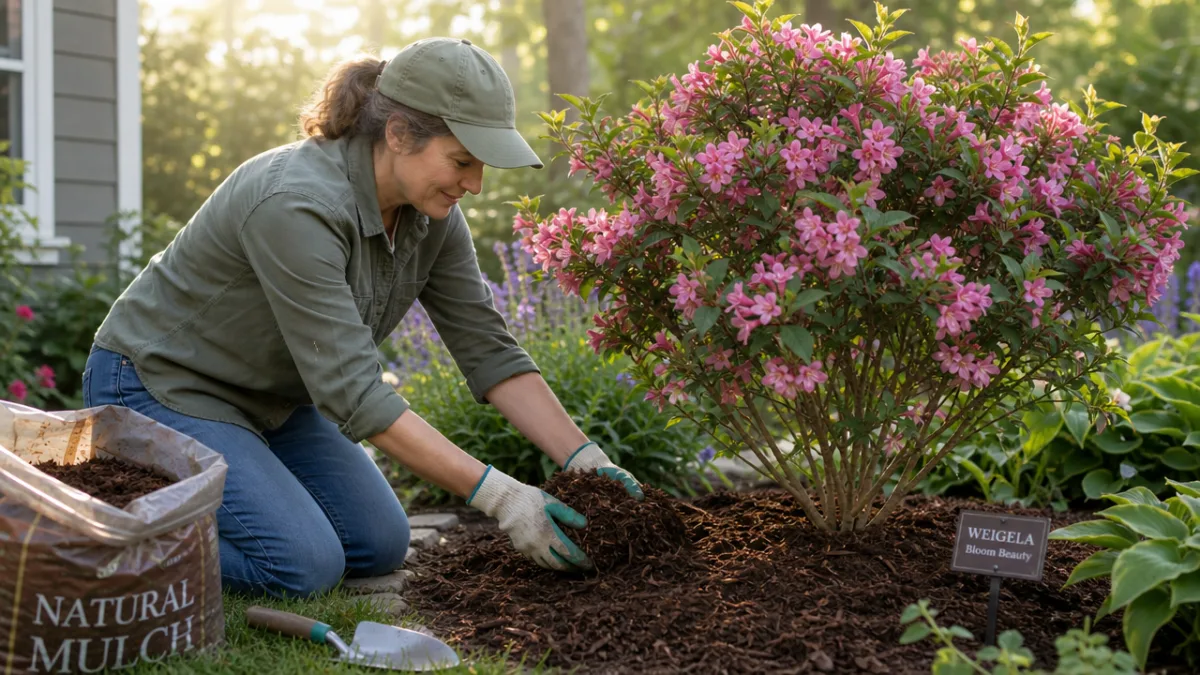
Mulch is one of those small efforts that pays off in multiple ways. A 2- to 3-inch layer of shredded bark or wood chips around the base of the plant holds in moisture, evens out soil temperature swings, keeps weeds down, and slowly improves the soil as it breaks down. Just keep the mulch pulled back a few inches from the main stems — piling it up against the plant can create a damp environment that invites disease. Top it off each spring as part of your regular garden refresh.
One of the reasons weigela is so popular is that it doesn’t come with a long list of pest and disease headaches. Aphids occasionally show up on new growth, but a strong blast from the hose usually takes care of them, or you can use insecticidal soap if things get out of hand. Spider mites can appear during hot, dry stretches. Powdery mildew sometimes shows up when humidity is high and airflow is poor — which is another reason that good spacing from the start really pays off.
Pruning Weigela for Shape, Size, and Maximum Blooms
Pruning has more impact on how well your weigela blooms than almost anything else you do, so it’s worth understanding how it works. The key thing to know is that weigela blooms on old wood — those flower buds for spring were actually set on stems that grew the previous year. That means the cardinal rule is to do your main pruning right after that first big flush of flowers in late spring or early summer. Prune in fall or late winter, and you’ll be cutting off the very buds you’re counting on for next year’s show.
The most practical approach is something called renewal pruning. Each year after flowering, cut about one-third of the oldest, thickest stems all the way down to ground level. This pushes the plant to send up fresh, vigorous new growth from the base — and that new growth is what carries next year’s blooms. While you’re at it, lightly trim the rest of the plant to clean up the shape and take out any dead, damaged, or rubbing branches. Done consistently, this keeps your weigela youthful and flowering well, rather than turning into a tangled thicket of old wood that barely blooms.
If you’ve inherited a weigela that’s been neglected for years and looks more like a woody mess than a flowering shrub, a hard rejuvenation pruning can turn things around. Cut the whole thing back to 12 to 18 inches from the ground in early spring before growth starts. You’ll lose the flowers for that season, but the plant will bounce back with a strong flush of new shoots that set you up for a much better show the following year. Do this in early spring rather than fall so the plant can make the most of the growing season as it recovers.
- Complete major pruning within two to three weeks of the final spring blooms fading
- Remove up to one-third of the oldest stems at ground level each year
- Lightly shape remaining branches to maintain a natural, rounded form
- Use clean, sharp bypass pruners for cuts up to 3/4 inch and loppers for thicker stems
- Disinfect pruning tools between plants to prevent the spread of disease
Winter Care and Cold Hardiness
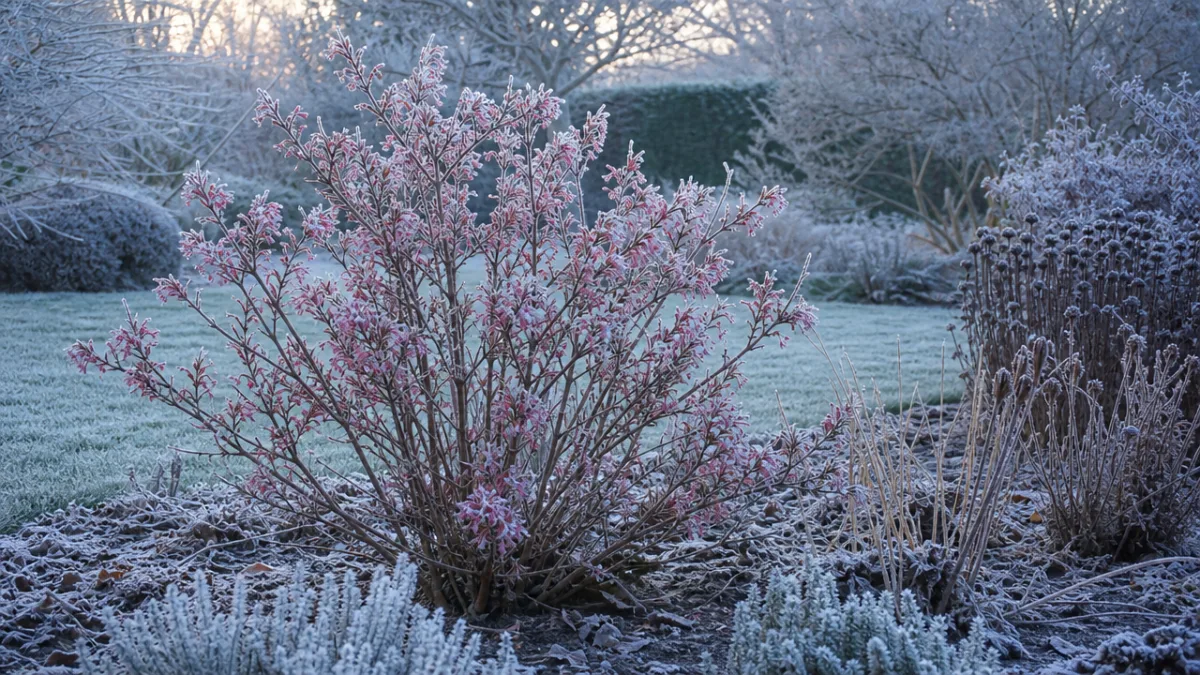
Weigela is a solid, cold-hardy shrub that grows well in USDA zones 4 through 8, though the exact range varies a bit by cultivar. Most standard varieties handle temperatures down to around -20°F (-29°C) without much trouble once they’re established. In zones 4 and 5, you might see some dieback at the tips after a particularly brutal winter, but don’t panic — the shrub bounces back reliably once warmer weather returns. On the other end, if you’re in a zone approaching 9, summer heat and humidity can be more of a challenge than winter cold ever is.
For most gardeners within the plant’s normal range, weigela doesn’t need a lot of special winter attention. The two main things to avoid are fertilizing after midsummer (which you already know from the previous section) and heavy fall pruning, which can push out soft new growth right before freezing temperatures arrive. A fresh layer of mulch over the root zone in late fall is a simple step that makes a real difference — it insulates the soil and helps protect roots from the freeze-thaw cycles that can literally heave plants up out of the ground.
In borderline climates, or if you have a weigela going into its first winter, a little extra protection makes sense. Wrapping it loosely in burlap helps cut down on wind desiccation and takes the edge off temperature swings around the stems. Avoid plastic — it traps moisture and can actually cause more problems than it solves. If you do get significant dieback after a hard winter, hold off on pruning until you can clearly see where new green growth is emerging in spring. The dead wood will be obvious at that point, and you can remove it cleanly without accidentally cutting into anything that’s still alive.
Landscaping and Design Uses for Weigela
Weigela is one of those plants that fits into a surprisingly wide range of garden situations. One of its most popular uses is as an informal flowering hedge or privacy screen. Plant a row at the right spacing and you get a relaxed, flowing boundary that explodes into color in spring and stays attractive through the rest of the season. Unlike a formal clipped hedge, a weigela hedge basically takes care of itself and develops that easygoing, cottage-garden character that a lot of homeowners really love.
Mixed shrub borders and island beds are another great home for weigela. Its rounded, arching shape and vivid flower color pair beautifully with ornamental grasses, conifers, and spring bulbs. Try pairing a burgundy-leafed weigela with something chartreuse — golden spirea or lime-toned hostas, for instance — and you get a genuinely striking contrast. For a classic cottage look, underplant a pink weigela with allium, nepeta, or salvia and you’ve built a layered planting that gives you months of color and texture without a lot of fuss.
Compact weigela varieties are a natural fit for foundation plantings. Dwarf cultivars like ‘My Monet’ and ‘Midnight Wine’ work especially well close to the house — they add seasonal interest without ever getting big enough to block windows or become a maintenance problem. Because they naturally hold a tidy mound shape with very little pruning, they’re a refreshing alternative to the same old evergreen foundation plants you see everywhere. And since they’re deciduous, they let more light into the house during winter when you actually want it.
Growing weigela in containers has become increasingly popular now that compact cultivars are so widely available. A dwarf weigela in a large decorative pot can anchor a patio or front entrance with real seasonal presence. Just make sure the container drains well and use a good quality potting mix. Potted plants will need more frequent watering and feeding than their in-ground counterparts, and in cold climates, you’ll want to move the containers into a sheltered, unheated garage or outbuilding over winter — roots in containers are much more exposed to freezing than roots in the ground.
There are a few bonus uses worth mentioning too. Those long, arching bloom-covered stems cut beautifully for fresh flower arrangements and hold up reasonably well in water indoors. And as a wildlife plant, weigela contributes more than just nectar — the dense branching structure gives small songbirds a place to nest, and the seeds can provide food for certain bird species as well. When you plant a weigela, you’re adding something beautiful to your own space, but you’re also putting something genuinely useful back into the natural world around you.








What do you think?
It is nice to know your opinion. Leave a comment.