










Discover Beautiful Flowers Beginning with ‘A’: Armeria Maritima
Introduction to Armeria Maritima: The Sea Thrift
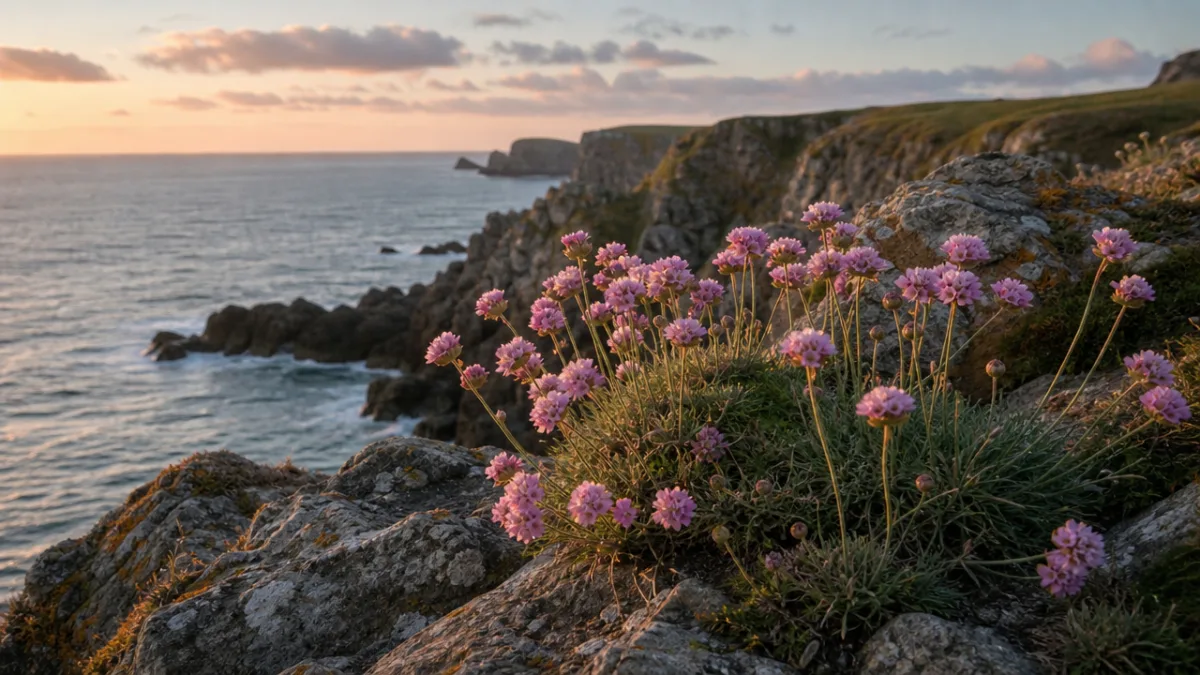
If you’ve ever walked along a windswept clifftop in Britain or western Europe and spotted cheerful little pink pompom flowers clinging defiantly to the rocks, there’s a good chance you were looking at Armeria maritima — better known as Sea Thrift, Sea Pink, or just Thrift. It’s a compact perennial in the Plumbaginaceae family, and honestly, it’s hard not to fall a little bit in love with it. Gardeners, coastal walkers, and nature lovers have been charmed by this plant for centuries, and it’s easy to see why.
Sea Thrift is native mainly to the coastal regions of Europe — think the Atlantic coastline running from Portugal all the way up to Norway, with the British Isles right in the middle of it all. Over thousands of years, it’s adapted to conditions that would finish off most plants: salt-laden winds, thin rocky soils, poor drainage, and wild swings in temperature. Rather than just barely surviving, it genuinely thrives in all of that, which makes it a fascinating plant whether you’re studying botany or just trying to fill a tricky spot in your garden.
Beyond its wild clifftop homes, Armeria maritima has been a garden staple for over three hundred years. Plant breeders have had a field day with it, developing cultivars in everything from classic pale pink to deep crimson, bright white, and soft lavender. That expanded color range has taken it well beyond coastal gardens — today you’ll find it in rock gardens, along border edges, spilling out of containers, and even on green roofs in the middle of cities.
Botanical Characteristics and Physical Description
Armeria maritima grows as a tidy, dense cushion of narrow, grass-like leaves, usually sitting somewhere between five and ten centimeters tall. The foliage is dark green, linear, and arranged in a basal rosette that stays evergreen through most of the year in temperate climates. So even when it’s not flowering, the plant earns its keep by providing neat ground cover and texture year-round. Those slim, narrow leaves aren’t just decorative either — they’re the plant’s way of cutting down on water loss, a handy trick when you live on a salt-blasted cliff.
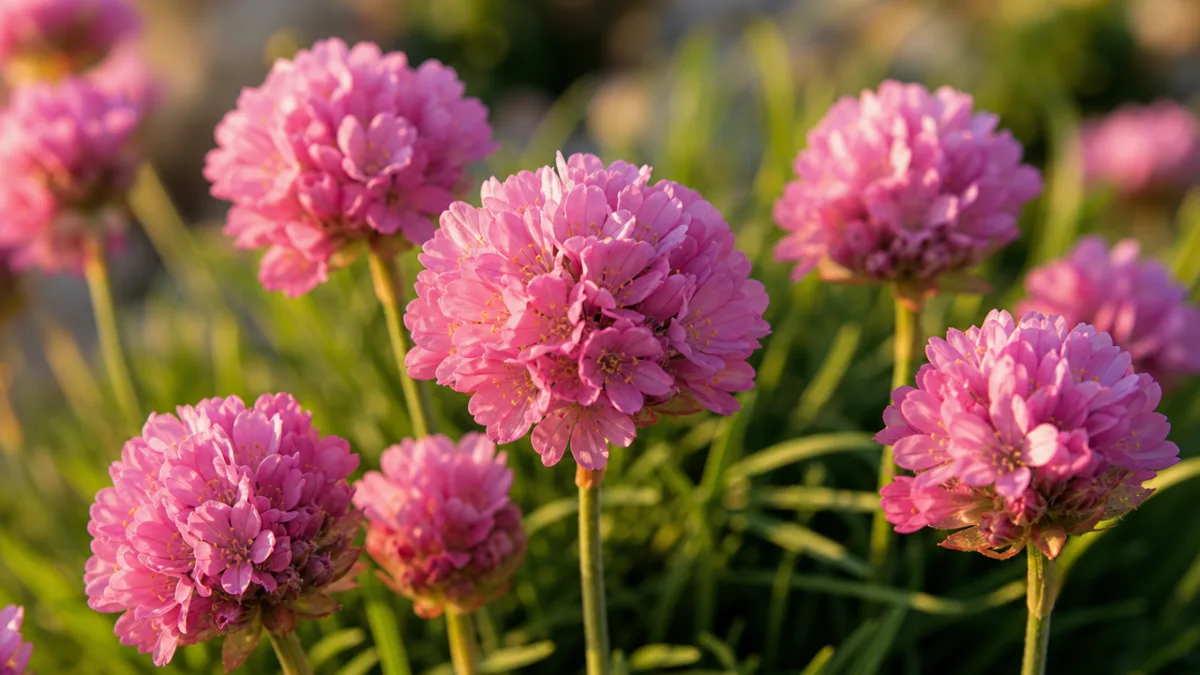
The flowers are what really make people stop and stare. Each one is a small, five-petaled bloom, but they cluster together into rounded heads about two to three centimeters across, held up on slender, wiry stems that rise anywhere from ten to thirty centimeters above the foliage. The result is that classic silhouette: a neat green mound with dozens of bobbing flower heads dancing above it. Look closely and you’ll also notice the papery bracts around each flower head, which give the whole thing an extra layer of delicate, almost tissue-paper texture.
One of Sea Thrift’s real selling points is just how long it blooms. You can typically expect flowers from late spring through midsummer, and some cultivars will keep going from as early as April right through to August or even September if conditions are kind. That’s a generous window that bridges the gap nicely between the spring bulb season and the main summer perennial flush. And even after the flowers themselves fade, the dried seed heads stick around on their stems and add a bit of quiet ornamental interest well into autumn.
Growing Conditions and Habitat Preferences
The best starting point for growing Armeria maritima well is to think about where it actually comes from. In the wild, you’ll almost always find it somewhere exposed and open — rocky clifftops, coastal grasslands, mountain screes, salt marshes — places where bigger, pushier plants can’t get a foothold because the conditions are just too tough. What all those habitats share is excellent drainage, fairly poor soil, and loads of light. Replicate those basics in your garden and you’re most of the way there, and it really doesn’t take much effort or money to do it.
Soil is probably the single most important thing to get right. Armeria maritima really does not like sitting in wet or overly rich ground. Heavy clay that holds moisture is genuinely bad news for it, especially through cold, wet winters when root rot can set in and kill the plant outright. What you’re aiming for is something light, gritty, and fast-draining — a sandy loam or even plain horticultural grit mixed with a little topsoil works brilliantly. If you’re working with heavier soil, be generous with the coarse grit or sharp sand when you plant.
Sunlight isn’t negotiable, either. This is a plant that evolved in wide-open, sunny places, and it shows in how it behaves in shadier spots — the foliage cushions get loose and floppy instead of staying tight and compact, and you’ll see far fewer flowers. Full sun for most of the day is the ideal. If you’re gardening somewhere very hot and dry, a bit of light afternoon shade can actually help, but in most temperate gardens, the sunniest spot you have is the right spot.
Watering and feeding should both be approached with a light touch. Once it’s settled in, Sea Thrift is impressively drought-tolerant and rarely needs you to get the hose out in a climate with reasonably regular rainfall. Overwatering is a much more common mistake than underwatering. The same restrained approach applies to feeding — dose it with a high-nitrogen fertilizer and you’ll get lush, soft, floppy growth and far fewer flowers. A light top-dressing of grit around the base each spring is really all it needs.
Popular Cultivars and Color Varieties
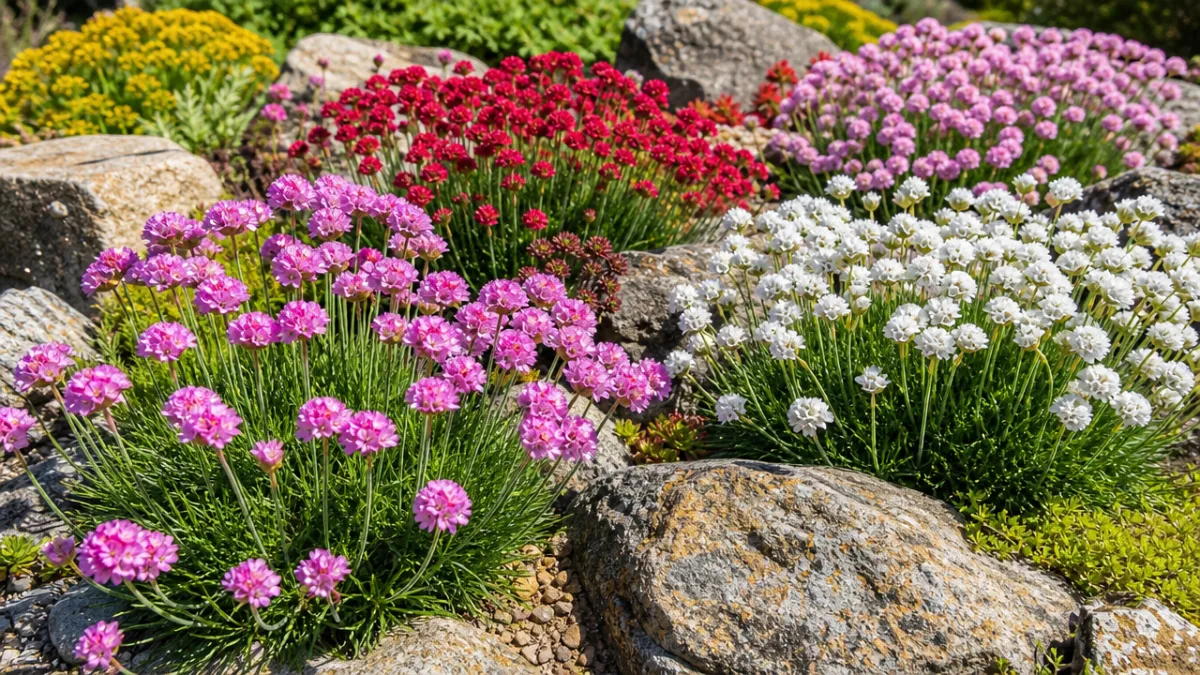
The wild species comes in shades from pale blush to deeper rose pink, which is lovely in itself — but years of selective breeding have opened things up considerably. These days there are named cultivars across a really satisfying range of colors, each with its own slightly different character and growth habit. Whether you want something crisp and white, punchy and deep red, or somewhere in the softer pink middle ground, there’s almost certainly an Armeria maritima cultivar that fits the bill and works with what you’ve already got growing.
A few stand out as particular favorites. ‘Düsseldorf Pride’ (sometimes written ‘Dusseldorf Pride’) is probably the most widely grown, with vivid deep pink to light crimson flower heads over a long season and especially neat, compact cushions of foliage. ‘Alba’ is the go-to white form, producing pure white heads that look almost luminescent against the dark green leaves — a beautiful choice for white-themed borders or containers. And ‘Vindictive,’ which lives up to that excellent name, delivers some of the most intensely deep rose-red flowers of any cultivar, making it a real showstopper in a rock garden.
Other cultivars worth hunting down include:
- ‘Bloodstone’ — rich, deep red flowers and a notably long blooming season, often carrying on well into late summer if you keep on top of deadheading.
- ‘Bees’ Ruby’ — a taller grower, reaching around thirty centimeters, with bright ruby-pink flowers that add a lively vertical note to planting schemes.
- ‘Nifty Thrifty’ — a variegated foliage form with cream-edged leaves that earn their place all year round, plus soft pink blooms when in flower.
- ‘Splendens’ — an older variety with bright, cheerful pink flowers and reliably vigorous growth, forgiving enough to handle less-than-perfect conditions.
- ‘Laucheana’ — a compact, free-flowering variety with rose-crimson blooms and a particularly tidy cushion-forming habit, ideal if you’re working with a small rock garden.
Garden Design and Landscape Applications
Because Armeria maritima is compact, flowers for a long time, and puts up with genuinely difficult conditions, it opens up a surprising range of design options. Its most natural home is probably the rock garden, where those cushion-forming mounds slot perfectly between boulders and stones, mimicking the tight, wind-clipped vegetation of its native clifftop habitats. Planted in groups, it creates a naturalistic scene that carries a real sense of coastal drama — even in the middle of a suburban garden nowhere near the sea.
As a border edging plant, it’s one of the best you can use at its scale. The neat cushions make a crisp, defined margin along path edges and border fronts without needing constant clipping, and the upright flower stems add just enough height to keep things from looking flat. The fact that the foliage stays evergreen means the border edge stays clearly defined through winter too, which is genuinely useful. It’s the kind of plant busy gardeners quietly love.
Container planting is another place where Sea Thrift really delivers. Its tolerance for dry, poor conditions maps onto container growing pretty well as long as you use a free-draining compost and make sure the drainage holes aren’t blocked. On its own in a terracotta pot it looks simple and elegant on a doorstep or patio. Paired with other drought-tolerant plants like sedums, sempervivums, and small ornamental grasses, it contributes to container arrangements that look great and practically look after themselves through summer.
Green roofs and living walls are a more modern application, but Armeria maritima is genuinely well suited to them. Its shallow roots, extreme drought tolerance, and ability to shrug off wind exposure tick a lot of boxes for those challenging planting situations. Across northern Europe it’s a regular component of green roof planting schemes, often alongside Sedum and Festuca grasses. Beyond the visual appeal, these installations bring real ecological benefits — biodiversity support, insulation, and beautiful flower-rich landscapes on surfaces that would otherwise just be empty rooftops.
Wildlife Value and Ecological Importance
Armeria maritima isn’t just pretty to look at — it genuinely pulls its weight ecologically. As a native plant of European coastal and upland habitats, it has deep, long-established relationships with native insects, many of which depend on it for nectar and pollen during a period when options can be slim. Its flowering season begins after many spring flowers have already finished and before the main summer meadow plants get going, which means it fills a real gap in the food calendar for pollinators.
Bumblebees are among its most enthusiastic visitors, and if you watch the flowers for a few minutes on a warm day you’ll likely also spot butterflies — common blues and small coppers are particularly fond of it. There’s also a more specialist connection worth knowing about: the Thrift Clearwing moth, a rare and rather wonderful species in the British Isles, has a specific relationship with this plant. Its caterpillars feed inside the roots and stems of Armeria maritima, which means the plant’s fate and the moth’s fate are directly linked. That kind of specific ecological relationship is a good reminder of how much depends on native wildflowers being present in the landscape.
Out on the coast, Sea Thrift also plays a practical role in holding fragile soils together. Its dense, mat-forming root systems help bind sandy and rocky substrates, reducing the damage done by wind and rain to vulnerable cliff edges and dune habitats. Where coastal erosion has degraded these ecosystems, restoring native plant communities that include Armeria maritima has been shown to meaningfully improve habitat stability. For gardeners interested in wildlife-friendly planting, it’s a straightforward and rewarding way to do something genuinely useful for local pollinators.
Care, Maintenance, and Propagation
One of the things that makes Sea Thrift so appealing as a garden plant is how little it asks of you once it’s established. It doesn’t need regular division, staking, or feeding the way many perennials do — in the right conditions, it’s largely happy to get on with things without much input. That said, a small amount of attention each year will keep plants looking their best and help them live longer, more productive lives. The most worthwhile routine task is deadheading: remove the spent flower heads as they fade and the plant will push out more flowering stems and stay tidy through the growing season.
After a few years, Armeria maritima cushions sometimes develop a tendency to die out in the middle while continuing to grow healthily at the edges — gardeners sometimes describe this as the plant “running out.” When it happens, usually somewhere between three and five years in, the fix is simple: divide the clump in early spring or early autumn. Lift the whole plant, throw away the dead central section, and replant the vigorous outer portions into freshly prepared soil. It rejuvenates the plant and gives you extra specimens to spread around the garden or pass on to someone else.
When it comes to propagation, there are a few different approaches depending on how many plants you need and what suits you best:
- Division — the simplest and most reliable option, best done in spring or early autumn using healthy sections from the outer edges of mature clumps.
- Basal cuttings — taken in spring from young, non-flowering shoots and rooted in a gritty compost mix. This is the best method for propagating named cultivars true to type.
- Seed — the species can be grown from seed sown under glass in late winter or early spring, though seedlings from named cultivars won’t necessarily come true to the parent plant and will take longer to reach flowering size.
Pests and diseases are rarely much of an issue, which is another mark in Sea Thrift’s favor. Aphids sometimes show up on the flower stems in spring, but natural predators usually deal with them before you need to get involved. The real enemy, as with so many of the best rock garden plants, is wet and cold combined — prolonged waterlogging during winter can cause root and crown rot in an otherwise perfectly healthy plant. If you’re gardening on heavy clay, raising the planting area slightly or laying a deep gravel mulch around the plant’s crown can make a real difference in keeping that moisture away where it matters most.








What do you think?
It is nice to know your opinion. Leave a comment.