










How to Make a Small DIY Pallet Sofa in a Weekend
Why Pallet Furniture Is Worth Your Weekend
Building your own furniture from reclaimed wooden pallets has become one of the most satisfying and budget-friendly DIY projects a homeowner can take on. The appeal goes far beyond saving money, though the savings are genuinely impressive. When you construct a pallet sofa yourself, you gain complete control over the dimensions, finish, and style, making it possible to create a piece that fits your specific space like it was custom-made, because it was.
Pallet wood carries a natural rustic warmth that is difficult to replicate with store-bought alternatives. The weathered grain, the slight imperfections, the history embedded in each plank — these qualities give handmade pallet furniture a character that mass-produced sofas simply cannot offer. Whether you are furnishing a backyard patio, a basement den, or a compact apartment living room, a pallet sofa brings texture and personality that feels genuinely earned.
Beyond aesthetics, building a pallet sofa is an excellent entry point into woodworking for beginners. The project requires only basic tools, widely available materials, and a single weekend of focused effort. By Sunday evening, you can be sitting on something you built entirely with your own hands, which is a feeling no furniture store can sell you. This guide walks you through every step of the process so that even first-timers can finish with professional-looking results.
Gathering Materials and Tools Before You Start
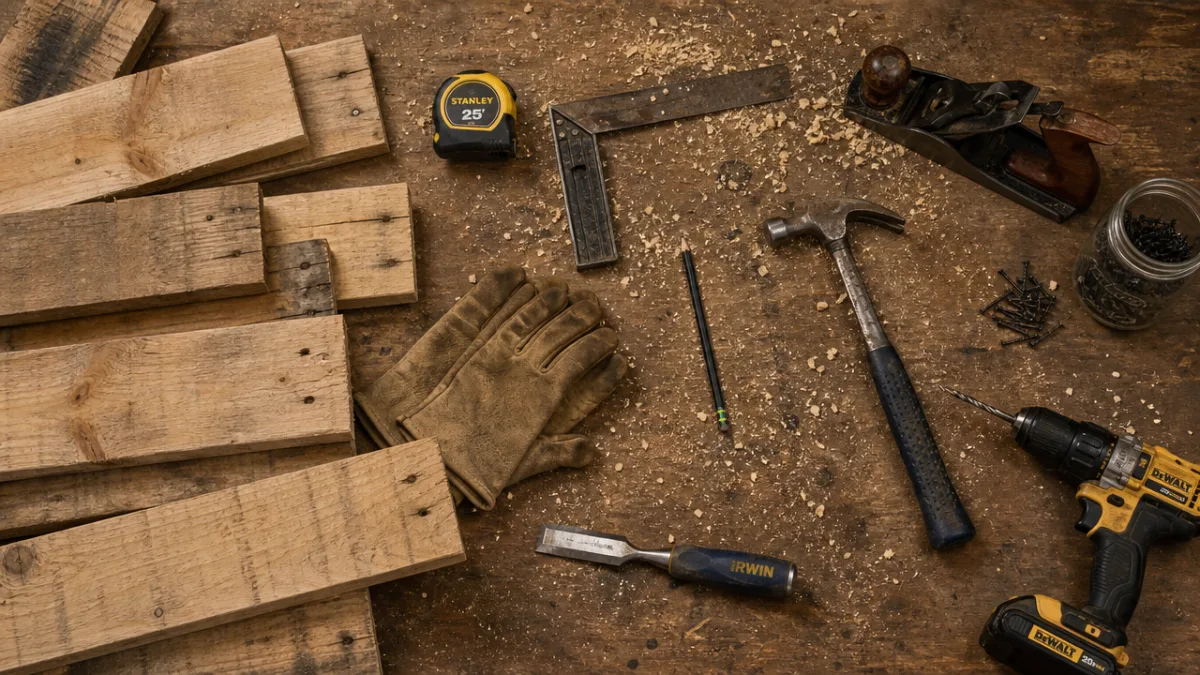
Preparation is the single factor that most determines whether a weekend project finishes on time or drags into the following week. Before you cut or sand a single plank, you need to gather everything you will use. The most critical material is, of course, the pallets themselves. You will typically need four to six standard wooden pallets for a small two-seater sofa. Look for pallets stamped with the letters HT, which stands for heat-treated, meaning they were not chemically treated and are safe to bring indoors or use around children and pets.
Free pallets are available from a surprising number of sources if you know where to look. Garden centers, hardware stores, furniture retailers, and grocery warehouses all receive regular pallet deliveries and are often happy to give them away rather than pay for disposal. Call ahead and explain your project, and most businesses will set some aside for you. Try to select pallets that are roughly the same size, typically 40 by 48 inches, and in good condition with no cracked or missing boards.
In terms of tools and additional supplies, here is what you should have ready before the weekend begins:
- Circular saw or jigsaw for cutting pallets to size
- Orbital sander with 60-grit and 120-grit sandpaper
- Drill with screwdriver bits and wood drill bits
- Exterior-grade wood screws, 2.5 and 3.5 inch lengths
- Measuring tape, carpenter’s square, and pencil
- Wood stain, paint, or outdoor sealant depending on your chosen finish
- Foam cushions cut to size, or ready-made outdoor cushions
- Sandpaper blocks for hand-finishing tight corners
- Safety glasses, dust mask, and work gloves
Having every item on this list in your workspace before you begin eliminates frustrating mid-project hardware store runs. If you plan to stain or paint, purchase your finish a few days in advance so you can test it on a scrap piece of pallet wood. Colors can look very different on raw reclaimed wood than they do on a paint chip card, so testing saves regret later.
Preparing and Cleaning Your Pallets
Raw pallets pulled from behind a warehouse are rarely ready to become furniture. They need thorough cleaning, careful inspection, and proper sanding before any construction begins. Start by laying each pallet flat on a clear surface and examining it closely. Check for protruding nails and hammer them flush or remove them entirely. Look for any boards that are cracked through their full thickness, split along the grain in ways that compromise structural integrity, or showing signs of mold or deep staining that soap and water cannot address. Discard any pallet with serious structural flaws rather than working around them.
Cleaning comes next. Use a stiff-bristle brush and a mixture of warm water with a small amount of dish soap to scrub each pallet thoroughly. For pallets that have been stored outside, a pressure washer on a low setting is extremely effective at blasting dirt out of the grain. Allow the pallets to dry completely in direct sunlight for at least 24 hours before sanding. Applying any finish to damp wood traps moisture inside the fibers, which leads to warping, bubbling, and eventual rot regardless of how good your sealant is.
Sanding is where raw pallet wood transforms into furniture-grade material. Begin with 60-grit sandpaper to remove rough splinters, graying surface fibers, and any old stain or paint residue from previous use. Work with the grain rather than across it to avoid scratching patterns that will show through your final finish. Follow up with 120-grit paper to smooth the surface further. Pay particular attention to any areas that will be at face height or that bare skin might contact, such as the armrests and the front face of the seat. A few extra minutes of sanding here prevents discomfort every time someone sits down.
Building the Sofa Frame Step by Step
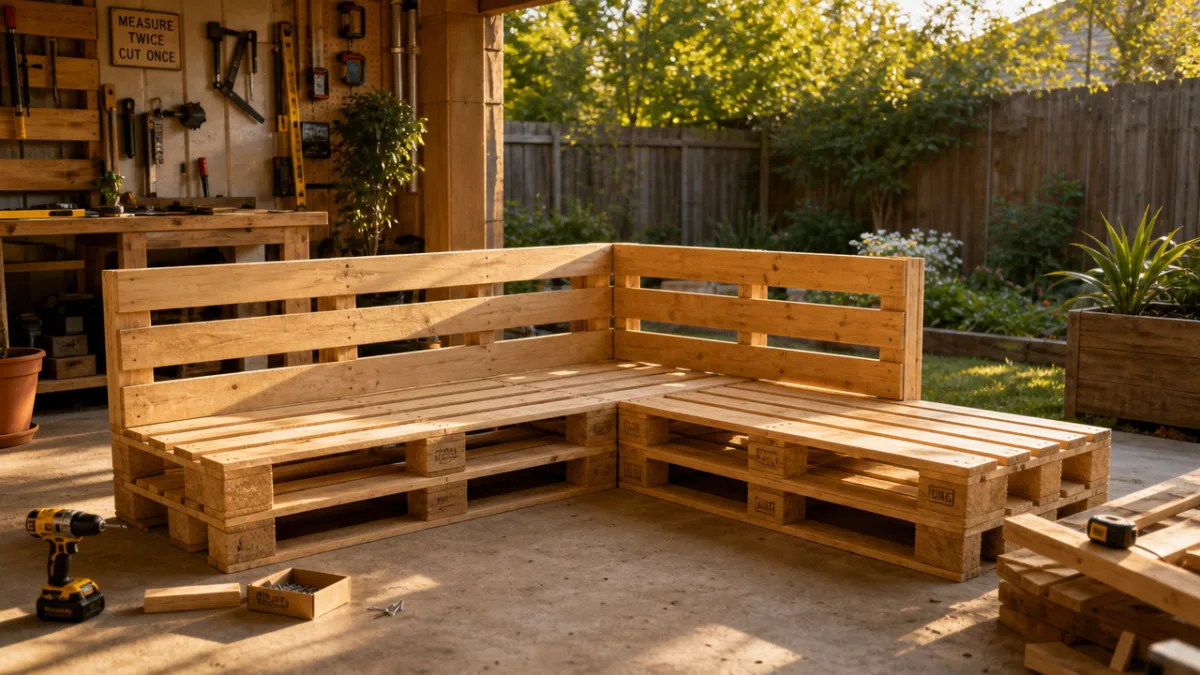
The construction process for a small pallet sofa follows a logical sequence that, when followed carefully, results in a sturdy and visually clean finished piece. The basic structure consists of a seat base made from stacked pallets, a backrest made from pallets set at a comfortable recline angle, and optional armrests constructed from cut pallet sections. For a small two-seater, your seat base will typically be two pallets placed side by side, giving you a seating surface of roughly 40 by 48 inches once cushions are added.
Begin by positioning your two base pallets side by side on a flat floor and checking that they are perfectly level with each other. Use your carpenter’s square to confirm the corners are true. Drill pilot holes to avoid splitting the wood, then drive 3.5-inch screws through the side planks of one pallet into the framing boards of the adjacent pallet. Use at least four screws per connection point to ensure the joint is rigid. The goal at this stage is a base that feels like a single solid unit when you try to flex it by hand, with no rocking or creaking movement whatsoever.
The backrest is where many first-time builders hesitate, but the process is simpler than it looks. Stand one or two pallets vertically behind the seat base and tilt them back approximately 10 to 15 degrees for a comfortable recline angle. Cut small wooden wedge blocks from scrap pallet wood to hold the angle consistently while you drill. Attach the backrest pallets to the rear edge of the seat base using 3.5-inch screws driven at a downward angle through the bottom rail of the backrest pallet into the top surface of the seat base. Add a wooden support brace running diagonally from the back of the seat base up to the rear of the backrest for additional stability.
Armrests are optional but add considerably to the comfort and finished appearance of the sofa. Cut two pieces from spare pallet boards to match the depth of your seat, typically around 24 inches. Attach them vertically to the outer edges of the seat base and backrest using screws driven from the inside so the fastener heads remain hidden. Sand the top edge of each armrest into a gentle rounded profile using your orbital sander so they are comfortable to rest your arms on. At this point your frame is complete, and you should be able to sit in it and feel its weight distribution and stability before moving on to the finishing stage.
Finishing, Staining, and Waterproofing
The finish you apply to your pallet sofa determines not only how it looks but also how long it will last. If your sofa is destined for an outdoor patio or deck, waterproofing is not optional — it is the difference between furniture that lasts two seasons and furniture that lasts a decade. For outdoor use, select a penetrating oil-based exterior wood sealer or a dedicated outdoor furniture stain with built-in UV protection. These products soak into the wood fibers rather than sitting on top of them, providing durable moisture resistance that does not peel or flake the way surface coatings eventually do.
Application technique matters as much as product selection. Use a wide natural-bristle brush and work the stain or sealer into the wood using long, even strokes that follow the grain. Work one section at a time, maintaining a wet edge to prevent lap marks where dry and wet sections overlap. The pallet wood will absorb finish unevenly due to its varied density, so plan for at least two coats on all exterior surfaces and three coats on any surfaces that will sit directly on the ground or be frequently exposed to rain. Allow each coat to dry fully according to the manufacturer’s instructions before applying the next.
For an indoor pallet sofa, you have considerably more creative freedom with your finish. A light natural wood stain enhances the existing grain while keeping the rustic aesthetic intact. A solid-color chalk paint in a muted tone like charcoal, navy, or sage green creates a more refined, contemporary look that pairs well with modern interior decor. White paint gives the sofa a Scandinavian simplicity that makes small rooms feel larger and lighter. Whatever product you choose, finish with a clear matte or satin topcoat to protect the color from scuffs and everyday wear, which is especially important on horizontal surfaces like the seat top and armrests.
Choosing and Installing Cushions for Comfort
A beautifully built and finished pallet sofa frame is only as comfortable as the cushions sitting on top of it, and cushion selection is genuinely where comfort is won or lost. For a small sofa with a seat surface of approximately 40 by 48 inches, you have two practical options. The first is purchasing ready-made outdoor seat cushions sized to fit standard pallet dimensions, which are widely available at home goods stores and online retailers. The second option is ordering custom-cut foam from a foam supplier and making your own cushion covers from fabric of your choice, which allows perfect sizing and complete control over firmness and upholstery material.
Foam density is the primary factor in seat cushion comfort and longevity. For a sofa that will see regular daily use, choose high-resilience foam with a density rating of at least 1.8 pounds per cubic foot. Lower-density foam feels comfortable initially but compresses permanently within a few months of regular sitting, leaving you with flat, unsupportive cushions that defeat the purpose of building quality furniture. For outdoor sofas, look specifically for open-cell foam designed for exterior use, which allows water that penetrates the cushion cover to drain out rather than pooling inside and causing mildew.
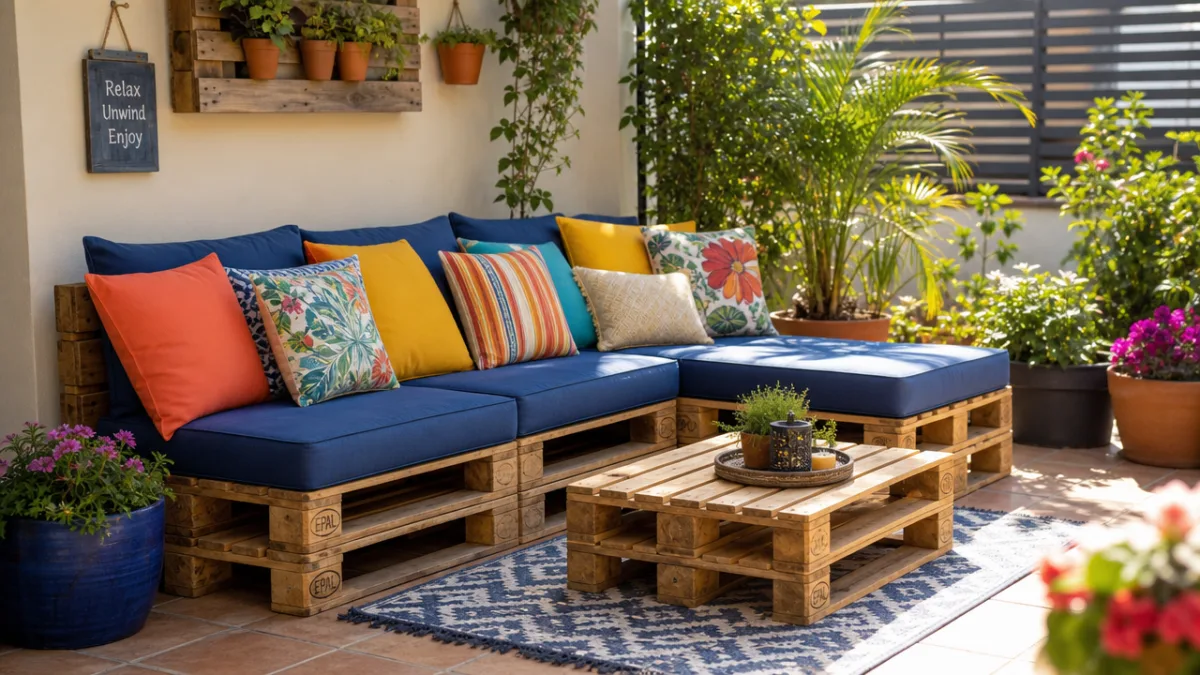
Cushion cover fabrics should be selected with the sofa’s environment firmly in mind. For outdoor use, solution-dyed acrylic fabrics such as Sunbrella are the gold standard because they resist fading from UV exposure, repel water, and can be cleaned with mild soap without damage. For indoor sofas, the options open up considerably — linen, cotton canvas, velvet, and woven textiles all work beautifully depending on the room’s existing style. Adding a few throw pillows in complementary colors or patterns to the backrest area ties the sofa visually into the broader room decor and adds the layered, considered look that elevates homemade furniture into something that genuinely impresses visitors.
Styling and Placing Your Finished Pallet Sofa
Once your pallet sofa is complete, the way you position and style it has an enormous impact on how the finished piece reads in its environment. In an outdoor setting, orient the sofa so it faces the most visually interesting element of the space — a garden bed, a fire pit, a view across a yard, or a feature wall. Place a low pallet coffee table built from the same materials directly in front of it to create a cohesive seating zone that feels intentionally designed rather than assembled from mismatched pieces. Outdoor rugs made from polypropylene or jute beneath the seating arrangement define the space and soften the hardscape underfoot.
For indoor placement, treat your pallet sofa the way you would treat any standard sofa. Float it away from the wall slightly rather than pushing it flush against the baseboard, which immediately makes the arrangement feel more purposeful and spacious. Layer a large area rug underneath so that the front legs of the sofa rest on the rug, anchoring the furniture to the floor and tying the seating area together visually. A floor lamp positioned beside one end of the sofa and a side table on the other creates the balanced, functional composition that good interior styling is built around.
Finishing touches transform a furniture project into a living space. String lights draped along a patio fence behind an outdoor pallet sofa create ambiance that is hard to achieve with any other lighting source. Indoor plant placement — a tall fiddle leaf fig in the corner, trailing pothos on a nearby shelf — softens the geometric lines of the pallet construction and brings the natural material world of the wood into dialogue with the living room as a whole. The sofa you built in a single weekend becomes not just a seat but a centerpiece that anchors the mood of the entire space.
Maintenance Tips to Make Your Pallet Sofa Last for Years
A pallet sofa, like any piece of wooden furniture, requires occasional maintenance to stay structurally sound and visually appealing over the years. The most important annual task for an outdoor sofa is reapplying the protective finish before winter or the rainy season. Sand the surface lightly with 220-grit sandpaper to remove any oxidized finish or surface mildew, wipe away the dust with a tack cloth, and apply a fresh coat of exterior sealer or stain. This single maintenance step, which takes only an afternoon, extends the functional life of the sofa by years and keeps it looking fresh and cared-for season after season.
Inspect the screw connections at the start of each season by sitting in the sofa and gently testing it for any new play or wobble in the frame. Wooden joints can loosen as the material expands and contracts through seasonal humidity changes. Drive any loose screws to their full depth, and if a particular joint has become persistently loose, remove the original screw, fill the hole with a wooden toothpick and wood glue, allow it to cure overnight, and then redrive the screw into the reinforced hole. This simple technique restores the holding power of stripped screw holes without replacing any structural components.
Cushion care is equally important to long-term sofa enjoyment. Store outdoor cushions in a dry shed or deck box during extended rain or through the winter months rather than leaving them exposed to the elements continuously. For spot cleaning, a solution of mild dish soap and warm water removes most stains from outdoor fabric without damaging the material. If mildew develops on foam cushions despite your best efforts, a diluted white vinegar spray allowed to air dry in sunlight is effective at killing spores and eliminating odor. With these straightforward maintenance habits in place, a well-built pallet sofa can remain comfortable, attractive, and structurally sound for five or more years of regular use.








What do you think?
It is nice to know your opinion. Leave a comment.