










How To Grow Lupines: A Complete Guide to These Stunning Garden Flowers
Introduction to Lupines
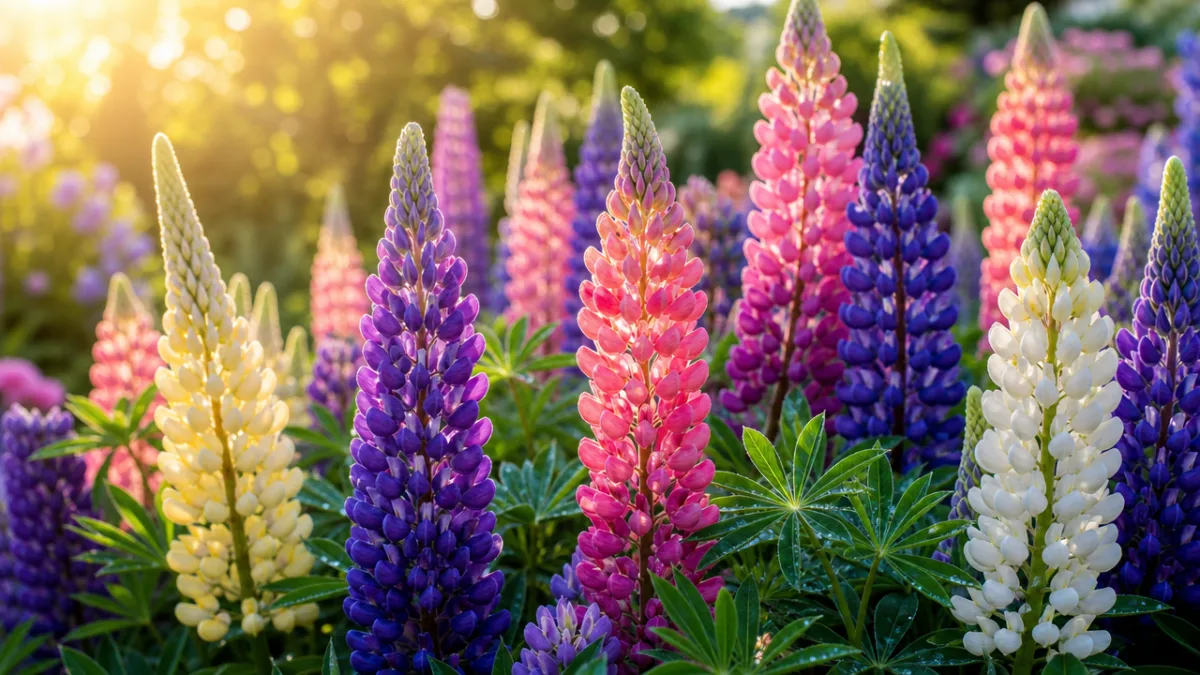
If you’re looking for a plant that really stops people in their tracks, lupines are hard to beat. Those tall, tapering spikes packed with pea-like blooms — in everything from deep violet and cobalt blue to soft pink, creamy white, and fiery red — create a vertical display that most other perennials simply can’t match. They’re native to North America and the Mediterranean, and gardeners have been growing them for centuries, not just because they’re gorgeous but because they actually improve the soil around them.
Lupines fit into all kinds of garden styles — cottage gardens, wildflower meadows, formal beds, you name it. The Russell Hybrid varieties are still the go-to choice for most home gardeners, and it’s easy to see why. Developed in the early twentieth century by English horticulturist George Russell, they produce those big, densely packed flower spikes in an incredible range of colors, including beautiful bicolors where two complementary shades share a single bloom. Given the right conditions, they’ll grow three to four feet tall and become a genuine focal point in any border.
What’s also worth knowing is that lupines pull double duty in the garden. As legumes, they form a partnership with nitrogen-fixing bacteria in the soil, essentially acting as a natural fertilizer. So while you’re enjoying the flowers, the plants are quietly improving the soil fertility for everything growing nearby. Once you understand a bit about what lupines need and why, it becomes much easier to give them the right conditions — and when you do, they’ll reward you with a stunning display year after year with very little fuss.
Choosing the Right Location and Soil
Getting the location right is probably the single most important decision you’ll make when growing lupines. They do best in full sun to partial shade, with at least six hours of direct sunlight per day. In hotter climates, a bit of afternoon shade is actually a good thing, since lupines prefer cooler conditions and can really struggle when summer heat becomes intense. If you’re somewhere with mild summers, go ahead and give them a fully sunny spot — they’ll flower more abundantly for it.
Soil matters just as much as sunlight, if not more. Lupines want well-drained, slightly acidic to neutral soil, ideally with a pH between 6.0 and 7.0. They develop deep taproots, so they hate sitting in compacted or waterlogged ground — that’s a fast track to root rot. Sandy or loamy soils tend to suit them really well, giving the roots room to explore while preventing the kind of moisture buildup that leads to disease. If you’ve got heavy clay, you’ll need to do some work before you plant.
It’s genuinely worth taking the time to improve your soil before planting. Working plenty of horticultural grit or coarse sand into clay beds makes a huge difference to drainage, while adding well-rotted leaf mold or compost gives sandy soils just enough moisture retention to keep plants healthy. One thing to avoid completely: lime or any alkaline amendments. Lupines are really sensitive to alkaline conditions, and if the pH creeps too high, the leaves will start turning yellow — a condition called chlorosis — because the plants can no longer absorb the nutrients they need.
Planting Lupines: Seeds and Transplants
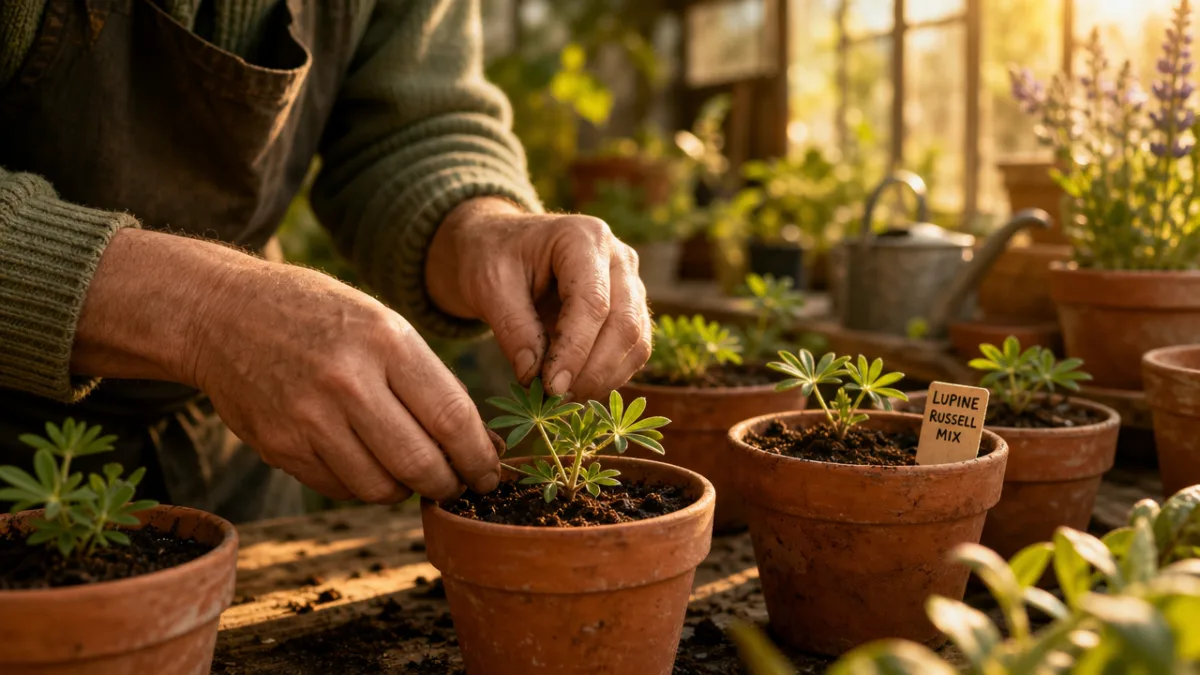
You can grow lupines from seed or pick up young plants from a nursery, and both approaches have their merits. Starting from seed is cheaper and opens up a much wider range of varieties than you’d ever find at a garden center. The one thing to know is that lupine seeds have a tough outer coat, so they benefit from scarification — just nick the seed coat slightly or give it a light sand to help water get in. Soaking the seeds in warm water for twenty-four hours before sowing helps speed things up too.
If you’re in a temperate climate, you can sow seeds directly outdoors in autumn and let the winter cold and moisture do the work of breaking dormancy naturally. You’ll get strong, early-season plants the following spring. If you’d rather start them indoors, sow six to eight weeks before your last expected frost. Use deep individual pots or root trainers rather than shallow trays — lupine seedlings put down a taproot very early and really don’t appreciate having it disturbed. Biodegradable pots are a great option here, since you can plant the whole thing straight into the ground without disturbing the roots at all.
When it comes time to transplant, choose a cool, overcast day or do it in the evening to make things easier on the plant. Dig a hole that’s roomy enough for the root system to sit comfortably without the taproot bending, and plant at the same depth the seedling was growing in its pot. Water well after planting and keep the soil consistently moist for the first few weeks while everything settles in. Lupines planted in autumn or early spring usually have enough time to establish before flowering, and if you started them early enough, you should see blooms in the first season.
Watering, Feeding, and General Care
Once lupines are established, they’re pretty low-maintenance. The first season is when they need the most attention — consistent watering helps them build a strong, deep root system. The trick is to water deeply but not too often, letting the top inch or two of soil dry out a little between sessions. This pushes the taproot to grow downward in search of moisture, which is exactly what you want for a drought-tolerant plant down the line. Overwatering is far more common than underwatering with lupines, and soggy soil is the quickest way to invite root and crown rot.
On the feeding front, lupines aren’t greedy plants, and overdoing the fertilizer — especially anything high in nitrogen — can actually backfire. Since they fix their own nitrogen from the air, adding more just pushes the plant into producing lots of leafy growth at the expense of flowers. If you want to give them a boost, a balanced low-nitrogen fertilizer in early spring is fine, or try a potassium-rich feed like tomato fertilizer to encourage better blooms. Honestly, a layer of well-rotted compost around the base each spring is usually all they really need.
For taller varieties, especially in exposed or windy spots, staking is worth thinking about. The big flower spikes on Russell Hybrids can get top-heavy in full bloom and go over in a strong wind or heavy downpour. Put stakes in early before the spikes develop, and use soft twine so you don’t damage the stems. Once the flowers have faded, deadhead the spent spikes promptly — it keeps things looking tidy and often encourages a second flush of smaller blooms later in the season, which is a nice bonus.

Dealing With Pests and Diseases
Lupines are tough plants on the whole, but there are a couple of problems worth watching out for. The most serious one is lupin aphid — a large, gray-green aphid that can appear in alarming numbers during late spring and early summer. These insects pile onto the undersides of leaves and along the stems, sucking sap and slowly weakening the plant. A bad infestation can cause distorted growth, poor flowering, and in young or already-stressed plants, it can sometimes be fatal.
The best approach to aphids is catching them early. Get into the habit of checking your plants from late spring onward, especially on new growth and under the leaves where colonies get started. A strong blast from a garden hose will knock off smaller infestations without harming the plant at all. Better yet, encourage natural predators — ladybirds, lacewings, and hoverflies will all do the job for you if you give them a reason to visit by planting a good variety of flowers nearby. It’s a sustainable, chemical-free solution that keeps working all season long.
Powdery mildew is the other issue that comes up fairly often, particularly during dry spells or when plants are crowded together without much airflow. It shows up as a white, powdery coating on the upper surface of the leaves and can spread quickly in warm, dry conditions. Giving plants more space, watering at ground level rather than from above, and removing badly affected leaves can all help keep it in check. If it becomes a recurring problem, an organic fungicide — a bicarbonate of soda solution or a copper-based product — used as a preventative in future seasons can help get ahead of it.
Propagating and Overwintering Lupines
If you’ve got a lupine in a color you love and want more of it, propagation is the way to go — it just takes a bit of patience. The most reliable method for perennial varieties is basal cuttings, taken in early spring when fresh shoots are just starting to emerge from the crown. Look for firm, healthy shoots around three to four inches long and cut them as close to the base as possible, ideally with a tiny piece of root crown attached. Strip off the lower leaves, dip the cut end in rooting hormone powder, and push the cuttings into a gritty, free-draining potting mix.
Keep the cuttings in a cold frame or unheated greenhouse, and water just enough to keep the compost slightly moist — never soggy. Roots usually form within four to six weeks, after which you can pot the young plants on individually and grow them on until they’re big enough to go out in the garden. It’s worth noting that lupines grown from seed won’t come true to type, meaning the seedlings could turn out quite different from the parent plant in color and form. If you want to hold onto a specific variety, cuttings are the only reliable way to do it.
Lupines are perennial in cooler climates and can handle temperatures down to around minus fifteen degrees Celsius, but they’re not always especially long-lived. Most gardeners find they perform brilliantly in their second and third year and then start to decline — it’s just the nature of the plant. To get the most out of them, cut the foliage back close to ground level once flowering is done and the leaves start to yellow. A mulch of straw or bark chippings over the crown in late autumn will help protect the roots through a hard winter and set the plant up for strong growth again the following spring.
Lupines in the Garden: Design and Companion Planting
There aren’t many plants that bring the same bold, upright drama to a border as lupines. Those tall, tapering spikes create strong vertical accents that play beautifully against rounder, more sprawling plants. In a cottage garden setting, lupines are wonderful alongside alliums, peonies, hardy geraniums, and the feathery foliage of fennel or bronze fennel. The key is thinking about timing — what’s going to carry the display once the lupines finish? Surrounding them with plants that bloom in succession keeps the border looking great all season without any gaps.
The color combinations are really where things get fun. Deep blues and purples, like the variety ‘The Governor,’ look absolutely stunning next to soft pink roses or the silver, felty leaves of Stachys byzantina. Rich reds and oranges pair beautifully with achillea, heleniums, and golden rudbeckias for a bold, hot-colored scheme. If you prefer something softer, mix pale pink, lavender, and white lupines with catmint, sweet rocket, and white aquilegia for a romantic, pastel look. With the sheer range of colors available, lupines can slot into almost any garden palette you can dream up.
From a wildlife perspective, lupines are a genuinely valuable addition to any garden. Bumblebees are particularly drawn to them — they’re actually one of the few insects strong enough to push open those little pea-like florets and get to the pollen inside. Planting lupines alongside other nectar-rich flowers helps keep pollinators fed throughout the season. And if you leave some of the spent flower heads to develop into seed pods as summer winds down, you’ll find seed-eating birds popping by to take advantage of them as autumn sets in — a nice finishing touch for a garden that gives back as much as it gets.








What do you think?
It is nice to know your opinion. Leave a comment.