










Emotional Support Chickadoo: The Complete Guide to Crocheting a Pocket Hug Chicken Amigurumi
What Is an Emotional Support Chickadoo and Why Everyone Needs One
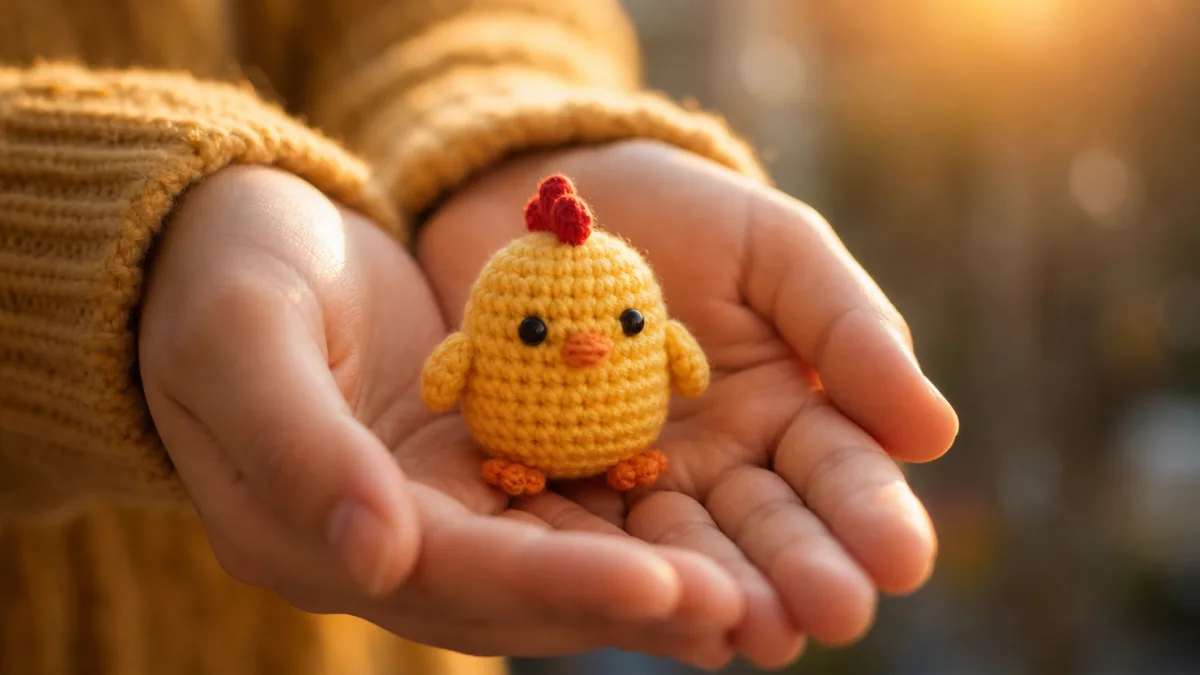
The Emotional Support Chickadoo is one of the most heartwarming trends to emerge from the crochet community in recent years. This tiny, palm-sized crocheted chicken is designed to slip neatly into a pocket, purse, or small gift box, accompanied by a thoughtful card that transforms it into what crafters lovingly call a “pocket hug.” The concept is simple but profoundly touching: giving someone a small, handmade creature they can carry with them as a tangible reminder that someone cares about them.
What makes the Emotional Support Chickadoo so special is the combination of craft and compassion. Unlike a generic store-bought gift, each little chicken is made by hand, stitch by stitch, with intention and love woven into every loop of yarn. The accompanying card typically features a sweet message explaining that the recipient now has a tiny feathered friend to squeeze whenever life feels overwhelming. It is the kind of gift that makes people laugh, then tear up a little, and finally tuck safely into their pocket for safekeeping.
These adorable amigurumi chickens have become particularly popular as gifts for people going through difficult times — friends starting chemotherapy, loved ones dealing with anxiety, children heading off to their first day of school, or colleagues navigating a stressful work period. The beauty of the Chickadoo is that it communicates empathy without requiring words. Sometimes the most powerful message you can send someone is a small, squishy, yellow chicken that fits in the palm of their hand and says, without saying anything at all, that they are not alone.
Materials and Tools You Will Need Before You Begin
Before diving into your Emotional Support Chickadoo project, gathering the right materials will make the entire process smoother and more enjoyable. The most important supply is yarn. Most crochet crafters recommend using a lightweight worsted or DK weight yarn in a sunny yellow for the body, with small amounts of orange or gold for the beak and feet. You want a yarn that is soft to the touch since the finished chicken will be squeezed and handled frequently by its recipient. Acrylic yarns are popular for amigurumi because they are durable, washable, and available in a wide range of cheerful colors.
For tools, a crochet hook sized appropriately for your chosen yarn is essential. Most amigurumi patterns call for a hook slightly smaller than the yarn label recommends, which creates a tighter stitch and prevents the stuffing from showing through the fabric. Alongside your hook, you will need a yarn needle for weaving in ends and sewing pieces together, a pair of sharp scissors, and polyester fiberfill stuffing. Safety eyes in a small size — typically 6mm or 8mm — give the Chickadoo its irresistible expression, though embroidered eyes using black yarn are a safer choice if the gift is intended for young children.
The finishing materials are just as important as the crochet supplies themselves. To complete the pocket hug concept, you will need cardstock or pre-made cards, a printer or good handwriting, and an envelope. Many crafters design their own printable cards featuring phrases like “You’ve got a friend in me” or “Squeeze me when you need a hug.” Small cellophane bags, ribbon, and a gift tag can elevate the presentation from a simple handmade item to a beautifully packaged gift that feels special the moment it is received. Having everything assembled before you sit down to crochet means you can focus entirely on the satisfying rhythm of stitching.
- Worsted or DK weight yarn in yellow, orange, and white
- Crochet hook (typically 3.5mm to 4.0mm depending on yarn weight)
- Polyester fiberfill stuffing
- Safety eyes (6mm or 8mm) or black embroidery thread
- Yarn needle and sharp scissors
- Stitch markers to track rounds
- Cardstock and envelope for the accompanying card
- Optional: small cellophane bag and ribbon for packaging
Understanding Amigurumi Basics for Beginner Crochet Crafters
Amigurumi is the Japanese art of crocheting or knitting small stuffed animals and characters. The word itself combines the Japanese terms for “knit” and “stuffed doll,” and the craft has exploded in popularity worldwide over the past two decades. What distinguishes amigurumi from other forms of crochet is the technique of working in continuous rounds rather than flat rows, which creates the seamless, rounded shapes that give stuffed animals their smooth, pleasing silhouettes. The Emotional Support Chickadoo is an excellent first amigurumi project because its shape is relatively simple — a rounded body, two small wings, a tiny beak, and optional feet.
The foundational stitch in amigurumi is the single crochet, worked tightly and consistently to create a dense fabric that holds its shape and keeps stuffing contained. Most amigurumi patterns begin with a magic ring, also called a magic circle, which allows you to start crocheting in the round without leaving a hole at the center of your first round. If the magic ring feels intimidating, you can substitute it with a chain-two starting method, though the magic ring does produce a neater result. From there, you increase stitches in each round to build up the rounded shape of the body, then decrease stitches toward the end to close the piece off before stuffing.
Reading an amigurumi pattern requires familiarity with standard crochet abbreviations. Common ones you will encounter include MR for magic ring, sc for single crochet, inc for increase (working two single crochets into the same stitch), dec for decrease (working two stitches together), and sl st for slip stitch. Counts in parentheses at the end of a row indicate how many total stitches should be in that round, which is your way of checking that you have not accidentally gained or lost stitches. Keeping stitch markers in your work to track where each round begins is an absolute lifesaver and a habit every new amigurumi crafter should develop from their very first project.
Step-by-Step Guide to Crocheting Your Emotional Support Chickadoo
Begin your Chickadoo by creating the main body. Start with a magic ring and work six single crochets into it, then pull the ring closed to form a tight circle. In the next round, increase in every stitch to create twelve stitches. Continue increasing in alternating rounds — first increasing in every other stitch for eighteen stitches, then in every third stitch for twenty-four stitches, and so on — until your body piece reaches the desired width. For a pocket-sized chicken, most patterns stop increasing around thirty stitches and work a few even rounds to create height before decreasing back down to close the shape.
Before you complete the final decrease rounds on the body, this is the moment to insert the safety eyes and begin stuffing. Position your safety eyes on either side of the body toward the upper third, checking that the spacing looks balanced and gives your chicken that endearing, wide-eyed expression. Push the post of each safety eye through the fabric, then secure the backing washer firmly on the inside of the piece. Begin adding small amounts of fiberfill stuffing as you work the decrease rounds, pausing periodically to check that the chicken feels firm but not rock-hard. Too little stuffing results in a floppy, unsatisfying shape; too much can stretch the stitches and make the stuffing visible.
The wings are simple oval shapes worked flat and then folded or sewn directly onto the body. Work a small foundation chain, increase along both sides to create an oval, then finish off and leave a long tail for sewing. The beak is typically a tiny triangle crocheted in orange yarn and folded in half before being stitched to the front of the face. Feet, if included, can be simple flat ovals or small cylindrical shapes in orange. Assembly is the most delicate part of the process — use your yarn needle and the long tails left on each piece to stitch everything into position, checking the placement from all angles before securing each element permanently. A chicken whose beak is slightly off-center has a quirky, lovable personality all its own.
- Create the magic ring and work the body in continuous rounds, increasing then decreasing.
- Insert safety eyes before completing the final decrease rounds.
- Stuff the body firmly before closing off the last round.
- Crochet two small oval wings and a tiny triangular beak in contrasting orange yarn.
- Optionally create two small feet or leave the body rounded for a rounder, simpler look.
- Sew all pieces onto the body using the yarn tails and a yarn needle.
- Weave in all remaining yarn ends securely on the inside of the body.
Designing the Perfect Pocket Hug Card to Accompany Your Chickadoo
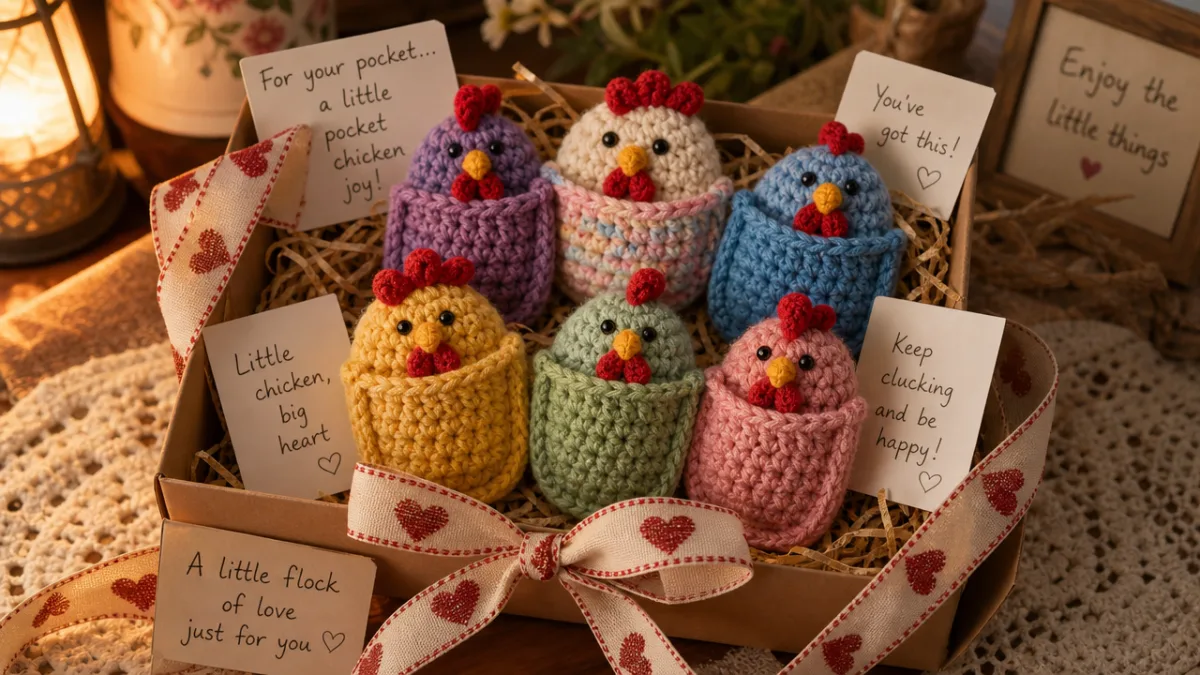
The card is arguably the most important element of the Emotional Support Chickadoo gift. Without it, you have an adorable crocheted chicken — charming enough on its own. But paired with a card that explains the creature’s purpose and expresses heartfelt sentiment, you transform a craft project into an act of emotional generosity. The card serves as the voice of the Chickadoo, giving words to the wordless comfort the little chicken is meant to provide. Crafters have developed all sorts of card styles, from simple printed tags to elaborate handmade cards with watercolor illustrations, and every version carries genuine warmth.
When writing the card message, tone is everything. The most beloved Chickadoo card messages strike a balance between humor and sincerity — they make the recipient smile before the deeper meaning lands. Popular examples include messages like “This is your Emotional Support Chickadoo. Whenever you’re feeling overwhelmed, stressed, or just in need of a hug, give this tiny chicken a squeeze. It has been specifically trained in the art of pocket hugs and moral support. You are loved.” The playful anthropomorphism of the chicken having been “trained” for this role is exactly the kind of gentle absurdity that makes this gift so universally beloved across age groups and circumstances.
For crafters who want a polished presentation, free printable Chickadoo card templates are widely available on platforms like Pinterest, Etsy, and Ravelry. These templates typically feature cute chicken illustrations, coordinating colors, and pre-written messages that can be customized with the recipient’s name. Printing on cardstock produces a far more professional result than standard printer paper. If you prefer a fully handmade approach, watercolor markers on thick white cardstock, a hand-lettered message, and a small hand-drawn chicken illustration create a uniquely personal card that no template can replicate. Whatever method you choose, the card should be sized to fit neatly with the chicken in a small envelope or cellophane bag so the whole gift arrives as a cohesive, intentional package.
Gifting Ideas and Occasions Perfect for the Emotional Support Chickadoo
One of the most beautiful qualities of the Emotional Support Chickadoo is its versatility as a gift. It is simultaneously funny and tender, practical and whimsical, inexpensive to make and priceless in meaning. This combination makes it appropriate for an astonishing range of occasions and recipients. Whether you are looking for a way to show support to a friend navigating a health crisis, a child anxious about a new school year, or a colleague overwhelmed by workplace stress, the little pocket chicken communicates care in a way that feels neither intrusive nor overly serious.
The Chickadoo has become especially popular in healthcare settings. Nurses, doctors, therapists, and social workers have been known to give them to patients as small tokens of encouragement during difficult treatments. Parents make them for children who struggle with separation anxiety, giving the child something soft and handmade to tuck into a uniform pocket during the school day. Teachers create batches of them for students during exam periods. Friends send them through the post to loved ones living far away, so that distance does not mean a complete absence of physical comfort. The pocket hug concept resonates across cultures and demographics because the need for comfort and connection is universal.
From a practical gifting standpoint, the Emotional Support Chickadoo is also remarkably cost-effective. A single Chickadoo uses very little yarn — often less than a quarter of a standard skein — meaning that once you have the supplies on hand, you can create a whole flock of pocket hugs for very little expense. Many crafters make them in batches, setting up an assembly line to stuff and finish multiple chickens at once. This makes them ideal for group gifts, party favors, charity donations, or stocking stuffers. Packaged in a small cellophane bag with a ribbon and the accompanying card, a Chickadoo costs very little in materials but delivers an emotional impact far out of proportion to its modest size and price.
Tips for Customizing Your Chickadoo and Building a Creative Crochet Practice
Once you have mastered the basic Emotional Support Chickadoo pattern, the creative possibilities for customization are genuinely endless. Yarn color is the most obvious variable — while sunny yellow is the classic choice, there is no rule requiring it. Lavender chickens, mint green chickens, soft peach chickens, even variegated yarn chickens that emerge in unexpected combinations of color all carry the same charm and meaning as the traditional version. Some crafters match the chicken’s color to the recipient’s favorite hue, adding a layer of personalization that makes the gift feel even more tailored and thoughtful.
Beyond color, texture opens up a world of creative options. Using a fluffy or chenille yarn creates an irresistibly soft, fuzzy chicken that practically begs to be petted. Velvet yarn produces a smooth, matte finish with a luxurious feel. Sparkle yarn or yarn with a subtle sheen gives the chicken a festive quality perfect for holiday gifting. You can also add embellishments — a tiny crocheted bow, a miniature flower tucked behind an ear, a woven scarf in a contrasting color — to give each Chickadoo a distinct personality. Some crafters embroider small details like rosy cheeks or tiny hearts onto the body to enhance the emotional expressiveness of the finished piece.
The Emotional Support Chickadoo is also a wonderful gateway into a broader crochet amigurumi practice. Once you are comfortable with the basic techniques of working in the round, increasing and decreasing, and assembling separate pieces, the entire world of amigurumi opens up to you. From there, you might move on to crocheting other small animals, tiny food items, fantastical creatures, or character-based designs. Many crafters report that amigurumi becomes a meditative practice — the repetitive nature of single crochet worked in rounds has a calming, almost hypnotic quality that makes it an ideal craft for managing stress. In this way, the act of making an Emotional Support Chickadoo is itself a form of self-care, even before the finished creature finds its way into someone else’s pocket.
Sharing your Chickadoo creations with the online crochet community adds another dimension of joy to the craft. Platforms like Instagram, Pinterest, and dedicated crochet forums are filled with makers posting their finished pocket hugs, sharing pattern modifications, comparing card designs, and celebrating the reactions of their recipients. Tagging your posts with popular amigurumi and Chickadoo hashtags connects you with a generous, enthusiastic community of fellow crafters who will cheer on your progress, offer troubleshooting advice, and inspire your next project. The Emotional Support Chickadoo began as a simple pattern but has grown into a genuine movement of handmade compassion — one tiny crocheted chicken at a time.








What do you think?
It is nice to know your opinion. Leave a comment.