










18 Rustic Garden Gates: Charm, Character, and Timeless Beauty for Your Outdoor Space
The Enduring Appeal of Rustic Garden Gates
There’s something about a rustic garden gate that just feels welcoming. Whether it’s made from weathered wood, hand-forged iron, or materials salvaged from an old barn, these structures speak to something slower and more grounded. They mark the line between the outside world and your own personal space, and that carries real weight. Step through a beautifully aged gate and you feel it — that quiet sense of arrival, like you’ve entered somewhere that actually matters.
Rustic garden gates have made a real comeback over the last decade, and it’s not hard to see why. There’s been a broader shift toward authenticity — toward things that are handmade, sustainable, and a little imperfect. Homeowners are gravitating toward materials with history: wood that shows its grain and knots, metal that’s developed an honest patina, stone posts worn smooth from years of rain. Those imperfections aren’t problems — they’re what makes each gate its own thing, something that no factory-made alternative can replicate.
“Rustic” covers a surprisingly wide range of looks, from the rough-hewn simplicity of a split-rail gate in a wildflower meadow to the tidier charm of a whitewashed picket gate tangled with climbing roses. What connects them all is a commitment to natural materials, organic shapes, and the sense that time has passed gracefully. Throughout this article, we’ll walk through eighteen inspiring examples and the core principles behind choosing, designing, and looking after a rustic garden gate that actually suits your space.
Types of Rustic Garden Gates: A World of Options
Getting a feel for the different types of rustic gates makes the planning process a lot easier. The most classic starting point is the wooden plank gate, usually built from cedar, oak, pine, or reclaimed timber. You can keep it simple with a straightforward vertical-plank design, or add visual interest with diagonal bracing, an arched top, or some decorative cutouts. Left untreated or finished with a light oil, the natural wood grain slowly takes on a beautiful silver-grey tone that blends right into a naturalistic garden.
Wrought iron and hand-forged metal gates are another beloved tradition, particularly in cottage gardens and country estates. What sets them apart from modern fabricated metalwork is their gentle irregularity — slightly uneven scrollwork, rivets that catch the light, surfaces that develop a rich, rust-tinged patina over time. These gates often feature botanical details like leaves, vines, acorns, and birds, sitting somewhere between functional architecture and decorative art. Set between stone or brick pillars, they make an entrance that’s hard to forget.
Beyond wood and metal, creative gardeners have discovered rustic possibilities in all sorts of unexpected places. Driftwood gathered from beaches or riverbanks can be lashed into wonderfully organic gate structures. Bamboo offers a lighter, more exotic option with strong associations with Asian garden design. Reclaimed pallet wood, salvaged window frames, repurposed old ladders, twisted willow branches woven into living structures — the options really are wide open. What matters most is that the material feels honest, intentional, and connected to the landscape around it.
- Cedar plank gates with diagonal cross-bracing for classic farmhouse appeal
- Hand-forged iron gates with scrollwork and botanical detailing
- Driftwood and reclaimed timber gates for a coastal or woodland aesthetic
- Woven willow or hazel hurdle gates for an authentically rural look
- Bamboo panel gates suited to zen or tropical garden styles
- Painted picket gates in white or muted heritage colors for cottage gardens
Design Principles for a Perfectly Rustic Gate
Getting a rustic gate right takes more than just reaching for rough-hewn materials. The gate needs to work with its surroundings — the house style, the character of the garden, the height and material of the fence or wall it interrupts, even the plants that will eventually grow around it. A gate that looks great on its own can feel completely out of place if it clashes with its context. On the flip side, a modest, simple gate can become genuinely magical when it perfectly frames an enticing glimpse of the garden beyond.
Proportion is one of the most important things to get right, and it’s also one of the most commonly overlooked. A gate that’s too narrow feels pinched and unwelcoming; one that’s too tall starts to feel like a fortress. As a general rule, the gate should feel proportionate to the fence or wall it sits in. For a typical residential garden gate used for foot traffic, somewhere between three and four feet wide tends to work well, with height scaled to match the surrounding boundary. Double gates for wider entrances or driveways open up some particularly dramatic rustic design possibilities.
Hardware is one of those details that can make or break the whole thing. Standard bright zinc hinges and latches from the hardware store can strip a beautifully crafted wooden gate of all its handmade character in an instant. What you really want are hand-forged strap hinges, ring latches, and bolt hardware in blackened iron or aged bronze. These pieces might seem like minor details, but they’re immediately noticeable and they tell you right away whether care went into the overall design. Many blacksmiths and specialty hardware suppliers stock exactly these things, often for less than you’d expect.
Incorporating Plants and Planting Around Your Gate
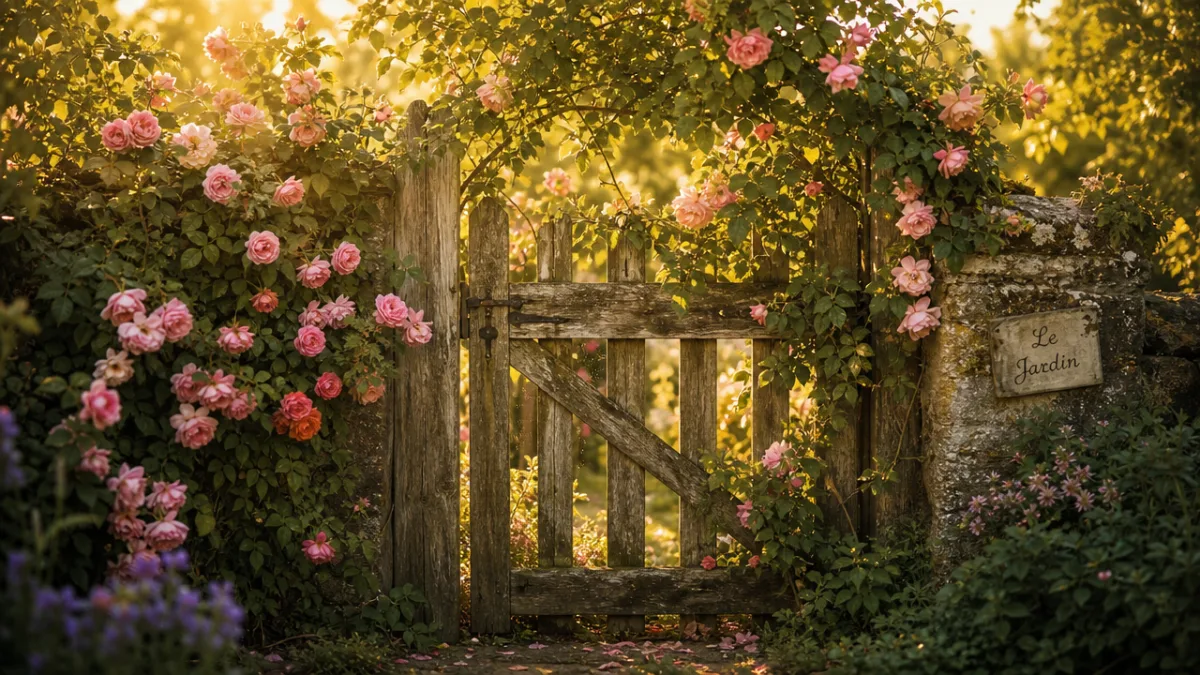
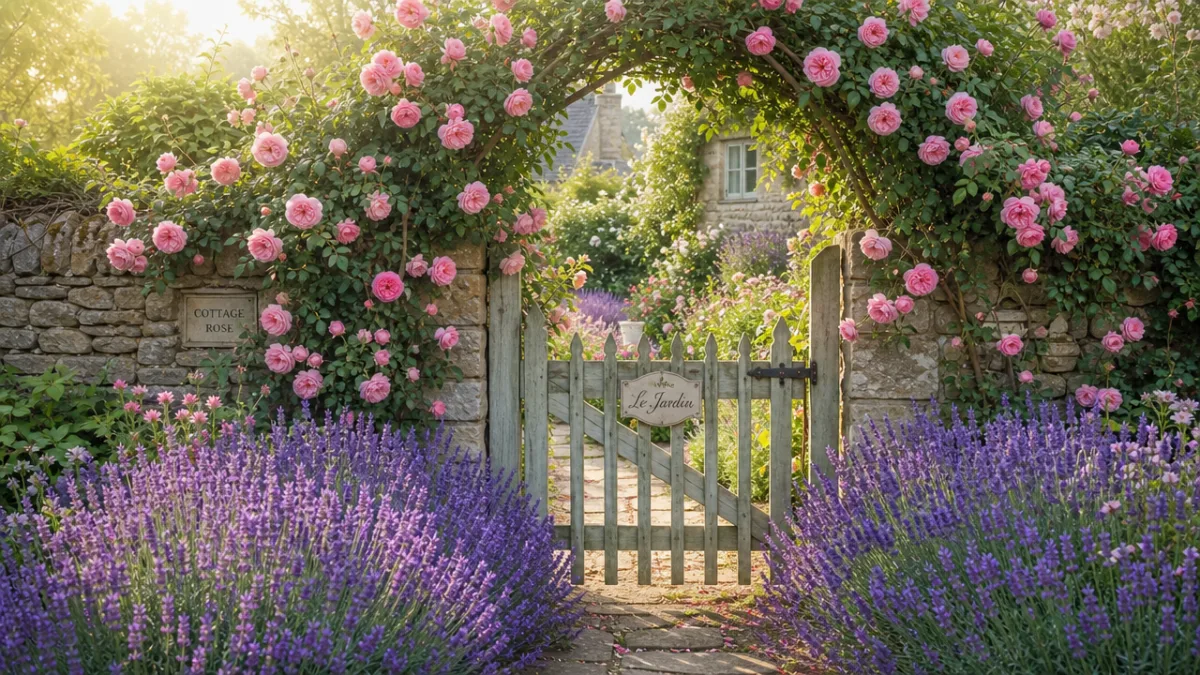
A rustic garden gate rarely reaches its full potential without the right planting around and over it. The relationship between a gate and the vegetation surrounding it is one of the most powerful tools you have for creating real atmosphere. A bare wooden gate, however beautiful in its construction, takes on an entirely different dimension when framed by billowing shrub roses, draped in cascading wisteria, or flanked by clipped yew columns that frame it like a picture. Good planting transforms a functional object into something close to living art.
Climbing plants are the natural choice here, and for good reason. Roses, clematis, honeysuckle, jasmine, and ramblers like Rosa filipes ‘Kiftsgate’ bring extraordinary seasonal interest — blossom in spring and summer, often followed by hips, seedheads, or autumn color. When choosing climbers for a rustic gate, think carefully about scale. A vigorous climbing rose can overwhelm a lightweight gate surprisingly quickly, while a delicate clematis might get completely lost against a large stone-pillared entrance. Match the vigor of the plant to the scale of the structure and things will stay manageable and balanced.
Ground-level planting at the base of gate posts and along the path leading up to the gate deserves just as much thought. Low mounding perennials — lavender, catmint, lady’s mantle, hardy geraniums — soften the transition between hard structure and soft garden beautifully. Taller plants like ornamental grasses, alliums, or foxgloves can add height and drama without blocking the gate itself. And seasonal bulbs planted in drifts — snowdrops in winter, daffodils in early spring, tulips following on — mean the entrance to your garden has something worth stopping for in every season.
- Choose climbers appropriate to the scale and strength of your gate structure
- Consider fragrant plants near the entrance — rose, honeysuckle, or jasmine — for a sensory welcome
- Use evergreen structure plants to maintain winter interest and year-round definition
- Layer planting heights from ground level to climbing height for maximum visual richness
- Leave room for the gate to open fully without being impeded by plant growth
Building Your Own Rustic Garden Gate: A Practical Guide
If you’re the hands-on type, building a rustic gate from scratch is one of the more satisfying projects you can take on — and it’s well within reach for a reasonably confident amateur woodworker or anyone willing to learn as they go. The most important decision upfront is your timber. Hardwoods like oak and chestnut are exceptionally durable outdoors and will last for decades with minimal fuss. Softwoods like cedar and redwood are lighter, easier to work with, and naturally resistant to rot. Whatever you choose, make sure it’s properly seasoned — green timber has a frustrating habit of warping and splitting once it’s been built into a structure.
The basic construction of a plank gate follows a fairly straightforward pattern: vertical planks form the face of the gate, held together by horizontal rails at the top, middle, and bottom, with a diagonal brace running from the bottom hinge corner up to the top latch corner. That diagonal brace is not optional — skip it and even a well-built gate will start to drop at the latch side within a few seasons. The joints between rails and planks benefit from waterproof outdoor adhesive in addition to screws or bolts, which goes a long way toward extending the life of the whole structure.
The finish you choose is the final creative decision, and it matters more than people often think. For a genuinely rustic, naturalistic look, a single coat of raw linseed oil or a clear penetrating finish lets the wood weather down to that lovely silver-grey while still offering some protection against moisture. For a tidier cottage-garden feel, a microporous outdoor paint in white, sage green, slate blue, or a warm heritage red gives a fresh, cared-for look without sealing the wood so tightly that it cracks over time. Either way, plan to reapply your chosen finish every two to three years to keep things looking good.
Maintenance, Longevity, and Sustainable Choices
A well-built rustic gate, properly looked after, should last for many years — potentially decades. The single most important thing you can do is keep it off the ground. Even a brief period of contact with damp soil will dramatically accelerate rot at the base of wooden posts and gate stiles. Setting posts in concrete, using metal post shoes that hold timber clear of the ground, or choosing naturally rot-resistant materials for any ground-contact sections all make an enormous difference to how long your gate structure will last.
Getting into the habit of a quick annual inspection is well worth it. Take a walk around your gate in early spring, once the worst of winter is behind you, and check for rot, loose joints, failing hardware, and any movement in the posts. Problems caught early are almost always quick and cheap to fix; left for a few years, those same problems can mean complete structural failure and a full replacement job. Pay particular attention to the joints between horizontal rails and vertical posts or planks — that’s where water tends to sit, and where rot usually gets its foothold first.
Sustainability is worth thinking about seriously when you’re choosing materials and methods. Opting for timber from certified sustainable forestry, or better yet sourcing reclaimed and salvaged wood, significantly cuts the environmental impact of building a gate. Reclaimed timber from old barns, warehouses, scaffolding, or railway sleepers often has a richness of character and surface texture that new timber simply can’t match — and it keeps usable material out of landfill at the same time. Metal gates can be found at salvage yards too, repaired and restored, given a new life that honors both their history and the effort that went into making them in the first place.

Eighteen Rustic Gate Ideas to Inspire Your Garden
To give these ideas some real shape, here are eighteen distinct approaches to rustic gate design, each with its own personality and suited to different kinds of gardens. A simple two-plank driftwood gate lashed with natural rope makes a perfect entrance to a coastal garden, its bleached surface echoing the pale tones of sea-worn timber and shingle. A gate built from slices of log rounds set into a timber frame brings a playful woodland whimsy that’s ideal for a family garden or children’s play space. An arched moon gate built from weathered brick creates a formal yet romantic framing device worthy of the most ambitious garden design project.
Repurposed materials tend to produce some of the most characterful results. An old iron bedstead set between stone pillars becomes an extraordinary gate with genuine Victorian grandeur. Pairs of reclaimed wooden shutters, hinged together and fitted with a simple latch, make charming and surprisingly solid double gates for a Mediterranean-style courtyard. Even a collection of old farm tools — rakes, scythes, pitchforks — welded together by a creative metalworker can become a gate with real artistic ambition. In every case, the key is making sure that the creative concept is backed up by structural soundness and day-to-day practicality.
Whichever of these eighteen ideas speaks to you, the most important thing is simply to get started. Visit salvage yards, drop into blacksmith workshops, spend time in gardens that are open to the public, and collect images that actually excite you. Notice what different gates make you feel as you approach and walk through them. The best rustic garden gates are never purely decorative — they’re expressions of the gardener’s personality and values, practical objects that age beautifully alongside the living, growing world they help to frame and protect. Your garden gate is, in the most meaningful sense, the opening line of your garden’s story. Make it one worth reading.








What do you think?
It is nice to know your opinion. Leave a comment.