










15+ Heat & Full Sun Tolerant Perennial Plants for Sunny Landscaping
Why Choose Heat and Sun Tolerant Perennials?
Gardening in full sun is genuinely tough. The brutal afternoon heat, bone-dry soil, and relentless sun can wipe out plants that aren’t built for it, and by midsummer your yard can look more scorched wasteland than welcoming garden. The good news? Picking the right perennials from the start is really the only trick you need to turn that problem around completely.
Heat and full sun tolerant perennials are also just a smarter investment than annuals. Instead of buying and replanting every single year, you put these tough beauties in the ground once and they come back stronger each season, with deeper roots and often more blooms than the year before. Many of them even get more drought-tolerant as they mature, which means less watering and less work for you over time.
And honestly, they look great too. Sun-loving perennials come in an incredible range of colors, textures, heights, and bloom times — enough variety that you can design a garden with something interesting happening from early spring all the way through fall. Even the most sun-baked slope or south-facing border can become a gorgeous, layered space that your neighbors will stop to admire and pollinators will absolutely flock to.
Top Perennials for Full Sun Front Yards
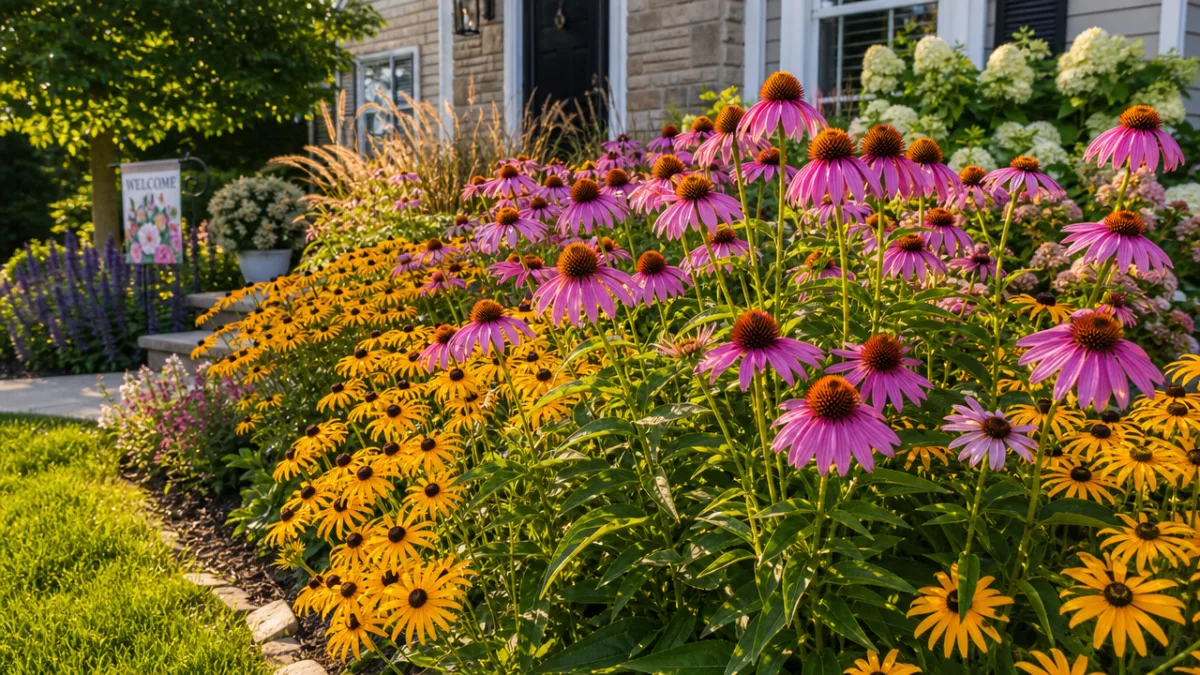
Your front yard is the first thing people see, so you want plants that look great without requiring constant attention. Black-eyed Susan (Rudbeckia hirta) checks both boxes effortlessly. Those bright golden-yellow blooms with the dark chocolate centers just keep coming from midsummer well into fall, and the plant genuinely doesn’t care if the soil is poor, the heat is intense, or rain hasn’t shown up in a while. It’s one of those cornerstone plants you can count on in almost any climate zone across North America.
Coneflower (Echinacea purpurea) is another one that earns its spot in almost every sunny front yard. The big daisy-like blooms come in purple, pink, white, orange, and red, butterflies and bees are all over them throughout summer, and once the flowers fade, the spiky seed heads stick around all winter and feed goldfinches and other birds. Coneflower handles full sun, clay soil, and mid-July heat waves without skipping a beat.
Salvia varieties — especially Salvia nemorosa and its cultivars — bring those tall, striking spikes of blue, purple, or pink that give a front bed real structure and vertical interest. They bloom heavily in early summer, and if you cut them back after the first flush, they’ll often rebloom right through September. The aromatic foliage is also deer resistant, which is a huge practical win if you’re gardening anywhere near a suburban edge or rural area.
- Black-eyed Susan (Rudbeckia hirta): Golden blooms, drought tolerant, attracts pollinators, blooms July through October
- Purple Coneflower (Echinacea purpurea): Bold daisy flowers, wildlife habitat value, tolerates clay and poor soil
- Salvia (Salvia nemorosa): Vertical interest, deer resistant, reblooms when deadheaded, aromatic foliage
- Daylily (Hemerocallis): Enormous color range, extremely adaptable, spreads to fill bare spots naturally
- Yarrow (Achillea millefolium): Flat-topped flower clusters, ferny foliage, thrives in poor dry soils
Best Heat Tolerant Perennials for Backyard Landscapes
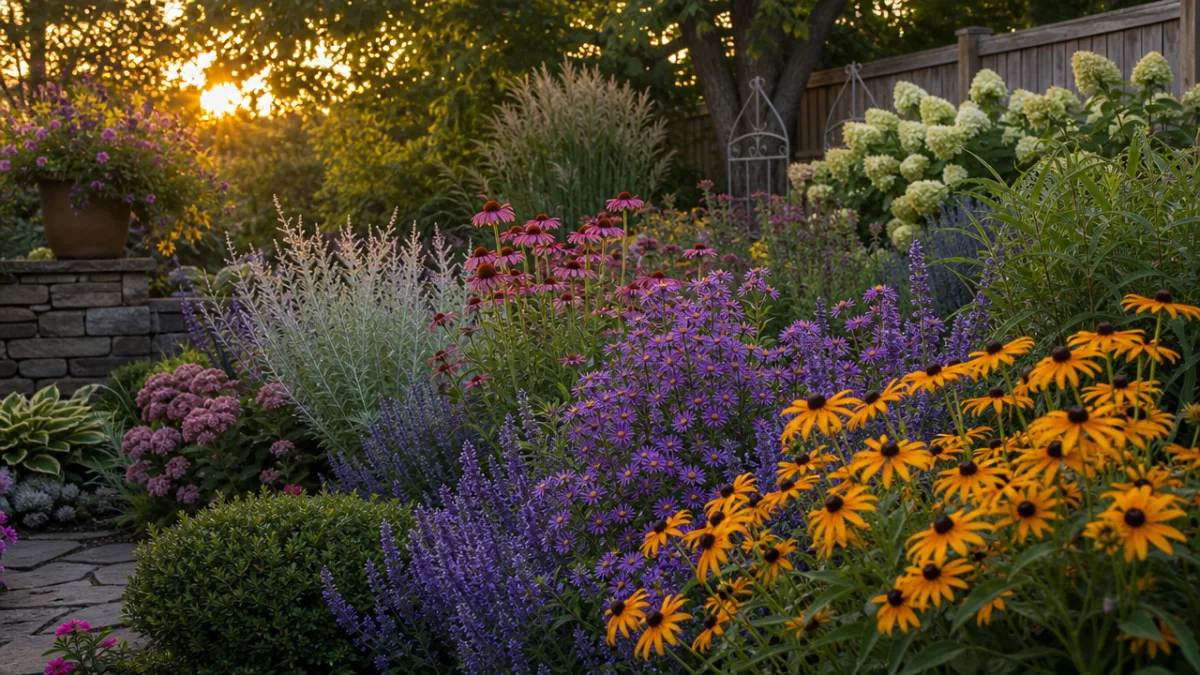
The backyard gives you a lot more freedom to get creative and really build something immersive. Russian Sage (Perovskia atriplicifolia) thrives here — those tall, airy wands of lavender-blue flowers on silver-white stems show up in midsummer and keep going through frost. What makes it really special is the texture. It’s wispy and semi-transparent in a way that layers beautifully behind shorter, denser plants, adding depth and gentle movement you can appreciate even while you’re sitting on the patio.
Agastache — hyssop or hummingbird mint, depending on who you ask — is absolutely magnificent in hot, dry backyard conditions. The tubular blooms in orange, coral, purple, and pink draw hummingbirds and bees in nonstop from July through September, which makes the whole garden feel alive and buzzing. Newer cultivars like ‘Kudos Coral’ and ‘Bolero’ bloom longer and grow more vigorously than the straight species, and they look fantastic paired with ornamental grasses in a more naturalistic planting.
Ornamental grasses deserve a lot of credit as anchoring plants in any hot, sunny backyard. Little Bluestem, Prairie Dropseed, and Karl Foerster Feather Reed Grass all handle full sun with minimal watering once they’re settled in. They work hard across all four seasons — fresh green in spring, flowing seed heads in summer, then that gorgeous bronze and copper color that sticks around well into winter and adds real warmth to an otherwise quiet landscape.
Blanket Flower (Gaillardia) is one of the best choices for those frustrating hot spots in the backyard where other plants just give up. It produces nonstop jewel-toned blooms in reds, oranges, and yellows that almost look like tiny woven textiles — striking and warm. The key thing to know about Gaillardia is that it actually performs better in lean, well-drained soil. Amend it too much or water it too heavily and it sulks. Plant it in masses along a sunny fence line or at the back of a border and you get a wall of color that lasts from late spring right through hard frost.
Designing a Continuous Bloom Sunny Garden
One of the most satisfying things you can achieve in a sun-tolerant perennial garden is a real succession of bloom — color and interest flowing continuously from the first warm days of spring through the last frosts of autumn. It takes a little intentional planning, but the concept is straightforward: layer plants with different peak bloom times so that as one winds down, another is just hitting its stride. Starting with early bloomers like Baptisia (False Indigo) and Nepeta (Catmint) gets color going in late spring before the heat even arrives, setting the stage nicely for everything that follows.
Midsummer is when sun-loving perennials really show off. Coreopsis (Tickseed) covers itself so completely in cheerful yellow, gold, and bicolor blooms that you can barely see the foliage underneath. Liatris (Blazing Star) sends up those distinctive bottle-brush spikes of magenta-purple that bloom from the top down — unusual and visually arresting in the summer border. Tuck in some silvery Artemisia nearby and you get beautiful contrast that keeps the whole planting looking composed even when the heat is at its worst.
Late season is where a lot of sunny gardens fall flat, but it really doesn’t have to be that way. Rudbeckia, Helenium (Sneezeweed), Sedum ‘Autumn Joy’, and Aster species all hit their peak in late summer and fall, carrying the garden’s energy right to the end of the season. Sedum is particularly wonderful — the succulent foliage looks great all summer, then the flat-topped flower heads open in that rich dusty rose and slowly age through copper and bronze tones as the temperatures drop. It’s a genuinely beautiful fade-out.
- Spring Bloomers: Baptisia, Nepeta, Salvia, Penstemon — establish early color before peak heat
- Early Summer Bloomers: Coreopsis, Gaillardia, Daylily, Black-eyed Susan — peak performance in June and July
- Midsummer Bloomers: Echinacea, Agastache, Liatris, Russian Sage — carry color through the hottest weeks
- Late Summer and Fall Bloomers: Aster, Helenium, Sedum, Rudbeckia — sustain interest through October
Drought Tolerant Sun Perennials for Water-Wise Landscaping
Water-wise landscaping has gone from a niche concern to something most gardeners are actively thinking about, especially as droughts get more frequent and water bills creep up. The great news is that many of the most beautiful sun-loving perennials are genuinely drought tolerant once they’re established — usually after one to two seasons of consistent watering while they get their roots settled. Knowing which plants are truly drought hardy versus which ones just tolerate the occasional dry spell will save you a lot of frustration and wasted money down the road.
Lavender (Lavandula angustifolia) is probably the most beloved drought-tolerant sun perennial in the world, and for good reason. It actually wants lean, alkaline, well-drained soil — the kind of conditions that would stress most plants — and it thrives on neglect once it’s established. It pairs beautifully with Knautia macedonica, a wispy, long-blooming plant with small crimson pincushion flowers that weave gracefully between more structured neighbors and bloom for what feels like forever.
Penstemon (Beardtongue) is criminally underused in American gardens, which is a shame because it’s native to many regions and genuinely thrives in hot, dry conditions. The tubular flowers in pink, red, purple, and white bring in hummingbirds and native bees all summer long. Penstemon digitalis ‘Husker Red’ is a particularly nice cultivar — the deep burgundy foliage contrasts beautifully with its pale pink flowers, so you’re getting visual interest even when it’s not in bloom.
Ice Plant (Delosperma) and various Sedum species are the answer for hot, dry slopes and rock gardens where almost nothing else wants to grow. Their succulent foliage stores water so efficiently that they can handle extended dry spells without irrigation and still manage to flower. As a bonus, they spread to cover the ground, which crowds out weeds and protects the soil from eroding on those steep, sun-baked grades that give gardeners fits.
- Lavender (Lavandula): Fragrant, silver foliage, thrives in lean alkaline soils, Mediterranean climate adapted
- Penstemon (Beardtongue): Native species available, hummingbird magnet, colorful tubular blooms
- Sedum: Succulent foliage, four-season interest, excellent for dry slopes and rock gardens
- Yarrow (Achillea): Flat-topped blooms, ferny aromatic foliage, spreads reliably in dry conditions
- Ice Plant (Delosperma): Ground covering, jewel-bright flowers, extraordinary drought and heat resilience
- Knautia macedonica: Crimson pincushion flowers, airy texture, extremely long blooming season
Planting, Care, and Maintenance Tips for Success
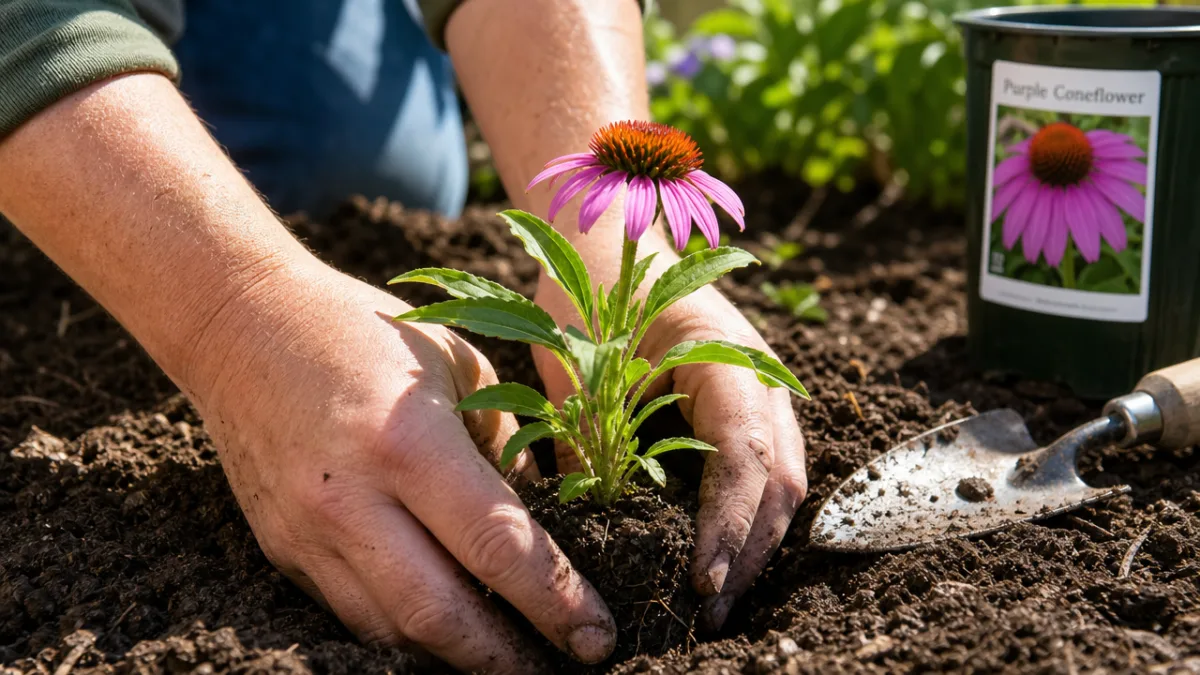
Good soil preparation is where success really begins, and it’s the step that eager gardeners most often skip. Most heat-tolerant perennials can handle poor soil, but almost all of them will struggle in heavy, waterlogged clay. Working in some coarse grit, expanded shale, or aged compost before you plant gives the roots a looser, better-draining environment to grow into quickly. Once a perennial has a deep, well-established root system, it has a huge amount of built-in insurance against heat stress and summer drought.
When you plant matters more than people often realize. Spring planting lets perennials take advantage of cool, moist weather to build their roots before summer arrives. But fall is actually the preferred approach for a lot of experienced gardeners — cooling soil temperatures and more reliable rainfall encourage strong root development without the added stress of dealing with heat at the same time. Whichever season you choose, plan on watering consistently through that first growing season. Even the most drought-tolerant plants need support while they’re getting established.
Deadheading spent flowers extends the bloom season for most sun-loving perennials and keeps the garden looking intentional rather than tired and overgrown. That said, resist the urge to clean everything up too aggressively as the season winds down. Leaving seed heads on Echinacea, Rudbeckia, Liatris, and ornamental grasses through winter gives overwintering songbirds something to eat and gives the garden a kind of quiet structural beauty during the dormant months that’s worth appreciating.
Dividing perennials every three to five years keeps clumps vigorous and blooming well, and it’s a great way to get free plants for expanding your garden or sharing with friends. Early spring, just as new growth is poking up from the soil, is usually the best window for most sun-loving perennials. A sharp spade or garden fork, a clean cut through the root mass, prompt replanting, and a good thorough watering — that’s all it takes to give each division a strong start in its new spot.
Mulching might be the single most impactful thing you can do for a hot, sunny garden, and yet so many home gardeners don’t bother with it consistently. A two-to-three-inch layer of shredded bark, wood chips, or composted leaves does a remarkable amount of work: it insulates the soil from wild temperature swings, slows down moisture evaporation on hot days, keeps weeds from getting a foothold, and gradually improves the soil as it breaks down. Just make sure to pull the mulch back slightly from the crown of each plant to avoid rot, and let it do its job around the root zone where it really counts.








What do you think?
It is nice to know your opinion. Leave a comment.