










Decorative Wall Plate Ideas for Vintage Home Decor
The Timeless Charm of Decorative Wall Plates
Decorative wall plates have been a fixture in beautiful homes for centuries, and honestly, it’s not hard to see why. From the hand-painted porcelain that European aristocracy treasured to the humble earthenware hanging in a countryside farmhouse, these pieces carry a sense of history and craftsmanship that very few other decorating objects can match. There’s something about their circular shape, too — it naturally draws the eye and makes you want to step closer for a better look.
What makes wall plates such a great choice right now is how incredibly versatile they are. Whether you’re decorating a cozy cottage kitchen, a formal dining room, or a bright and airy living space, there’s a style of plate that will feel completely at home. Antique transferware, hand-painted Delftware, gilded Victorian chargers, folk art pottery — each one brings its own personality to a room, but they all share that warmth and nostalgia that makes vintage decor so appealing in the first place.
They’re also a surprisingly practical thing to collect. You can find them at estate sales, antique markets, thrift stores, and online without too much trouble, and they’re often quite affordable — which means building a collection you actually love doesn’t have to cost a fortune. Even a single well-chosen plate hung above a mantel or sideboard can completely change how a wall feels, turning something plain into something that looks curated and full of character.
Choosing the Right Plates for Your Vintage Aesthetic
Before you start hunting for plates or planning out a wall arrangement, it really helps to have a sense of the look you’re going for. The world of antique and vintage ceramics is enormous, and having some focus — a particular era, a region, a style — will save you a lot of second-guessing later. Are you drawn to the crisp blue-and-white elegance of eighteenth-century Delftware? The romantic florals of Victorian English bone china? The bold geometric patterns of mid-century Scandinavian pottery? Each direction leads somewhere quite different visually, and that’s worth thinking about before you start buying.
When you’re looking at individual plates, pay attention to the glaze quality, color, and condition. A little crazing — those fine hairline cracks you sometimes see in old glaze — is completely normal and actually a sign of genuine age, so don’t let that put you off. But chips, cracks, and heavy staining are worth factoring in, both for how they look and for whether the plate is structurally sound enough to hang safely. A badly damaged plate might be better off displayed on a stand than mounted on a wall.
One of the best approaches when building a collection is to work around a loose color palette rather than trying to match everything too precisely. Some of the most beautiful plate walls have that beautifully collected-over-time quality, where it’s obvious the pieces came from different places and different eras, but they’re held together by a shared tonality — creams and blues, warm terracottas and ochres, or an all-white grouping with varied textures. That kind of arrangement looks genuinely personal rather than purchased as a set, which is exactly the quality that makes vintage interiors feel so alive.
Popular Styles and Periods of Decorative Wall Plates
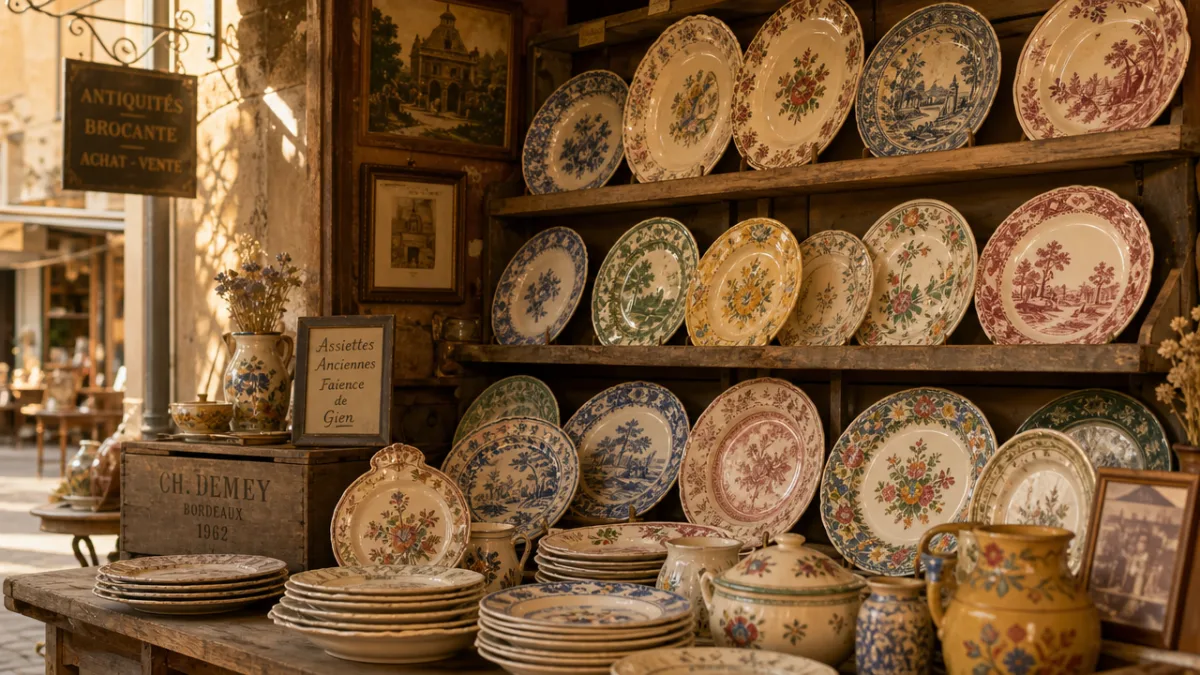
Getting familiar with the major styles and periods of decorative ceramics will make you a much more confident collector over time. One of the most beloved traditions is Delftware, which has been produced in the Dutch city of Delft since the seventeenth century. These plates are instantly recognizable — blue-and-white hand-painted designs featuring windmills, tulips, pastoral scenes, and intricate borders. Original antique Delft pieces can be genuinely valuable, but there’s also excellent reproduction Delftware widely available, and for decorative purposes it works just as beautifully.
English transferware is another category that vintage decorators absolutely love. Made extensively from the late eighteenth century through the Victorian era, these plates feature detailed scenic, botanical, or figurative designs applied through a printing process, then glazed and fired. The blue willow pattern is probably the most iconic example — a romanticized Chinese landscape that became wildly fashionable across Britain and America. Other popular motifs include botanical illustrations, English countryside scenes, and all sorts of historical and commemorative subjects.
If you’re drawn to something more colorful, majolica and folk pottery are worth exploring. Italian majolica, with its vivid glazed surfaces depicting fruits, vegetables, and mythological scenes, brings a real Mediterranean warmth to any room. Eastern European folk plates from Poland, Hungary, and Romania feature bold hand-painted florals in rich reds, greens, and blues that look spectacular grouped together on a white wall. And American country pottery from the nineteenth and early twentieth centuries has a wonderful rustic, homespun quality that’s perfect for farmhouse and cottage-style interiors.
Some of the most popular plate styles to consider include:
- Blue and white Delftware and Chinese export porcelain for a classic, refined look
- English transferware in willow pattern or botanical designs for a traditional country house feel
- Italian majolica for Mediterranean warmth and vibrant color
- French Quimper faience featuring hand-painted Breton figures for a charming folk quality
- Scandinavian studio pottery for a mid-century modern take on vintage collecting
- American redware and stoneware for authentic farmhouse and colonial-era character
Arranging Wall Plates for Maximum Visual Impact
Arranging plates on a wall is genuinely one of the most enjoyable parts of this whole decorating tradition. Unlike framed artwork, which tends to work within grids and rectangular forms, plate walls invite you to create something more organic and free-flowing — something that can keep growing and shifting as your collection does. Before you commit to anything by putting holes in your walls, lay your plates out on the floor and move them around until a grouping starts to feel balanced and satisfying. It takes a bit of patience, but it’s so much easier than rearranging things once they’re already hanging.
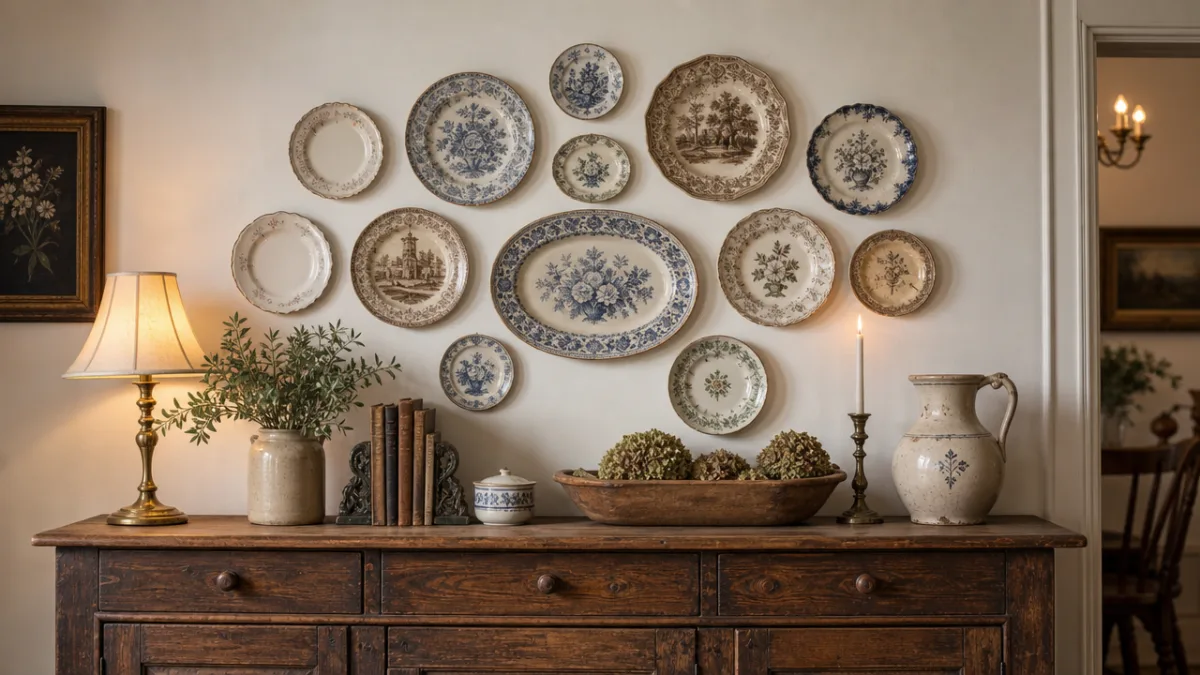
There are a few different organizational approaches worth thinking about. A symmetrical arrangement — plates radiating outward from one large central piece in a formal pattern — creates a structured, elegant effect that works beautifully in dining rooms and traditional interiors. A looser, salon-style grouping of varying sizes feels more casual and eclectic, which is perfect for kitchens, living rooms, and hallways where you want things to feel relaxed and collected. And a single row of evenly spaced matching plates running along a plate rail or shelf makes a clean, graphic statement that suits both traditional and transitional spaces nicely.
Mixing sizes is key to keeping things interesting. Start with your largest plates — typically twelve to fourteen inches across — as anchor points, then fill in with medium plates around eight to ten inches, and use smaller five to seven inch pieces to close gaps and add a bit of rhythm. Keeping a consistent two to three inches of space between plates will give the whole arrangement a cohesive feel no matter how varied the individual pieces are. It’s also worth thinking about what’s below your plate wall — a grouping hung above a console table, dresser, or sideboard feels intentional and grounded in a way that a cluster floating on an empty wall sometimes doesn’t quite manage.
Hanging Plates Safely and Securely
Getting the hanging right is really important — both to protect your plates from damage and to make sure nothing comes crashing down on anyone below. The most common method is a spring-wire plate hanger, which comes in sizes matched to different plate diameters. These attach to the back of the plate using spring tension and hang from a standard wall nail or picture hook. They’re inexpensive, easy to find, and work well for most ceramic plates of average weight.
For heavier, more valuable, or more fragile pieces, adhesive disc hangers are worth considering instead. These stick to the back of the plate with a strong removable adhesive and keep any hardware completely out of sight. They’re especially handy for plates with delicate rims or unusual shapes that might not take well to the pressure of a spring-wire hanger. Whatever type you use, always check the weight rating against your actual plate, and use properly rated wall anchors or hooks — especially if you’re going into drywall rather than a stud.
If you have pieces with real antique value, it’s a good idea to check with an antiques dealer or conservator before hanging them. Some older plates are genuinely better off on a plate stand or inside a glass-fronted cabinet than on a wall, particularly if they’re especially fragile or valuable. For the decorative market finds and reproduction pieces that most of us are working with, though, standard hardware is perfectly fine as long as you’re using the right size hanger and hanging into a solid surface.
Styling Plate Walls in Different Rooms
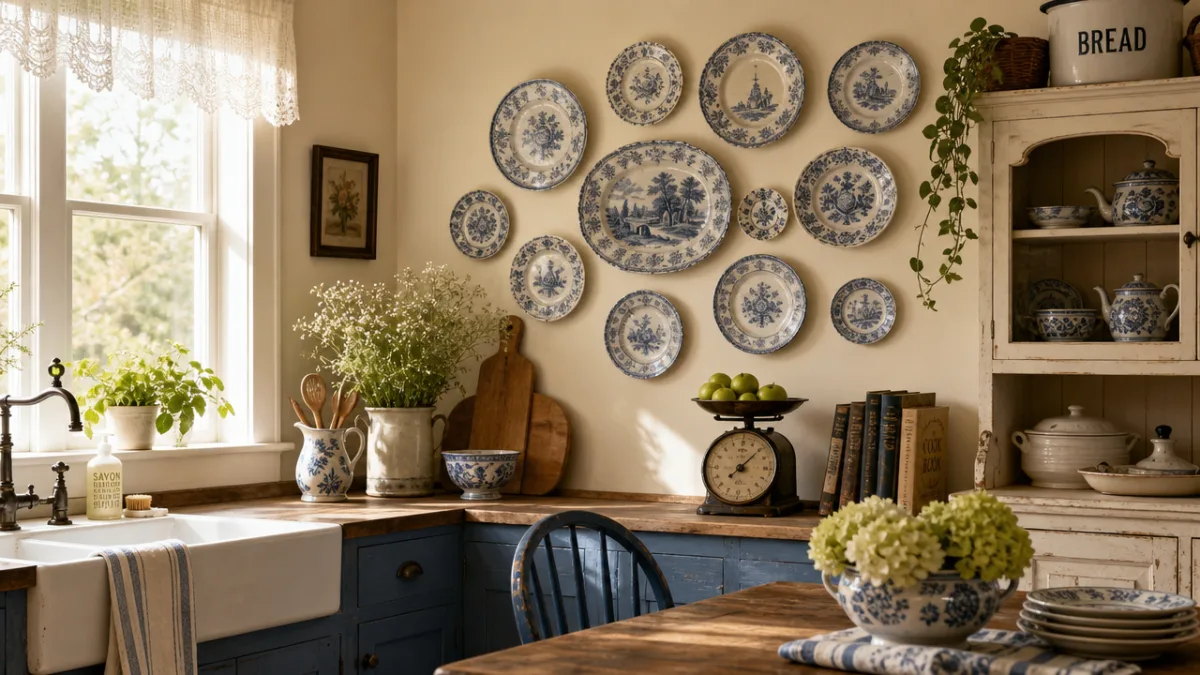
Plate walls work in almost every room in the house, though each space calls for a slightly different approach. In the kitchen, plates feel completely natural — after all, that’s where they came from. A collection of vintage transferware arranged above open shelving or along the upper part of a tiled wall creates a cottage kitchen atmosphere that feels warm, personal, and genuinely lived-in rather than staged.
In the dining room, a more formal arrangement of matching or closely related plates above a sideboard makes a strong statement the moment you walk in. There’s also something lovely about the visual connection between the plates on the wall and the tableware used during meals — it reinforces the room’s identity as a place for gathering, good food, and hospitality. Gilded chargers, silver-rimmed Victorian pieces, and formal European porcelain all look particularly beautiful in this setting.
Bedrooms and sitting rooms open up opportunities for something more intimate. A small grouping of three to five delicate floral plates hung above a headboard or next to a vanity mirror brings a romantic, softly feminine quality to a bedroom. In a sitting room or library, plates with landscape scenes, botanical illustrations, or historical motifs can be woven in with framed artwork, mirrors, and other wall objects to create a richly layered gallery wall that feels genuinely personal. Hallways and stairwells are also wonderful spots for plate displays — they’re transitional spaces that often get neglected, and a well-considered plate arrangement can turn them into something worth pausing to look at.
Consider these styling tips when incorporating plates into different rooms:
- In kitchens, combine plate displays with hanging copper pots, dried herbs, and vintage prints for a cohesive farmhouse look.
- In dining rooms, align the center of your plate arrangement with the top third of the wall to maintain balanced proportions relative to furniture below.
- In bedrooms, keep plate arrangements smaller and more refined, choosing pieces with softer colors and delicate motifs that support a restful atmosphere.
- In living rooms, integrate plates freely with other wall objects — mirrors, artwork, sconces — to build a genuinely eclectic and personal gallery wall.
- In hallways, a single column of graduated plates hung at eye level creates a welcoming and elegant first impression for visitors.
Caring for and Preserving Your Plate Collection
Taking good care of your plates will keep them looking beautiful for decades and help protect whatever value they hold. Day-to-day, that mostly just means dusting — done gently with a soft microfiber cloth or a natural-bristle brush. Skip the feather duster, which can snag on raised edges or old repair work, and stay away from anything abrasive that might scratch or dull the glaze.
When you need a more thorough clean — if kitchen plates have picked up a bit of grease, for instance — wash them carefully by hand in warm water with a small amount of mild dish soap. Never put antique or vintage ceramics in the dishwasher. The heat, water pressure, and harsh detergents can cause real damage to glazes, strip gold or platinum banding, and loosen any previous repairs. After washing, dry each plate right away with a soft cloth before it goes back on the wall, since sitting wet isn’t good for certain types of ceramic and can cause metal hangers to rust over time.
For pieces with genuine antique value, it’s worth having a ceramics conservator take a look periodically, especially if you notice any changes in the glaze, new cracking, or anything that looks unstable. It’s also a good idea to keep a simple record of your most significant pieces — approximate age, origin, any known history — both for insurance purposes and because knowing the story behind something you look at every day makes it so much more meaningful. A well-kept, thoughtfully documented plate collection isn’t just a decorating choice; it’s a real archive of craft history and personal memory that only becomes richer over time.








What do you think?
It is nice to know your opinion. Leave a comment.