










“`html
The Complete Begonia Care Guide: Everything You Need to Grow Beautiful Begonias
Begonias have a way of winning people over — and honestly, it’s not hard to see why. They bloom like crazy, their foliage can be absolutely stunning, and they’re surprisingly adaptable to all kinds of growing situations. Whether you’ve been gardening for decades or you just picked up your first houseplant last month, there’s a begonia out there for you. The sheer variety is kind of mind-blowing — we’re talking over 2,000 known species and countless hybrids, ranging from the cheerful little wax begonia you see lining garden paths to tuberous varieties with dinner-plate-sized blooms that stop people in their tracks.
Knowing a little about where begonias come from actually makes you a better plant parent. Most of them are native to tropical and subtropical regions — think South America, Africa, Asia — and that heritage tells you a lot about what they’re after: warmth, humidity, indirect light, and soil that stays nicely moist without turning into a swamp. The closer you can get to mimicking those conditions, the more your begonias will reward you. We’re talking lush growth, vivid color, and a flowering season that, in mild climates or indoors, can stretch on for a remarkably long time.
This guide covers pretty much everything you need to grow begonias well. We’ll go through the main types and how to tell them apart, nail down the basics of light, water, and soil, talk through feeding and fertilizing, help you identify and deal with common pests and diseases, and walk you through how to propagate new plants from what you already have. By the time you’re done reading, you’ll feel genuinely confident about growing these plants — and keeping them happy for years.
Understanding the Different Types of Begonias
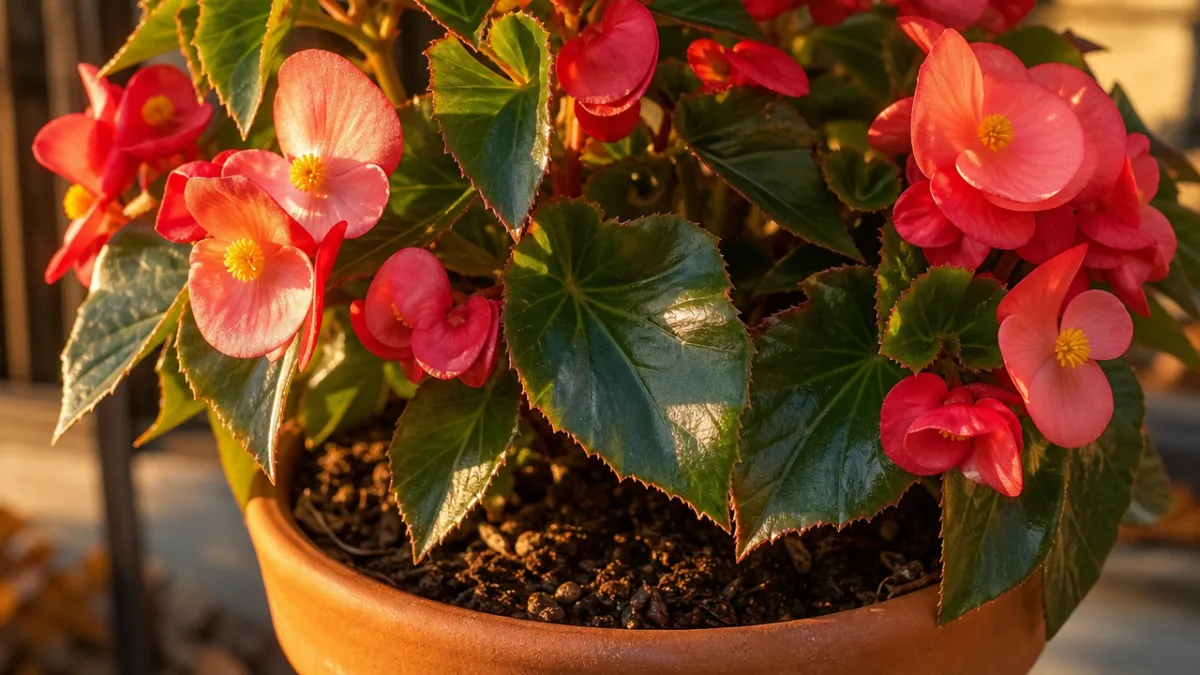
Before we get into the care specifics, it’s worth understanding the main categories of begonias, because the type you’re growing will actually influence some of your decisions. The three big groupings are fibrous-rooted begonias, tuberous begonias, and rhizomatous begonias. Fibrous-rooted types — which include the popular wax begonia (Begonia semperflorens) and cane begonias like the angel wing — have a more conventional root system and tend to be the easiest to grow. They’re reliable bloomers that pump out clusters of flowers in reds, pinks, whites, and oranges all growing season long.
Tuberous begonias are the drama queens of the group, and I mean that in the best possible way. They grow from a flat, disc-shaped tuber and produce enormous, rose-like flowers in an almost ridiculous range of colors. They’re a favorite for hanging baskets, container gardens, and seasonal beds. They do like it a bit cooler and shadier than some other types, and they’ll go dormant in winter, so you’ll need to store the tuber properly during that time. Done right, though, a tuberous begonia can live for many years — and the blooms actually get more impressive each season.
Rhizomatous begonias, including the much-loved Rex begonia, are really grown for their foliage rather than their flowers. And what foliage it is — swirling, star-shaped, or deeply lobed leaves in combinations of silver, burgundy, green, and pink, often with an almost metallic sheen. They grow from a thick horizontal stem called a rhizome that creeps along or just under the soil surface. They can be a little more demanding when it comes to humidity and light, but the visual payoff is genuinely spectacular.
Light Requirements: Finding the Perfect Spot
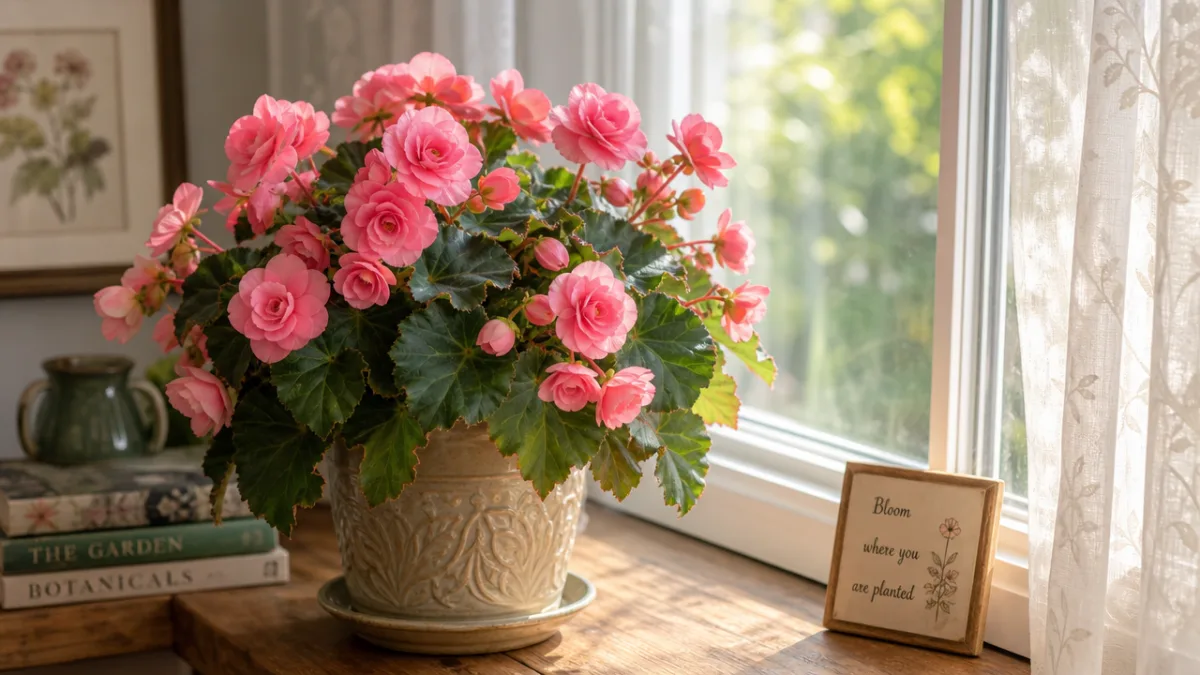
Getting the light right is one of the most important things you can do for your begonias — it really does make or break how well they grow and bloom. Most begonias want bright, indirect light. Direct afternoon sun, especially in summer, can scorch their leaves and leave ugly brown patches that are hard to ignore. For indoor plants, a spot near an east- or north-facing window is usually a great bet — you get that softer morning light or consistent indirect brightness without the intensity that can do real damage.
That said, different types have different comfort zones when it comes to light. Fibrous-rooted begonias, especially wax begonias, are the most sun-tolerant of the bunch and can handle partial to full sun outdoors, as long as the heat isn’t brutal. They’re a common choice for partially shaded garden beds, and they hold up in spots where other begonias would struggle. Angel wing begonias, though, prefer bright indirect light and really do their best — both in terms of foliage color and flower production — when you keep them away from harsh direct sun.
Rex begonias and other rhizomatous varieties are probably the most sensitive to excess light. Their dramatic leaf colors actually developed as an adaptation to the dimmer conditions of forest understories, and too much sun will cause those colors to fade and the leaves to look washed out or crispy at the edges. If your begonia’s leaves are looking pale or bleached, that’s a pretty clear signal to move it somewhere shadier. On the flip side, if it’s producing long, spindly stems and barely any flowers, it probably isn’t getting enough light — a brighter spot should sort that out.
Watering and Humidity: Striking the Right Balance
Watering is where a lot of begonia growers run into trouble, because these plants are sensitive to both too much and too little. Overwatering is by far the more common mistake — and it’s the number one reason begonias die in home collections. They need consistently moist soil, but moist is the key word here. Not wet, not soggy, not sitting in water. Their roots need oxygen just as much as they need moisture, and soil that stays saturated will lead to root rot, which can take down a plant in a matter of days if you don’t catch it early.
The best approach is to check the soil regularly and water when the top inch or so feels dry. When you do water, go slowly and evenly across the soil surface until water starts draining freely from the bottom of the pot, then let it drain completely before putting the pot back in its saucer. Never leave your begonia sitting in standing water — that’s a fast track to root rot. In winter, when growth slows down, you can pull back on watering quite a bit.
Humidity matters too, particularly for Rex and rhizomatous varieties, which are used to humid tropical environments and can really struggle in the dry air of a heated or air-conditioned home. If you’re seeing crispy or curling leaf edges — especially on new growth — that’s often a humidity issue. Grouping plants together helps, as does placing them on a pebble tray with a little water in it (just make sure the pot isn’t sitting directly in the water). A small nearby humidifier works well too. One thing to avoid: misting directly on the leaves. Wet foliage is an open invitation to powdery mildew, which begonias are already prone to.
Soil, Fertilizing, and Feeding for Maximum Growth
Soil matters more than a lot of people realize. Begonias need something lightweight, well-draining, and rich in organic matter — and a standard potting mix straight from the bag is usually too dense and holds too much moisture on its own. A really solid mix for begonias is equal parts good potting soil, perlite, and either orchid bark or coarse horticultural sand. That combination holds just enough moisture to keep the roots happy while letting excess water drain away quickly, which is exactly what you want.
For fertilizing, begonias are moderate feeders and do well with a balanced, water-soluble fertilizer applied regularly during their active growing season, from spring through early fall. A 10-10-10 or 20-20-20 formulation at half the recommended strength every two to four weeks is a good rhythm to get into — you’ll keep your plants well-fed without risking the fertilizer burn that can happen when you go too strong too often. Some gardeners like to switch to something with a slightly higher phosphorus content as the plant comes into bloom, since phosphorus supports flower development and can mean more abundant, longer-lasting blooms.
Knowing when to stop fertilizing is just as important as knowing when to start. In winter, when most begonias are resting or growing slowly, feeding should be scaled back significantly or paused entirely. Pushing the plant to grow during this period usually results in weak, leggy growth that it doesn’t have the light or energy to sustain. Pick back up again in late winter or early spring when you start seeing new growth emerge. For tuberous begonias specifically, let the tuber dry out and rest through winter, and only start feeding again once you’ve restarted it in fresh soil in early spring.
Common Pests and Diseases: Prevention and Treatment
Even if you do everything right, you’ll probably deal with a pest or disease issue at some point — it just comes with the territory of growing plants. The good news is that catching problems early makes them much easier to handle. The most common insect pests on begonias are mealybugs, spider mites, thrips, and fungus gnats. Mealybugs show up as small, cottony white clusters, usually tucked into leaf joints or along the undersides of leaves. They feed on the plant’s sap, slowly weakening it over time, and they leave behind a sticky residue called honeydew that can lead to sooty mold.
Spider mites tend to be worse in hot, dry conditions and are sneaky — you often don’t notice them until the damage is already significant. They feed on the undersides of leaves, leaving a telltale stippled or bronzed appearance, and in bad infestations you’ll see fine webbing stretched across the plant. Keeping humidity up can help deter them. For an existing infestation, insecticidal soap or neem oil applied to the undersides of leaves usually does the job, though you’ll likely need several treatments a week apart to fully break the cycle. Always test on a small area first, since some begonias can be sensitive to certain sprays.
On the disease side, powdery mildew is the complaint you’ll hear about most from begonia growers. It shows up as a white or grayish powdery coating on the tops of leaves and can spread fast when the air is humid, circulation is poor, and temperatures are on the cooler side. The best defense is prevention: give your plants some breathing room, keep the foliage dry when you water, and make sure air moves reasonably well around them. If mildew does appear, remove affected leaves right away and treat the rest with a fungicide containing potassium bicarbonate or sulfur. Root rot is the other big concern, and honestly, the best prevention is just a careful watering routine paired with good drainage from the start.
Propagation: Growing New Begonias from Your Collection
One of the genuinely fun things about begonias is how easy most of them are to propagate. You can expand your collection, share plants with friends, or just make backups of a variety you really love — and it’s not complicated once you know what you’re doing. The method depends on the type of begonia you’re working with. For fibrous-rooted and cane begonias, stem cuttings are the way to go. Take a four- to six-inch cutting just below a leaf node using clean, sharp scissors or pruners, strip the lower leaves to expose a node or two, and pop it into a small pot of moist propagation mix or even a glass of clean water. Roots usually show up within two to four weeks, and water-rooted cuttings can be moved to soil once they’ve established.
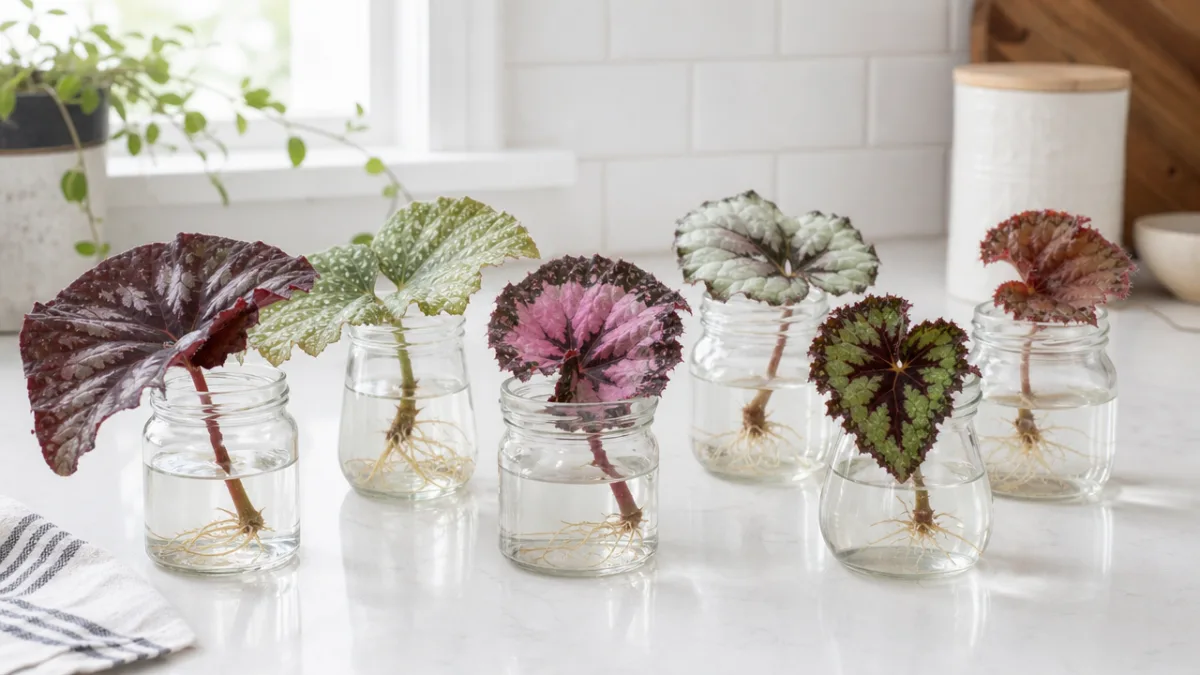
Rex and other rhizomatous begonias can be propagated through leaf cuttings — and honestly, it’s one of the more magical things you can do as a plant person. Take a healthy, mature leaf, lay it flat on moist propagation mix, and make small cuts through the main veins. Or cut the leaf into sections, each with a piece of a main vein, and push them partway into the mix at a slight angle. Keep the whole thing warm and humid — a clear plastic bag or propagation dome works perfectly — and within a few weeks, tiny plantlets will start emerging right along those cut veins. It never really gets old to watch.
Tuberous begonias are propagated a bit differently, usually through dividing the tuber itself or taking stem cuttings in spring when the new shoots first appear. To divide, let the tuber begin sprouting in early spring, then use a clean, sharp knife to cut it into sections, making sure each one has at least one healthy sprout or growth eye. Dust the cut surfaces with powdered sulfur or cinnamon to guard against fungal issues, let them dry briefly, then plant in fresh potting mix. With any propagation method, patience is key — new begonias need time to build their root systems before they’re ready for full care routines, so go easy on watering and feeding until you see clear signs that the plant is actively growing.
Seasonal Care and Encouraging Reblooming
Tuning in to your begonias’ seasonal rhythms and adjusting your care accordingly is what separates plants that just survive from plants that genuinely thrive year after year. For most fibrous-rooted and cane begonias grown as houseplants, the seasonal shifts are relatively gentle — they grow more vigorously in spring and summer, then ease off in fall and winter without going fully dormant the way tuberous types do. During those slower winter months, ease back on watering, stop fertilizing, and if you can, move them to the brightest spot available to make up for the shorter days.
If you want your begonias to keep blooming reliably, deadheading is worth making a habit of. When begonias are left to develop seed pods, they shift their energy into seed production and away from making new flowers — and you’ll notice the display taper off pretty quickly. By removing spent blooms before that happens, you’re essentially telling the plant its job isn’t done yet, which keeps it pushing out new flowers. Just pinch off faded blooms at the base of the flower stem, being careful not to disturb the surrounding foliage or any buds that are just opening up.
Repotting is the other seasonal task worth staying on top of. Most begonias do well when repotted every year or two into fresh potting mix, since the old soil gradually breaks down and loses its ability to drain properly. Early spring — right as the plant is gearing up for a new season of growth — is the ideal time to do this. Go up only one pot size at a time, about one to two inches larger in diameter, because a pot that’s too big holds more moisture than the roots can handle, which raises the risk of root rot. With a little seasonal attention and the know-how from this guide, your begonias should keep rewarding you with their incredible beauty for many, many seasons to come.
“`








What do you think?
It is nice to know your opinion. Leave a comment.