










Free Crochet Pattern: 15 Crochet Wallet Designs from SitnCrochet 2026
Introduction to Crochet Wallets: A Practical Craft for Every Skill Level
Crochet wallets have really taken off in the crafting world lately, and honestly, it’s not hard to see why. There’s something special about an accessory that’s both handmade and genuinely useful — something you actually reach for every day, not just admire on a shelf. Whether you’ve been crocheting for years or you’re just getting started with fiber arts, a wallet is one of those projects that hits a sweet spot: it’s manageable enough to finish without burning out, but interesting enough that you won’t get bored halfway through.
The SitnCrochet 2026 collection brings together fifteen free wallet patterns, and the range is genuinely impressive. We’re talking slim cardholders all the way up to full bifold wallets with multiple compartments — so whatever style you’re going for, there’s something in here for you. Each design is approachable enough for beginners but still has enough variety and technique to keep more experienced crocheters from feeling like they’re on autopilot.
Crochet wallets also happen to be one of the best handmade gift ideas out there. Unlike a sweater or a blanket, you can realistically knock one out in a single weekend. That makes them perfect for last-minute gifts, craft fair stock, or just treating yourself. Get the yarn and hook combo right, and you’ll end up with something that feels genuinely luxurious — not like a school project, but like something someone would actually be excited to carry around every day.
Essential Materials and Tools You Will Need
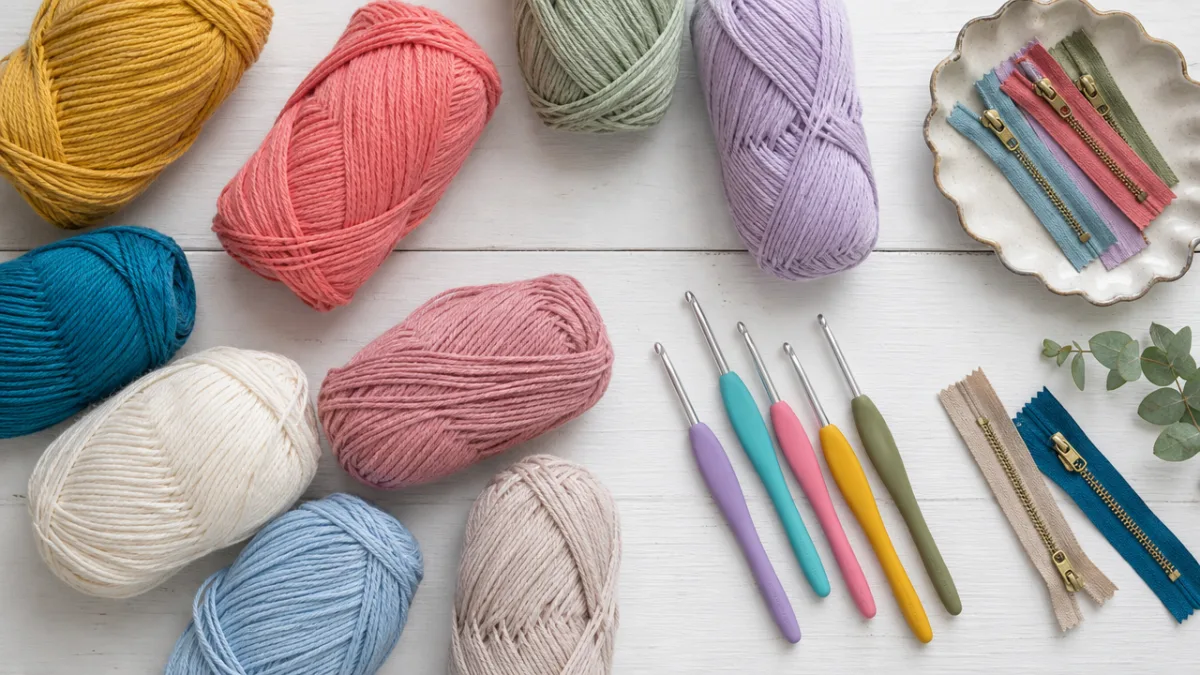
Before you cast on your first stitch, it’s worth taking a few minutes to get your materials sorted. The biggest decision you’ll make is your yarn. For a wallet that sees real daily use, cotton is your best friend — it’s durable, holds its shape, and doesn’t stretch out the way acrylic can. A tightly twisted cotton in fingering or sport weight is the sweet spot, giving you a firm, structured fabric that looks and feels polished.
For your hook, most of the patterns in this collection call for something in the 2.5mm to 4mm range, depending on how dense you want the fabric. A good rule of thumb: go a size or two smaller than what the yarn label suggests. You’ll get a tighter, stiffer result, which is exactly what you want for a wallet. Aside from that, you’ll need a yarn needle for weaving in ends, a decent pair of scissors, and depending on the pattern, a few notions to finish everything off.
Speaking of notions, here’s what comes up most often across the fifteen patterns:
- Zippered coin purse zippers in various lengths, typically 6 to 8 inches
- Sew-on snaps or magnetic closures for flap-style wallets
- Stiff interfacing or plastic canvas for structural support inside larger wallets
- Sewing needle and matching thread for attaching hardware
- Fabric glue or fusible webbing as optional reinforcement for seams
- Metal or plastic rings for keychain attachments on wristlet styles
Getting everything together before you start makes the whole process so much smoother. It’s also worth reading through the full pattern once before you begin — nothing kills momentum like stopping mid-project to hunt down a zipper. And when it comes to hardware like zippers and snaps, it really is worth spending a little extra. Those elements are what determine whether your finished wallet looks handmade in the best way or in the “ehh, close enough” way. Good hardware makes a real difference over years of daily use.
Beginner-Friendly Wallet Patterns in the Collection
If you’re newer to crochet — or coming back after a long break — there are several patterns in this collection that are genuinely welcoming rather than just technically labeled “easy.” The Basic Flat Cardholder is probably the most approachable of the bunch. It’s entirely single crochet worked in rows, and the finished wallet holds four to six cards comfortably. Simple as it sounds, this pattern is actually a great opportunity to practice keeping your tension consistent, which is one of those foundational skills that quietly improves everything else you make.
The Simple Snap Wallet is another great starting point, and it introduces something a little new: working in the round to create a small rectangular pouch that folds in half and closes with a snap. It eases you into shaping without throwing too much at you at once, and the finished piece looks a lot more refined than you’d expect from such basic stitches. The SitnCrochet patterns are written out clearly, with stitch counts at the end of every row, so if something goes sideways, you’ll catch it early before it becomes a bigger headache.
The third beginner-friendly design worth calling out is the Beginner Zipper Pouch Wallet. Attaching a zipper intimidates a lot of crafters — it’s one of those things that sounds harder than it is. This pattern breaks it down into small, clear steps that make the whole process feel totally doable, and once you’ve done it once, you’ll find yourself applying that skill to bags, pouches, and all kinds of other projects with a lot more confidence.
Intermediate and Advanced Wallet Designs for Experienced Crocheters
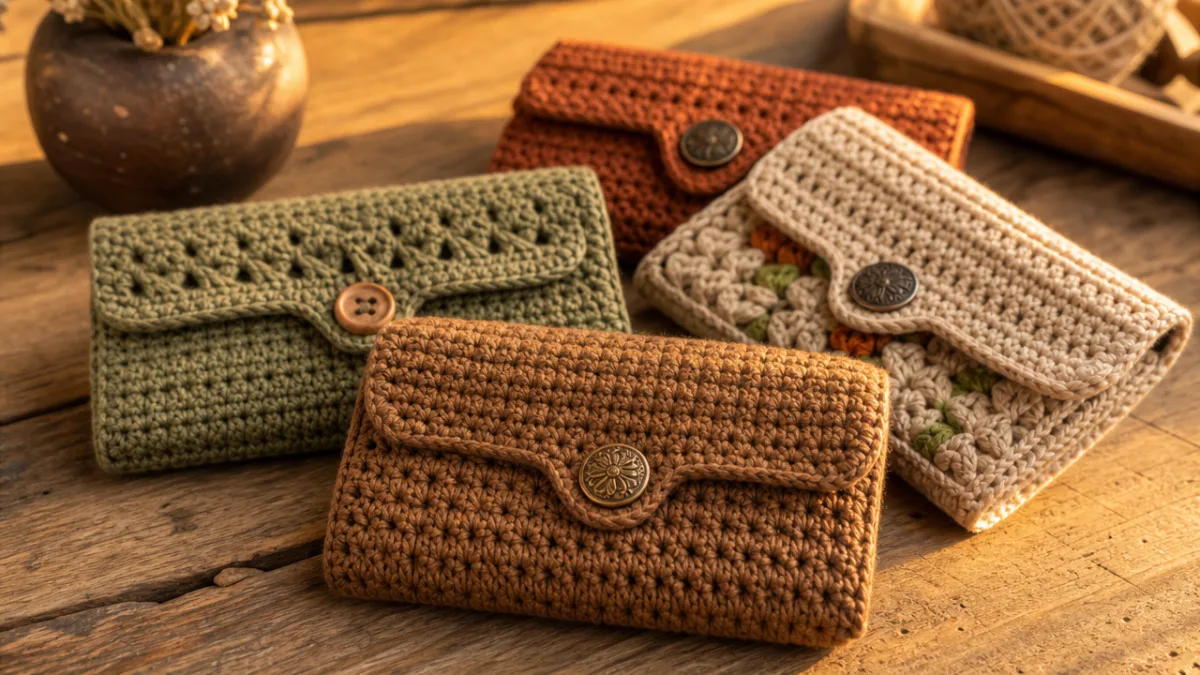
If you’ve got the basics well in hand and you’re looking for something with more meat to it, this collection delivers. The Textured Bifold Wallet uses a combination of front post and back post double crochet to build up a raised basketweave pattern that looks genuinely stunning. It asks you to pay close attention to stitch placement, but the payoff — a wallet with a texture that’s almost as satisfying to touch as it is to look at — is absolutely worth the focus it takes.
The Wristlet Clutch Wallet is another standout, turning the basic wallet concept into a small handheld accessory with a crochet wrist strap and a full-length zipper. This one pulls together several different techniques: crocheting flat panels, joining them with a single crochet seam, and attaching both a zipper and a D-ring for the strap. The finished piece is big enough for cards, cash, your phone, and the small everyday things you need on hand — it’s the kind of thing you’d actually use all the time.
At the advanced end, the Mosaic Tapestry Wallet is the crown jewel of the collection. It uses the mosaic crochet technique to create a geometric colorwork design, but here’s the clever part: mosaic crochet only uses one color per row, so the effect looks incredibly complex without the usual headache of carrying multiple strands. The pattern includes both a chart and written instructions, and finishing it will give you a real sense of accomplishment — plus a wallet that honestly looks like something you’d find in a boutique.
Tips for Customizing Your Crochet Wallet
One of the best things about working from free patterns is how much room there is to make the project your own. The SitnCrochet designs are very much meant as starting points — the designer actively encourages you to adapt them — and color is the easiest place to begin. A deep jewel tone like emerald or sapphire gives a wallet a sophisticated, grown-up feel, while pastels or bright variegated yarn takes it in a totally different, more playful direction. Either way, a color swap alone can make the same pattern look like a completely different piece.
You can also tweak the functionality of most of these wallets without too much trouble. Many patterns include notes on adding or removing card slots, adjusting the depth of the cash pocket, and other structural changes that let you dial in exactly what you need. If you carry a ton of cards, an extra panel is usually a pretty easy modification once you understand how the construction works. If you’re a “just the essentials” person, stripping things back can give you something beautifully minimal.
And then there are the finishing touches, which are honestly some of the most fun. Surface slip stitches can add monogram initials or simple geometric shapes directly onto a finished wallet. A small crocheted flower or a few appliquéd leaves give it a three-dimensional quality that really catches the eye. Even something as small as a little tassel or a crocheted charm on the zipper pull can transform a functional piece into something that feels truly personal. These details don’t take much time or yarn, but they make a huge difference in how the finished wallet feels.
Caring for Your Crochet Wallet and Making It Last
A well-made crochet wallet, built from good materials and taken care of properly, can easily last for years — it can genuinely become one of those everyday items you’d miss if it were gone. A lot of that longevity comes down to yarn choice, as we talked about, but care matters just as much once it’s finished. Cotton wallets are generally fine to hand-wash in cool water with a gentle soap when they start looking a little rough around the edges. Just reshape them while damp and lay them flat to dry. Machine washing is best avoided — the agitation can mess with the fabric structure and put stress on any attached hardware.
If your wallet starts feeling a little soft and floppy after a lot of use, a light starch spray or fabric stiffener applied after washing and before drying can bring back a lot of that original body. This is especially handy for wallets that get heavy daily use or are packed with cards. Some crafters also like to apply a thin coat of clear fabric protector spray before first use, which adds a subtle barrier against moisture and everyday grime and means less frequent washing overall.
Don’t overlook the hardware, either. Take a quick look at the stitching around your zippers, snaps, and rings every now and then, and reinforce anything that’s starting to loosen before it becomes a real problem. Metal closures can be wiped down with a soft cloth and a tiny bit of metal polish to keep them from tarnishing. Plastic parts just need an occasional wipe. These small maintenance habits are easy to build into your routine, and they’ll keep your wallet looking and functioning great for much longer than it would if you just tossed it in your bag and forgot about it.
Why Free Patterns Matter in the Crochet Community
The fact that SitnCrochet is sharing all fifteen of these patterns completely free isn’t just a nice bonus — it’s a genuinely meaningful choice. Free patterns lower the barrier to entry for people who are just starting out and aren’t ready to spend money on pattern purchases. They make sure the creative and mental health benefits of crocheting are available to people regardless of their financial situation. In a landscape where so much craft content is behind a paywall, freely shared patterns carry a spirit of community generosity that a lot of us in this space genuinely treasure.
There’s also a real educational value here that’s easy to overlook. When a newer crocheter works through several patterns in a collection like this — starting with the cardholder, moving through the snap wallet, eventually tackling the mosaic tapestry — they’re essentially taking themselves through a self-paced skill-building journey. That kind of organic progression, where you naturally encounter new techniques as you’re ready for them, is one of the most effective ways to actually get good at this craft. It only works because the patterns are freely and openly available.
And when you benefit from free patterns, there are plenty of meaningful ways to give something back. Leaving a thoughtful review, sharing your finished project with a tag to the designer, buying a paid pattern when you’re able to, supporting the designer on Ko-fi or Patreon, or simply telling a crafting friend about the collection — all of these things matter more than they might seem. The culture of generosity that makes the crochet community such a genuinely warm place to be is only sustained when people take a moment to reciprocate it. If you make something from this collection that you love, consider letting SitnCrochet know — it really does make a difference.








What do you think?
It is nice to know your opinion. Leave a comment.