










Crochet Digital Camera Strap: The Perfect Blend of Craft and Photography
Introduction: Why a Crochet Camera Strap Is a Must-Have Accessory
For photographers who love handmade aesthetics, a crochet digital camera strap is one of the most charming and functional accessories you can add to your gear collection. Unlike generic nylon or leather straps that come standard with most cameras, a crocheted strap adds a personal, artistic touch that turns your equipment into an extension of your creative personality. Whether you’re shooting street photography, portraits, or botanical flat lays, this little detail speaks volumes about your style before you’ve even taken a single photo.
Beyond its visual appeal, a crochet camera strap offers genuine practical benefits. When made with the right yarn and construction technique, a crocheted strap can be surprisingly sturdy, providing a comfortable cushion around your neck or shoulder during long shooting sessions. The texture of crochet naturally distributes weight more evenly than a thin flat strap, reducing strain after hours of carrying your camera. Many photographers report that switching to a handmade strap genuinely improved their comfort in the field, making it easier to stay focused on composition and light rather than discomfort.
There’s also something deeply satisfying about creating your own camera strap from scratch. Crochet is a craft with a rich history spanning centuries, and applying it to modern photography equipment creates a beautiful dialogue between tradition and technology. This project is accessible to beginner and intermediate crocheters alike, requires minimal supplies, and can typically be completed in a single weekend. The result is a one-of-a-kind accessory that no one else in your photography circle will have, making it both a conversation starter and a genuine reflection of your creative sensibility.
Materials You Will Need Before You Begin
Gathering the right materials before starting your crochet camera strap project will save you time and frustration. The most important decision you’ll make is yarn selection. For a camera strap that will hold the weight of a digital camera — typically anywhere from 400 grams for a mirrorless to over 800 grams for a full-frame DSLR — you’ll want a yarn that is both strong and non-stretchy. Cotton yarn is the most popular choice among crafters who make camera straps because it has very little give, making it reliable under load. Macramé cord, jute twine, or a cotton-acrylic blend are also excellent options worth considering.
In terms of hook size, this will depend on the thickness of your chosen yarn. A 4mm or 5mm crochet hook works well with standard worsted weight cotton yarn and produces a dense, tight fabric that doesn’t flex or warp under the weight of your camera. If you’re working with a thicker cord or chunky yarn, you may want to step up to a 5.5mm or 6mm hook. Always check your gauge by crocheting a small test swatch first. A strap that is too loose could stretch dangerously when loaded with camera weight, while one that is too tight may feel stiff and uncomfortable against your neck.
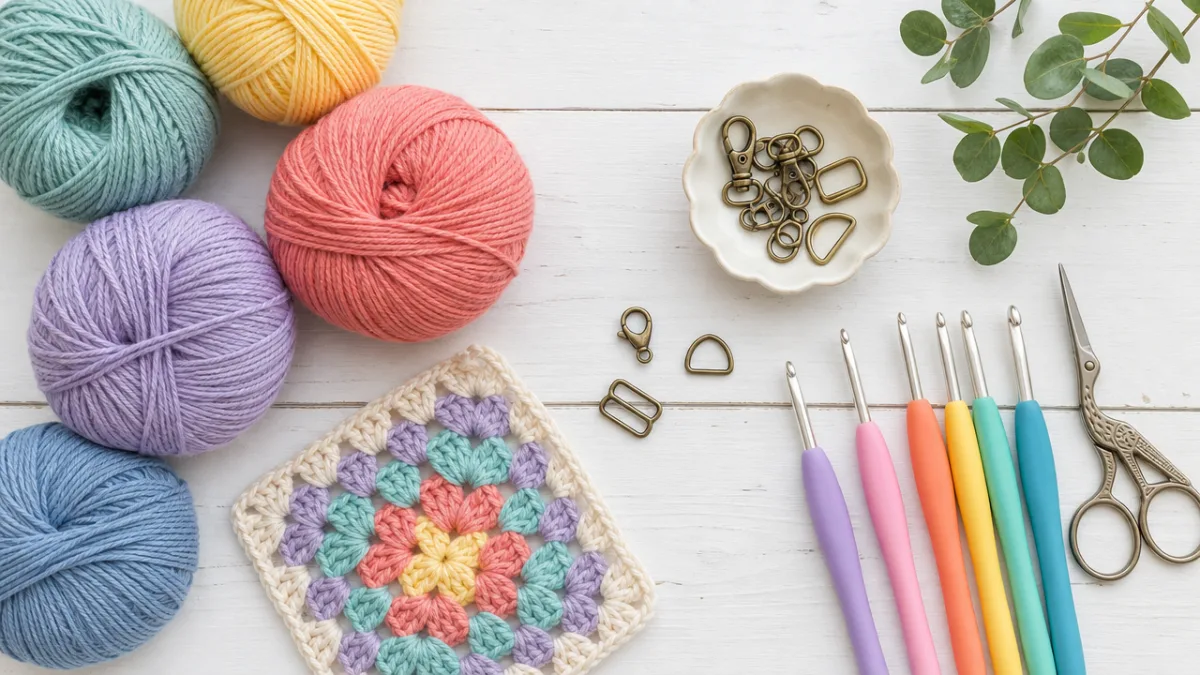
Beyond yarn and a hook, you’ll need a few other supplies to complete the project properly. Hardware connectors are essential — look for swivel snap hooks or trigger clasps in metal, as these provide a secure attachment to your camera’s strap lugs. You’ll want two of these clasps, one for each end of the strap. D-rings or split rings can also be incorporated for added adjustability. A yarn needle for weaving in ends, scissors, and a measuring tape round out your basic toolkit. Optional embellishments like small floral motifs, beads, or ribbon can be added after the main strap is complete if you want extra decorative detail.
- Yarn: Cotton worsted weight or macramé cord in your preferred color palette
- Crochet hook: 4mm to 6mm depending on yarn weight
- Metal swivel snap clasps: Two, rated for at least 1kg load capacity
- D-rings or adjustable sliders: Optional, for an adjustable-length strap
- Yarn needle and scissors: For finishing and weaving in ends
- Measuring tape: To ensure the strap reaches your desired finished length
- Stitch markers: Helpful for keeping track of pattern repeats
Step-by-Step Instructions for Crocheting Your Camera Strap
Begin by threading one of your metal swivel clasps onto a short length of chain stitches that will form the anchor loop at one end of your strap. To do this, chain 8 stitches, slip stitch the chain into a loop around the clasp bar, and then work your foundation row of single crochet stitches along this chain to establish the width of your strap. A standard camera strap width is between 2.5cm and 4cm, which translates to roughly 8 to 14 single crochet stitches across, depending on your yarn thickness and hook size. Use stitch markers at the beginning of each row to help you keep track of your work as you build length.
Once you’ve established your foundation, continue working in rows of single crochet back and forth, turning your work at the end of each row. Single crochet produces the densest, most durable fabric of the basic stitches, which is exactly what you need for something that must bear weight reliably. As you work, check the tension of your stitches regularly — they should be snug but not so tight that you’re struggling to insert your hook. If you’d like a slightly more decorative texture, you can substitute a row of half double crochet every few rows, which creates a slightly thicker fabric with a gentle ribbed appearance that also looks beautiful.
Continue crocheting until your strap reaches approximately 100cm to 120cm in length, keeping in mind that the finished strap will need to loop over your head and rest comfortably on your shoulder with the camera hanging at hip level. Try measuring against a strap that already fits you well to calibrate the ideal length for your body. Once you’ve reached the right length, work the second clasp anchor in the same manner as the first: chain 8, fold the chain around the bar of the clasp, and slip stitch to join. Fasten off and use your yarn needle to weave in all tail ends securely, going back through the stitches in multiple directions so no ends can work themselves loose over time.
If you’d like your strap to be adjustable, you can incorporate an adjustable cord slider — the kind used in backpack straps — at the midpoint of your strap. Simply cut the strap to your preferred maximum length, weave both ends through the slider hardware, and secure them. This allows the strap to be lengthened or shortened depending on the shooting situation, which is particularly convenient if you share the camera with someone of a different height. Adjustable straps are slightly more complex to construct but significantly more versatile in everyday use and are well worth the small additional effort.
Decorative Ideas and Customization Options
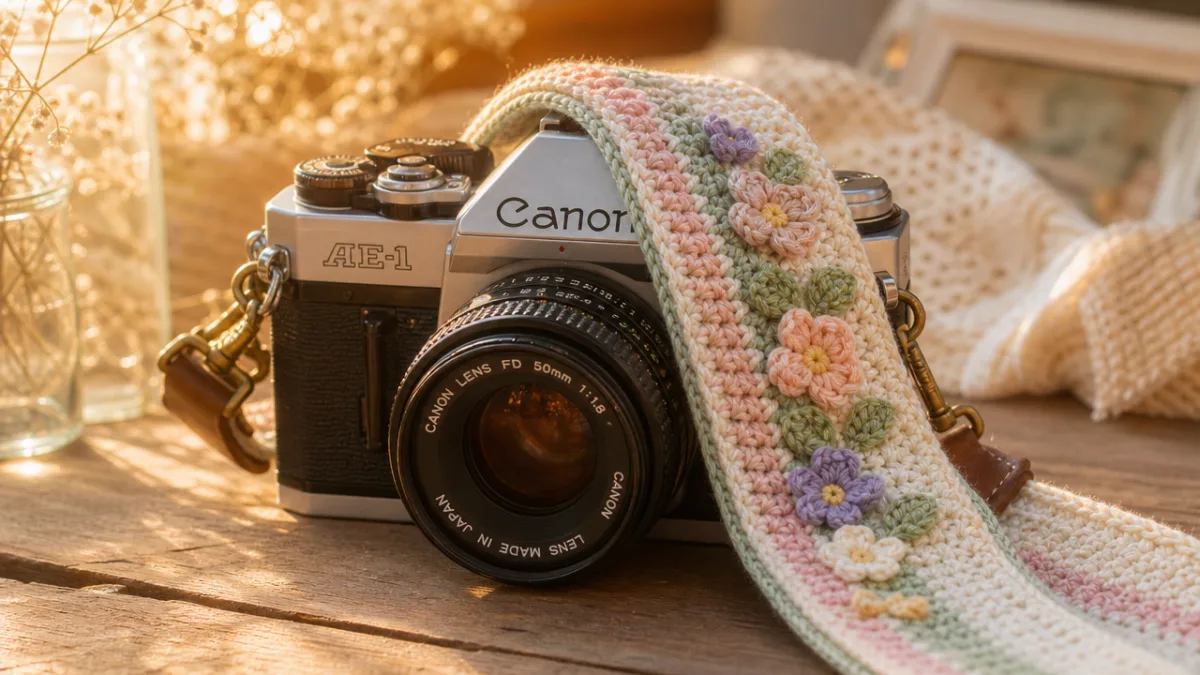
One of the greatest joys of making your own crochet camera strap is the enormous scope for personalization. Color is the most obvious starting point — you can work in a single solid color for a clean, minimalist look, or carry multiple colors throughout the strap for a striped, gradient, or colorblock effect. Pastel tones like sage green, dusty rose, lavender, and cream are perennially popular for this project, especially among photographers who lean toward a soft, cottagecore, or botanical aesthetic. Bold jewel tones work beautifully too, particularly for street and documentary photographers who want their strap to be a confident style statement.
Small crocheted flowers are among the most charming embellishments you can add to a camera strap, and they’re referenced in countless Pinterest iterations of this project. To make a simple crochet flower, magic ring 6 single crochets, slip stitch to join, then work five petals around the ring by chaining 3 and slip stitching between each single crochet. These flowers can be made in any color and in multiple sizes, then sewn along the length of the strap at evenly spaced intervals. Adding a small button or bead to the center of each flower gives them a finished, dimensional quality. A cluster of these floral motifs at the midpoint of the strap creates a focal point that looks elegant against almost any camera body color.
Beyond flowers, you might consider adding tassels at the ends of the strap, which give a bohemian feel and can be made from the same yarn or from contrasting ribbon. Beads with large enough holes to thread onto yarn — wooden beads, ceramic beads, and glass seed beads all work well — can be crocheted directly into the strap by threading them onto the yarn before you begin and sliding them into position as you work each row. Embroidered details, such as small stars or leaves stitched onto the finished strap with a tapestry needle, are another beautiful finishing option that adds texture and dimension without adding bulk.
- Choose a color palette that complements your camera body or your usual photography wardrobe.
- Crochet small flower motifs separately and sew them at evenly spaced points along the strap.
- Add wooden or ceramic beads by threading them onto your yarn before beginning each row.
- Create a striped effect by changing yarn colors every 10 to 15 rows throughout the strap body.
- Finish the ends with small tassels made from yarn offcuts or satin ribbon for a bohemian flourish.
- Embroider small motifs like stars, leaves, or initials onto the completed strap using a tapestry needle.
Safety, Durability, and Care Considerations
When making any accessory designed to hold a camera, safety must be the primary consideration. Before you ever attach your finished crochet strap to your camera and wear it in public, you should conduct a simple load test at home. Attach the strap to something of similar weight to your camera — a bag of rice or a filled water bottle of equivalent weight works perfectly — and hold it suspended by the strap for at least a full minute. Shake it gently to simulate the movement of walking. Inspect every part of the strap and both clasp connections carefully afterward. If anything looks stressed, frayed, or distorted, reinforce those areas before use.
The clasps are the most critical component from a safety standpoint. Even if your crocheted strap itself is perfectly constructed, a cheap or poorly rated clasp can fail without warning, sending your camera to the ground. Invest in trigger snap clasps or swivel snap hooks that are explicitly rated for at least 1kg of load — 2kg rated clasps are even better and still inexpensive. Check that the clasp mechanism opens and closes cleanly and locks securely. Replace the clasps at the first sign of stiffness, rust, or difficulty latching. The yarn anchor loops around the clasps should be reinforced with multiple rows of slip stitches and, ideally, a few additional hand-sewn stitches through the anchor loop using a sturdy thread for extra peace of mind.
Cotton yarn, which is the most recommended material for this project, has excellent durability and can withstand regular use for years if properly cared for. However, it will absorb moisture, which can lead to discoloration or mildew if the strap is frequently exposed to sweat or rain and not dried properly. If you photograph outdoors frequently, consider giving your finished strap a light spray with a fabric protector product to add a degree of moisture resistance. To clean the strap, hand wash it gently in cool water with a small amount of mild soap, rinse thoroughly, and lay it flat to dry. Avoid machine washing, as the agitation can distort the shape of the crochet stitches and weaken the clasp anchor loops over time.
Gifting, Selling, and Sharing Your Crochet Camera Strap
A handmade crochet camera strap makes an exceptional gift for the photographer in your life. It communicates thoughtfulness and creativity far beyond what any store-bought accessory can convey, and because it’s fully customizable, you can tailor the colors and embellishments to perfectly suit the recipient’s personal style. Photography enthusiasts, content creators, bloggers, film photographers, and even casual point-and-shoot users will appreciate the charm of a one-of-a-kind handmade strap. Pair it with a small card explaining the materials used and care instructions, and you have a gift that is both heartfelt and genuinely useful.
If you discover that you enjoy making these straps and that your friends and family are constantly admiring them, selling your crochet camera straps could become a rewarding small creative business. Platforms like Etsy, Instagram, and local craft markets are all excellent venues for selling handmade camera accessories. When pricing your work, be sure to account for the full cost of materials including yarn, clasps, and any embellishments, plus a reasonable hourly rate for your time, plus platform fees and shipping costs. Many makers undervalue their handmade work, but buyers on craft-focused platforms actively seek out handmade goods and are often willing to pay fairly for quality craftsmanship and thoughtful design.
Sharing your finished strap on social media and platforms like Pinterest can also bring joy and inspiration to the wider crochet and photography communities. When you post your work, include details about the yarn weight, hook size, and approximate length in the caption or description so that fellow crafters can replicate your results. Tag your posts with relevant hashtags such as #crochetcamerastrap, #handmadephotography, #crochetaccessories, and #diyamerastrap to reach people who are specifically searching for this type of project. Engaging with comments, answering questions, and encouraging others to share their own versions creates a warm and collaborative creative community that enriches the craft for everyone involved.
- Customize the color palette to match the recipient’s camera body or personal style before gifting.
- Include a handwritten care card with washing and maintenance instructions when giving as a gift.
- Price your straps fairly on Etsy or at craft markets by calculating material costs plus hourly labor plus fees.
- Photograph your finished straps against beautiful backdrops to create compelling product images for selling.
- Use targeted hashtags on Instagram and Pinterest to connect with the wider crochet and photography communities.
- Offer custom orders with personalized color choices and embellishment styles to attract repeat customers.
Inspiration, Community, and Where to Find More Patterns
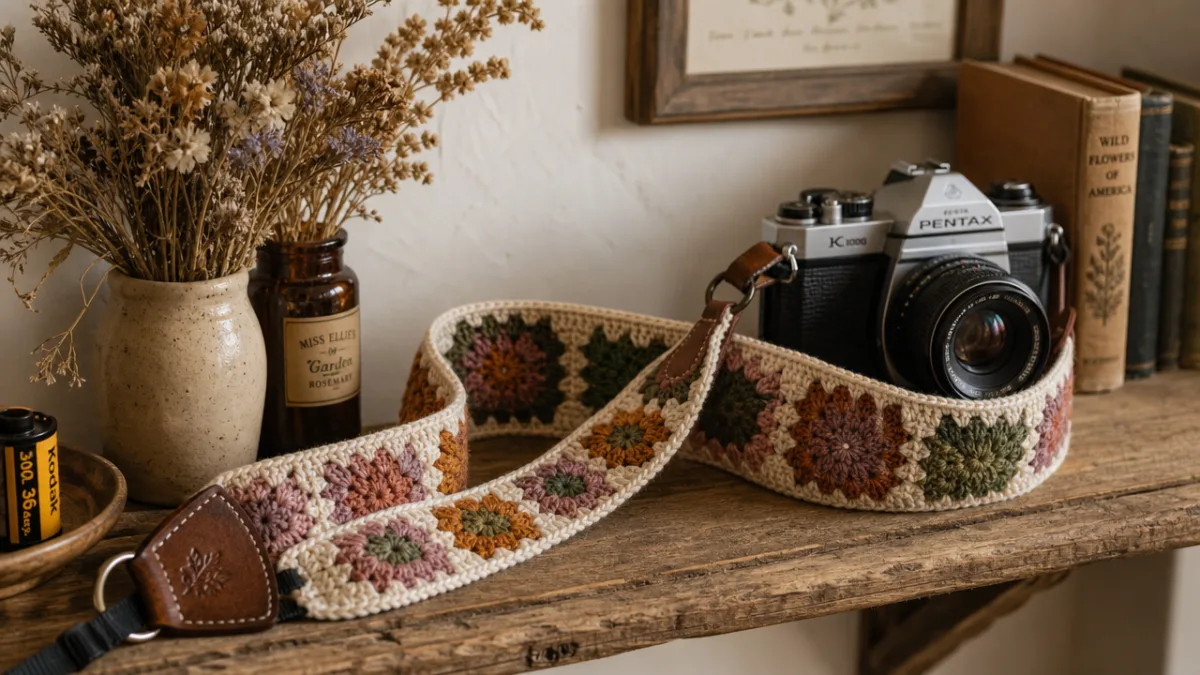
The crochet camera strap project sits at a particularly lovely crossroads of two vibrant online communities: fiber arts enthusiasts and photography lovers. Pinterest is perhaps the richest single source of inspiration for this project, with thousands of pins showcasing finished straps in every imaginable color combination, style, and decoration. Spending even a short time browsing will reveal how varied the results can be — from clean, minimalist neutral straps with simple metal clasps, to lush, flower-covered bohemian creations that look like wearable gardens. Saving pins that appeal to you and identifying the common elements among your favorites is a wonderful way to develop your own unique vision before you start crocheting.
YouTube is another invaluable resource, particularly for beginners who benefit from seeing the techniques demonstrated in real time. Search for terms like “crochet camera strap tutorial,” “crochet strap with hardware clasps,” or “crochet bag strap” — the latter will yield many structurally similar projects with transferable techniques. Ravelry, the dedicated fiber arts platform and community, is also worth exploring, as it hosts a large database of free and paid patterns, many of which include detailed stitch counts, written instructions, and user photos showing finished results in different yarns and colors. Creating a free Ravelry account allows you to save your favorite patterns to a virtual library for easy reference.
Beyond digital platforms, local yarn shops frequently host workshops and crochet circles where you can learn new techniques, ask questions in person, and meet fellow crafters who share your enthusiasm. If a crochet camera strap project sounds like something other members of your local community might enjoy, you could even propose it as a themed workshop or group project. The combination of a practical outcome and a genuinely enjoyable crafting process makes this project ideal for group settings. Whether you work through it alone at home on a quiet afternoon or in the company of friends over coffee, creating a crochet digital camera strap is an experience that is every bit as rewarding as the beautiful, functional accessory you end up with at the end.








What do you think?
It is nice to know your opinion. Leave a comment.