










IKEA Craft Hacks That Look Expensive But Aren’t
The Art of Affordable Luxury: Why IKEA Hacking Has Taken Over the Design World
There is a quiet revolution happening in homes across the world, one that does not require a designer’s budget or a contractor’s expertise. IKEA hacking — the practice of modifying, painting, combining, or otherwise transforming IKEA’s affordable flat-pack furniture into something that looks like it belongs in an architectural digest spread — has become one of the most beloved creative pursuits of the modern age. What began as a niche hobby among resourceful decorators has blossomed into a global community of makers, crafters, and design enthusiasts who refuse to believe that beautiful living spaces are only for the wealthy.
The appeal is obvious when you stop to think about it. IKEA products are built on clean, simple lines — a design philosophy rooted in Scandinavian minimalism that, as it turns out, makes their pieces the perfect blank canvas. A BILLY bookcase, a KALLAX unit, or a LACK side table might look perfectly functional straight out of the box, but with a little imagination and a modest investment in craft supplies, these humble pieces can be elevated into something that looks genuinely custom-made. Visitors who see the finished results are often stunned to learn where the furniture actually came from.
What makes IKEA hacking so particularly satisfying is the combination of accessibility and creativity it demands. You do not need to be a trained carpenter or an experienced interior designer to achieve results that look polished and professional. Armed with some paint, hardware store trim, contact paper, or even just new drawer pulls, anyone with an afternoon to spare and a vision in mind can create pieces that feel genuinely one-of-a-kind. This article is your guide to the most impactful, most impressive, and most achievable IKEA craft hacks around — all of them designed to look far more expensive than they actually are.
Understanding the IKEA Hacking Philosophy
Before diving into specific projects, it helps to understand what separates a truly successful IKEA hack from a modification that simply looks like a modified piece of cheap furniture. The best hacks work because they respect the original item’s proportions and structural integrity while fundamentally changing its visual identity. A good hack asks the question: what would this piece look like if it had been made by a luxury brand? Then it reverse-engineers the answer using affordable materials and accessible techniques.
Color is perhaps the single most powerful tool in the IKEA hacker’s toolkit. A coat of deep, moody paint — think forest green, charcoal, or dusty terracotta — can transform even the most basic IKEA piece into something that reads as designer. The key is in the finish. Matte and eggshell finishes tend to read as more luxurious than glossy ones, which can cheapen the look. Invest in quality furniture paint or chalk paint, apply it carefully with a foam roller for a smooth result, and the difference will be immediately apparent.
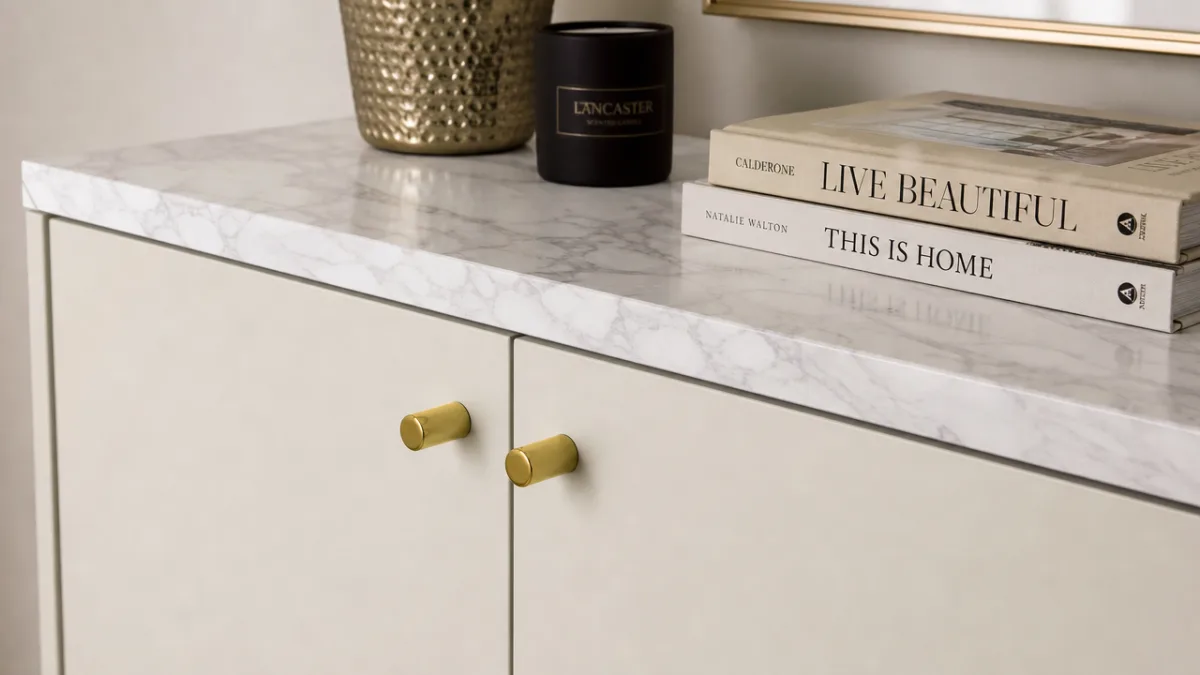
Hardware upgrades are another transformative hack that costs very little but delivers enormous impact. IKEA’s standard hardware — the basic knobs, pulls, and hinges that come standard on most pieces — is functional but generic. Swapping these out for brass pulls, ceramic knobs, rattan handles, or aged bronze fixtures instantly changes the perceived quality of the entire piece. This is the kind of detail that subconsciously signals “expensive” to anyone who looks at the finished result, even if they cannot quite put their finger on why.
Paint Transformations: From Flat-Pack to Fine Furniture
The IKEA KALLAX shelving unit is arguably one of the most popular canvases for paint transformations, and for good reason. Its grid-based design is inherently versatile, but in its standard white or birch finish, it can look a little institutional. A full repaint in a deep, saturated color like navy, sage green, or matte black instantly transforms it into something that looks like a custom-built shelving unit from a high-end furniture boutique. The trick is proper preparation — always sand lightly and apply a primer designed for laminate surfaces before your topcoat to ensure adhesion and longevity.
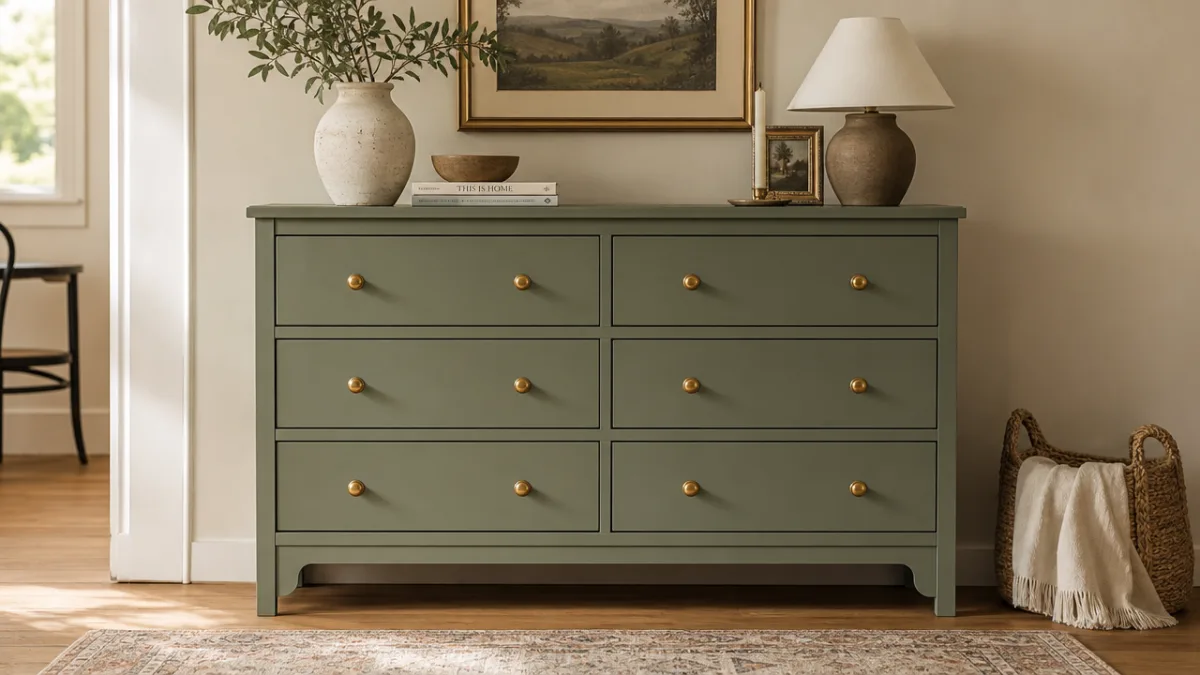
The HEMNES dresser is another perennial favorite for paint hacks. Its classic, slightly traditional silhouette lends itself beautifully to a heritage color palette. Painted in a warm antique white and fitted with new brass or porcelain handles, it can convincingly pass for a vintage French provincial piece that would retail for five times the price. For an even more convincing antique effect, try lightly dry-brushing a slightly darker shade of the same color along the edges and raised details to simulate the gentle patina that comes with age and use over many decades.
For the truly adventurous, two-tone painting — applying one color to the exterior of a piece and a contrasting or complementary color to the interior — is a sophisticated technique that immediately elevates the perceived craftsmanship of any unit. Imagine a BILLY bookcase painted in dusty blush pink on the outside, with the back panel painted in a deep, rich burgundy. The contrast draws the eye in and creates a sense of intentional, thoughtful design that speaks volumes about the care and consideration that went into the space. It is the kind of detail that interior designers charge handsomely to specify.
The Power of Fluted and Textured Finishes
One of the most on-trend IKEA hacks currently making waves across interior design communities involves adding fluted paneling or reeded wood detail to the fronts of IKEA cabinet doors and drawer fronts. Thin strips of MDF or rattan caning applied vertically to plain IKEA fronts — particularly those on the BESTA system or the PAX wardrobe — create an instantly luxurious textural effect that is strongly associated with high-end furniture design. The materials themselves are inexpensive and widely available at hardware stores, and the application requires nothing more than wood glue and patience.
Wallpaper applied to the back panels of open IKEA shelving units is another textured hack with dramatic impact. A single roll of beautiful wallpaper — whether it features a bold botanical print, a geometric pattern, or a faux grasscloth texture — applied behind the shelves of a KALLAX or a BILLY unit creates a layered, curated look that transforms the entire piece into a decorative focal point. The wallpaper frames whatever objects are displayed on the shelves and gives the whole composition a sense of richness and intentionality that would otherwise cost a great deal more to achieve.
Limewashing is a paint technique gaining enormous popularity that works particularly well on IKEA pieces with any natural wood or wood-effect finish. By diluting white paint and applying it in loose, slightly uneven strokes before wiping back, you create a soft, chalky, aged texture reminiscent of old European farmhouse furniture or Californian coastal interiors. The result looks artisanal and handmade in the best possible way — the kind of piece that looks like it was sourced from a carefully curated vintage market rather than assembled with an Allen key on a Tuesday evening.
Hardware and Trim Upgrades: The Details That Make All the Difference
If paint is the biggest transformation, hardware is the most underrated one. The handles, knobs, and pulls on any piece of furniture function almost like jewelry — they are small, they are often the last thing you add, and yet they can entirely define the character and perceived quality of the finished piece. IKEA sells replacement fronts and basic hardware, but the real magic happens when you source your hardware elsewhere. Etsy is a treasure trove of handmade ceramic knobs, artisan leather pulls, and custom cast brass handles that add genuine character and a sense of individuality to any IKEA piece.
Adding decorative trim and molding to the exterior of IKEA furniture is a hack that has been around almost as long as IKEA hacking itself, and it remains one of the most dramatic upgrades available. Applying simple MDF chair rail molding or picture frame molding to the flat fronts of PAX wardrobe doors, for instance, instantly transforms them from flat, modern panels into what appear to be traditional raised-panel doors. Painted in the same color as the door itself — or in a contrasting shade for extra drama — the molding creates shadow lines and dimensionality that signal craftsmanship and quality to any observer.
Legs are another frequently overlooked upgrade point. Many IKEA storage pieces sit directly on the floor, giving them a built-in, utilitarian appearance. Adding tapered mid-century modern legs, hairpin legs, or even simple bun feet — all of which are available from a variety of online retailers — immediately lifts the piece off the floor, creates visual breathing room, and transforms it into what appears to be a freestanding furniture item with genuine design heritage. The KALLAX unit, in particular, looks like an entirely different object when raised on hairpin legs and repositioned as a credenza-style media console.
Contact Paper and Vinyl: Affordable Surface Transformations
Contact paper has had a serious glow-up in recent years. Once associated primarily with lining kitchen shelves, high-quality adhesive contact paper and vinyl film now come in finishes so convincing that they are genuinely difficult to distinguish from the real thing at a glance. Marble-effect contact paper applied to the top surface of an IKEA LACK table, for instance, creates what appears to be an actual stone surface — the kind of thing you would expect to pay a significant premium for if it were genuine. The trick is in the application: use a squeegee, work slowly from one edge, and overlap any seams precisely.
Wood-grain contact paper applied to the flat, painted surfaces of IKEA pieces can add warmth and texture in spaces that might otherwise feel a little cold and minimal. It works particularly well on the ALEX drawer unit, a perennial favorite that appears everywhere from home offices to vanity spaces. Wrapped in a warm walnut or light oak contact paper, the ALEX transcends its origins entirely and becomes something that reads as genuinely Scandinavian-designer-quality rather than entry-level flat-pack. Pair it with some gold or brushed brass handles and the transformation is complete.
For a truly high-impact, low-effort transformation, consider applying contact paper in a bold pattern to the interior backs of glass-fronted IKEA cabinets like the FABRIKÖR or the older DETOLF. A geometric tile pattern, a moody dark marble, or even a bold abstract print visible through the glass doors creates an immediate impression of a thoughtfully curated and designed display cabinet. The pattern is protected by the glass and can be changed relatively easily if your tastes evolve, making it one of the most flexible and rewarding hacks in this entire arsenal.
Combining IKEA Pieces for Custom Built-In Looks
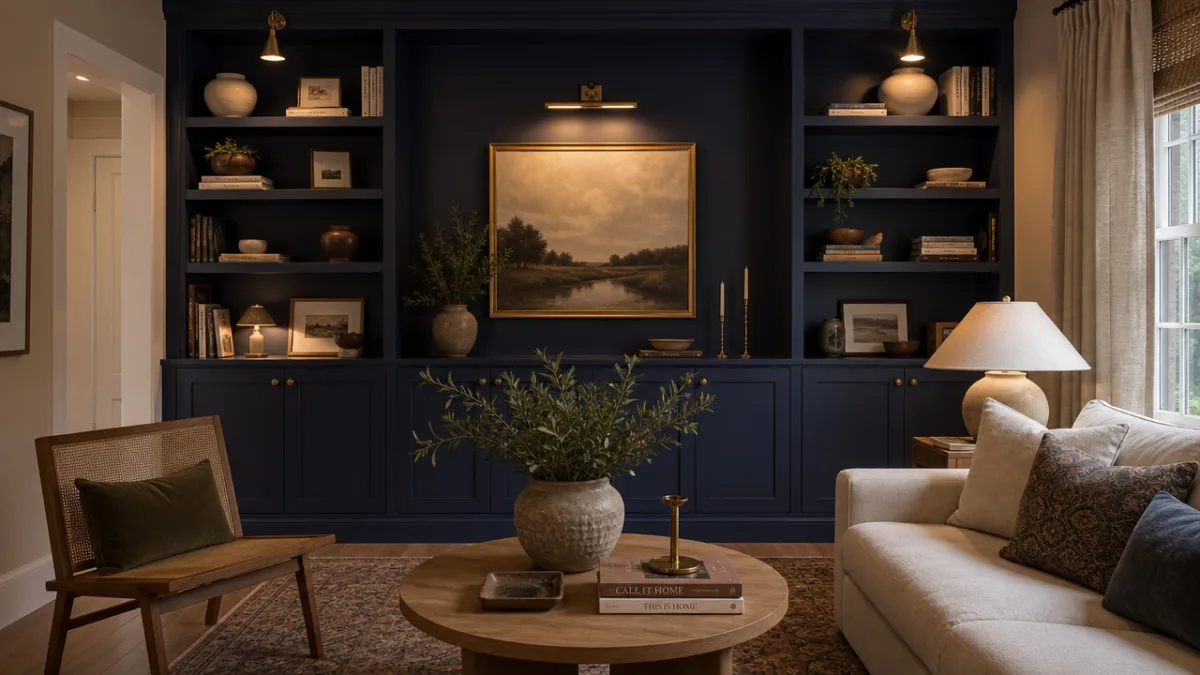
One of the most ambitious and most impressive categories of IKEA hacking involves combining multiple IKEA units to create what appears to be custom built-in furniture — the kind of floor-to-ceiling, wall-to-wall cabinetry that would typically require a joiner or a bespoke furniture maker and a budget to match. The BILLY bookcase is the most famous candidate for this treatment. By combining multiple units of different heights, adding crown molding along the top to meet the ceiling, and painting everything in a single unified color, you can create a library wall that looks absolutely indistinguishable from a custom installation.
The BESTA system was practically designed with this kind of transformation in mind. Its modular nature means that units can be stacked, combined horizontally, and configured in almost any arrangement imaginable. Add a continuous top surface — a slab of butcher block, a piece of marble-effect laminate, or even a custom-cut piece of solid timber — and suddenly you have what appears to be a fully custom media wall or sideboard of exactly the right dimensions for your space. Finish it with flush, handleless doors using BESTA’s push-open mechanism and the result is impossibly sleek and modern-looking.
The PAX wardrobe system offers similar possibilities on a grander scale. A full wall of PAX units, fitted with custom doors sourced from third-party retailers like Semihandmade or Reform — companies that specialize in high-quality alternative fronts specifically designed for IKEA carcasses — can look like a genuinely bespoke walk-in wardrobe installation. Add internal lighting strips along the top edge and soft-close drawer inserts, and the result is something that genuinely rivals what you would find in a luxury apartment show home. The total cost is a fraction of the custom alternative.
Styling Your Hacked Pieces: The Final Layer of the Look
Even the most beautifully executed IKEA hack will fall flat if it is not styled and integrated into its surrounding space thoughtfully. The way you style your hacked pieces is part of the hack itself — a crucial final layer that completes the illusion of expense and intentionality. Think about what sits on top of, inside, and around your hacked furniture as carefully as you thought about the paint color or the hardware selection. A few well-chosen decorative objects, plants, and books can make even a simple piece look like it was placed by a professional set stylist.
Lighting is perhaps the most powerful styling tool of all, and it is one that is frequently underestimated. Placing a hacked KALLAX unit or BILLY bookcase against a wall that is lit from above by a picture light, or adding interior strip lighting that illuminates the objects on the shelves, transforms it from a piece of furniture into a genuine design feature. The way light plays across the surface of a painted piece, picks out the texture of added trim detail, or reflects off a new brass handle can make all the difference between a hack that looks handmade and one that looks genuinely designed.
Finally, integration is key. Hacked pieces look most convincing when they feel like they belong in the space rather than sitting in it. This means considering the surrounding wall color, the flooring, the other furniture, and the overall mood of the room. A deep green HEMNES dresser looks stunning in a room with warm-toned walls and natural fiber rugs; the same dresser might look less convincing in a very different environment. Take the time to consider how your hacked piece will coexist with everything else in the room, and you will find that the whole space elevates along with the individual piece itself.
Budget Planning and Where to Find Your Supplies
One of the most practical aspects of IKEA hacking is how achievable it is even on a genuinely tight budget. The beauty of the approach is that you can scale your investment up or down depending on what you are working with, and still achieve impressive results. A simple paint and hardware upgrade — arguably the most impactful hack of all — can be accomplished for well under fifty dollars in most cases. A more ambitious build-in installation using multiple IKEA units with custom molding, a new countertop surface, and premium hardware might run to a few hundred dollars, but the result would cost many thousands if commissioned as a bespoke piece.
For paint and supplies, look beyond the big box DIY stores to specialist chalk paint and furniture paint brands that offer superior adhesion and coverage on the kinds of surfaces IKEA furniture typically presents. Brands like Annie Sloan, Rust-Oleum, and Frenchic have become favorites among the IKEA hacking community for their quality and their extensive color ranges. For hardware, Etsy remains the gold standard for unique, handcrafted options, while Amazon and eBay offer a huge range of more standard brass, black metal, and ceramic pulls at very competitive prices.
For wood trim and molding, most hardware stores carry a good selection of MDF profiles that work perfectly for adding decorative detail to flat IKEA surfaces. Rattan caning sheets — used to create those beautiful fluted and caned effects — are available from craft suppliers and online retailers. Contact paper is widely available in an enormous range of finishes, but it is worth investing in a quality brand rather than the cheapest option, as the difference in finish quality and durability is genuinely significant. Finally, do not overlook the secondhand market for IKEA pieces themselves — Facebook Marketplace and local thrift stores often have IKEA furniture available at a fraction of the original retail price, giving you an even larger margin to invest in your transformation materials.
Building a Community and Finding Inspiration
One of the greatest resources available to any aspiring IKEA hacker is the enormous, generous, and genuinely inspiring community that has built up around this hobby over the years. IKEAhackers.net — one of the original websites dedicated to documenting IKEA modifications — remains a fantastic archive of projects ranging from the simple to the extraordinary. Pinterest boards dedicated to IKEA hacking are an inexhaustible source of visual inspiration, and Instagram and TikTok are increasingly rich with creators who document their projects step by step in a way that makes even ambitious builds feel genuinely approachable.
Connecting with others who share your interest in IKEA hacking also has practical benefits beyond inspiration. The community is full of people who have already solved the problems you are likely to encounter — whether that is finding the right primer for IKEA’s laminate surfaces, sourcing a specific type of hardware, or figuring out the best way to attach molding to a smooth cabinet door. Facebook groups dedicated to IKEA hacking are particularly active and helpful, and members are typically very generous with their knowledge, their sourcing recommendations, and their honest assessment of what works and what does not.
Ultimately, the most important ingredient in any successful IKEA hack is the willingness to experiment and the confidence to trust your own creative instincts. Not every project will turn out exactly as planned — that is part of the process, and the mistakes are often where the most interesting lessons are learned. But with each project, your skills sharpen, your eye for what works develops, and your home gradually fills with pieces that are genuinely, uniquely yours — objects that look expensive, feel considered, and carry the particular satisfaction of having been created by your own hands from the most humble of beginnings.








What do you think?
It is nice to know your opinion. Leave a comment.