










“`html
First Sunflower: A Complete Guide to Growing, Understanding, and Celebrating Nature’s Golden Bloom
The Magic of Growing Your First Sunflower
Growing your first sunflower is kind of a big deal — even if it doesn’t feel that way when you’re just poking a striped seed into a patch of warm soil. Humans and sunflowers go back thousands of years, and there’s a reason this particular plant has stuck around in our gardens for so long. Even if you’ve never successfully kept a houseplant alive, a sunflower will make you feel like a proper gardener. The payoff — those enormous, vivid blooms — is one of nature’s better rewards for a little patience and attention.
What really gets people hooked is how fast things move. In those first few days, a little green hook pushes up through the dirt and unfurls into two tiny seed leaves that look almost laughably small for what they’re going to become. Then, week by week, the stem thickens, the leaves spread out wider than your hand, and the whole plant starts leaning toward the sun with this almost stubborn sense of purpose. Checking on it every morning stops feeling like a chore pretty quickly.
Kids especially tend to remember their first sunflower for the rest of their lives. It grows fast enough to keep them interested, gets tall enough to genuinely impress them, and blooms in a color that feels like a celebration. Ask most adults about it and they can still picture exactly where that first plant stood, what the petals looked like, the particular satisfaction of cutting it and carrying it inside. That kind of memory sticks, which says a lot about what a sunflower can do for a person.
Choosing the Right Variety for Your Garden
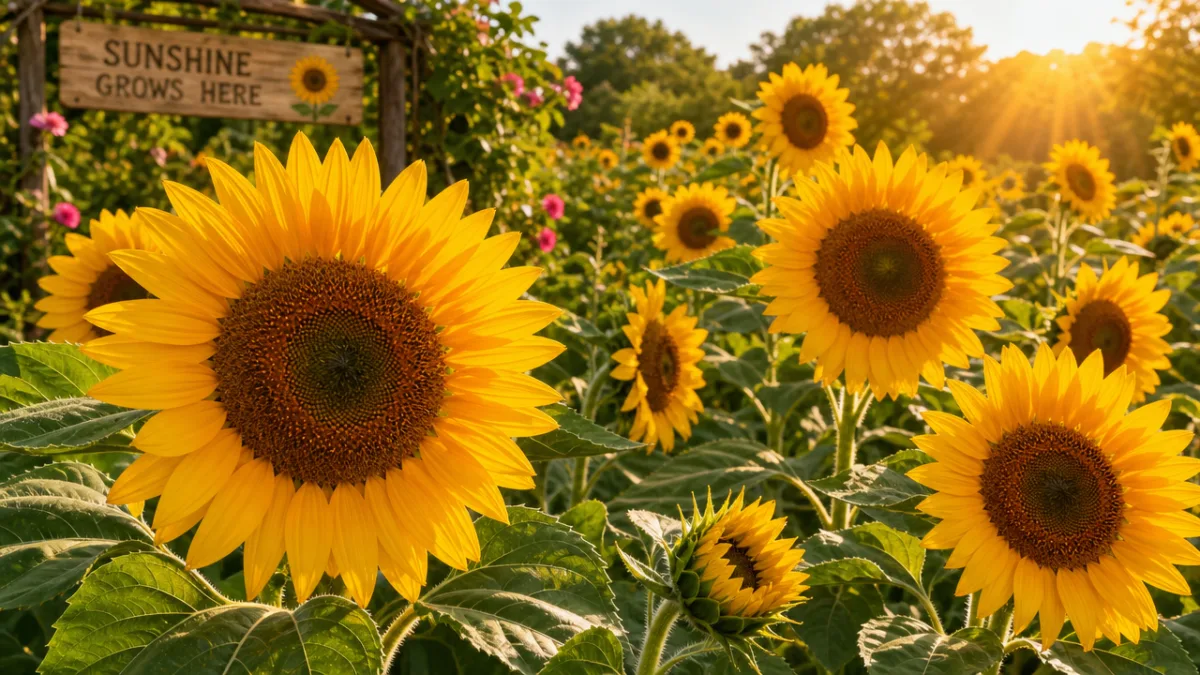
Most people picture the same thing when they think sunflower: a towering single-stemmed plant, dinner-plate head, bright yellow petals fanning out around a deep brown center. That variety — usually sold as Mammoth or Russian Giant — is absolutely worth growing. But it’s really just the tip of the iceberg. Once you start looking at what’s actually out there, the variety of sunflowers available is kind of staggering, and worth a little exploration before you buy seeds.
If you’re working with a small patio or balcony, dwarf varieties like Sunspot or Music Box top out around two feet but still produce full, beautiful blooms. They tend to branch and keep producing flowers across the whole season, which is a real bonus. At the complete opposite end of things, varieties like Skyscraper or Titan can push twelve to fourteen feet tall — the kind of plant that makes neighbors stop and stare over the fence.
Color is worth thinking about too. Yellow is the classic, but modern breeding has taken sunflowers into some surprising territory: deep burgundy, dark mahogany, soft lemon, creamy white, and bicolor patterns that fade from dark centers outward into golden tips. If you want to bring them indoors, look for pollen-free varieties developed for the cut flower trade — they won’t dust your furniture or bother anyone with allergies. And honestly, if you’re not sure where to start, a mixed sampler pack is a great excuse to try a bit of everything and see what you love.
- Mammoth Russian: The classic towering giant, reaching eight to twelve feet, with enormous single blooms ideal for seed production and dramatic garden presence.
- Teddy Bear: A dwarf variety with fully double, fluffy blooms that look remarkably like chrysanthemums, reaching only two feet in height.
- Moulin Rouge: A deep burgundy variety that adds dramatic color contrast to summer gardens and arrangements, pollen-free for indoor use.
- Lemon Queen: A branching variety producing dozens of soft yellow blooms, beloved by pollinators and excellent for cutting throughout the season.
- Skyscraper: One of the tallest varieties available, capable of reaching fourteen feet with proportionally large seed heads attractive to birds.
Planting, Soil, and Site Selection for Success
Sunflowers are forgiving plants, but they do have preferences — and getting the basics right from the start makes a real difference in how tall they grow, how freely they bloom, and how long the season lasts. The biggest one is sunlight. Full sun means at least six to eight hours of direct light per day, and there’s no workaround here. A spot that catches morning shade or gets blocked by a building for half the afternoon is going to produce plants that lean, struggle, and underperform. Just pick the sunniest corner of your garden and commit to it.
Soil prep is something a lot of beginners skip over, but it’s worth the effort. Sunflowers will grow in poor soil — they’re not that fussy — but they really hit their stride in loose, well-drained ground with a pH somewhere between 6.0 and 7.5. Before you plant, work the soil down about twelve inches, break up any compaction, and mix in some compost or a balanced slow-release fertilizer. One thing to avoid: going overboard with nitrogen. Too much and you’ll get a lush, leafy plant that doesn’t put much energy into flowers. Moderate fertility is actually the sweet spot.
Timing matters more than people realize. Sunflowers hate cold soil and frost, so wait until after your last frost date and until soil temperatures are at least 50°F before sowing. Direct sowing is the way to go anyway — sunflowers have sensitive taproots that don’t love being transplanted. Sow seeds about an inch deep and six inches apart for large varieties, then thin to proper spacing once seedlings come in. If you stagger plantings every two or three weeks from late spring through early summer, you’ll have fresh blooms rolling in all the way into autumn.
Watering is the last piece of the puzzle. Early on, you want consistent moisture to help germination and get seedlings established. Once the plants are several inches tall, they become impressively drought-tolerant, sending deep taproots down in search of water on their own. Deep, infrequent watering encourages that root development and produces sturdier plants in the long run. Overwatering — especially in heavy or clay soil — can cause root rot and stem disease. Keep the soil evenly moist but not soggy, and always water at the base rather than overhead so the leaves stay dry and fungal problems stay away.
The Science and Symbolism Behind the Sunflower
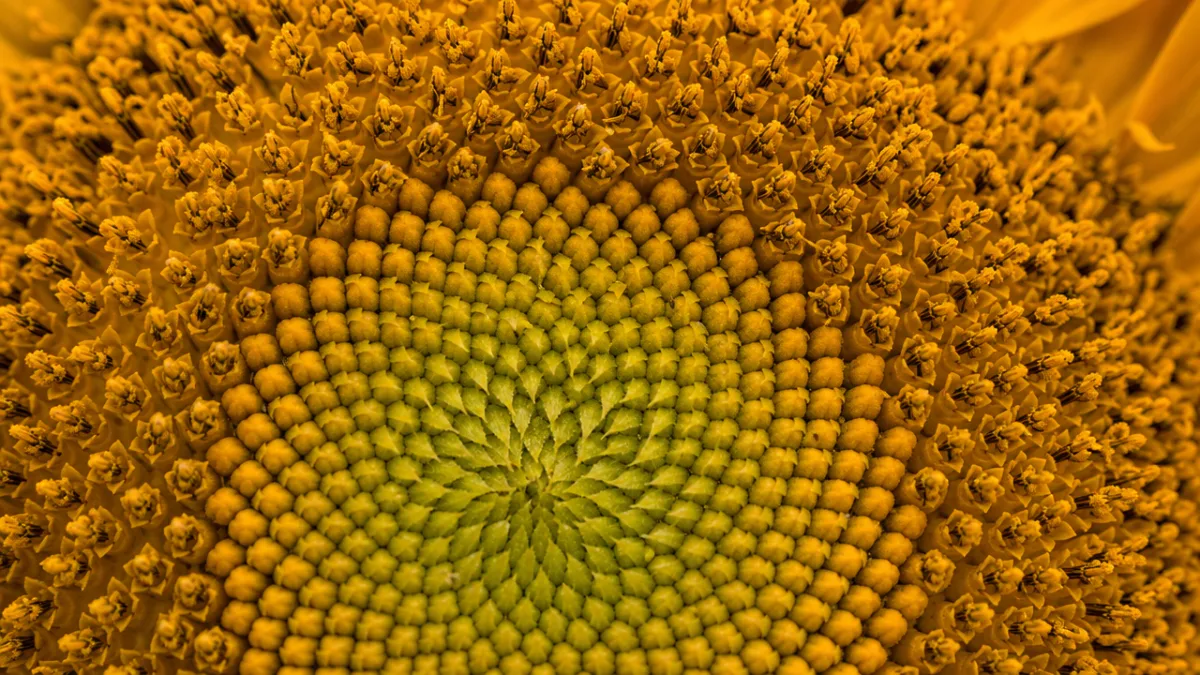
Scientifically known as Helianthus annuus, the sunflower belongs to the Asteraceae family — one of the largest plant families on the planet. Here’s something that surprises most people: what looks like a single flower is actually hundreds of tiny individual flowers packed together in one composite head. Those long, bright petals around the outside? They’re sterile ray florets whose whole job is to flag down pollinators. The textured brown center is made up of disc florets, and each one of those is a real flower capable of producing a single seed. Which means one sunflower head can easily contain more than a thousand seeds.
The sun-tracking behavior that gives the plant its name — technically called heliotropism — is fascinating once you know how it actually works. Young sunflowers track the sun across the sky each day not through any kind of sensing mechanism, but because the shaded side of the stem grows faster, physically pushing the tip toward the light. What’s interesting is that this behavior stops once the plant matures and starts flowering. At that point, the bloom settles facing east and mostly stays there. Researchers think this eastward orientation warms the flower in the morning hours, making it more attractive to bees who genuinely prefer a warmer landing pad.
Symbolically, the sunflower carries more weight than most flowers. Indigenous peoples across North America were cultivating sunflowers thousands of years before Europeans arrived, using every part of the plant for food, oil, dye, and medicine. The Aztecs connected it to their solar deity and worked it into religious ceremony. In Western art, it’s forever tied to Van Gogh, whose sunflower paintings turned a garden plant into something iconic. Today the sunflower shows up as a symbol of Ukraine, of hope, of environmental awareness, and of the kind of straightforward, uncomplicated happiness that summer tends to bring out in people.
The seed arrangement at the center of a sunflower is one of those things that can genuinely stop you in your tracks once you start looking. The seeds pack themselves into interlocking spirals following the Fibonacci sequence — a series where each number is the sum of the two before it. The number of spirals running in each direction is always two consecutive Fibonacci numbers, usually 34 and 55 or 55 and 89 in a large head. This arrangement is essentially nature’s solution to packing as many seeds as possible into the available space, and it’s been captivating mathematicians and scientists for a very long time — for good reason.
Caring for Your Sunflowers Through the Season
Once sunflowers are established and growing well, they’re pretty low-maintenance — but a few simple habits will make a noticeable difference in your results. Staking is worth doing for any variety expected to top four or five feet, especially if your garden is exposed to wind. A bamboo cane or garden post set close to the stem and loosely tied with soft twine will keep the plant from snapping over during summer storms. Get this done early, before the plant reaches its full height, so you’re not disturbing an established root system later in the season when it matters most.
Pests are rarely a serious problem, but they do show up. Aphids are the most common culprit, gathering on the undersides of leaves and on soft stem tips. A firm blast of water or a spray of insecticidal soap takes care of most infestations without reaching for anything harsh. As seeds start forming, birds and squirrels will absolutely notice, and if you’re planning to harvest seeds for eating, covering ripening heads with fine mesh or a paper bag is worth considering. For most people growing sunflowers for their beauty, though, sharing with wildlife is part of what makes the whole thing enjoyable.
Deadheading — removing spent flowers — is something to think about based on what you’re going for. With branching varieties grown as cut flowers, snipping off finished blooms regularly pushes the plant to keep producing new buds, which can extend flowering well into autumn. For single-stemmed varieties you’re growing for seeds, or plants you want to leave standing for birds through the colder months, just leave the heads alone. There’s something genuinely lovely about watching goldfinches work their way through a stand of dried sunflower heads on a crisp fall morning, methodically pulling seeds out one at a time.
Harvesting Seeds and Celebrating Your Blooms
Getting to the seed harvest is one of the most satisfying parts of growing sunflowers all the way through. Seeds are ready when the back of the head has shifted from green to a yellow-brown color, the petals have dropped, and the seeds themselves feel firm and show their familiar striped pattern. Cut the head from the stem with a few inches of stalk left on as a handle, then hang it upside down somewhere warm, dry, and well-ventilated for a few weeks until the seeds dry out completely and come free without much effort.
For eating, the simplest approach is to soak the seeds overnight in salted water, drain them, spread them on a baking sheet, and roast at 300°F for thirty to forty minutes, stirring now and then, until they’re golden and fragrant. Hulled seeds are endlessly versatile — toss them into salads, granola, bread, or trail mix, or blend them into sunflower butter, which is a genuinely good option for anyone dealing with nut allergies. Sunflower oil, pressed from the seeds, is a mild and light everyday cooking oil that’s been used around the world for generations.
Saving seeds for the following year is one of those simple pleasures that makes gardening feel like it connects you to something larger. Store dried seeds in a labeled paper envelope or breathable container — variety name, date — and tuck it somewhere cool, dark, and dry until spring. Sunflower seeds stay viable for several years, though germination rates are best in the first two. If you saved from an open-pollinated or heirloom variety, your plants next season will look very much like the parent. Hybrid varieties are less predictable, and the offspring can surprise you — which is honestly a fun gardening experiment in its own right.
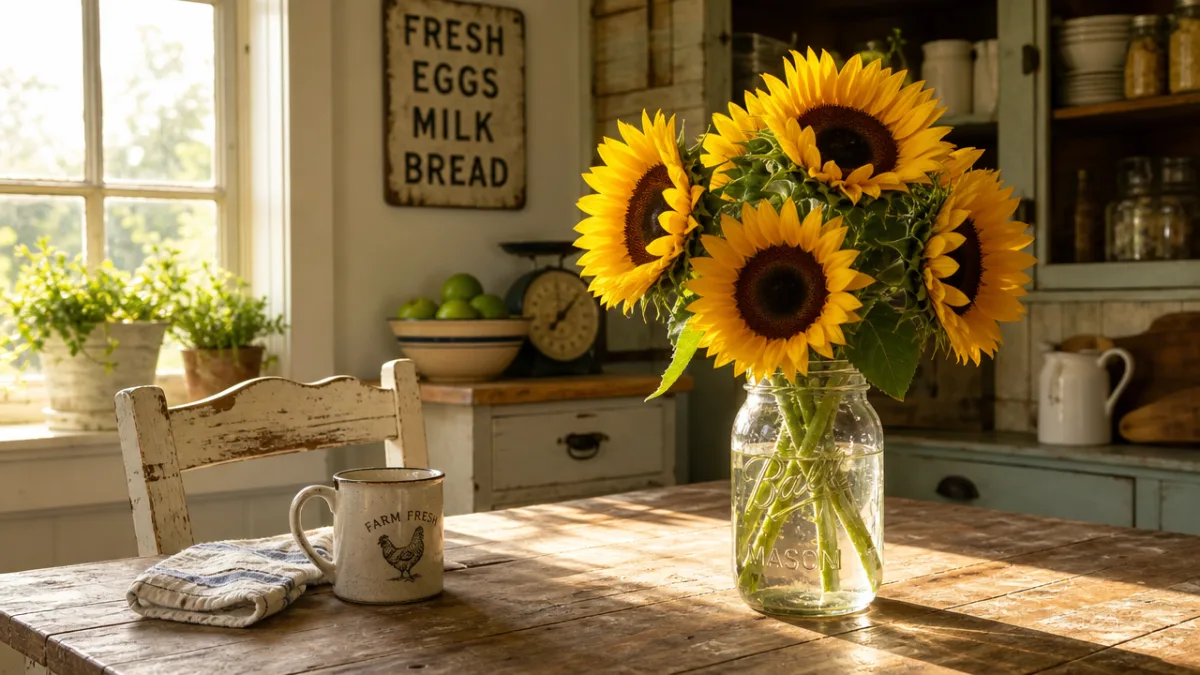
Beyond all the practical stuff, a sunflower just deserves to be appreciated for what it is. A big, fresh-cut bunch in a tall vase — stems cut on an angle and conditioned overnight in deep water — will easily last seven to ten days indoors. They go beautifully with zinnias, rudbeckia, dahlias, and the feathery textures of ornamental grasses. As a gift, sunflowers communicate something warm and uncomplicated that almost everyone responds to. There’s a reason they show up on birthday cards and nursery walls and festival banners everywhere you look. Something about them just captures what it feels like to be alive in summer.
- Cut stems early in the morning when flowers are freshest and most hydrated for best vase life indoors.
- Remove all leaves that would sit below the waterline to prevent bacterial growth and extend freshness.
- Change the water every two days and recut stems at an angle to maintain water uptake throughout the week.
- Keep arrangements away from direct sunlight and heat sources to slow wilting and preserve color.
- Add a small amount of floral preservative or a drop of bleach to the vase water to inhibit bacterial growth.
“`








What do you think?
It is nice to know your opinion. Leave a comment.