










When to Plant Flower Seeds: A Complete Guide to Perfect Timing
Understanding Seed Starting Basics
Getting your planting timing right might be the single biggest factor in whether your flower garden thrives or just sort of… exists. Nail the timing and you’ll have a garden exploding with color right when you want it. Get it wrong, and you’re left wondering why everything looks sad and late. Whether you’ve been gardening for decades or you just bought your first seed packet, understanding when to plant will genuinely change what you’re able to grow.
Here’s why timing matters so much: every flower species evolved to respond to specific environmental cues — soil temperature, day length, moisture, frost. When you plant at the right time, you’re basically speaking the plant’s language, and it responds with strong, healthy growth. Plant too early or too late, and you’re working against those signals. Seeds may rot, struggle to germinate, or produce weak plants that spend the whole season fighting uphill.
Before you can figure out your planting dates, you need two pieces of information: your USDA Hardiness Zone and your area’s average last frost date. Your zone tells you how cold your winters typically get, while your last frost date becomes the anchor for your entire spring planting calendar. Almost every seed packet references it — you’ll see instructions like “start indoors 8 weeks before last frost” or “direct sow 2 weeks after last frost.” Once you know that date, the rest of the puzzle falls into place.
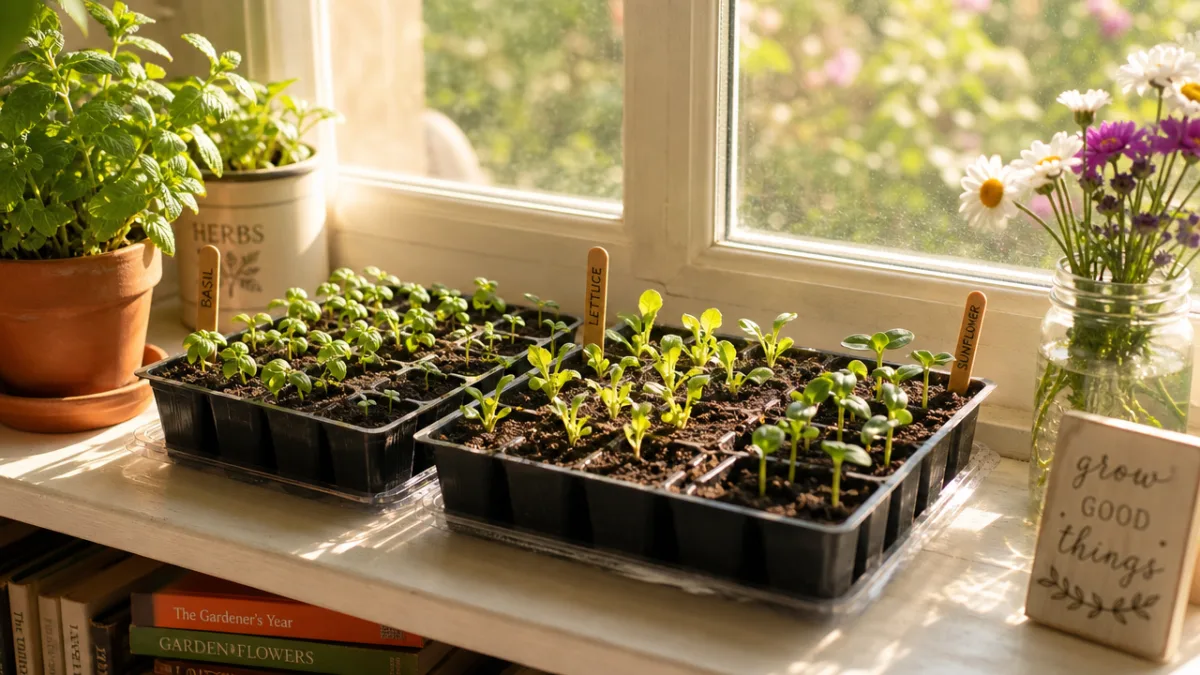
Starting Seeds Indoors: Timing for a Head Start
If you live somewhere with a shorter growing season, starting seeds indoors is how you get flowers that technically need more time than your climate naturally offers. Petunias, snapdragons, impatiens, begonias — these need anywhere from 10 to 16 weeks of indoor growing before they’re ready to go outside. Starting them inside lets you essentially steal weeks from the calendar and give your garden a real head start.
The math is pretty simple: look at your seed packet, find how many weeks of indoor time the seeds need, then count backwards from your last frost date. If your last frost is May 15th and your seeds need 10 weeks, you’re starting them around March 6th. One thing worth knowing, though — earlier isn’t always better. Plants that get started too far in advance tend to get leggy, root-bound, and stressed out before they ever see the garden. A well-timed seedling will almost always outperform one that’s been sitting in a pot too long.
Timing is only part of the equation indoors. Seeds also need consistent moisture, enough warmth to germinate (most flower seeds like soil between 65 and 75°F), and plenty of light once they sprout. We’re talking 14 to 16 hours of bright light a day — which usually means grow lights unless you have a genuinely excellent south-facing window. It’s also worth keeping notes on when you started things each year. Over time, those records become incredibly useful for fine-tuning your approach to your specific garden.
- Petunias: Start 10–12 weeks before last frost; tiny seeds need light to germinate and should not be covered with soil.
- Snapdragons: Start 10–12 weeks before last frost; they prefer cool temperatures and benefit from a period of cold stratification.
- Impatiens: Start 10–12 weeks before last frost; require warmth and high humidity for successful germination.
- Marigolds: Start 6–8 weeks before last frost; fast germinators that are easy for beginners to handle.
- Begonias: Start 12–16 weeks before last frost; extremely tiny seeds that require patience and careful moisture management.
Direct Sowing Outdoors: Reading the Soil and Season
Not every flower wants to be started in a little tray indoors — some actually do better when you skip all that and just sow them straight into the garden. Flowers with long taproots, like poppies, larkspur, and nigella, really don’t like having their roots disturbed, so transplanting them tends to set them back. Others, like sunflowers and zinnias, grow so fast that starting them indoors barely buys you anything and can actually backfire if they get too big for their containers before it’s warm enough to plant them out.
When you’re direct sowing after the last frost, soil temperature matters more than the date on the calendar. A lot of gardeners make the mistake of rushing out to plant the moment their last frost date passes, only to find the soil is still cold and waterlogged from snowmelt. Seeds sitting in cold, wet soil don’t germinate — they just sit there, and sometimes rot. A cheap soil thermometer takes the guesswork out of it. For warm-season flowers, wait until the soil is consistently reading at least 60°F and you’ll see a dramatic difference in how quickly things get going.
On the flip side, some flowers actually want cool soil and need to go in early — sometimes even before your last frost date, or in autumn to bloom the following spring. Sweet peas, bachelor’s buttons, and calendula fall into this camp. They’re frost-tolerant and can germinate in soil as cold as 40 to 50°F. Plant them too late when summer heat rolls in, and they may not germinate at all, or they’ll sprint straight to setting seed without giving you much of a flower show. Knowing which flowers are which is honestly one of the most useful things you can learn as a gardener.
When you’re prepping your bed for direct sowing, take the time to do it properly — loosen the soil at least six inches down, pull out rocks and debris, and work in some compost. Rake the surface until it’s fine and crumbly so small seeds have good soil contact. After sowing, firm the bed gently to close up any air pockets, then water carefully with a gentle spray so you don’t wash the seeds all into one corner. And once seedlings come up, thin them. Overcrowding is one of the most common reasons direct-sown flowers disappoint even when the timing was right on.
Cool-Season vs. Warm-Season Flowers: Knowing Your Plants
One of the most useful ways to think about flower timing is the cool-season versus warm-season split. Cool-season flowers evolved where temperatures are mild and frost is part of the picture, and they actively grow and bloom when temps are somewhere in the 45 to 65°F range — think spring and fall. Warm-season flowers are tropical or subtropical at heart and really hit their stride once the heat arrives, with many preferring consistently warm temperatures to perform their best.
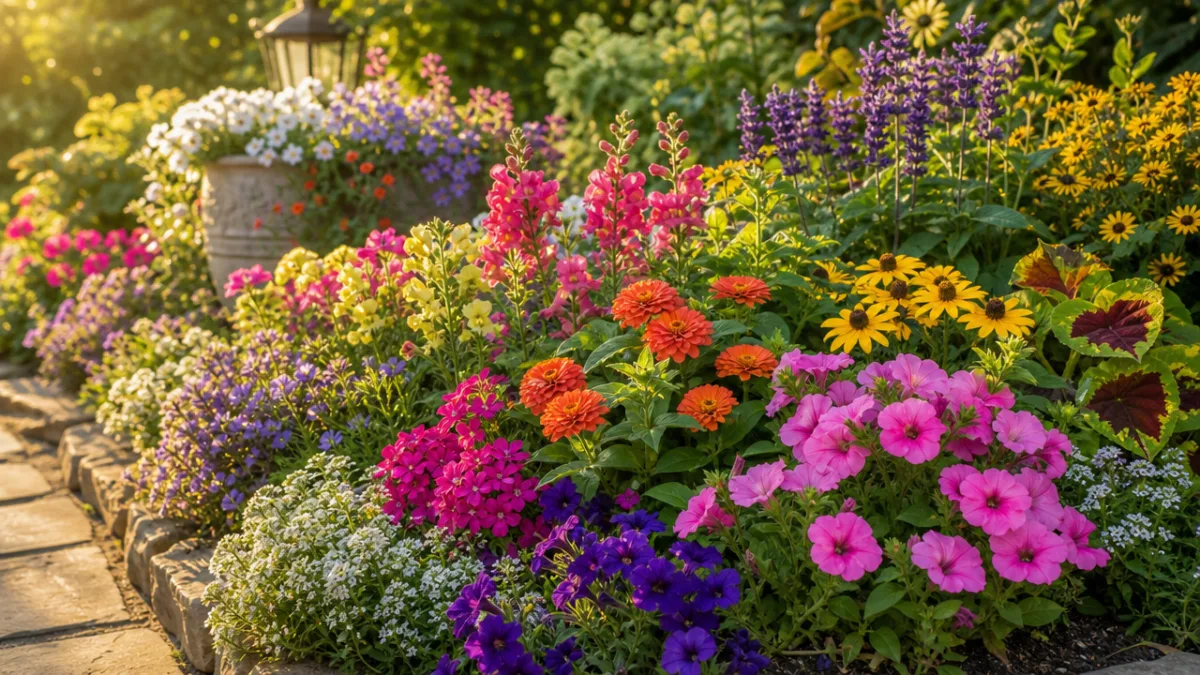
Pansies, violas, stock, dianthus, alyssum, and foxglove are all classic cool-season flowers. They don’t just tolerate a light frost — they often bloom more freely in cool weather than they ever would in heat. When summer temperatures settle in, many of them slow down, stop blooming, or simply die back, which makes them perfect for filling the garden with color during those shoulder seasons when not much else is going. In mild climates, you can even plant some of them in autumn and they’ll overwinter and pick right back up in early spring.
The warm-season crowd includes zinnias, marigolds, dahlias, celosias, cosmos, and sunflowers — basically the full lineup of summer favorites. None of them should go outside until frost danger is genuinely behind you and the soil has warmed up. It can be tempting to push them out early when a warm week shows up in April, but one cold snap can stunt or kill them, and you’ll end up further behind than if you’d just waited. Here’s the thing: plants that go in at the right time usually catch up to and actually beat plants that went in too early under stressful conditions.
- Early spring (4–6 weeks before last frost): Direct sow sweet peas, larkspur, poppies, and bachelor’s buttons outdoors.
- 2–4 weeks before last frost: Transplant hardened-off cool-season seedlings like snapdragons and stocks to the garden.
- On the last frost date: Begin hardening off warm-season seedlings started indoors.
- 1–2 weeks after last frost: Transplant warm-season seedlings like petunias and impatiens outdoors.
- 2–3 weeks after last frost: Direct sow zinnias, sunflowers, marigolds, and cosmos once soil is reliably warm.
Perennial Flower Seeds: A Different Timing Philosophy
Perennials are the long game of flower gardening — they come back year after year from the same root system, which is wonderful, but growing them from seed requires a completely different mindset about timing. Most perennial seeds have built-in dormancy mechanisms that prevent them from germinating until very specific conditions are met. This isn’t a flaw; it’s an evolutionary safeguard that keeps seeds from sprouting in autumn, only to be wiped out by winter before they can get established. But it does mean you have to work with those mechanisms rather than around them.
For many perennial seeds, that means cold stratification — a period of cold, moist chilling that mimics what would happen naturally if a seed fell to the ground in autumn and spent the winter in the soil. You can do this artificially by mixing seeds with slightly damp sand or peat moss, sealing it all in a plastic bag, and putting it in the fridge for 4 to 12 weeks (the exact time depends on the species). Once that’s done, the seeds are primed and ready to germinate, and you can sow them indoors under lights or directly in the garden as late winter eases into early spring.
If all that sounds like a lot of work, there’s a much easier option: winter sowing. The idea is simple — you put seeds in mini-greenhouses made from clear plastic containers (milk jugs work great) and leave them outside all winter. The seeds go through natural freeze-thaw cycles, stratify on their own schedule, and germinate when the time is right in spring. It works beautifully for coneflowers, black-eyed Susans, columbines, native wildflowers, and many others that want that cold exposure. And honestly, it’s far less fussing than managing a whole indoor seed-starting operation.
One thing worth setting your expectations around: perennials grown from seed almost never bloom in their first year. They put most of their energy in year one into building a strong root system, and flowers usually show up in year two or three. That’s completely normal — it’s not a sign anything went wrong. Gardeners who know this go in with appropriate patience and often fill in with fast-growing annuals while they wait for their perennial investment to mature. It’s a long-term payoff, but a very satisfying one.
Regional Considerations and Adapting to Your Climate
General planting timelines are a great starting point, but they can only take you so far. Your garden exists in a specific microclimate that might be quite different from what the regional averages suggest. Elevation, proximity to water, urban heat effects, a south-facing slope, or a frost pocket in a low spot can all shift your effective last frost date by days or even weeks compared to what’s listed for your zip code. Gardeners who pay close attention to their own land over multiple seasons develop a feel for exactly how their conditions differ from the norm, and that knowledge is worth a lot.
Gardeners in the Deep South and other warm climates face a genuinely different situation — in many ways, their growing calendar is flipped. Summer heat is the limiting factor there, not cold, and the most productive seasons are autumn and early winter. Cool-season annuals that Northern gardeners plant in spring become the workhorses of the Southern fall and winter garden, while the summer months are often too hot and humid for much of anything to thrive. If you garden in a warm climate, learning your regional rhythm matters at least as much as knowing your last frost date.
On the opposite end, gardeners dealing with short summers — think the Northern Plains, higher elevations, or much of Canada — need to maximize every possible growing day. That means starting seeds indoors as early as makes sense, using row covers and cold frames to squeeze extra time out of both ends of the season, and actively seeking out varieties that are bred for short growing seasons. Many seed catalogs now have specific sections for short-season varieties, and choosing those selections can genuinely be the difference between a flower garden that hits its stride and one that gets cut off by frost before it ever really gets going.
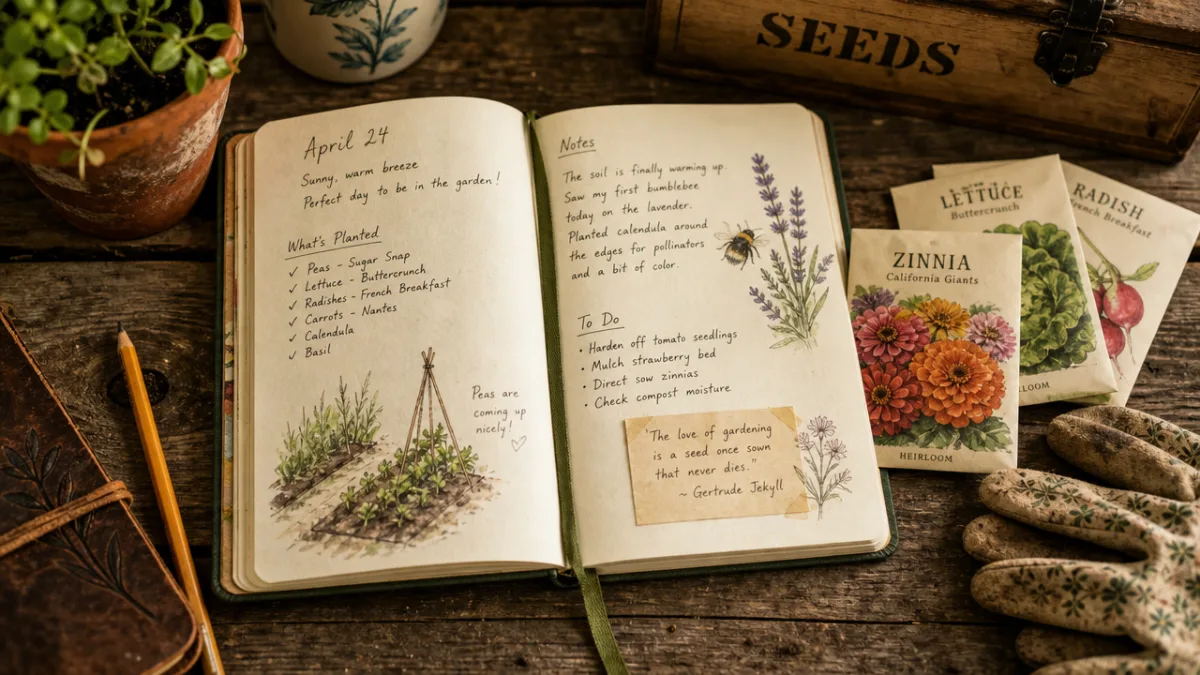
No matter where you garden, keeping a journal is one of the best habits you can build. Write down your planting dates, when things germinated, when you transplanted, when the first blooms opened, and any weather that threw you a curveball. Over the seasons, those notes become a personalized gardening almanac that no general guide could replicate — showing you which varieties consistently shine in your soil, which weeks tend to sneak in late frosts, and exactly what timing tweaks produce the best results in your particular corner of the world. Ultimately, that accumulated knowledge is the most reliable planting guide you’ll ever have.








What do you think?
It is nice to know your opinion. Leave a comment.