










Introduction to the WaterMate Mini Automatic Greenhouse Watering Kit
Keeping a greenhouse healthy and productive requires consistent, reliable watering — yet manually managing that task day after day is one of the most time-consuming responsibilities any grower faces. The WaterMate Mini Automatic Greenhouse Watering Kit is designed specifically to solve this problem, offering a compact and efficient mains-powered pump system that delivers water to your plants on a precise, automated schedule. Whether you’re a weekend hobbyist or a dedicated home grower, this system promises to transform the way you care for your greenhouse.
The WaterMate Mini operates from a mains power source, meaning you benefit from consistent, uninterrupted water pressure without the need to monitor battery levels or rely on gravity-fed solutions. The built-in pump draws water from a separate tank of your choosing, giving you full flexibility over your water storage setup. This modularity is one of the kit’s greatest strengths, allowing it to fit seamlessly into existing greenhouse arrangements without requiring a complete overhaul of your current infrastructure.
What truly sets this kit apart from simpler drip systems is its intelligence and adaptability. Most basic irrigation systems are passive — they rely on gravity or manual timers with limited settings. The WaterMate Mini, by contrast, incorporates pump technology that actively moves water to your plants wherever they are positioned, regardless of elevation differences within the greenhouse. This makes it ideal for tiered shelving units, hanging baskets, and raised growing beds that traditional passive systems simply cannot serve reliably.
Who Is This Kit Designed For?
The WaterMate Mini is aimed at greenhouse owners who want the benefits of automation without the complexity or expense of commercial-grade irrigation systems. Home growers with small to medium greenhouses — typically ranging from a six-foot by four-foot structure up to a full-sized garden greenhouse — will find this kit particularly well-suited to their needs. It bridges the gap between basic drip kits and professional-level systems, offering meaningful functionality at an accessible price point.
Gardeners who travel frequently or work long hours will find the automated scheduling especially valuable. Missing a day of watering during a warm summer week can devastate a greenhouse crop, causing heat stress, wilting, and even permanent damage to sensitive seedlings. With the WaterMate Mini running reliably in the background, growers can leave for several days knowing their plants are being cared for with the same precision they would provide themselves.
The kit is also a strong match for growers who are scaling up their operations. If you’ve been managing a small collection of pots by hand but have recently expanded your growing space, automating the process frees up significant time and energy. Rather than spending twenty or thirty minutes each morning walking the greenhouse with a watering can, you can redirect that effort toward propagation, soil preparation, pest management, or simply enjoying the fruits of your labour.
Key Features and Components of the WaterMate Mini
At the heart of the WaterMate Mini system is its mains-powered pump, which is the element that distinguishes this kit from passive gravity-fed alternatives. The pump actively circulates water from your external tank through the distribution network, ensuring consistent flow and pressure across every connected outlet. This means plants at the far end of your greenhouse receive the same volume of water as those positioned directly beside the pump unit, eliminating the uneven distribution that plagues many simpler setups.
The kit includes all the tubing, connectors, and drip emitters needed to set up a complete watering circuit. These components are engineered to be user-friendly, with push-fit connections that require no specialist tools or plumbing expertise. The drip emitters themselves are adjustable, allowing you to calibrate the exact flow rate delivered to each plant individually. This is particularly useful when you’re growing a variety of species with differing moisture requirements side by side in the same greenhouse.
Integrated timer functionality is another standout feature. The WaterMate Mini includes a programmable timer that allows you to set precise watering schedules — choosing both the time of day and the duration of each watering cycle. Most experienced growers prefer to water in the early morning, when temperatures are cooler and evaporation rates are lowest. The timer makes this effortless to achieve every single day without manual intervention, and it can typically accommodate multiple watering cycles per day for plants with higher hydration needs.
Understanding the Mains Power and Pump Mechanism
The decision to power this kit from the mains rather than batteries is a deliberate and significant design choice. Battery-powered systems require regular replacement or recharging, and a flat battery at the wrong moment can mean a missed watering cycle — with potentially serious consequences during hot weather. Mains power eliminates this risk entirely, providing a stable and continuous energy supply that you can depend on season after season without the maintenance overhead.
The pump itself is designed to be both efficient and quiet. Greenhouse environments are often adjacent to living spaces, patios, or garden seating areas, so a noisy pump running at dawn would quickly become an unwelcome feature. The WaterMate Mini’s pump operates at a low noise level that is unlikely to disturb nearby household members or neighbours, making it a genuinely practical choice for residential garden settings rather than purely commercial environments.
It is important to note that this kit is sold without a water tank, which means you’ll need to source one separately. This is not a shortcoming but rather a strength of the modular design — you can choose a tank that suits your specific greenhouse size, water usage, and available storage space. Smaller greenhouses might be well served by a standard water butt, while larger operations might prefer a larger IBC container or a dedicated water storage barrel positioned outside the greenhouse door.
Setting Up Your WaterMate Mini: A Step-by-Step Overview
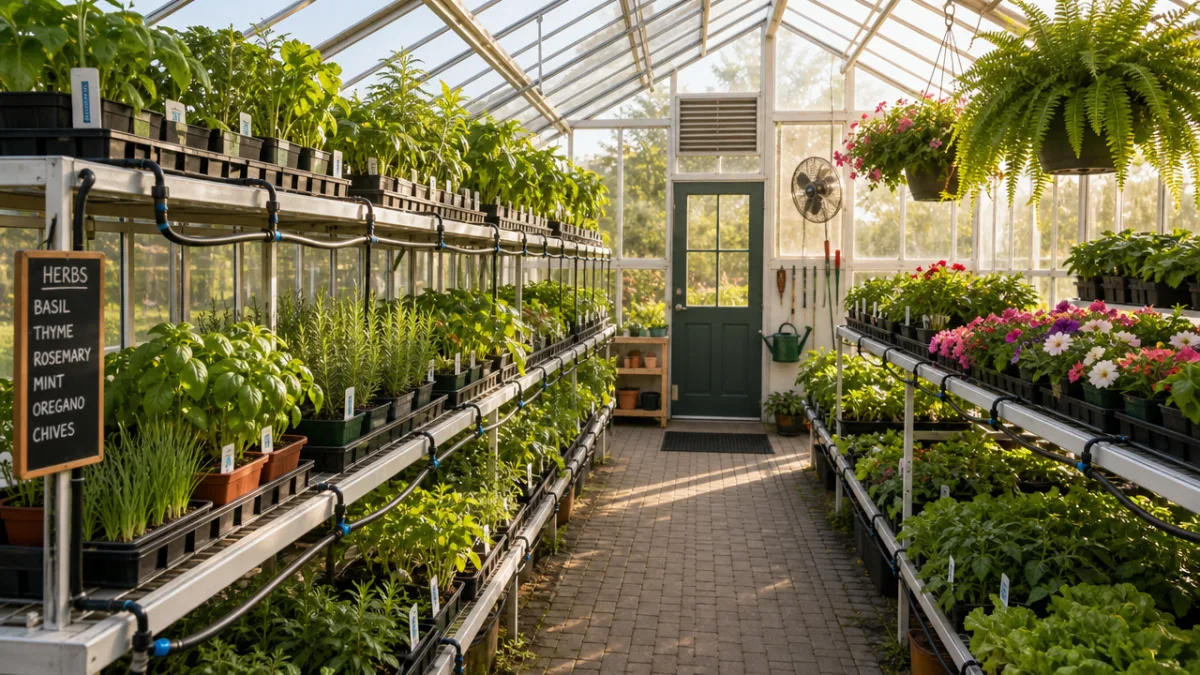
Installing the WaterMate Mini is straightforward enough for most greenhouse owners to complete without professional assistance, typically within a couple of hours for a standard-sized structure. Before you begin, it’s worth spending a few minutes planning the layout of your tubing. Sketch a rough diagram of your greenhouse, marking the positions of your plant benches, hanging areas, and any raised beds. This planning phase helps you calculate the total length of tubing required and identify the best routing paths to avoid trip hazards and unnecessary bends.
Once you have your layout mapped out, begin by positioning your external water tank and connecting the pump unit to it. The pump should ideally be placed at the lowest point of the circuit, or as close to the tank as possible, to minimise the suction distance and maximise efficiency. Run the main distribution tube from the pump output along the central spine of your greenhouse, then branch off secondary tubes to reach each growing area. The push-fit connectors supplied with the kit make these branch connections simple and leak-free.
After laying out the tubing, attach the drip emitters to the secondary lines at each plant position. Adjust the flow rate on each emitter according to the moisture needs of the plant it will serve — higher flow for thirsty tomatoes and cucumbers, lower flow for herbs and succulents. Once everything is connected, run a test cycle before programming the timer. This allows you to check for leaks, verify even water distribution, and fine-tune emitter settings before committing to an automated schedule.
Troubleshooting Common Installation Issues
Even with straightforward kits, first-time installations sometimes encounter minor issues that are worth knowing about in advance. One of the most common is air locking in the pump, which can occur if the system is primed incorrectly or if the tubing runs have significant elevation changes. If the pump appears to be running but producing little or no water flow, disconnecting the outlet tube briefly and allowing the pump to expel any trapped air usually resolves the issue quickly.
Blocked or restricted drip emitters are another issue that growers occasionally encounter, particularly if using untreated or hard water. Mineral deposits can accumulate inside the small emitter orifices over time, reducing flow rates. A simple solution is to periodically remove the emitters and soak them in a diluted white vinegar solution, which dissolves calcium and lime deposits without damaging the plastic components. Adding a simple inline filter near the pump outlet can significantly reduce this problem from the outset.
Leaking push-fit connections are usually caused by inadequate insertion of the tubing into the connector body. If you notice a drip at any junction, simply disconnect the fitting, trim a small amount from the end of the tube to create a clean, square cut, and reinsert it firmly until it clicks into place. It can also be helpful to slightly soften the end of the tubing by dipping it briefly in warm water before insertion, as this makes the fit cleaner and more secure.
Benefits of Automated Greenhouse Watering for Plant Health
Consistency is perhaps the single most important factor in successful greenhouse growing, and automated watering systems like the WaterMate Mini deliver it in a way that manual watering simply cannot match. When plants receive water at the same time each day in the same quantities, their root systems develop in a stable and predictable moisture environment. This consistency reduces the stress cycles that occur when plants swing between being too dry and too wet, leading to stronger growth, better yields, and improved resistance to disease.
Automated drip irrigation also reduces the incidence of foliar diseases, which are a persistent challenge in greenhouse environments. When water is applied manually with a can or hose, it inevitably splashes onto leaves and stems, creating the damp conditions that encourage fungal infections such as botrytis, powdery mildew, and damping off. Drip emitters deliver water directly to the root zone at soil level, keeping foliage dry and dramatically reducing the conditions that allow these pathogens to establish and spread.
Water efficiency is another significant benefit worth highlighting. Automated drip systems are inherently more efficient than overhead or hand watering, because they deliver water precisely where it is needed with minimal evaporation and runoff. Studies consistently show that drip irrigation can reduce water consumption by thirty to fifty percent compared to traditional watering methods, without any reduction in plant health or productivity. For growers who pay for their water supply or who are committed to sustainable gardening practices, this efficiency represents a meaningful and ongoing benefit.
Supporting Seedlings and Young Plants
Young plants and seedlings are especially vulnerable to watering inconsistencies, making automated systems particularly valuable during the propagation and early growth stages. A single missed watering in hot weather can kill trays of newly germinated seedlings before they have the chance to develop any drought resilience. Similarly, overwatering — a common occurrence when growers attempt to compensate for inconsistency — can cause root rot and damping off in a matter of hours. The WaterMate Mini’s programmable cycles eliminate both extremes.
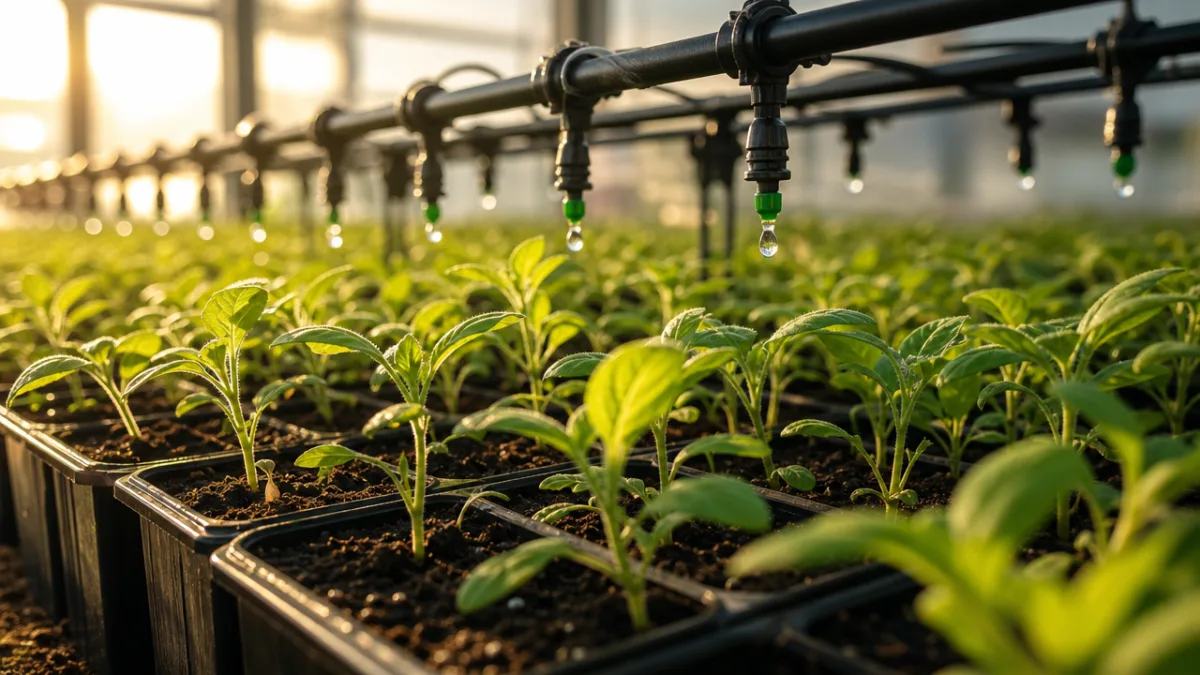
When using the system with seedling trays, it’s advisable to use misting-style emitters rather than standard drip heads, as the gentle application rate is better suited to the delicate root systems of young plants. The WaterMate Mini system is compatible with a range of emitter types, giving you the flexibility to configure different sections of your greenhouse differently depending on the growth stage of the plants they serve. You might use misting emitters over propagation benches while running standard drip heads for mature container plants elsewhere.
As seedlings develop and transition to larger containers or growing beds, the emitter configuration can be updated accordingly without needing to reconfigure the entire system. This scalability means the WaterMate Mini grows with your greenhouse rather than becoming obsolete as your growing ambitions expand. It’s an investment that continues to deliver value across multiple growing seasons and through significant changes in what and how you choose to cultivate.
Comparing the WaterMate Mini to Alternative Watering Solutions
To understand the value the WaterMate Mini offers, it helps to compare it against the alternatives available to greenhouse growers at different price and complexity levels. At the most basic end of the spectrum, hand watering with a can or hose remains the most common approach for hobby growers. It is inexpensive and requires no installation, but it is also time-consuming, inconsistent, and completely dependent on the grower’s physical presence. For anyone growing more than a handful of plants, the time investment quickly becomes burdensome.
Passive gravity-fed drip kits represent the next level up and are widely available at low cost from garden centres and online retailers. These systems work by positioning a water reservoir above the growing area and allowing gravity to pull water down through thin tubing to drip emitters. They require no power source and are extremely simple to set up, but their limitations are significant. Flow rates are entirely dependent on the height of the reservoir, water pressure is low and uneven, and the systems cannot serve plants at higher elevations than the reservoir itself.
At the other end of the scale, fully automated commercial irrigation systems offer sophisticated programming, multiple zone control, soil moisture sensing, and remote monitoring capabilities. These systems are excellent for professional nurseries and market gardens but come with price tags that put them well beyond the reach of most home growers. They also typically require professional installation and are considerably more complex to maintain. The WaterMate Mini occupies the valuable middle ground between these extremes, offering meaningful automation and reliability at a realistic price for the serious hobby grower.
Value for Money and Long-Term Investment
Assessing the value of an automated watering system requires looking beyond the initial purchase price to consider the broader benefits it delivers over time. The time savings alone represent significant value — if the system saves even fifteen minutes of manual watering per day across a six-month growing season, that amounts to over forty-five hours of time returned to the grower. For most people, that time has meaningful value, whether measured in terms of productivity, leisure, or reduced stress.
The reduction in plant losses attributable to watering inconsistency also has tangible financial value. Greenhouse plants, seeds, and growing media represent a real investment, and losing a tray of seedlings or a productive tomato plant to drought or overwatering is a frustrating and avoidable expense. By maintaining consistent moisture levels automatically, the WaterMate Mini pays for itself through reduced losses even before the time savings are factored in. Growers who take this analytical view often find that the system pays back its purchase cost within a single growing season.
Durability and build quality are also relevant to the value equation. The WaterMate Mini is constructed from materials designed to withstand the humid, temperature-variable environment of a greenhouse year-round. The tubing is UV-resistant to prevent degradation from sun exposure, and the pump and timer units are housed in enclosures suited to damp conditions. With reasonable care and occasional maintenance — primarily cleaning emitters and checking connections — the system should deliver reliable service for many growing seasons, making the cost per year of use impressively low.
Maintenance Tips and Seasonal Care for Your WaterMate Mini
Like all mechanical systems, the WaterMate Mini benefits from regular maintenance to keep it operating at peak efficiency. Fortunately, the maintenance requirements are modest and can be carried out by any greenhouse owner without specialist skills or tools. The most important routine task is checking and cleaning the drip emitters at the start of each growing season and periodically during periods of heavy use. Emitters are small and can become partially blocked by algae, mineral deposits, or fine particles of growing media, which reduces their output and compromises watering consistency.
The pump unit itself should be inspected at the start of each season to ensure the intake filter is clean and free of debris. Remove the filter screen and rinse it under clean water, gently brushing away any accumulated sediment with a soft brush. If you notice reduced pump output despite a clean filter, check the inlet and outlet connections for partial blockages. Running a short cycle with clean, fresh water after any extended period of disuse helps flush any stagnant water from the system before it contacts your plants.
At the end of the growing season, or before any extended period when the greenhouse will not be in use, it’s good practice to drain the system fully and store the pump and timer unit indoors. While the kit is designed to handle greenhouse conditions, exposure to freezing temperatures can damage the pump mechanism and cause tubing to crack. Disconnecting, draining, and storing the key components over winter extends the life of the system considerably and ensures it is ready for reliable service when the next season begins.
Optimising Your Watering Schedule Through the Seasons
One of the advantages of the WaterMate Mini’s programmable timer is the ability to adjust your watering schedule as conditions change through the year. In the height of summer, when greenhouse temperatures can soar and transpiration rates are high, plants may need watering twice daily to maintain adequate hydration. The timer can be configured to deliver two or even three separate watering cycles each day, ensuring moisture levels remain consistent even during the hottest weather without any manual intervention required.
As autumn arrives and temperatures drop, the frequency and duration of watering cycles should be reduced to match the slowing growth rates and lower evaporation levels of the season. Overwatering in cooler conditions is just as harmful as underwatering in summer — saturated compost in low temperatures creates anaerobic conditions that damage roots and encourage the growth of harmful soil pathogens. Reviewing and adjusting your timer settings at the beginning of each new season is a simple but important habit that keeps your plants healthy as conditions shift.
For growers who use their greenhouse for winter cropping — growing hardy salad leaves, microgreens, or overwintering tender perennials — the WaterMate Mini remains a valuable tool even in the coldest months, provided the system is protected from freezing. Insulating the tubing runs with pipe lagging and ensuring the pump is housed in an insulated enclosure or positioned in a frost-free area of the greenhouse allows the system to continue operating through milder winter conditions. With thoughtful management, the WaterMate Mini can support year-round growing ambitions rather than lying dormant for half the year.









What do you think?
It is nice to know your opinion. Leave a comment.