










7 Flowers Begging to Be Deadheaded (& 5 That Will Actually Hate It!)
What Is Deadheading and Why Does It Matter?
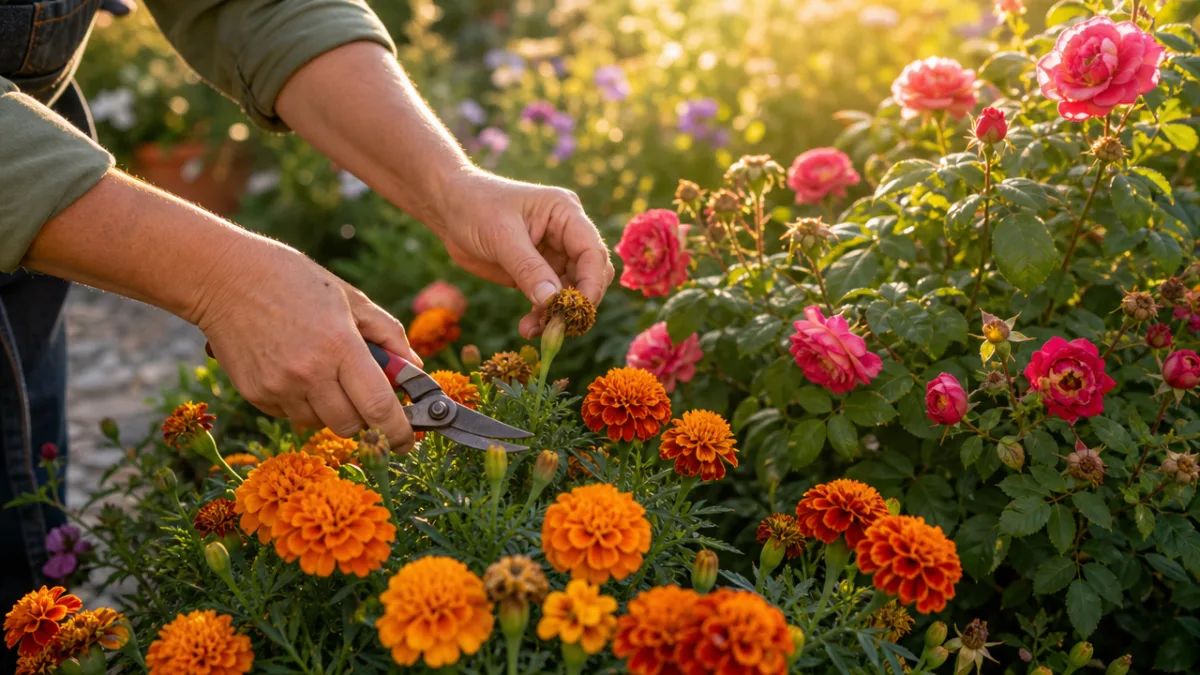
Deadheading is exactly what it sounds like — you go around the garden snipping or pinching off old, faded blooms before they get a chance to turn into seeds. The name sounds a bit grim, I’ll admit, but the results are genuinely wonderful. It’s one of those small habits that makes a surprisingly big difference, keeping your beds looking fresh and colorful for the whole growing season. You can use your fingers, a pair of pruning shears, or a little snips — whatever feels right — and the plant will notice immediately.
Here’s basically what happens: once a flower matures and starts forming a seed head, the plant figures its job is done. It shifts its energy away from making more flowers and toward making seeds, which means fewer buds and a shorter show of color. But if you remove that spent bloom before seeds have a chance to develop, the plant gets the message to try again. The payoff is a longer, fuller bloom period — sometimes by weeks, sometimes by months.
That said, not every plant responds the same way, and this is where a lot of gardeners go a bit wrong. Some plants are eager, enthusiastic rebloomers that practically beg you to deadhead them. Others are perfectly happy dropping their own spent flowers without any help from you. And some — especially those you’re growing for their beautiful seed heads or their value to wildlife — actually do worse when you deadhead them. Knowing which camp each of your plants falls into is really the key to putting in less work while getting more out of your garden.
7 Flowers That Absolutely Love Being Deadheaded
Some plants are so responsive to deadheading that if you skip it, you can lose half their blooming season without even realizing why. These are the real workhorses of the garden — the ones that, with just a bit of regular attention, will keep your beds bursting with color from spring all the way into autumn. Getting into a deadheading rhythm with these plants is honestly one of the most satisfying habits you can build as a gardener.
Roses are probably the most famous example. Modern repeat-blooming varieties especially will keep sending up wave after wave of flowers as long as you’re consistently removing the old ones. The technique is a little more involved than a simple pinch — most gardeners cut the stem back to just above a leaf with five leaflets, which encourages a strong new shoot — but the results are absolutely worth it. A well-deadheaded rose bush in full summer bloom is hard to beat.
Dahlias are another plant that really rewards the effort. They’re prolific bloomers through the warm months, but spent flowers left on the plant get heavy, turn to mush, and drag down the whole plant’s performance. A quick pass through your dahlias every few days during peak season keeps them producing at full capacity and looking lush and tidy rather than cluttered with papery brown husks.
- Marigolds: Honestly one of the easiest and most satisfying plants to deadhead. Keep pinching off the old blooms and marigolds will flower non-stop from late spring right through the first frost — they’re an absolute bedding plant staple for a reason.
- Petunias: Without regular deadheading, trailing and mounding petunias get leggy and sparse pretty quickly as energy gets diverted toward seed production. Stay on top of them and they’ll bloom much more vigorously all season.
- Zinnias: These heat-loving annuals are some of the most enthusiastic reboomers you’ll find. Cut spent blooms back to just above a set of leaves and they’ll branch out and send up multiple new buds — it’s almost magical how fast they respond.
- Geraniums (Pelargoniums): Removing spent flower clusters regularly keeps geraniums going strong all season. As a bonus, old clusters can harbor disease if left on the plant, so deadheading is good for their health as well as their looks.
- Cosmos: These airy, feathery-leafed annuals bloom in waves and are a delight to deadhead — a light pinch or snip is genuinely all it takes to get a fresh flush of flowers going.
One thing worth keeping in mind even with these enthusiastic reboomers: technique still matters. Going too hard — cutting back too much or accidentally removing healthy foliage along with the spent bloom — can stress the plant more than it helps. The goal is always to take the old flower and as little else as possible, so the plant’s energy goes toward new growth rather than recovering from a clumsy pruning job. It gets faster and more intuitive quickly, and honestly, there’s something genuinely satisfying about it once you get the hang of it.
5 Flowers You Should Never Deadhead
Here’s where things get a little counterintuitive: some genuinely beautiful and well-loved plants actually get worse when you deadhead them. Either they don’t rebloom no matter what you do, or the seed heads they produce after flowering are more interesting than the flowers themselves, or they’re providing a crucial food source for birds and pollinators during the lean autumn and winter months. Knowing which plants to leave alone can save you real time and effort — and actually make your garden better in the process.
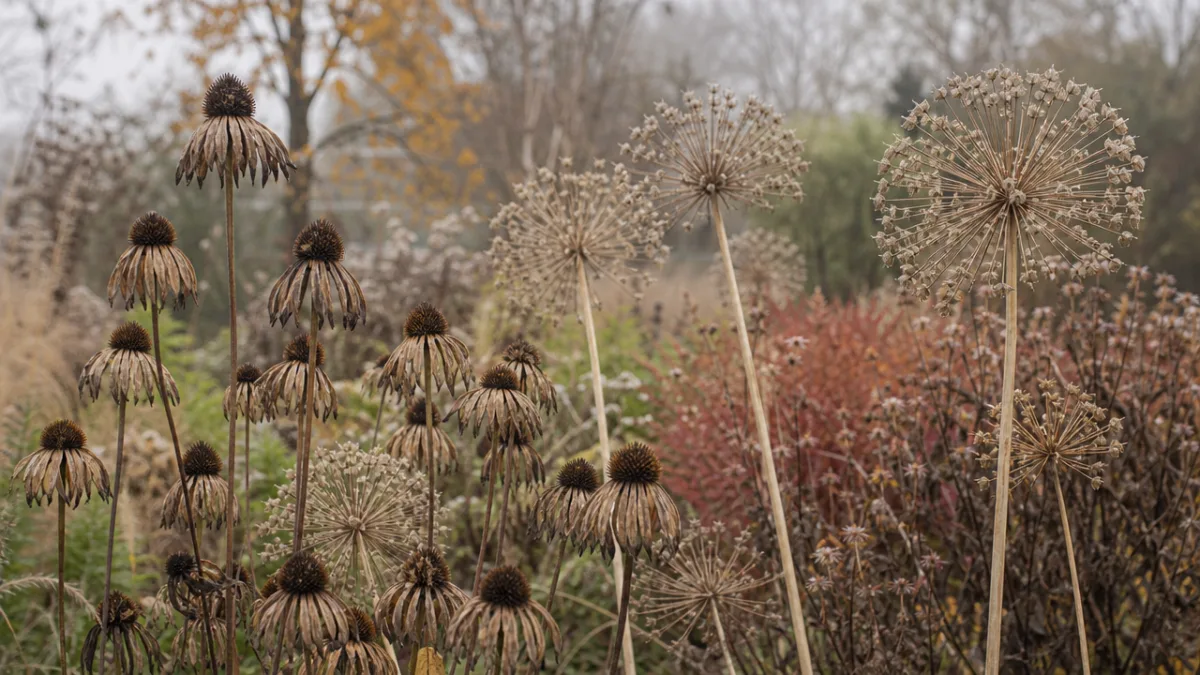
Echinacea, or coneflower, is one of the most important plants to keep your scissors away from. Once the petals drop, echinacea develops this wonderfully spiky, architectural seed cone that looks genuinely dramatic in the autumn and winter garden. More importantly, those seed heads are a lifeline for goldfinches and other seed-eating birds when food is scarce. Deadheading echinacea is essentially pulling down a bird feeder — and you’re getting no reblooming benefit for the trouble, since echinacea doesn’t produce a meaningful second flush of flowers no matter when you cut it.
Rudbeckia — the classic black-eyed Susan — is another one that belongs firmly in the “leave it alone” column. Like echinacea, it produces attractive seed heads that feed birds through the winter. It also self-seeds freely when you let it be, gradually spreading through a planting in a wonderfully naturalistic way. Deadhead it and you interrupt that self-seeding cycle, robbing yourself of what can become a gorgeous, sprawling colony of golden summer blooms for years to come.
- Alliums: These ornamental onions produce some of the most dramatically beautiful spherical seed heads you’ll find anywhere in the plant world. The dried globes look spectacular in the border well into winter, and they’ll self-seed slowly to expand your planting over time.
- Nigella (Love-in-a-Mist): After those delicate blue and white flowers fade, nigella forms these gorgeous inflated, papery seed pods streaked with purple and maroon. They’re beloved by flower arrangers and look wonderful left on the plant through autumn.
- Foxgloves: Cutting the main spike back might encourage some side shoots, but removing spent foxglove flowers entirely stops them from self-seeding. Since most foxgloves are biennial — they only bloom in their second year — letting them seed themselves is the only real way to keep a continuous display going year after year.
The bigger lesson these five plants teach is that “spent” doesn’t automatically mean “done.” In a lot of cases, what a flower does after it blooms — the seed head it produces, the birds it feeds, the seedlings it scatters — is just as valuable as the bloom itself. The thoughtful gardener learns to tell the difference between a plant that needs a little help moving forward and one that’s doing exactly the right thing when left to its own devices.
How to Deadhead Like a Pro: Technique and Timing
Good deadheading is really about two things: catching plants at the right moment and using the right technique. The goal is to get in there after a flower has clearly peaked but before seed development has gotten too far along, and then remove spent material in a way that doesn’t stress the plant while sending that clear signal to produce new growth. It sounds fussier than it is — once you’ve done it a few times, you’ll develop an eye for it pretty naturally.
For most plants, the sweet spot is when petals have clearly faded, wilted, or started browning, but the base of the flower — the little swelling that becomes a seed capsule — hasn’t noticeably expanded yet. At this stage, the plant hasn’t invested much in seed production and is easy to redirect toward new blooms. If you wait until seeds are visibly forming, the plant has already committed resources to reproduction and deadheading becomes much less effective.
The physical technique varies quite a bit depending on the plant. For soft-stemmed annuals like petunias, marigolds, and cosmos, your fingers are usually all you need — just grasp the spent flower below the head and snap it cleanly off. For woodier-stemmed plants like roses or dahlias, you’ll want clean, sharp pruning shears. Crushing or tearing the stem instead of cutting it leaves a ragged wound that heals slowly and can invite disease. It’s also worth wiping your tools down between plants — or at least between different species — to avoid accidentally spreading pathogens around the garden.
How often you deadhead matters just as much as how you do it. For the most eager reboomers like petunias and marigolds, a quick pass every two or three days during peak season really does make a noticeable difference. For bigger-flowered plants like dahlias and roses, once a week is usually enough. The easiest way to make it feel less like a task and more like a pleasure is to pair it with something else you’re already doing — watering, or a slow morning walk through the garden with a cup of coffee. You’ll end up much more in tune with what’s happening out there, which is its own reward.
Self-Cleaning Plants: The Low-Maintenance Middle Ground
Somewhere between the plants that need constant deadheading and the ones that should never be touched sits a lovely middle category: self-cleaning plants. These are varieties that have either been bred or naturally evolved to drop their spent petals on their own, tidying themselves up without any help from you. If you’re short on time or gardening on a bigger scale, working plenty of self-cleaners into your planting scheme is a genuinely smart move — you get long-lasting color without the recurring maintenance commitment.
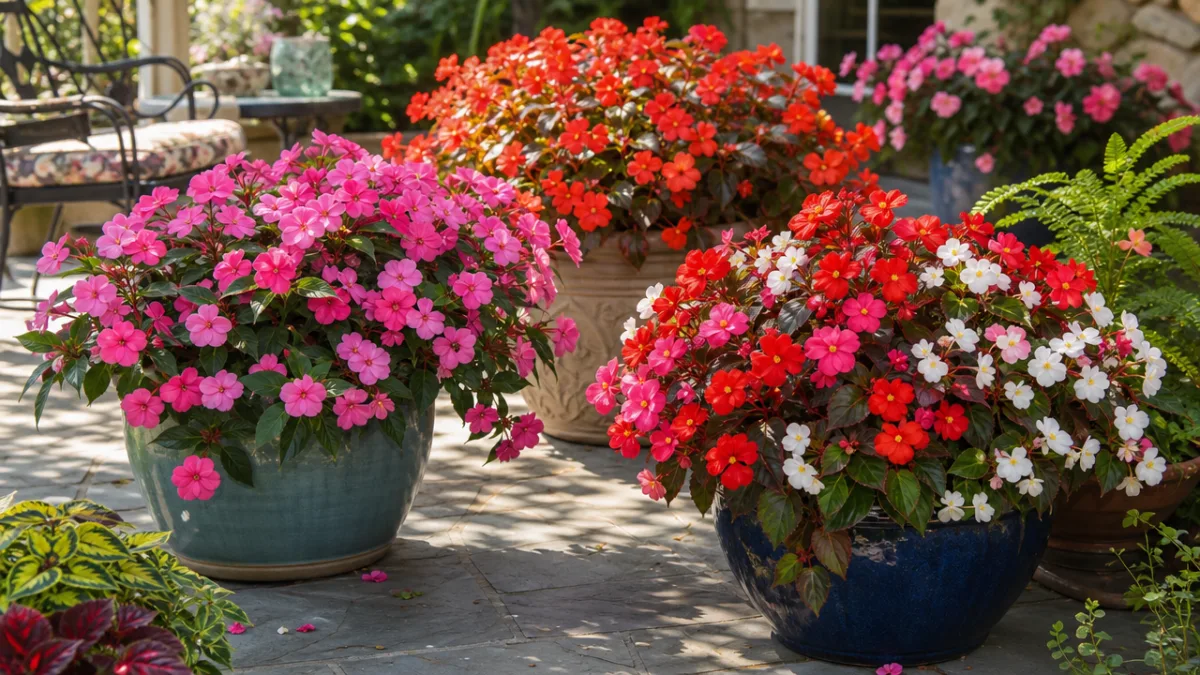
Impatiens are probably the most classic example. The old flowers just fall away on their own, and the plants keep producing new blooms all season without you having to do a thing. Many modern begonia varieties work the same way — breeders have put a lot of work into developing that self-cleaning trait in begonias specifically because gardeners wanted the color without the upkeep, and it shows.
Wave petunias and Supertunia varieties are another great example. Traditional petunias can get leggy and sparse without regular deadheading and periodic hard cutbacks, but these spreading, self-cleaning types shed their spent blooms on their own and just keep going. They’ve been a genuine game-changer for a lot of gardeners, especially for container planting. When you’re dealing with pots and window boxes that dry out fast and need constant attention already, the last thing you want is a plant that also demands daily deadheading. Self-cleaners take that whole worry off the table.
Building a Smarter Garden With Deadheading in Mind
Once you really understand deadheading — which plants thrive on it, which plants resent it, which plants just handle themselves — it starts to change how you think about garden design altogether. Rather than applying the same approach to every plant, you can build a planting scheme that balances the high-energy reboomers that need regular attention with the self-cleaners and seed head producers that are better left alone. The result is a garden that looks beautiful across more seasons while feeling a lot more manageable to maintain.
A good mixed border might put roses, dahlias, and zinnias at the center — your deadheading workhorses — with self-cleaning annuals like impatiens and wave petunias filling in around them, and a supporting cast of echinacea, alliums, and rudbeckia left to develop their seed heads for autumn and winter interest. That kind of layered approach gives you color and beauty from late spring through winter, supports pollinators and seed-eating birds, and spreads your gardening tasks out so no single job ever piles up into something overwhelming.
It’s also worth keeping simple notes about which plants in your garden respond best to deadheading and what technique and timing seem to work for each. Every garden is a little different, and the same plant can behave differently depending on your climate, your soil, how much sun it gets, and the specific variety you’re growing. A basic garden journal — or honestly, just a few notes in your phone — can turn casual gardening into something much more refined, built on years of personal observation and experimentation.
And really, at the end of the day, deadheading is just a practice in service of the garden and your enjoyment of it. There are no hard rules here, just guidelines shaped by how plants naturally behave. If you love the look of zinnia seed heads left to go naturalistic, that’s a completely valid choice. If you’d rather let your roses go to hip — those colorful, fruit-like structures that form when flowers are allowed to set seed — for a bit of autumn color and wildlife value, that’s a wonderful option too. The best gardening practice is always the one that fits your vision, your time, and the living community of plants and creatures you’re sharing your outdoor space with.








What do you think?
It is nice to know your opinion. Leave a comment.