










Perennial Bloom Calendar Guide for Zones 5b & 7 at The Farm at Green Village
Understanding USDA Hardiness Zones 5b and 7: A Foundation for Perennial Success
Before you can plan a thriving perennial garden, you need to understand the climate conditions that define where you garden. USDA Hardiness Zones 5b and 7 represent two distinct but often overlapping growing environments across the United States. Zone 5b encompasses regions where average minimum winter temperatures fall between -15°F and -10°F, encompassing much of the upper Midwest, parts of New England, and elevated areas of the mid-Atlantic. Zone 7, by contrast, sees winter lows between 0°F and 10°F, covering portions of the Pacific Northwest, the mid-Atlantic coast, and large swaths of the upper South. At The Farm at Green Village, gardeners working within these zones enjoy a remarkable diversity of plant choices, though timing and selection require careful attention.
The difference between these two zones may seem modest on paper, but it carries enormous practical implications for perennial gardening. A plant perfectly hardy in Zone 7 may struggle to survive a brutal Zone 5b winter without additional mulching, windbreaks, or careful siting. Conversely, certain cool-loving perennials that flourish in Zone 5b may suffer in the hotter summers that characterize many Zone 7 locations. Understanding these nuances allows gardeners at The Farm at Green Village to make smarter plant selections, time their plantings with confidence, and build layered bloom sequences that carry color from the first hints of spring through the final days of autumn.
At The Farm at Green Village, the guiding philosophy is to work with nature rather than against it. By anchoring every planting decision to the specific zone’s rhythm of frost dates, soil temperature thresholds, and seasonal moisture patterns, the farm’s gardeners have built a perennial landscape that delivers reliable, season-long beauty with minimal intervention. This zone-aware approach is the single most powerful tool any gardener can adopt, and the bloom calendar described throughout this guide is built entirely upon that foundation. Whether you are a first-year gardener or a seasoned horticulturist, returning to zone basics will always sharpen your results.
Early Spring Bloomers: Waking the Garden in Zones 5b and 7
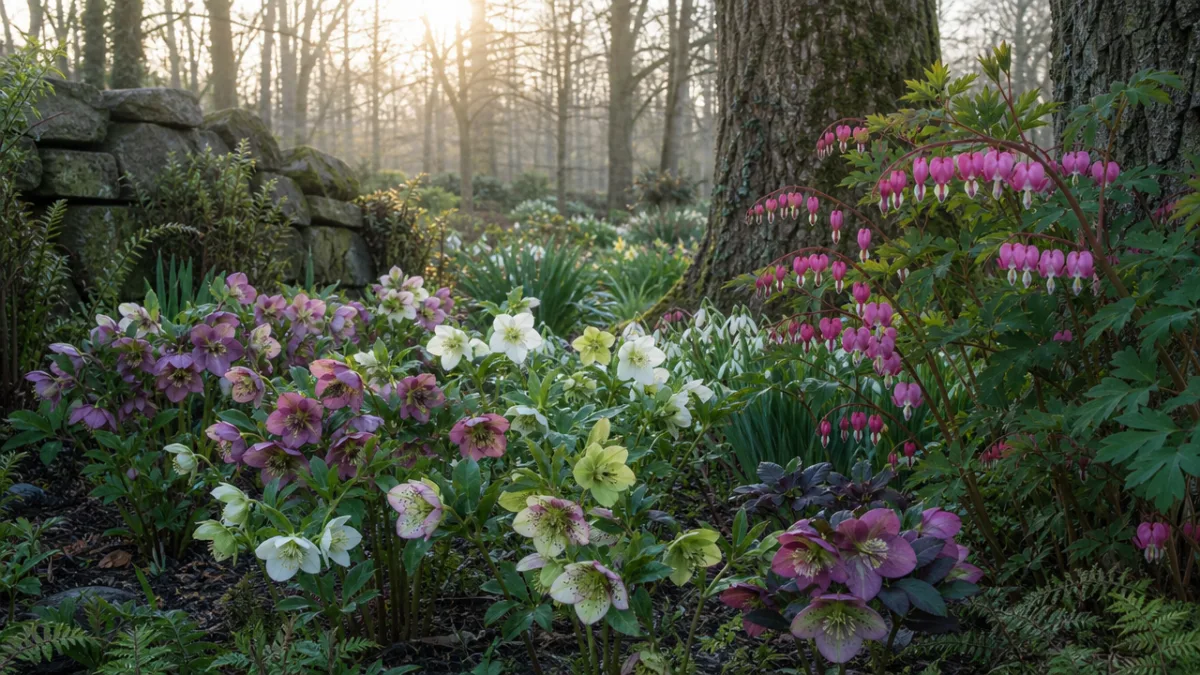
The first perennials to emerge in Zones 5b and 7 are among the most eagerly anticipated plants in any garden. After months of frost and bare soil, early spring bloomers signal the return of the growing season with color, fragrance, and life. In Zone 7, this awakening can begin as early as late February, when hellebores (Helleborus spp.) push nodding blooms through the last of the cold. In Zone 5b, gardeners may wait until mid-March or even early April before the first true perennial color appears, though snowdrops and early crocus can tease the eye in sheltered microclimates weeks before the official last frost date. The Farm at Green Village celebrates these pioneers with dedicated early-season planting areas designed to be visible from the main pathways.
Among the most reliable early performers across both zones are bleeding heart (Dicentra spectabilis), lungwort (Pulmonaria), primrose (Primula vulgaris), and creeping phlox (Phlox subulata). Bleeding heart is a particular favorite at The Farm at Green Village because its arching stems laden with heart-shaped flowers bridge the gap between the earliest bulb displays and the main perennial flush of late spring. Lungwort is valued not only for its blue, pink, or white blooms but for its attractively spotted foliage, which remains ornamental long after flowering ends. Primroses bring jewel-toned clusters of color to shaded and semi-shaded beds, thriving in the cool, moist conditions that both zones offer in abundance during March and April. Creeping phlox cascades over walls and slopes in sheets of lavender, pink, and white, making it indispensable for early-season impact.
Timing your soil preparation around these early bloomers is critical in both zones. Zone 7 gardeners can often begin amending beds in February during mild spells, giving roots a head start once temperatures rise. Zone 5b gardeners should focus fall preparation efforts on beds designated for early spring perennials, ensuring that well-amended, well-drained soil is ready the moment frost releases its grip. At The Farm at Green Village, raised beds with added compost and a light layer of shredded leaf mulch have proven especially effective for early bloomers, accelerating soil warming and protecting emerging crowns from the late-season cold snaps that both zones can experience well into April and even May.
Late Spring and Early Summer: The Heart of the Perennial Season
Late spring and early summer represent the crescendo of the perennial garden, when the greatest diversity of species comes into bloom simultaneously and the garden reaches its most visually complex and colorful state. In Zone 5b, this peak typically occurs between late May and mid-June, when reliable warmth arrives after the last frost and soil temperatures are fully settled. In Zone 7, the window opens somewhat earlier, often beginning in earnest by early May, though the growing season’s extended length means that the peak can feel less concentrated than in cooler zones. At The Farm at Green Village, this is the season for which the bloom calendar is most intensively planned, with dozens of perennial species overlapping to create layered tapestries of color and texture.
Irises, peonies, alliums, and salvia are the cornerstones of this season at The Farm at Green Village. Bearded irises (Iris germanica) open in a staggering range of colors from pure white to deep burgundy, their ruffled standards and falls catching every breeze in showy display. They are exceptionally hardy across both zones, requiring only well-drained soil and full sun to perform reliably year after year. Peonies (Paeonia lactiflora) are among the longest-lived perennials available to gardeners in these zones, often outlasting the gardeners who plant them. Their enormous, fragrant blooms in shades of white, blush, rose, and crimson are simply unmatched for late spring drama. Alliums contribute vertical interest and polished spherical blooms in purple and white, while the many salvia species begin their long season of blue, purple, and red flower spikes, attracting hummingbirds and bees in abundance.
Designing for succession within this peak season requires deliberate attention to bloom timing within each species category. Early, mid, and late-season peony cultivars can extend that genus’s display across nearly six weeks when planted together. Similarly, selecting a range of iris cultivars with staggered bloom times stretches the iris season from early May through late June in Zone 7 or from mid-May into July in Zone 5b. At The Farm at Green Village, the planting maps for this season are organized not by color but by bloom week, ensuring that as each wave of flowers fades, the next is already opening to fill the visual gap. This approach transforms what could be a brief, dazzling show into a sustained, evolving landscape experience that rewards frequent visits throughout the late spring and early summer months.
Midsummer Perennials: Sustaining Color Through the Heat
Midsummer presents a genuine challenge in both Zone 5b and Zone 7 gardens. In Zone 5b, July and August bring heat and humidity that can stress plants adapted to cooler conditions. In Zone 7, these same months can be significantly hotter, with heat indices regularly pushing well above 90°F and soil moisture evaporating quickly from exposed beds. The perennials that thrive during this period share several important characteristics: deep root systems that access subsoil moisture, thick or waxy foliage that resists transpiration stress, and a general physiology calibrated for warm-season performance. Selecting the right midsummer perennials is essential for maintaining garden beauty during what can otherwise become a tired, gap-ridden season.
At The Farm at Green Village, the midsummer palette centers on echinacea (coneflower), rudbeckia (black-eyed Susan), monarda (bee balm), veronicastrum (culver’s root), and liatris (blazing star). Echinacea purpurea is arguably the workhorse of the midsummer garden in both zones, producing its characteristic domed seed heads surrounded by reflexed ray petals in pink, white, orange, yellow, and red depending on cultivar. The plants are heat-tolerant, drought-resistant once established, and beloved by pollinators throughout their long bloom season. Rudbeckia fulgida ‘Goldsturm’ provides a bold carpet of golden-yellow flowers with nearly bulletproof reliability across both zones, and its seed heads persist into winter, adding wildlife value. Monarda creates vivid masses of scarlet, pink, lavender, or white blooms that hummingbirds visit with extraordinary devotion throughout July and August.
Water management during the midsummer period deserves special attention, particularly for gardeners in Zone 7 where heat stress can arrive early and persist late. Deep, infrequent watering that encourages roots to grow downward is far more effective than frequent shallow irrigation. At The Farm at Green Village, drip irrigation lines installed beneath a two-inch layer of wood chip mulch have dramatically reduced supplemental watering needs during July and August while maintaining excellent plant performance. Zone 5b gardeners often find that their naturally cooler summer temperatures reduce drought stress, but mulching remains important for temperature regulation and weed suppression. The following perennials are particularly recommended for midsummer reliability across both zones:
- Echinacea purpurea (Purple Coneflower) – blooms July through September, full sun, drought tolerant once established, zones 3–9
- Rudbeckia fulgida ‘Goldsturm’ (Black-Eyed Susan) – blooms July through October, full sun, adaptable to many soil types, zones 3–9
- Monarda didyma (Bee Balm) – blooms June through August, full to part sun, prefers moist soil, zones 4–9
- Liatris spicata (Blazing Star) – blooms July through August, full sun, drought tolerant, zones 3–9
- Veronicastrum virginicum (Culver’s Root) – blooms July through August, full to part sun, tolerates moist soil, zones 3–8
- Agastache (Hyssop) – blooms July through frost, full sun, excellent drought tolerance, zones 5–9
Late Summer and Autumn Perennials: Extending the Season to Frost
Many gardeners make the mistake of treating the perennial garden as a spring and summer phenomenon, allowing beds to become dull and weedy by late August and September. At The Farm at Green Village, the autumn garden is treated with the same intentional planning as any other season, and the results are spectacular. In Zone 5b, the growing season typically closes with a hard frost between mid-September and mid-October, depending on the specific location and its microclimate. Zone 7 gardens often remain growing through October and into November, giving late-season plants ample time to develop and display. Both zones offer a remarkable palette of late-season perennials that bring rich color, interesting texture, and vital wildlife support to the garden just when it is needed most.
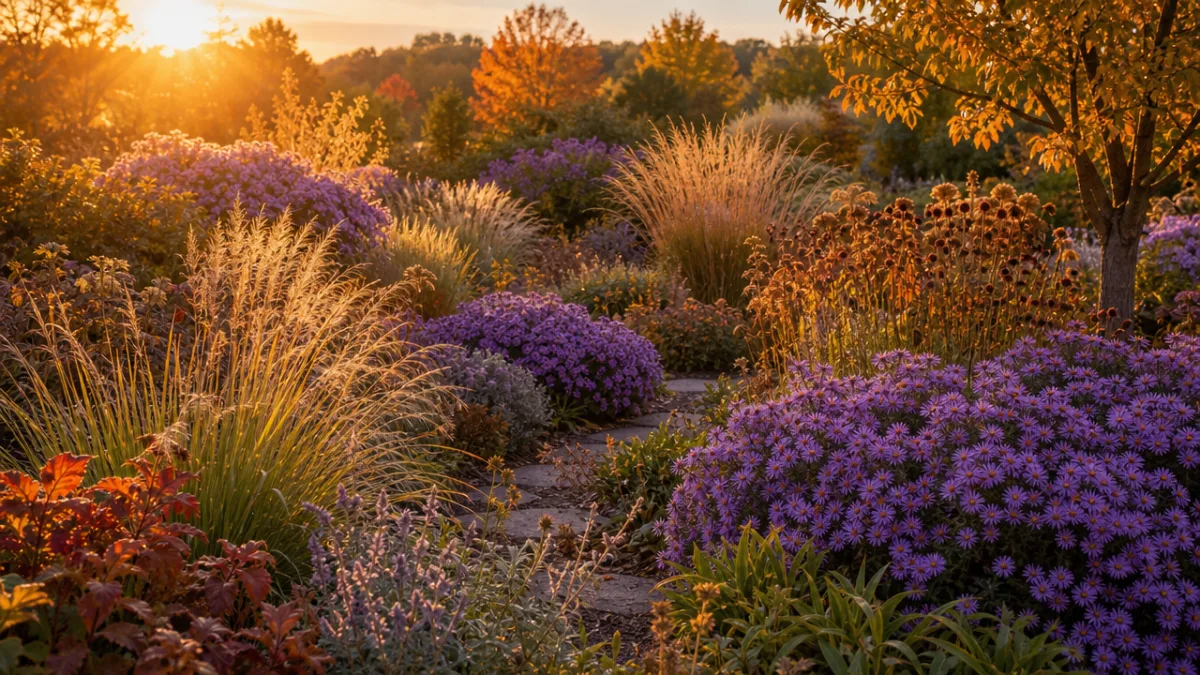
Asters are perhaps the defining genus of the late-season perennial garden, and they perform superbly across both Zones 5b and 7. New England aster (Symphyotrichum novae-angliae) and smooth aster (Symphyotrichum laeve) produce masses of daisy-like flowers in purple, violet, pink, and white during September and October, creating a natural bridge between the summer garden and the seed-head beauty of winter. Sedum ‘Autumn Joy’ (now reclassified as Hylotelephium) is another indispensable autumn perennial, its flat-topped flower heads transitioning from pale pink through salmon to deep russet as the season progresses. Ornamental grasses such as Panicum virgatum (switchgrass) and Pennisetum alopecuroides (fountain grass) reach their peak ornamental value in autumn, when their seed heads catch the low-angle light of September and October in breathtaking fashion. At The Farm at Green Village, these grasses are planted in sweeping drifts that create movement and golden luminosity on even the cloudiest autumn days.
Designing for autumn requires thinking about the garden not just as a collection of plants but as a habitat and a sensory experience. Leaving seed heads standing through winter provides critical food sources for migrating and overwintering birds, including goldfinches, chickadees, and sparrows. The structural interest of spent flower stalks and ornamental grass plumes also extends the garden’s visual appeal far beyond the last frost, creating a sculptural winter landscape that is beautiful under snow and in the slanted light of January afternoons. At The Farm at Green Village, the decision to leave the majority of the garden standing through winter is both an aesthetic and an ecological one, reflecting the farm’s broader commitment to supporting native wildlife and building a garden that gives back to the landscape as much as it takes from it.
Building Your Year-Round Bloom Calendar: Planning Tips from The Farm at Green Village
Creating a truly continuous bloom calendar across Zones 5b and 7 requires systematic planning that begins not in spring but in late summer or fall of the preceding year. The most effective approach starts with a simple zone-by-zone bloom month matrix, mapping each perennial you intend to grow against the months during which it typically flowers in your specific zone. Once this matrix is complete, the gaps become immediately visible — those weeks when no significant blooms are expected — and you can select new plants specifically to fill those periods. At The Farm at Green Village, this planning exercise is conducted every August for the following year, allowing ample time to source unusual cultivars, divide and relocate existing plants, and prepare new beds before the growing season ends.
Beyond simply cataloging bloom times, an effective bloom calendar also considers flower color, plant height, foliage texture, and habitat value. A garden that blooms continuously but in a single color, at a single height, and for a single type of pollinator will be less satisfying and less ecologically valuable than one that layers complementary colors, contrasting textures, and diverse wildlife relationships across every season. The Farm at Green Village uses a simple four-attribute planning grid for each planting zone within the garden, tracking bloom month, primary color, plant height category (low, medium, tall), and primary pollinator guild (bees, butterflies, hummingbirds, beetles). This grid makes it easy to spot imbalances and opportunities that would be invisible in a simple plant list.
Soil health is the invisible foundation beneath every successful bloom calendar. Perennials cannot deliver consistent, season-long performance without soil that drains freely, supports robust microbial communities, and supplies adequate macro and micronutrients throughout the growing season. At The Farm at Green Village, annual applications of finished compost, rotational cover cropping in vegetable areas adjacent to perennial beds, and the permanent avoidance of synthetic herbicides have produced deeply alive soil that supports extraordinary plant performance with minimal chemical input. Whether you are gardening in Zone 5b or Zone 7, investing in soil health before acquiring a single additional plant is always the highest-return activity available to you. A bloom calendar built on healthy soil is a bloom calendar that delivers on its promise year after year.
- February–March (Zone 7) / April (Zone 5b): Hellebores, snowdrops, lungwort, early crocus — focus on sheltered south-facing beds with rich, moist soil
- April–May: Bleeding heart, creeping phlox, primrose, Virginia bluebells — ideal for shaded or semi-shaded areas beneath deciduous trees
- May–June: Bearded iris, peony, allium, baptisia, catmint — full sun borders and island beds at peak performance
- June–July: Salvia, geranium, veronicastrum, shasta daisy, campanula — mid-border filler plants that bridge spring and summer peaks
- July–August: Echinacea, rudbeckia, monarda, liatris, agastache — heat-tolerant sun lovers that sustain color through the hottest weeks
- August–September: Sedum, ornamental grasses, phlox paniculata, Joe Pye weed — late-season workhorses that begin as summer fades
- September–Frost: Asters, goldenrod, toad lily, anemone — frost-hardy closers that carry the garden through its final weeks in style
The bloom calendar is not a rigid prescription but a living document that evolves with your garden, your climate, and your own growing aesthetic. Each season will bring surprises — a plant that blooms two weeks earlier than expected after an unusually warm spring, a drought that shortens the midsummer display, a new cultivar that outperforms everything around it and demands a larger role in next year’s plan. At The Farm at Green Village, these surprises are welcomed as teaching moments and integrated into the following year’s calendar with curiosity rather than frustration. The goal is not a perfect, predictable display, but a deepening relationship with your land, your plants, and the seasonal rhythms that make gardening in Zones 5b and 7 such an endlessly rewarding pursuit. Start with your zone, study your bloom windows, amend your soil, and let the calendar guide you toward a garden that is always, in every season, becoming more beautiful than it was before.








What do you think?
It is nice to know your opinion. Leave a comment.